Autoflowering seeds
by Azarius
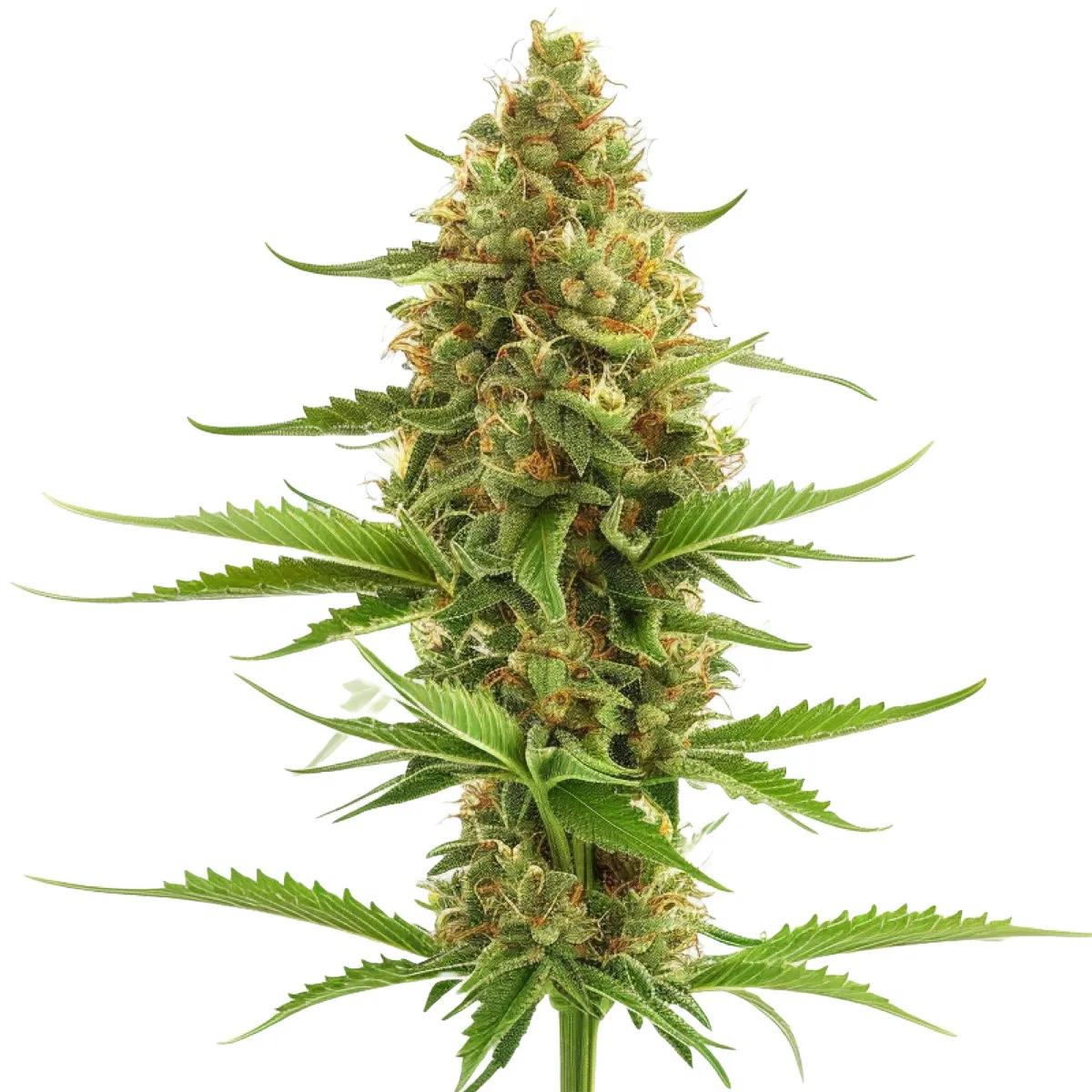
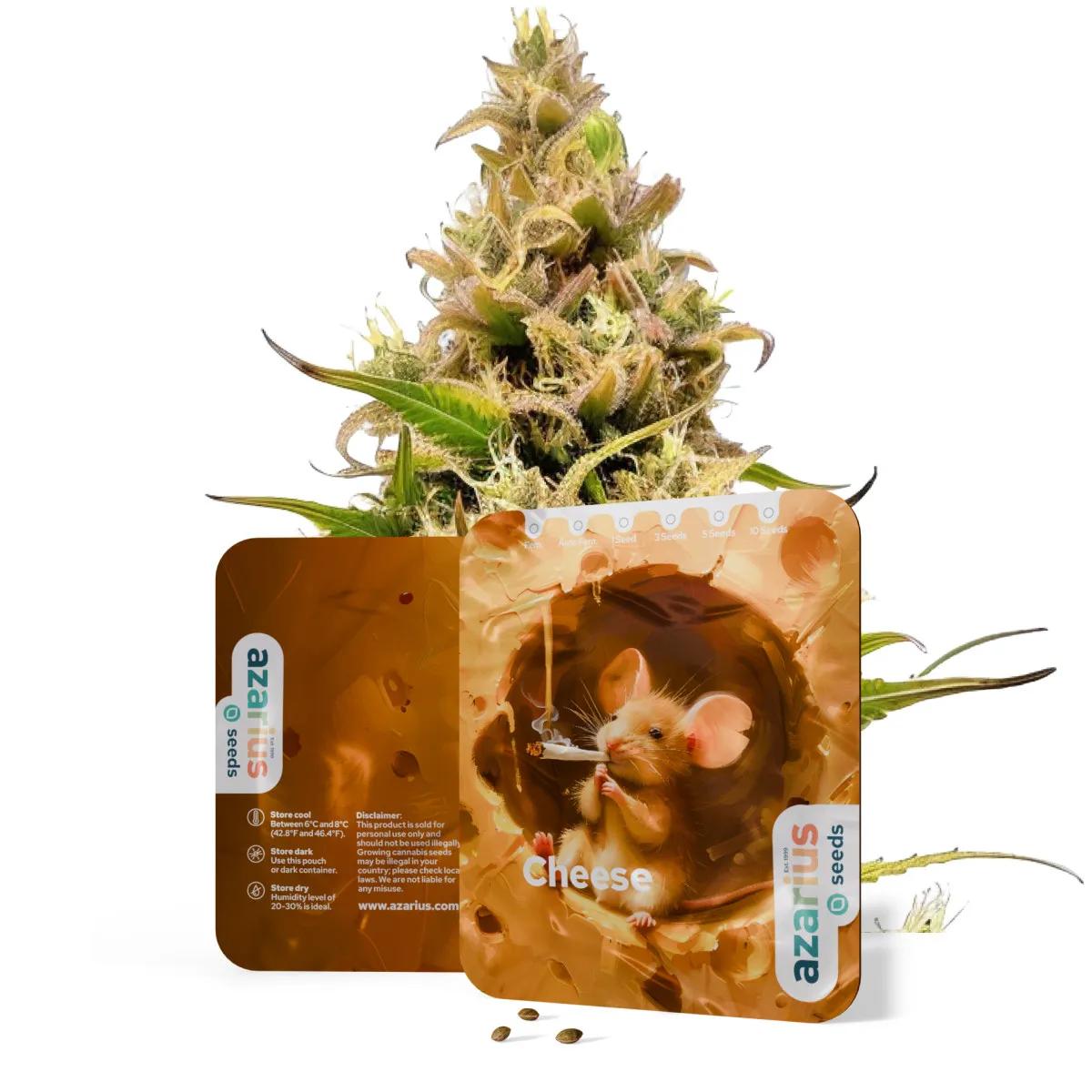
Cheese Auto is a mostly indica autoflower that crosses the legendary Cheese clone with Critical Mass Auto. The result: a compact, fast-finishing plant that fills your grow space with that unmistakable sharp, tangy cheese aroma — the kind that sticks to your fingers when you handle the buds. At €7.95 for a single seed (with bulk options up to 10 seeds), this is one of the most affordable ways to grow proper Cheese genetics without fussing over light schedules or fighting a lanky sativa structure.
We've carried cheese auto seeds at Azarius since the autoflower boom really took off, and this particular cross remains a steady seller. The Critical Mass Auto parent brings structure and yield; the Cheese parent brings that skunky, fermented flavour profile that made the original UK Cheese a coffeeshop staple in the early 2000s. THC sits in the 10–15% range — not face-melting, but enough for a proper, relaxing evening session. If you want something stronger, look at our full cannabis seeds catalogue. But if you want flavour, ease of growing, and a forgiving plant that doesn't punish mistakes, keep reading.
Autoflowers don't care about your light schedule. Cheese Auto will flip to flower on her own roughly 3–4 weeks after germination, regardless of whether you're running 18/6, 20/4, or even 24/0. That removes the single biggest source of beginner confusion: "when do I switch to 12/12?" You don't. She handles it herself.
The Critical Mass Auto genetics also keep the plant short — expect 60–100 cm indoors, occasionally a bit taller outdoors with full sun. That makes Cheese Auto a natural fit for small grow tents like an 60×60 or 80×80. We'd recommend the 80×80 if you're growing more than one plant — you'll want airflow between them, especially during late flower when those dense indica buds can trap moisture.
A few honest notes on what to expect:
The Cheese strain's signature aroma comes from a specific terpene combination dominated by methyl-branched fatty acids and high levels of isovaleric acid — the same compound responsible for the smell of aged cheese and, less glamorously, sweaty socks. Love it or hate it, there's nothing else quite like it in the cannabis world.
When you crack open a cured bud of Cheese Auto, the first thing that hits you is that sharp, tangy funk. Underneath it, there's an earthy sweetness from the Critical Mass side — almost like damp forest floor with a hint of dried fruit. The smoke itself is thick, creamy, and coats the back of your throat. Taste lingers for minutes.
The dominant terpenes in Cheese strains typically include:
| Terpene | Aroma | Also found in |
|---|---|---|
| Myrcene | Earthy, musky | Hops, lemongrass, mango |
| Caryophyllene | Peppery, spicy | Black pepper, cloves |
| Limonene | Citrus, sweet | Lemon peel, orange rind |
| Ocimene | Herbal, woody | Mint, parsley, basil |
The myrcene content is worth noting — it's the terpene most associated with the "couch-lock" body effect, and Cheese Auto has plenty of it. Combined with the indica-dominant genetics, this is a strain that nudges you firmly towards the sofa rather than the dance floor.
Here's the setup we'd use for 2–4 Cheese Auto plants indoors:
One thing to watch: those dense, chunky buds can develop bud rot (Botrytis) in the final 2 weeks if humidity creeps above 55%. Keep your extraction fan running and consider a small dehumidifier if you're growing in a damp room. We've seen growers lose entire harvests to rot in the last week — heartbreaking when you're that close to the finish line.
Cheese Auto works outdoors in most European climates, provided you've got at least 3–4 months of decent weather. The autoflowering genetics mean she doesn't depend on shortening days to trigger flowering — plant her in May, harvest in August. Some growers in southern Europe manage two outdoor runs per season.
Outdoors, expect slightly taller plants (up to 120 cm with full sun and good soil) and potentially higher yields than indoor grows. The trade-off: you've got less control over humidity, pests, and temperature. Cheese Auto's dense bud structure makes her more susceptible to mould in wet climates — if you're in the UK or northern Europe, keep an eye on the weather forecast during the last few weeks and be prepared to harvest a few days early if a prolonged rain spell is coming.
Direct sunlight for at least 6 hours per day is the minimum. More is better. A south-facing balcony or garden spot works well. She's compact enough to grow in a large pot (15–20 litres) on a terrace without drawing too much attention, though that cheese smell will carry on a warm evening breeze.
With THC levels between 10% and 15%, Cheese Auto sits in the mild-to-moderate range. That's actually a selling point for a lot of people. Not everyone wants to get flattened — sometimes you want a relaxing buzz that lets you still hold a conversation, cook dinner, or watch a film without forgetting the plot every 10 minutes.
The effects lean heavily indica:
The moderate THC content also makes Cheese Auto a reasonable choice if you're returning to cannabis after a long break. The gap between 2005-era street weed and modern 25%+ strains can be jarring — Cheese Auto bridges that gap nicely.
How does Cheese Auto compare to other popular autoflowers in our catalogue? Here's a quick breakdown:
| Strain | THC | Dominant type | Flavour | Seed-to-harvest |
|---|---|---|---|---|
| Cheese Auto | 10–15% | Indica | Cheese, earthy, sweet | 8–9 weeks |
| Northern Lights Auto | 12–16% | Indica | Pine, earthy, sweet | 9–10 weeks |
| Amnesia Haze Auto | 15–20% | Sativa | Citrus, haze, spicy | 10–12 weeks |
| White Widow Auto | 14–18% | Hybrid | Earthy, woody, pungent | 8–10 weeks |
Cheese Auto finishes faster than most and stays shorter. If you want maximum flavour in minimum time with minimum effort, she's hard to beat. If you're chasing THC numbers, look at the Amnesia Haze Auto instead — but be prepared for a longer grow and a more demanding plant. Browse our full autoflowering seeds collection to compare options side by side.
Knowing when to harvest is the difference between good weed and great weed. For Cheese Auto, watch the trichomes — the tiny mushroom-shaped crystals covering the buds. You'll need a jeweller's loupe or a phone macro lens to see them properly.
After harvest, hang the whole plant or individual branches upside down in a dark room at 18–21°C with 55–60% humidity. Drying takes 7–14 days — don't rush it. Stems should snap cleanly, not bend, before you move to curing.
Curing happens in glass jars. Pack the trimmed buds loosely, seal the jars, and open them ("burp" them) for 10–15 minutes twice daily for the first week, then once daily for another 2–3 weeks. This is where the Cheese flavour really develops — fresh-dried Cheese Auto smells good, but properly cured Cheese Auto smells incredible. That sharp, tangy funk deepens and the sweet undertones come forward. Minimum 2 weeks curing; 4–6 weeks is better.
Cheese Auto seeds are available in 4 pack sizes:
| Pack size | Price | Per seed |
|---|---|---|
| 1 seed | €7.95 | €7.95 |
| 3 seeds | Check listing | Better value |
| 5 seeds | Check listing | Even better |
| 10 seeds | Check listing | Best per-seed price |
If you're growing for the first time, the 3-seed pack gives you a safety margin — germination rates are generally high, but having a backup seed or two means one failed germination doesn't end your project. Experienced growers running a full tent will want the 5 or 10 pack for the better per-seed price.
Cannabis seeds are living organisms. Store them wrong and they'll lose viability within months. Store them right and they'll stay viable for years.
We ship all seeds in sealed, light-proof packaging. If you're not planting immediately, leave them in the packet and stick them in the fridge. Simple as that.
| Parameter | Detail |
|---|---|
| Genetics | Cheese × Critical Mass Auto |
| Type | Autoflowering, mostly indica |
| THC | 10–15% |
| CBD | Low (<1%) |
| Seed-to-harvest | 8–9 weeks |
| Height (indoor) | 60–100 cm |
| Height (outdoor) | 80–120 cm |
| Yield (indoor) | 30–80 g/plant |
| Yield (outdoor) | 50–120 g/plant |
| Flavour | Cheese, earthy, sweet |
| Dominant terpenes | Myrcene, caryophyllene, limonene |
| Difficulty | Easy |
| Best climate | Temperate to warm |
| Recommended pot size | 7–11 L (indoor), 15–20 L (outdoor) |
8–9 weeks on average. Some phenotypes stretch to 10 weeks, but most finish within the 9-week mark. That's total time from germination to chop — one of the fastest turnarounds you'll find for a strain with this much flavour.
7–11 litres indoors, 15–20 litres outdoors. Don't transplant — start in your final pot. Autoflowers have a fixed life cycle and any transplant stress costs you growth time you can't get back.
Yes. Intensely. The cheese terpene profile kicks in hard around week 5–6 and only gets stronger. Indoors, you need a carbon filter and proper extraction. Outdoors, your neighbours will notice. Plan accordingly.
Technically yes, but expect a small plant with minimal yield. Windowsill grows rarely provide enough light intensity for decent bud development. You'll get better results with even a basic 50W LED panel in a small tent. If the windowsill is all you've got, pick the sunniest south-facing window and keep expectations modest.
Absolutely. 10–15% THC delivers a clear, functional high with solid body relaxation. It's less intense than modern 20%+ strains, which is actually a benefit if you want to enjoy the experience without being glued to the sofa for 4 hours. For context, most cannabis consumed in the 1990s tested below 10%.
2–4 plants comfortably. Three is the sweet spot — gives each plant enough space for airflow while filling the canopy. Four works if you keep them slightly smaller with less veg time, but the plants handle that themselves since they're autoflowers.
Yes, but go easy. Start at half the manufacturer's recommended dose and increase only if the plant shows signs of deficiency (yellowing lower leaves, slow growth). Autoflowers are smaller than photoperiod plants and burn easily with full-strength feeds. A basic cannabis-specific nutrient line with separate grow and bloom phases is all you need.
Low-stress training (LST) — gently bending and tying down branches — works well and can increase yield by 15–20%. Topping (cutting the main stem) is more controversial with autoflowers. Some growers do it successfully, but the recovery time eats into the plant's short life cycle. If you're new to growing, stick with LST. It's lower risk and still makes a noticeable difference.
Three things: size, yield, and light dependence. Cheese Auto is smaller (60–100 cm vs 120–180 cm), yields less per plant (30–80 g vs 100–300 g), and doesn't need a light schedule change to flower. The flavour profile is very similar — the autoflowering genetics don't significantly alter the terpene expression. Choose auto if you want speed and simplicity; choose photoperiod if you want maximum yield and don't mind managing light cycles.
Medical disclaimer. This content is for informational purposes only and does not constitute medical advice. Consult a qualified healthcare provider before use of any substance.