Autoflowering seeds
by Azarius
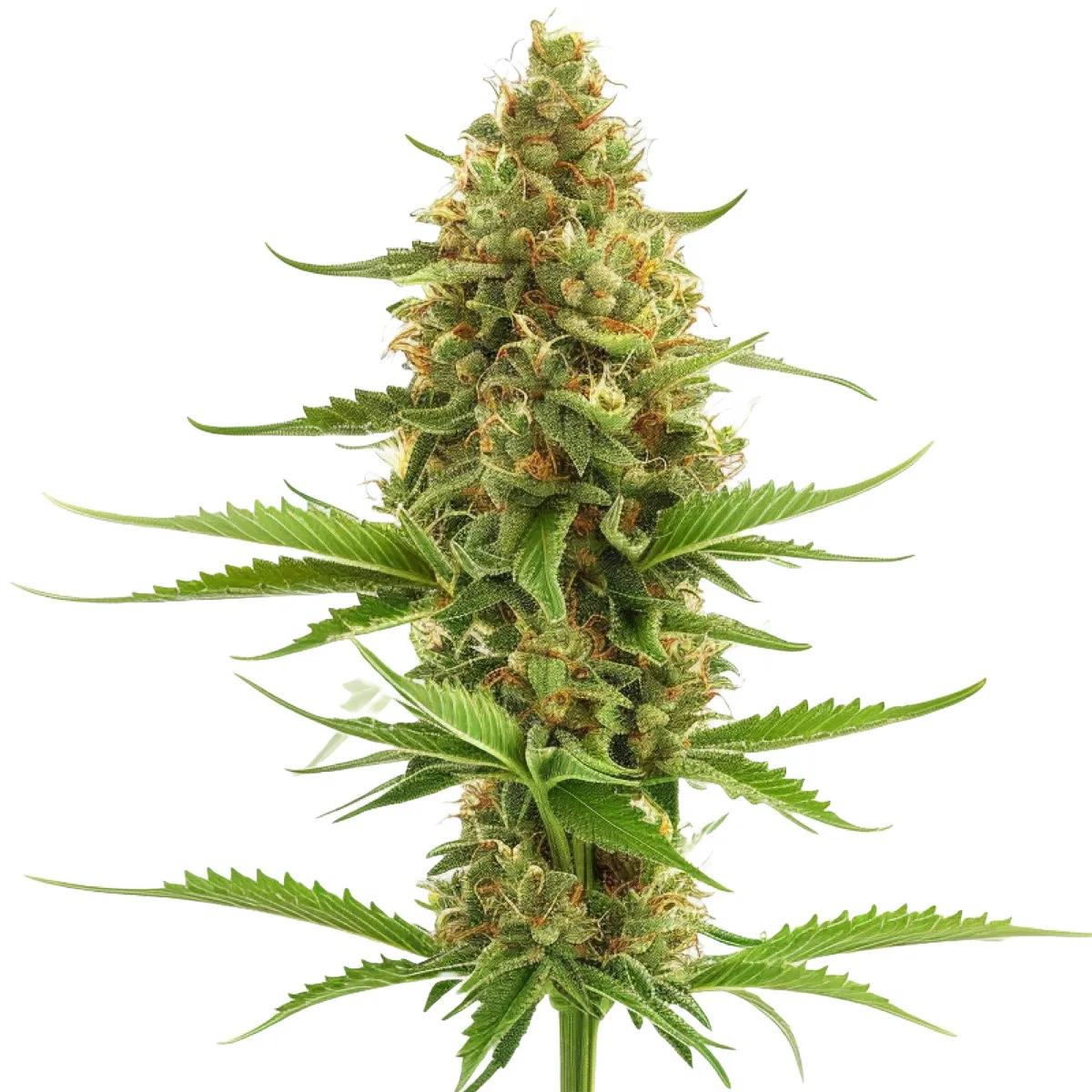
Jack Herer Auto is a sativa-dominant autoflower seed that crosses Haze, Northern Lights, and Shiva Skunk genetics with ruderalis to deliver a genuine cerebral high from a plant that stays compact and finishes fast. Named after the legendary cannabis activist, this strain packs 15–20% THC into dense, resinous buds that smell of earth and pine — and it does it all in 8–10 weeks from seed, no light schedule change required. If you've been chasing sativa effects but don't have the ceiling height or patience for a 14-week photoperiod monster, this is where you stop looking.
Jack Herer Auto seeds ship in packs of 1, 3, 5, or 10. Your choice depends on your grow space and how many harvests you're planning this year.
| Pack Size | Best For | Notes |
|---|---|---|
| 1 seed | Single balcony pot or first-time test run | Low commitment. One plant in a 7–11 litre pot — see how you get on before scaling up. |
| 3 seeds | Small tent (60x60 cm) or a balcony with a few containers | Room to select the strongest phenotype and still fill your canopy properly. |
| 5 seeds | Medium tent (80x80 cm or 100x100 cm) | Enough to run a full cycle with a spare seed or two for the next round. |
| 10 seeds | Dedicated growers or multiple harvests per year | Best value per seed. Stagger your starts and you can harvest every few weeks. |
New to autoflowers? The 3-pack is the sweet spot. You get enough genetic variation to find a strong plant without committing to a full tent. If you already know you like the Jack Herer profile and want to run it all season, grab the 10-pack and don't look back.
Jack Herer Auto draws from three of the most celebrated cultivars in cannabis history — Haze, Northern Lights, and Shiva Skunk — crossed with a ruderalis parent to introduce the autoflowering trait. The original Jack Herer photoperiod strain earned its reputation for blending sativa uplift with indica structure, and this autoflower version keeps that balance intact while trimming the timeline down dramatically.
The Haze genetics bring the cerebral clarity. Northern Lights contributes resin production and a compact growth pattern. Shiva Skunk adds density to the buds and a layer of earthy sweetness to the terpene profile. The ruderalis parent doesn't add much in terms of flavour or potency — its job is to make the plant flower automatically based on age rather than light cycle, which is exactly what it does. The result is a plant that behaves like a sativa above the soil line but stays manageable at roughly 100 cm tall.
| Specification | Detail |
|---|---|
| Genetics | Haze x Northern Lights x Shiva Skunk x Ruderalis |
| Type | Sativa-dominant autoflower |
| THC | 15–20% |
| Seed to Harvest | 8–10 weeks |
| Height | ~100 cm |
| Indoor Yield | 350–400 g/m² |
| Flowering Type | Autoflower — no light schedule change needed |
| Flavour Profile | Earthy, piney, with subtle spice |
| Pack Sizes | 1, 3, 5, or 10 seeds |
Jack Herer Auto leans heavily into earth and pine — think walking through a forest after rain, with a sharp resinous edge that hits the back of your nose before you even grind the bud. There's a subtle spicy warmth underneath, almost peppery, that rounds out the exhale. It's not a fruity strain and it's not trying to be one. The flavour is clean, direct, and distinctly "classic cannabis" in a way that newer dessert strains often aren't.
The dominant terpenes here are alpha-pinene and beta-pinene, which account for that sharp pine character. According to a 2021 review published in Frontiers in Psychiatry, terpene expression can vary significantly between cannabis chemovars, with pinene-dominant profiles showing distinct aromatic and functional characteristics compared to myrcene- or limonene-heavy strains. You'll also pick up traces of terpinolene and caryophyllene, which add the spicy, slightly herbal undertone. If you've smoked the original Jack Herer photoperiod, you'll recognise the profile immediately — the autoflower version doesn't water it down.
One honest note: the aroma during the final two weeks of flowering is strong. Not overwhelming compared to something like a Cheese or Skunk, but if you're growing in a small flat without a carbon filter, your neighbours will have questions. Plan accordingly.
Jack Herer Auto delivers a clear-headed, talkative, and focused effect that sits firmly in sativa territory. At 15–20% THC, it's potent enough to notice but not so heavy that you lose your afternoon. This is a functional daytime strain — the kind you smoke before a long walk, a creative project, or a conversation that goes on for three hours without you noticing.
According to Healthline's review of sativa strains for energy and focus, Jack Herer ranks high on the energy scale, making it a go-to recommendation for daytime use. The onset is fairly quick — within 10–15 minutes — and the initial wave is cerebral: ideas flow more freely, music sounds slightly better, and you feel like actually doing things rather than sinking into the sofa. There's a mild body relaxation that creeps in after 45 minutes or so, but it never tips into couch-lock territory.
From behind our counter: we've had customers come back specifically to say this is the strain that lets them stay productive. It's not a "stare at the wall" cultivar. If you want something that hits harder and heavier, look at an indica-dominant auto instead. But if you want to stay sharp and sociable, Jack Herer Auto is one of the best sativa autoflowers we carry for exactly that.
Jack Herer Auto is genuinely beginner-friendly — and we don't say that about every seed. The autoflower genetics mean you don't need to worry about switching your light cycle from 18/6 to 12/12 to trigger flowering. The plant does it on its own, typically around week 3–4 from germination. Your job is to keep the environment stable and the feeding consistent.
Indoors, a 60x60 cm tent comfortably fits 2–3 plants, and you can expect 350–400 g/m² with decent light and airflow. Outdoors, the plant stays around 100 cm and does well on a sunny balcony or terrace from late spring through early autumn. You won't get the same yields outdoors as under a proper LED, but you'll still pull a respectable harvest with minimal effort.
The one thing to watch: don't overfeed. Autoflowers are smaller plants with shorter lifecycles, and they're more sensitive to nutrient burn than their photoperiod cousins. If the leaf tips start yellowing or curling, back off the feed. Less is more with autos — we've seen more plants stunted by overfeeding than underfeeding.
The obvious question: why not just grow the original photoperiod Jack Herer? It's a fair point, and the answer depends entirely on your setup.
Photoperiod Jack Herer can stretch to 180 cm or more indoors and takes 9–10 weeks of flowering alone — plus 4–6 weeks of veg before that. You need a taller tent, more light, and the discipline to manage a 12/12 flip at the right time. The reward is potentially higher yields and slightly more complex terpene development.
Jack Herer Auto, by contrast, tops out around 100 cm, goes from seed to harvest in 8–10 weeks total, and doesn't care what your light schedule is. You sacrifice some ceiling on yield and THC (the photoperiod version can push above 20%), but you gain speed, simplicity, and the ability to run multiple harvests per year in the same space. For balcony growers, small-tent growers, or anyone who wants results without a four-month commitment, the auto version is the practical choice.
We'd pick the auto for a first grow or a quick summer run. We'd pick the photoperiod for a dedicated indoor setup where you've got the height and the patience. Both are excellent — they just serve different growers.
Running Jack Herer Auto in a small tent? Pair it with a complete grow kit that includes ventilation, a carbon filter, and lighting — everything sized for a 60x60 or 80x80 space. If you're growing on a balcony, a set of fabric pots in the 11-litre range gives the roots room to breathe without taking over your outdoor space.
Clear-headed, talkative, and focused. It's a sativa-dominant effect at 15–20% THC — cerebral without being overwhelming. Most people find it functional for daytime use. A mild body relaxation develops after about 45 minutes but doesn't lead to couch-lock.
Yes. The autoflower genetics remove the need to manage light schedules, and the plant stays compact at around 100 cm. It's forgiving of minor environmental fluctuations. The main beginner mistake is overfeeding — keep nutrients at half-strength and you'll be fine.
Absolutely. It fits comfortably in a 60x60 cm tent and yields 350–400 g/m² under proper lighting. Run your lights at 18/6 or 20/4 for the full lifecycle — no schedule change needed. Keep temperatures between 20–26°C for best results.
8–10 weeks total. That's germination through to chop day. Most phenotypes are ready around week 9. Check trichome colour with a jeweller's loupe — milky white with some amber means it's time.
Earthy and piney, with a sharp resinous edge and a subtle peppery warmth on the exhale. The terpene profile is dominated by alpha-pinene and beta-pinene. It tastes like classic cannabis — no fruit, no dessert, just clean and direct.
According to Healthline's review of sativa strains, Jack Herer ranks high on the energy scale. The auto version preserves that same cerebral, motivating character. It's one of the best sativa autoflowers we stock for staying productive and sociable.
Outdoor yields depend heavily on sunlight hours and climate, but expect less than the 350–400 g/m² indoor figure. A single plant on a sunny balcony in a 15–20 litre pot can produce a solid personal harvest. For maximum yield, grow indoors under LED.
Yes, particularly in the final two weeks. The pine and earth terpenes are noticeable. If you're growing indoors without a carbon filter, the scent will escape your tent. Budget for proper extraction and filtration if discretion matters.
Last updated: April 2026
Medical disclaimer. This content is for informational purposes only and does not constitute medical advice. Consult a qualified healthcare provider before use of any substance.