Autoflowering seeds
by Azarius
Sour Diesel autoflower is a feminised, photoperiod-independent cannabis strain that delivers the unmistakable fuel-and-lemon terpene profile of the original 1990s New York Sour Diesel in a compact, beginner-friendly package. Built on a Chemdog 91 × Super Skunk × Ruderalis cross, this 70/30 sativa-dominant hybrid runs from seed to harvest in 70–77 days, reaches 16–23% THC, and stays under 120 cm tall. No light-schedule fiddling, no timer drama — the ruderalis genetics trigger flowering automatically, so you feed, water, keep the air moving, and let the plant do its thing.
Sour Diesel autoflower seeds come in packs of 1, 3, 5, or 10 feminised seeds. The right choice depends on your tent size and what you're trying to learn from the run.
| Pack | Best For | Notes |
|---|---|---|
| 1 seed | Testing the strain alongside an existing grow | Low commitment, but nothing to compare against — you won't know if that phenotype is typical or an outlier |
| 3 seeds | A standard 60×60 cm tent | Most popular starting point. Three plants give you room to train without crowding and enough variation to spot a keeper |
| 5 seeds | 80×80 cm or larger, or growers who want a germination backup | If one seed doesn't pop, you've still got a full canopy. Good insurance without overspending |
| 10 seeds | Active phenotype hunting | Sativa-dominant autos can express differently across a batch — ten plants side by side is how you find the standout |
Our honest take: the 3-pack is where most first-timers should start. It fills a small tent properly and gives you enough plants to compare without turning your spare room into a warehouse. If you already know you love the diesel profile and want to find the best expression, go straight to the 10-pack — you'll save per seed and get a proper selection run.
The original Sour Diesel is one of those strains people talk about the way vinyl collectors talk about first pressings — the genetics trace back to early-90s New York, and the Chemdog 91 lineage gives it a pungent, unmistakable fuel-forward nose that no amount of breeding has managed to replicate from scratch. This autoflower version keeps that terpene fingerprint intact while stripping out the photoperiod hassle.
Here's what that means in practice: you don't need separate veg and flower light schedules. Run 18/6, 20/4, or even 24/0 from day one — the plant decides when to flip based on age, not light hours. That's a genuine advantage if you're growing in a shared tent, running perpetual harvests, or simply don't want to deal with timers and light leaks. The 70–77 day total cycle means you can fit roughly four full runs per year indoors without pushing anything.
Yield-wise, expect 350–400 g/m² indoors under decent lighting. Outdoors, individual plants can push 70–200 g depending on your climate and how much direct sun they get. The plant stays under 120 cm, which makes it manageable in a standard tent — even a 150 cm tall tent gives you enough headroom for a light and a carbon filter above the canopy.
Crack open a cured jar of Sour Diesel auto and the first thing that hits you is fuel — sharp, almost chemical, like someone spilled petrol near a lemon grove. That's the Chemdog 91 backbone doing its job. Underneath the diesel punch, there's a citrus brightness and a faint earthy undertone from the Super Skunk side of the cross. The terpene profile leans heavily on myrcene, limonene, and caryophyllene, which together create that classic sour-fuel-lemon combination that made the original strain famous.
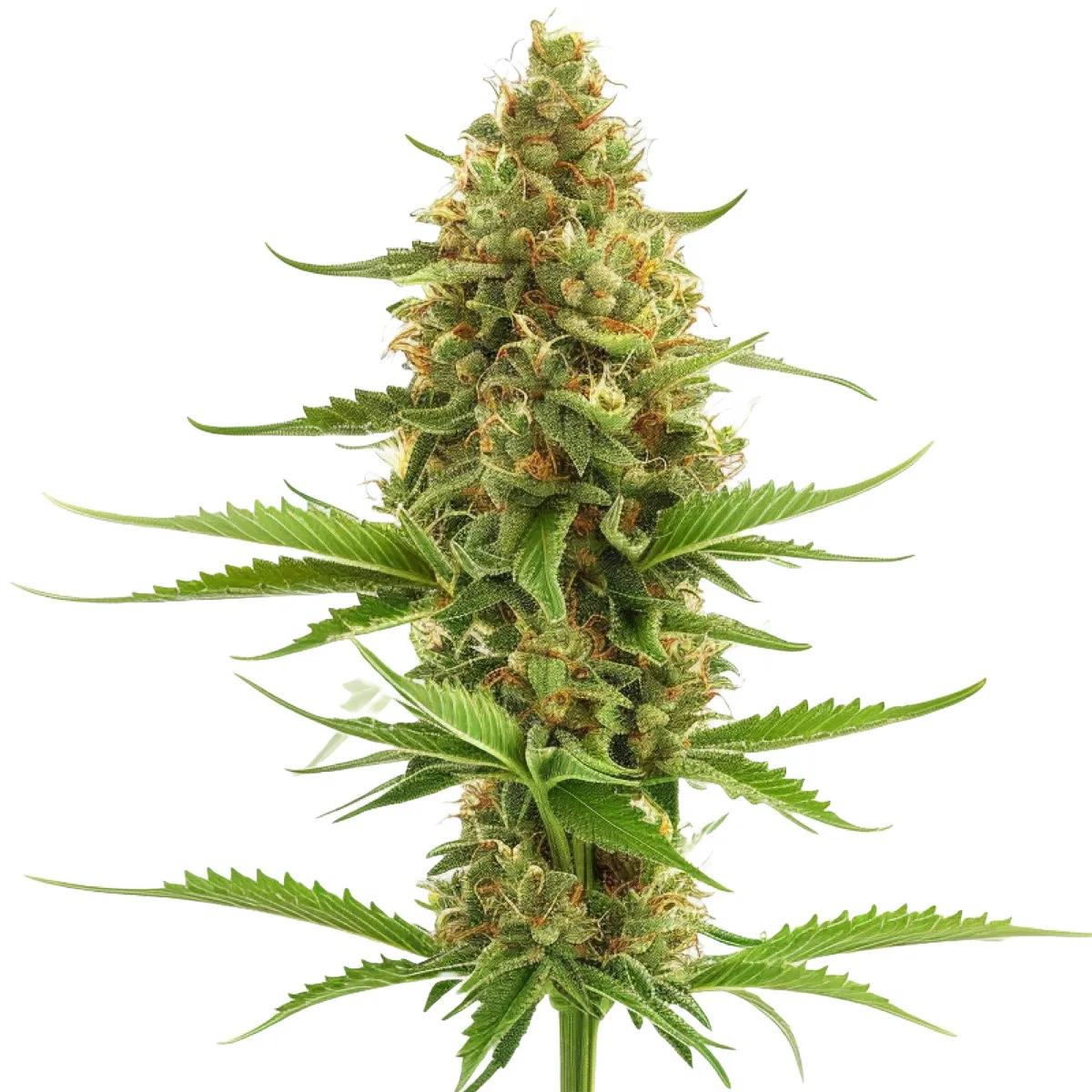
The buds tend toward elongated, sativa-influenced structures — not as dense as a pure indica, but coated in a sticky layer of trichomes that makes trimming a glove-requiring job. At 16–23% THC, potency sits in a range that's strong enough to be properly felt but not so aggressive that a slightly larger-than-planned session sends you sideways. The sativa dominance means the effect leans cerebral and energetic rather than couch-locked — think morning smoke, creative sessions, or social situations where you want to be present rather than melting into furniture.
This strain is genuinely beginner-friendly, but "beginner-friendly" doesn't mean "neglect-proof." Here's a straightforward run-through of the full cycle.
| Specification | Detail |
|---|---|
| Genetics | Chemdog 91 × Super Skunk × Ruderalis |
| Type | Feminised autoflower |
| Sativa / Indica | 70% sativa / 30% indica |
| THC | 16–23% |
| Seed to harvest | 70–77 days |
| Height | Under 120 cm |
| Indoor yield | 350–400 g/m² |
| Light schedule | Photoperiod-independent (18/6, 20/4, or 24/0) |
| Difficulty | Beginner-friendly |
| Available packs | 1, 3, 5, or 10 feminised seeds |
Running Sour Diesel auto in a small tent? Pair it with a complete grow kit that includes lighting, ventilation, and a carbon filter — the diesel terps on this strain get loud from week 6, and your neighbours will notice without proper extraction. A jeweller's loupe or pocket microscope is also worth grabbing for checking trichome ripeness at harvest time.
We've been selling cannabis seeds since the early days of the online shop, and Sour Diesel in some form has been in the catalogue for most of that time. The auto version gets picked up most often by growers who've smoked the original photoperiod Sour Diesel, loved the flavour, but don't want to commit to a 12-week flower cycle plus veg time on top. The 70–77 day total is a genuine time-saver — we're talking about shaving 4–6 weeks off a typical photoperiod Sour Diesel run.
The honest limitation: autoflowers in general produce slightly less per plant than their photoperiod counterparts, and Sour Diesel auto is no exception. The 350–400 g/m² indoor figure is solid for an auto, but a photoperiod Sour Diesel in a longer veg can push past 500 g/m² with training. The trade-off is speed and simplicity. If you're growing for personal use and want to harvest every 10–11 weeks like clockwork, the auto wins. If you're chasing maximum yield per cycle and don't mind managing light schedules, the photoperiod version might suit you better.
One thing we'd flag: sativa-dominant autos can show more phenotypic variation than indica-dominant ones. In a 10-pack, you might get plants ranging from 80 cm to 120 cm with noticeably different bud structures. That's not a defect — it's the genetics expressing. If consistency matters to you, run a batch, find the phenotype you like best, and note the characteristics for next time. You can't clone autos (the clone flowers at the same age as the mother), so each seed is a fresh roll.
If you're weighing Sour Diesel autoflower against other autos in the catalogue, here's how it stacks up. Compared to a Gorilla Glue auto, Sour Diesel leans more cerebral and energetic — Gorilla Glue hits harder on the body side and tends to run slightly higher THC. Against a Northern Lights auto, the difference is night and day: Northern Lights is a classic indica — short, bushy, sedating — while Sour Diesel stretches taller, smells sharper, and delivers a more uplifting effect. For growers who want the diesel profile but in a faster package, there's really no substitute. The Chemdog 91 lineage gives this strain a terpene signature that other "fuel-forward" strains approximate but rarely match.
70–77 days from germination to harvest. That's the full cycle — no separate veg and flower phases to manage. Under an 18/6 light schedule with proper feeding, most plants are ready to chop around day 73–75.
350–400 g/m² indoors under good lighting and proper nutrition. Individual plant yield depends on pot size, training, and light intensity. Three well-trained plants in a 60×60 cm tent typically hit the lower end of that range; a 100×100 cm space with four or five plants pushes toward the upper end.
Yes. The autoflowering genetics remove the need for light-schedule management, which is the single biggest source of beginner mistakes. Feed conservatively, don't overwater, and keep airflow steady — that's genuinely most of the job. The plant handles the flowering trigger on its own.
Very. The diesel terpenes become noticeable from around week 5–6 and intensify through harvest. A carbon filter and proper extraction fan are not optional if you're growing indoors. Without them, the fuel-lemon smell will escape the tent and fill the room — and then some.
You can, but we'd recommend LST (low-stress training) instead. Autos have a fixed life cycle, and topping creates recovery time that eats into growth. Bending the main stem sideways achieves a similar canopy spread without the stress. If you do top, do it early — before the fifth node — and only if the plant looks vigorous.
18/6 is the most common and gives the plant a rest period without sacrificing much growth. Some growers run 20/4 for slightly faster development. Running 24/0 is possible but increases electricity costs and doesn't always translate to noticeably bigger yields. We'd stick with 18/6 unless you have a reason to push it.
Under 120 cm in most conditions. Typical indoor height with LST is 80–100 cm. Without training, the sativa genetics push the plant taller — closer to the 120 cm ceiling. A 150 cm tent gives you enough headroom for the plant, a light, and a filter above the canopy.
16–23% THC depending on phenotype, growing conditions, and harvest timing. Harvesting when trichomes are mostly cloudy with a touch of amber tends to produce the strongest results. Letting it run longer shifts the profile slightly more sedating as THC degrades to CBN.
Last updated: April 2026
Medical disclaimer. This content is for informational purposes only and does not constitute medical advice. Consult a qualified healthcare provider before use of any substance.