Feminized seeds
by Azarius
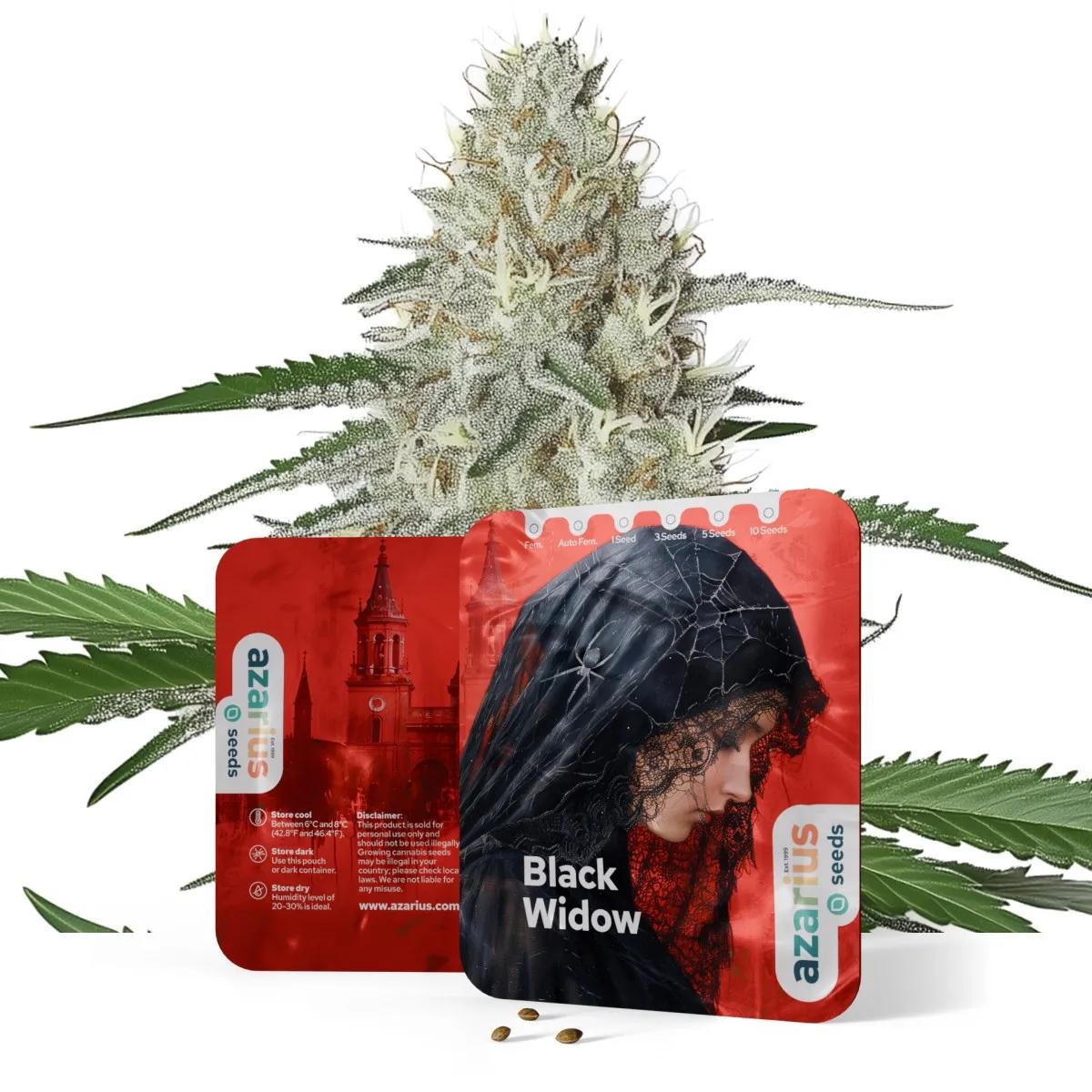
Black Widow is a feminized photoperiod cannabis seed bred from Brazilian Sativa and South Indian Indica genetics — the same cross that made White Widow famous, but refined by its original creator for heavier potency and deeper relaxation. With a 60% Indica / 40% Sativa split and flowering in up to 10 weeks, Black Widow delivers indoor yields up to 450g/m² of resinous, trichome-heavy bud with a terpene profile dominated by myrcene, caryophyllene, and pinene.
| Pack Size | Best For |
|---|---|
| 1 seed | Single-plant test run or SOG slot |
| 3 seeds | Small tent grow — pick the best phenotype from three |
| 5 seeds | Solid pheno hunt with room for one or two duds |
| 10 seeds | Serious selection — find your keeper and keep clones going |
We'd go with the 5-pack if this is your first run with Black Widow. Three seeds is fine if you've grown similar Indica-dominant hybrids before and trust your setup. The 10-pack makes sense if you want to pheno hunt properly — there's genuine variation in how the Brazilian Sativa side expresses.
Here's the backstory most seed banks gloss over. Black Widow isn't a White Widow "remix" or knockoff — it's the original genetics, renamed by the breeder who created them after parting ways with the seed bank that made White Widow a household name. Same Brazilian Sativa mother, same South Indian Indica father, but selected and stabilised for the traits the creator always intended: heavier resin production, a more pronounced body effect, and a flavour profile that leans into earthy pine and peppery spice rather than the lighter, more sativa-forward expression that White Widow became known for.
The 60/40 Indica-Sativa balance means you get structural benefits from both sides. The Indica genetics keep plants compact and manageable — no ceiling-scraping stretch during flower — while the Sativa influence adds enough internodal spacing to let light penetrate the canopy without aggressive defoliation. Flowering wraps up in about 10 weeks, which is standard for a hybrid of this type. Not the fastest finisher, but not a 14-week marathon either.
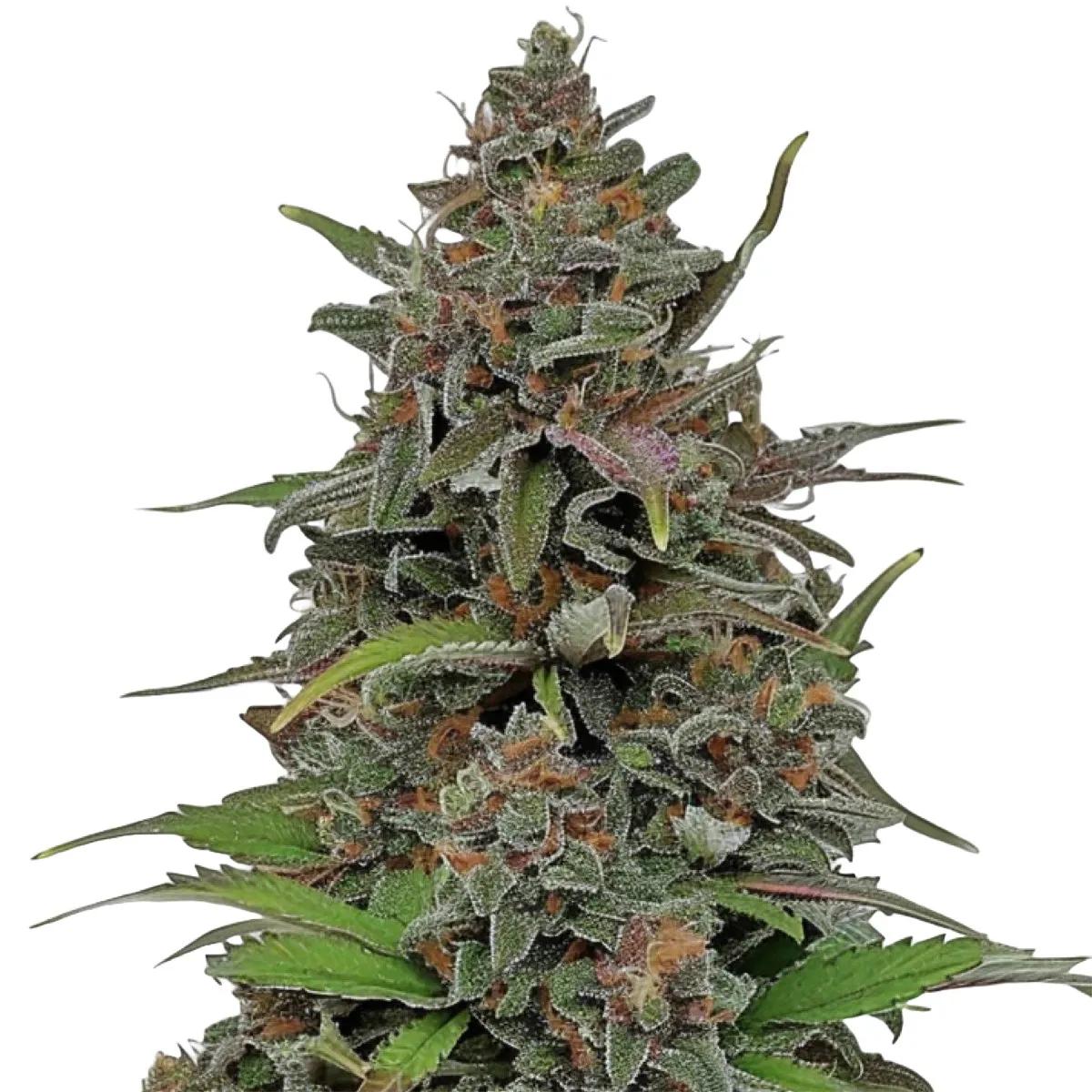
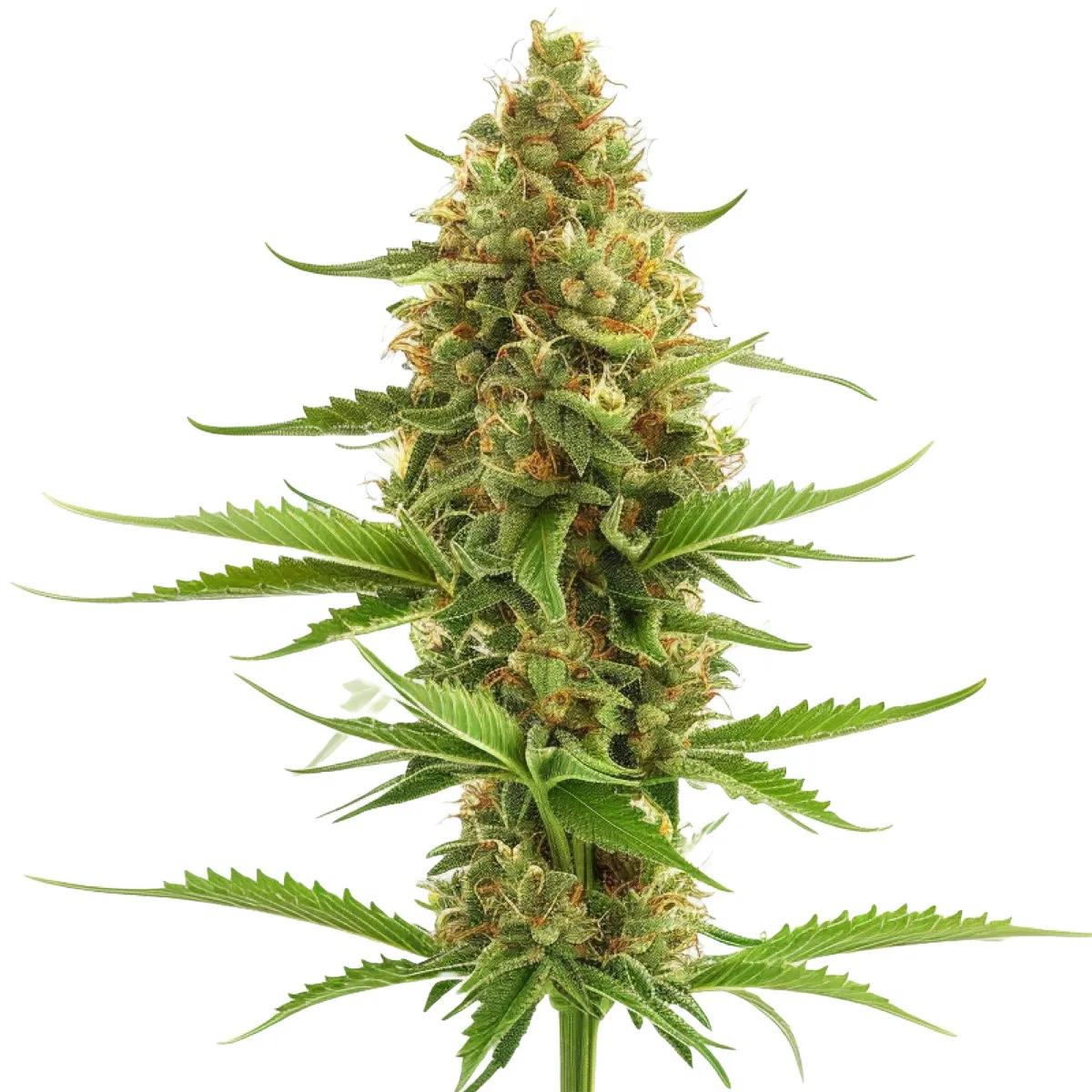
What actually sets Black Widow apart from the dozens of Widow crosses floating around? Trichome density. The resin output on a well-grown Black Widow is genuinely absurd — buds look like they've been rolled in sugar by week 7. That myrcene-dominant terpene profile (40% myrcene, 20% caryophyllene, 15% pinene) gives the dried flower an earthy, musky base with sweet pine on the inhale and a peppery, almost fruity spice on the exhale. If you've grown standard White Widow and thought "nice, but a bit one-dimensional," Black Widow is the answer.
Black Widow's flavour comes down to three terpenes working together in a ratio you don't see often. Myrcene at 40% dominance is the foundation — earthy, herbal, slightly musky. Caryophyllene at 20% adds black pepper spice and a dry, woody bite. Pinene at 15% brings sharp, clean pine that cuts through the heavier notes and keeps the smoke from feeling muddy.
| Terpene | Proportion | Flavour Contribution |
|---|---|---|
| Myrcene | 40% | Earthy, herbal, musky sweetness |
| Caryophyllene | 20% | Black pepper, dry wood, spice |
| Pinene | 15% | Sharp pine, fresh resin, slight citrus |
The sensory experience when you crack open a cured jar of Black Widow is distinctive — sweet pine hits first, almost like walking into a forest after rain, then the earthier myrcene base comes through with a fruity undertone that's hard to place. Some growers describe it as overripe mango mixed with fresh-cut wood. On the exhale, the caryophyllene kicks in with a peppery warmth that lingers at the back of the throat. It's a complex smoke. Not subtle, not one-note — genuinely layered.
| Specification | Detail |
|---|---|
| Genetics | Brazilian Sativa x South Indian Indica |
| Strain Type | Hybrid (60% Indica / 40% Sativa) |
| Seed Type | Feminized |
| Flowering Type | Photoperiod |
| Flowering Time | Up to 10 weeks |
| Indoor Yield | Up to 450g/m² |
| Dominant Terpene | Myrcene (40%) |
| Secondary Terpenes | Caryophyllene (20%), Pinene (15%) |
| Available Packs | 1, 3, 5, or 10 seeds |
Running Black Widow indoors? Pair these seeds with a complete grow tent kit — tent, lighting, ventilation, and carbon filter in one box. The myrcene-heavy terpene profile on this strain is pungent during late flower, so a proper carbon filter isn't optional. A digital pH meter is also worth grabbing if you don't have one — Widow genetics are sensitive to pH swings in the root zone, and keeping it dialled between 6.0–6.5 in soil makes a real difference to final resin production.
Black Widow is a forgiving strain for intermediate growers, but there are a few things worth knowing before you pop these seeds. The Indica dominance keeps height manageable — expect 80–120cm indoors with standard veg times — but the branching structure benefits from some early training.
We've been stocking cannabis seeds since our early days in Amsterdam, and Black Widow is one of those strains that generates a specific kind of customer loyalty. People who grow it once tend to keep it in rotation permanently. The most common feedback we hear? "It's what I always wanted White Widow to be." That tracks with the genetics — same parents, but selected for the heavier, more resinous phenotype rather than the lighter sativa expression.
One honest limitation: Black Widow's aroma during weeks 7–10 of flower is intense. We're not talking "a bit skunky" — we're talking "your entire flat smells like a pine forest crossed with a spice market." If you're growing in a shared building, invest in proper carbon filtration. A passive carbon filter won't cut it. You need an active inline fan pulling air through a quality filter, sized correctly for your tent volume. We get returns on cheap carbon filters more than almost any other product — don't be that grower.
Compared to standard White Widow seeds, Black Widow tends to produce denser, more compact buds with noticeably more trichome coverage. The trade-off is a slightly longer flowering period — White Widow can finish in 8–9 weeks, while Black Widow typically needs the full 10. If speed is your priority, White Widow gets you there faster. If potency and resin production matter more, Black Widow is the better pick. We'd choose Black Widow every time for extraction purposes — the trichome density makes it exceptional for hash or rosin.
Since this question comes up constantly: Black Widow and White Widow share identical parent genetics (Brazilian Sativa x South Indian Indica), but they're different selections from that cross. Black Widow is the original breeder's cut — the phenotype he always intended to release. White Widow is the version that became commercially famous through a different seed bank.
| Trait | Black Widow | White Widow |
|---|---|---|
| Genetics | Brazilian Sativa x South Indian Indica | Brazilian Sativa x South Indian Indica |
| Indica/Sativa | 60/40 | 40/60 (typically) |
| Flowering Time | Up to 10 weeks | 8–9 weeks |
| Effect Character | Heavier body, deep relaxation | More uplifting, cerebral |
| Trichome Density | Very high | High |
| Dominant Terpene | Myrcene (40%) | Varies by phenotype |
| Best For | Evening use, extraction | Daytime use, social settings |
Same parent genetics — Brazilian Sativa crossed with South Indian Indica — but different phenotype selections. Black Widow is the original breeder's cut, selected for heavier Indica expression, more resin, and deeper body effects. White Widow leans more sativa-forward and uplifting. Think of them as siblings, not twins.
Up to 10 weeks from the flip to 12/12 lighting. Some phenotypes finish a few days earlier, but plan for the full 10 weeks. Rushing harvest costs you trichome maturity and terpene development — the last week makes a real difference with this strain.
Up to 450g/m² under optimised indoor conditions. Realistically, a first-time grower with decent lighting and proper feeding should hit 300–350g/m². Training techniques like SCROG or LST push yields toward the upper range by maximising light exposure across the canopy.
It's forgiving enough for someone with one or two grows under their belt. The Indica-dominant structure keeps height manageable and the plant isn't fussy about nutrients. The main challenge is supporting heavy buds in late flower and managing the strong aroma. Total beginners might find a faster-finishing strain less stressful for a first run.
Expect intense earthy pine with peppery spice from mid-flower onward. The myrcene dominance (40%) creates a musky, herbal base, while the 15% pinene adds sharp resinous pine. Weeks 7–10 are the strongest — carbon filtration is critical if discretion matters.
Yes, in warm climates with consistent sunlight during the flowering period. The Indica structure handles wind well, but the dense buds can be susceptible to mould in humid conditions. Outdoor harvest typically falls in mid to late October in the Northern Hemisphere. Indoor growing gives you more control over the final product.
Exceptional. The trichome density on Black Widow is among the highest we've seen in Widow-family genetics. The resin glands are large and abundant, making it a top choice for dry sift, bubble hash, or rosin pressing. If extraction is your goal, Black Widow is the best Widow variant to grow for it.
Last updated: April 2026
Medical disclaimer. This content is for informational purposes only and does not constitute medical advice. Consult a qualified healthcare provider before use of any substance.