Feminized seeds
by Azarius
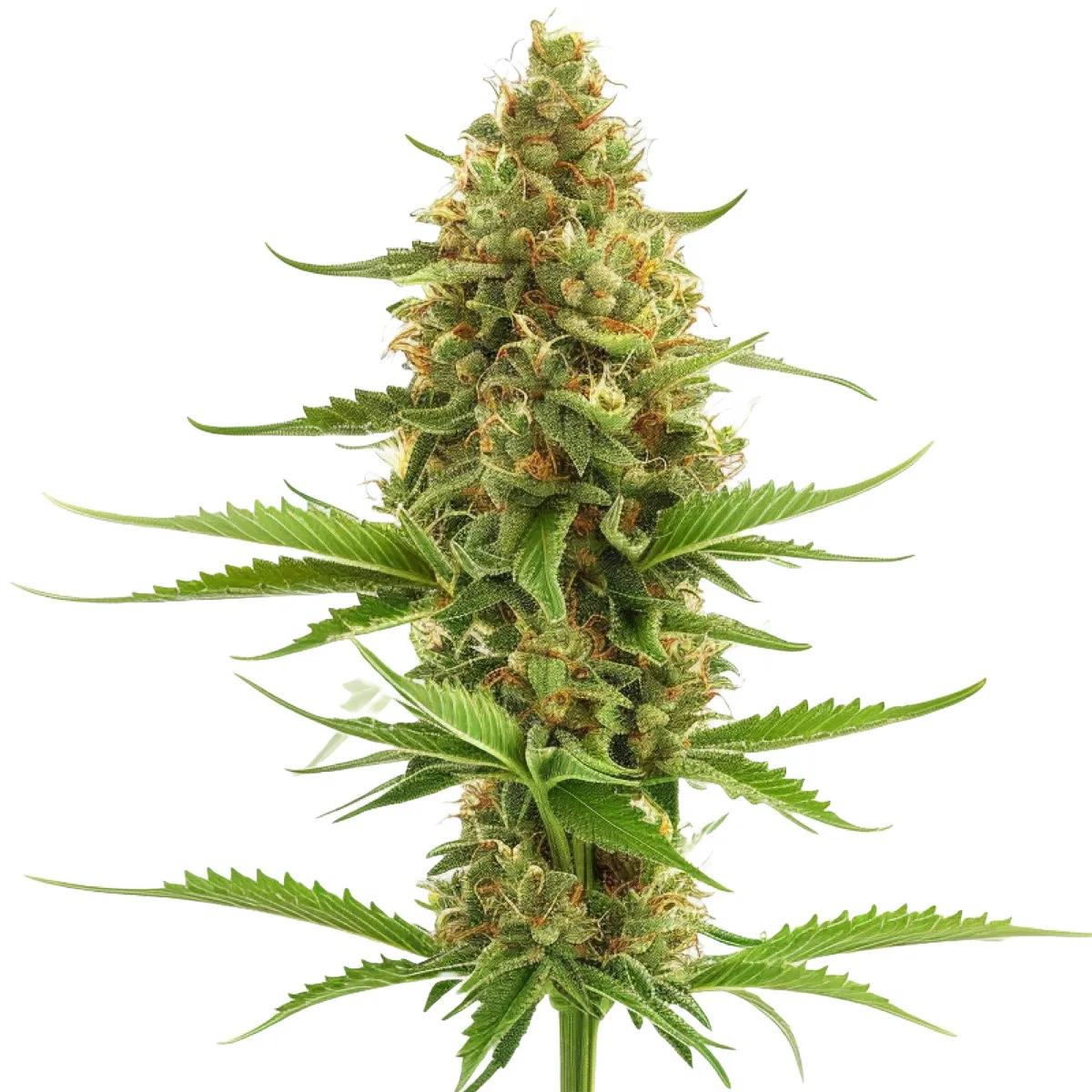
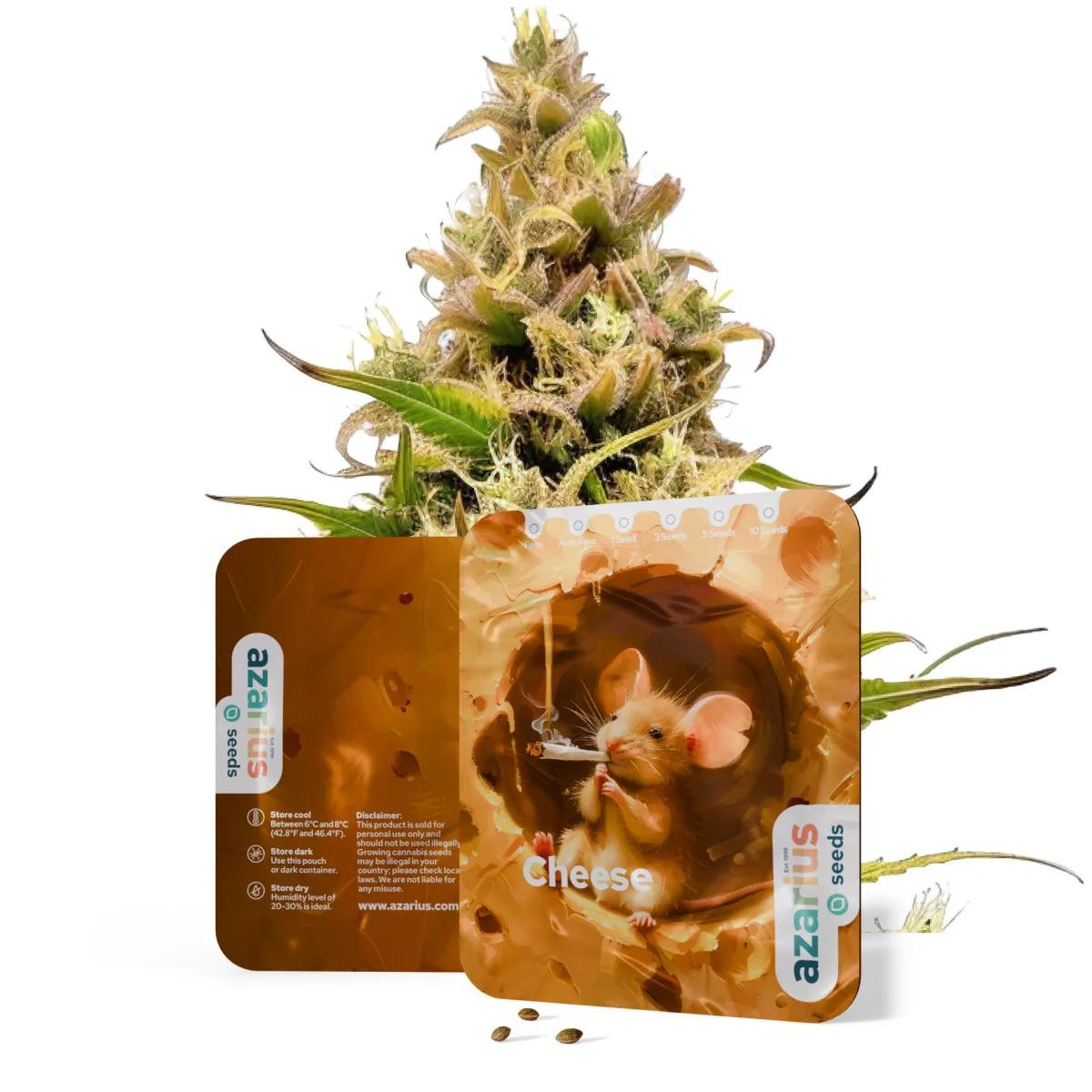
Cheese is a feminized indica-dominant hybrid that crosses Skunk #1 with Afghani genetics — a strain that earned its name from the unmistakable sharp, tangy funk it puts out during flowering. If you've spent any time around cannabis culture in the UK or the Netherlands, you've smelled Cheese before you ever knew what it was called. These cheese seeds produce stocky, resinous plants with dense colas and a terpene profile that hits somewhere between aged cheddar and fermented earth. At €7.95, this is one of the most affordable ways to grow a strain with genuine pedigree.
We've been stocking cheese seeds at Azarius since the mid-2000s, and it's one of those strains that never leaves the catalogue — not because of hype, but because growers keep coming back. It performs. Beginners get solid results. Experienced growers get exceptional yields. And the smoke? Blissful, heavy-limbed relaxation with a flavour that's impossible to confuse with anything else.
| Genetics | Skunk #1 × Afghani |
| Type | Feminized (photoperiod) |
| Indica / Sativa | ~60% Indica / 40% Sativa |
| Flowering Time | 8–9 weeks |
| Indoor Yield | 500–600 g/m² |
| Outdoor Yield | 600–700 g per plant |
| THC Content | 17–21% |
| CBD Content | <1% |
| Height | 80–140 cm (indoor), up to 180 cm (outdoor) |
| Climate | Temperate to warm; tolerates cooler nights |
| Difficulty | Easy — good for first-time growers |
| Price | €7.95 |
Cheese didn't come out of a breeding programme with a marketing budget. It came out of a squat. The original Cheese phenotype was reportedly selected from a batch of Sensi Seeds' Skunk #1 in the late 1980s or early 1990s, somewhere in the south of England. The grower — or growers, nobody's entirely sure — noticed one plant that smelled nothing like the rest. Instead of the typical skunky sweetness, it reeked of sharp, aged cheese. They cloned it. And cloned it again. And shared those clones across the UK's underground growing community.
By the mid-'90s, Cheese clones were circulating through the Exodus collective in Luton — which is why you'll sometimes see this strain called "Exodus Cheese." The Afghani genetics in the background gave it a stocky structure and heavy resin production, while the Skunk #1 backbone provided vigour and yield. The combination was accidental brilliance: a strain that practically grows itself, produces mountains of bud, and has a flavour profile that's instantly recognisable from across the room.
What makes this strain historically interesting is that it was clone-only for years. The feminized cheese seeds you can buy today are the result of breeders working backwards from those original clones, stabilising the genetics so the cheese phenotype expresses reliably from seed. That's no small feat — and it's why seed-grown Cheese can vary slightly from breeder to breeder. We'd say the version we stock captures the essence: that funky, savoury nose and the heavy, blissful body stone that made the original famous.
Here's the honest truth about growing Cheese: it's forgiving. If you're a first-time grower looking for a strain that won't punish you for imperfect humidity or a slightly off pH reading, Cheese is a solid pick. The Afghani genetics give it a sturdy, compact structure with thick stems that handle heavy buds without snapping. Indoors, expect plants between 80 and 140 cm — manageable in a grow tent as small as 80×80 cm, though you'll get better results with more space.
Flowering runs 8 to 9 weeks from the flip to 12/12. During the final two weeks, the smell becomes... significant. We're not exaggerating when we say Cheese is one of the most pungent strains you can grow indoors. A carbon filter isn't optional here — it's the difference between a discreet hobby and your entire building knowing what you're up to. The terpene profile is dominated by methyl butyrate and other short-chain fatty acid esters, which are the same compounds responsible for the smell of actual cheese. Nature has a sense of humour.
Indoor yields typically land between 500 and 600 g/m² under a 600W HPS or equivalent LED grow light. Outdoors, in a temperate climate with a decent summer, individual plants can push 600 to 700 g. Cheese handles cooler nights better than most strains — another gift from its Afghani parent. If you're growing in northern Europe, this is one of the few strains that can finish outdoors before October rains set in.
One thing to watch: Cheese plants tend to stretch during the first two weeks of flowering. If you're working with limited vertical space, flip early or use low-stress training (LST) to keep the canopy even. The side branches respond well to bending — they're flexible, not brittle. Topping once during veg gives you a bushier plant with more even bud sites, which Cheese rewards with dense, golf-ball-sized nugs across the canopy rather than one dominant cola.
Let's talk about what you actually taste when you smoke or vaporise Cheese. The initial hit is sharp and savoury — genuinely cheese-like, with a sour, almost fermented tang that coats the back of your throat. There's an earthy undertone from the Afghani genetics, and if you're using a dry herb vaporiser at lower temperatures (around 180–190°C), you'll pick up subtle sweet notes underneath the funk that get lost when you combust.
The dominant terpenes are:
The smell when you open a cured jar is something else entirely. It fills the room. We've had customers in the Amsterdam shop describe it as "old socks in the best possible way," which is oddly accurate. If you prefer subtle, floral strains, Cheese is not for you. If you like your cannabis loud and unapologetic, this is the one.
Cheese delivers a heavy, warm body stone paired with a gentle cerebral uplift. The onset is gradual — you'll feel it settle into your shoulders and lower back first, then spread outward. It's not couch-lock in the "can't move" sense, but more of a "don't want to move" contentment. The indica dominance shows up as deep physical relaxation, while the Skunk #1 sativa genetics keep your mind engaged enough that you're not just staring at the wall.
THC content typically falls between 17% and 21%, which puts Cheese in the moderate-to-strong range. It's not going to floor an experienced user, but it's more than enough for a satisfying evening session. For context, the European Monitoring Centre for Drugs and Drug Addiction (EMCDDA) reports that average THC levels in European herbal cannabis have risen to around 10–15% over the past decade — so Cheese sits comfortably above average without being overwhelming.
The effects last 2 to 3 hours when smoked, slightly longer when vaporised. Most users report:
The one downside: dry mouth. Cheese seems to cause more cottonmouth than average. Keep water nearby. It's a small price for what is otherwise one of the most pleasant, uncomplicated highs you can get from a single strain.
We get asked this constantly: "What's the difference between Cheese and Blue Cheese?" Blue Cheese is a cross of the original Cheese with Blueberry, which adds a fruity sweetness to the savoury funk and pushes the indica percentage higher. If regular Cheese is a sharp cheddar, Blue Cheese is a Stilton — still funky, but with a berry sweetness underneath.
In practical growing terms, Blue Cheese tends to be slightly shorter and more compact, with a marginally longer flowering time (9–10 weeks vs. 8–9 for standard Cheese). Yields are comparable. The effects of Blue Cheese lean more heavily sedative — better for sleep, less suited to socialising. If you want the classic Cheese experience with more versatility, stick with the original. If you want a nighttime knockout with a sweeter flavour, Blue Cheese is the move.
We stock both, and honestly, at €7.95 for Cheese seeds, you could grab a pack of each and run them side by side. That's the best way to find your preference.
Cheese seeds germinate reliably — another point in the strain's favour for beginners. Here's the method we recommend:
One tip from years of watching customers succeed and fail: the most common germination mistake is overwatering. The paper towels should be damp, not dripping. Cheese seeds are robust, but no seed survives drowning.
Cheese isn't fussy about nutrients, but it responds well to a moderate feeding schedule. During veg, a balanced NPK ratio works fine. During flowering, increase phosphorus and potassium while tapering nitrogen — standard practice, but Cheese rewards it with noticeably denser buds.
Environmental targets:
Cheese's dense bud structure means airflow is critical in the final weeks. If you're growing in a grow tent, make sure you've got an oscillating fan moving air through the canopy, not just an extraction fan pulling air out. Stagnant air between those tight buds is an invitation for botrytis (bud rot), and Cheese's density makes it more susceptible than airier sativa-leaning strains.
Harvest timing matters with Cheese. Check the trichomes with a jeweller's loupe or digital microscope — you're looking for mostly cloudy trichomes with about 10–20% amber. All cloudy gives you a more uplifting effect; more amber pushes toward heavier sedation. For the classic Cheese experience — relaxed but not comatose — aim for that 10–20% amber window.
Drying should take 7–10 days in a dark room at 18–20°C and 55–60% humidity. Don't rush this. Cheese's terpene profile develops significantly during a proper dry and cure. If you speed-dry at higher temperatures, you'll lose the cheese funk and end up with something that smells like hay. Nobody wants that.
Cure in glass jars for a minimum of 2 weeks, burping daily for the first week. Four weeks is better. Six weeks is where the flavour really peaks — the sharp cheese notes deepen and the earthy undertones become more pronounced. Patience pays off here more than with most strains.
Some strains are trendy. Cheese is not trendy. It's been around since the late '80s and it's still one of the most-grown strains in Europe. That kind of staying power doesn't come from marketing — it comes from consistent results. High yields, easy growing, distinctive flavour, and a reliable, enjoyable effect. We've sold thousands of packs of cheese seeds since 1999, and the return rate on this strain is essentially zero. People grow it, they like it, they grow it again.
At €7.95 per pack, Cheese is also one of the best-value feminized seeds in our catalogue. Compare that to newer boutique genetics that run €15–20 per seed and require precise environmental control to perform. Cheese doesn't need babying. It needs soil, light, water, and a carbon filter. That's it.
Cheese is a cross between Skunk #1 and Afghani. The original phenotype was selected from a batch of Skunk #1 in the UK in the late 1980s or early 1990s, chosen for its distinctive sharp, cheese-like aroma. The Afghani genetics contribute the compact structure, heavy resin production, and indica-dominant effects.
8 to 9 weeks from the switch to a 12/12 light cycle. Some phenotypes finish closer to 8 weeks, others push to 9. Check trichome colour rather than counting days — cloudy with 10–20% amber is the sweet spot for the classic Cheese effect.
Yes — Cheese is one of the most forgiving strains you can grow. It tolerates minor environmental fluctuations, resists most common pests, and doesn't require advanced training techniques to produce good yields. If this is your first grow, you could do a lot worse than Cheese.
Expect 500–600 g/m² under a 600W HPS or equivalent LED setup. With optimised conditions and techniques like topping or ScrOG, experienced growers push toward the higher end. Outdoors, individual plants can produce 600–700 g in a good season.
Yes. The terpene profile includes compounds (methyl butyrate and similar short-chain fatty acid esters) that are chemically identical to what gives aged cheese its smell. During late flowering, the odour is intense and unmistakable. A carbon filter is not optional if you're growing indoors.
"Exodus Cheese" refers to the original clone-only Cheese that circulated through the Exodus collective in Luton, UK. Modern feminized Cheese seeds are bred from those genetics but stabilised for seed production. The flavour and effects are very close to the original, though slight phenotypic variation is normal with seed-grown plants.
Yes. Cheese handles cooler nights better than most strains, thanks to its Afghani heritage. In temperate climates, it typically finishes by late September to early October — before the worst autumn weather hits. A dry October helps, but Cheese is more cold-tolerant than many alternatives.
Deep physical relaxation with mild uplifting and mood elevation. THC runs 17–21%, so it's strong but not overwhelming. Effects last 2–3 hours when smoked. Expect increased appetite, reduced tension, and a warm body stone that's more "contented" than "couch-locked." Dry mouth is the main side effect — keep water handy.
Keep them in a cool, dark, dry place — ideally 6–8°C (a fridge works). Store in the original sealed packaging or an airtight container with a silica gel packet to absorb moisture. Properly stored, cannabis seeds remain viable for 2–3 years, though germination rates are highest within the first year.
Medical disclaimer. This content is for informational purposes only and does not constitute medical advice. Consult a qualified healthcare provider before use of any substance.