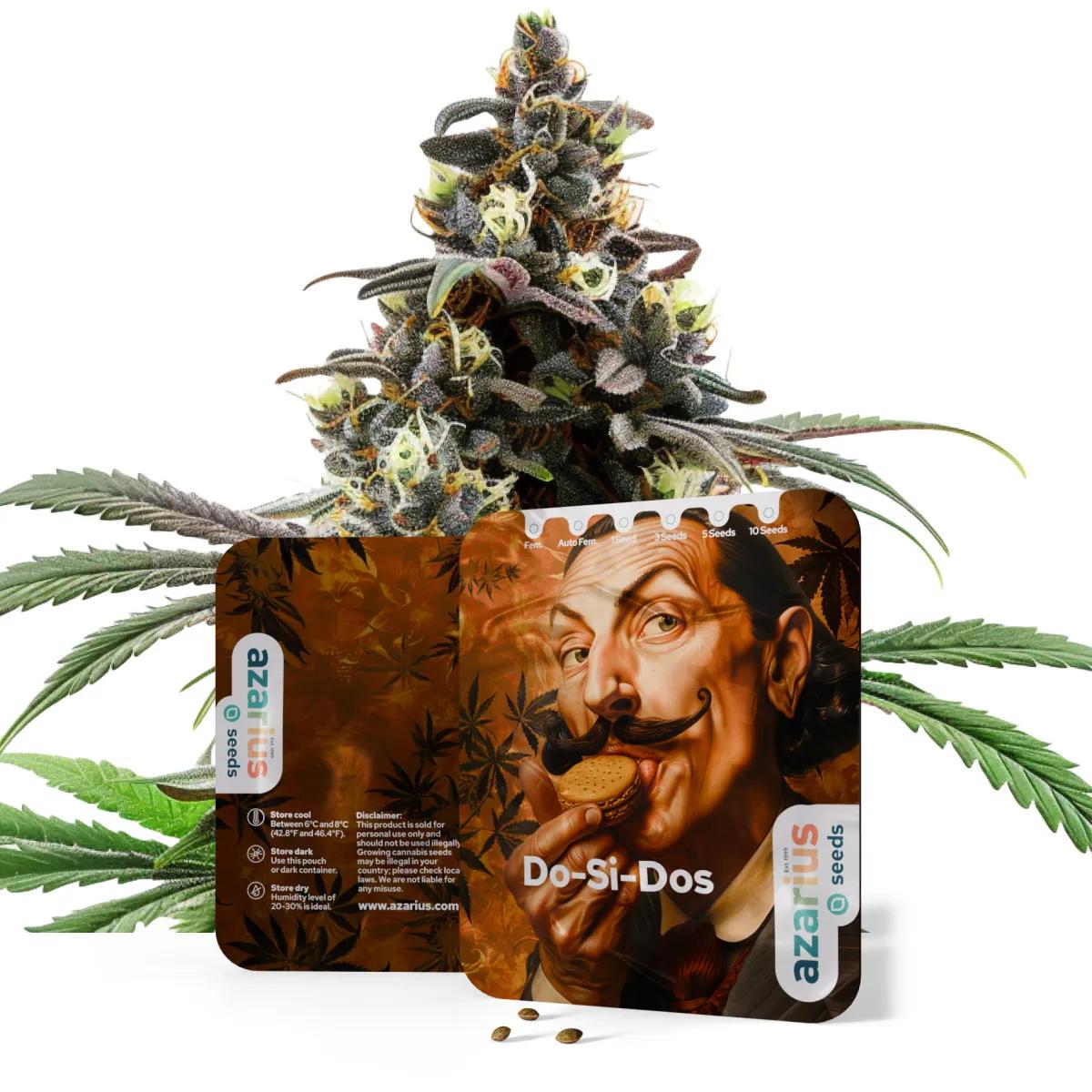
Feminized seeds
by Azarius
Do-Si-Dos is a feminized photoperiod cannabis seed producing an indica-dominant hybrid that finishes flowering in just 8–10 weeks. Bred from Do-Si-Dos crossed with its own autoflower counterpart, this strain delivers THC levels between 26–30% and coats every bud in a thick layer of trichomes. If you want dense, resinous harvests without waiting half the year, this is where you start.
| Pack | Seeds | Best for |
|---|---|---|
| 1 seed | 1 | Single-plant test run — see how she grows in your setup before committing |
| 3 seeds | 3 | Small tent or balcony grow, enough to fill a 60x60 or 80x80 space |
| 5 seeds | 5 | Standard indoor run with room for phenotype selection |
| 10 seeds | 10 | Serious growers who want to pheno-hunt or run a full canopy |
Do-Si-Dos plants stay compact — roughly 1.5 metres tall — which makes them manageable in a tent without aggressive training. The indica-dominant genetics keep internodal spacing tight, so you get a bushy structure with plenty of bud sites. Outdoors, expect 50–100 grams per plant. Indoors under proper lighting, yields push to 400–500 g/m².
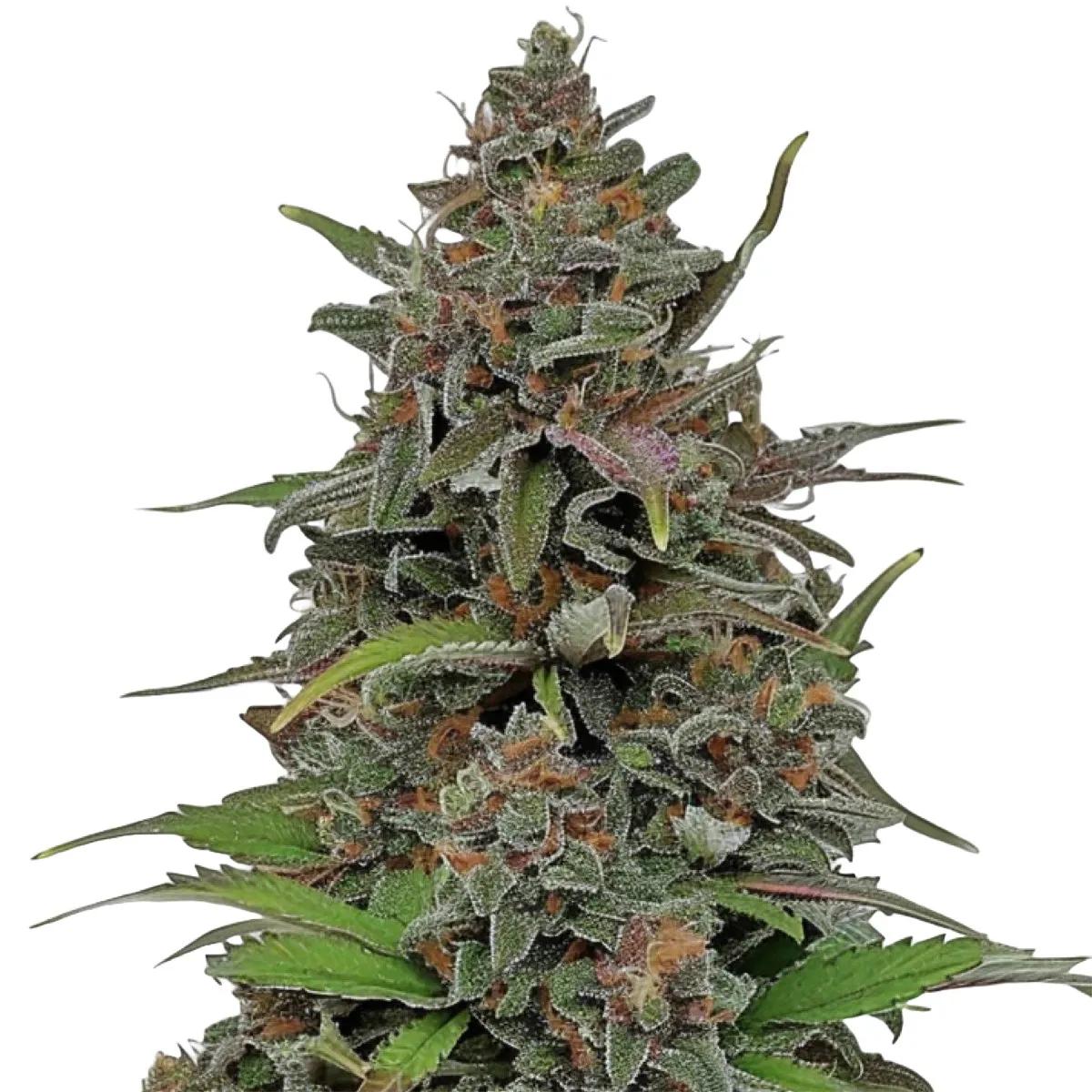
The resin production on this strain is genuinely impressive. We've seen customers bring in photos of their Do-Si-Dos harvests where the buds look like they've been rolled in sugar. That trichome coverage isn't just cosmetic — it's what pushes the THC content to that 26–30% range. If you're making extracts or concentrates, this is one of the better starting materials you'll find in feminized seed form.
One honest note: that 8–10 week flowering window is a range, not a guarantee. Most phenotypes lean closer to 9 weeks indoors. If you're running a tight schedule, don't bank on pulling at exactly 8 weeks — check your trichomes with a loupe and let the plant tell you when she's done.
The main terpenes in Do-Si-Dos are limonene, caryophyllene, and linalool. In practice, that translates to an earthy sweetness on the inhale with floral and citrus notes that come through on the exhale. It's not a one-note strain — there's genuine complexity in the flavour. Think damp forest floor mixed with lime zest and a faint lavender finish.
According to research published in Frontiers in Plant Science, terpenes like caryophyllene and linalool may interact with cannabinoid pathways, though a 2021 study in the same journal found that terpenes alone did not directly activate cannabinoid receptors at typical concentrations (Finlay et al., 2020). The flavour contribution, however, is undeniable — and it's what makes Do-Si-Dos stand out from blander high-THC strains.
If you've grown Girl Scout Cookies or OG Kush before, the terpene profile sits in similar territory but with more pronounced floral sweetness. Cure your buds properly — at least two weeks in glass jars with daily burping — and those flavours develop significantly.
Do-Si-Dos seeds are feminized and photoperiod, meaning you'll need to switch your light cycle to 12/12 to trigger flowering. The autoflower genetics in the parent cross contribute to the "fast version" flowering speed, but this is not an autoflower — you still control the veg period.
| Specification | Detail |
|---|---|
| Genetics | Do-Si-Dos x Do-Si-Dos Autoflower |
| Strain type | Indica-dominant hybrid |
| Flowering type | Photoperiod (feminized) |
| Flowering time | 8–10 weeks |
| THC content | 26–30% |
| Indoor yield | 400–500 g/m² |
| Outdoor yield | 50–100 g/plant |
| Plant height | Approximately 1.5 m |
| Main terpenes | Limonene, caryophyllene, linalool |
| Flavour | Earthy, sweet, floral, citrus |
Running Do-Si-Dos in a tent? Pair these seeds with a complete grow kit that includes lighting, ventilation, and a carbon filter — the dense buds on this strain produce a noticeable aroma from week 4 of flower. A jeweller's loupe or pocket microscope is also worth grabbing so you can check trichome ripeness before harvest.
We've been selling cannabis seeds since the early days of the online smartshop, and the strains that keep coming back in customer orders share a few traits: reliable germination, manageable plant size, and a finished product that actually impresses. Do-Si-Dos ticks all three.
The fast flowering time is the practical selling point. At 8–10 weeks, you're looking at a full cycle — seed to harvest — in under four months. Compare that to a pure sativa that can run 12–14 weeks in flower alone, and the efficiency becomes obvious. For growers who want to run multiple cycles per year or who simply don't want to babysit a plant for half the calendar, this strain makes sense.
The 26–30% THC range puts Do-Si-Dos in the upper tier of potency. That's not marketing fluff — it's a direct result of the heavy resin production and dense trichome coverage these genetics produce. If you've been growing strains in the 18–22% range and want to step up, Do-Si-Dos is a solid next move. The one thing to watch: those THC levels mean this isn't a strain for casual afternoon use. It hits hard and leans heavily toward body relaxation. Treat it as an evening strain and you'll get the most out of it.
Compared to something like Wedding Cake or Gelato — which sit in similar genetic territory — Do-Si-Dos tends to finish a week or two faster while delivering comparable resin output. If speed matters to you, that's a meaningful difference.
Do-Si-Dos delivers deep physical relaxation paired with a mood lift that takes the edge off a long day. The indica dominance means the body effects arrive first — a warmth that settles into your limbs — followed by a calm mental state that doesn't fog you out completely. It's the kind of strain where you'll still enjoy a conversation or a film, but you won't want to tackle anything requiring sharp focus.
Dosage guidance from strain databases consistently recommends starting low: one or two light inhales, then waiting 15 minutes before taking more. At 26–30% THC, overconsumption can lead to dry mouth, dizziness, or mild anxiety — particularly if you're not accustomed to high-potency strains. Keep water nearby. According to a large case series published in The Permanente Journal, cannabinoid compounds at varying doses showed effects on sleep and relaxation metrics, though individual responses varied considerably (Shannon et al., 2019).
A review in the National Academies of Sciences, Engineering, and Medicine found substantial evidence that cannabis is effective for certain types of chronic discomfort in adults, though the committee noted that more research is needed on strain-specific outcomes (NASEM, 2017). We mention this for context — not as medical advice.
Limonene, caryophyllene, and linalool. These give Do-Si-Dos its earthy-sweet base with citrus and floral top notes. Caryophyllene is the spicy one — it's also found in black pepper and cloves.
8–10 weeks from the switch to 12/12 lighting. Most phenotypes finish around week 9. Check trichome colour with a loupe rather than counting days — the plant knows better than the calendar.
Yes. The compact 1.5 m height and resilient genetics make it forgiving. The main thing to watch is humidity during late flower — dense buds can trap moisture. Keep your grow space below 50% RH from week 5 onwards.
400–500 g/m² under good lighting and proper nutrition. Outdoor plants produce 50–100 g each. Training techniques like LST or SCROG can push indoor yields toward the higher end of that range.
Dry mouth is the most reported. At 26–30% THC, overconsumption can cause dizziness or mild anxiety. Start with one or two inhales and wait before taking more — this strain hits harder than it looks.
This is a photoperiod strain — you control veg time and trigger flowering with a light change. Autoflowers flower on their own timeline regardless of light. The photoperiod version generally yields more and allows for training, but takes longer overall from seed to harvest.
Keep them in a cool, dark, dry place — a sealed container in the fridge works well. Properly stored seeds remain viable for 2–3 years. Bring them to room temperature before germinating.
Last updated: April 2026
Medical disclaimer. This content is for informational purposes only and does not constitute medical advice. Consult a qualified healthcare provider before use of any substance.