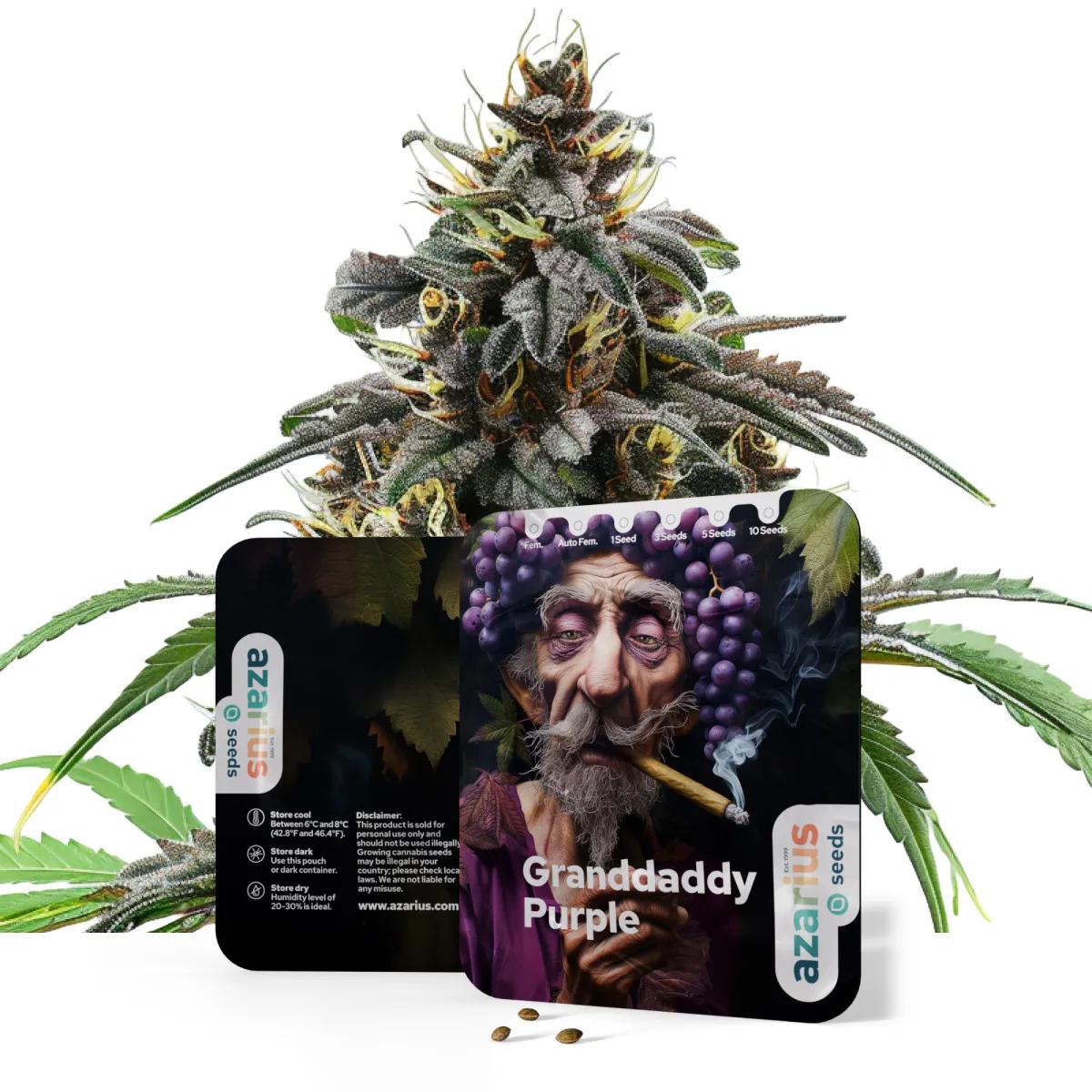
Feminized seeds
by Azarius
Granddaddy Purple is a feminized, mostly indica cannabis seed bred from Purple Urkle and Big Bud — two legendary parent strains that pass on dense bud structure, heavy resin production, and those unmistakable deep purple hues. With THC levels typically ranging between 17% and 24%, this photoperiod strain flowers in 8–10 weeks and rewards growers with berry-scented, frosty colas built for evening wind-down sessions. We've carried a lot of indica-dominant genetics over the years, and GDP remains one of the most requested — for good reason.
Granddaddy Purple feminized seeds come in packs of 1, 3, 5, and 10. Growing indoors in a typical 1m² space? Three to four plants will fill it nicely. If you're running an outdoor plot and want to select the best phenotype, grab the 10-pack — you'll get some variation in purple intensity and bud density, and picking your favourite is half the fun. First-timers who just want a single plant to learn with: the 1-seed option exists for exactly that reason.
| Specification | Detail |
|---|---|
| Genetics | Purple Urkle x Big Bud |
| Strain Type | Mostly Indica |
| Seed Type | Feminized |
| Flowering Type | Photoperiod |
| Flowering Time | 8–10 weeks |
| Indoor Yield | 450–500 g/m² |
| Outdoor Yield | 600–700 g/plant |
| Outdoor Plant Height | Approx. 1.5 metres |
| THC Range | 17–24% |
| Flavour Profile | Berry, fruity, sweet undertones |
| Available Packs | 1, 3, 5, 10 seeds |
Complete your grow setup with a Dark Box grow tent and a carbon filter kit — GDP can get pungent during late flower, and your flatmates will appreciate the discretion. If you're after a contrasting daytime strain to complement your evening GDP harvest, take a look at a sativa-dominant variety like Amnesia Haze.
GDP solves a specific problem: you want an indica that actually looks and tastes as good as it performs. Plenty of indica-dominant strains deliver on relaxation but hand you bland, generic buds that could be anything. Granddaddy Purple is different. The Purple Urkle parent brings that signature grape-and-berry terpene profile alongside the deep purple colouring, while Big Bud contributes the yield and bud density that makes the whole grow worth your time and electricity.
From a practical standpoint, this strain stays manageable indoors — around 1.5 metres outdoors, and shorter still under a screen of green. The 8–10 week flowering window is standard for a heavy indica, and the 450–500 g/m² indoor yield puts it solidly in the "worth the tent space" category. Outdoors, 600–700 g per plant is realistic in a decent climate with full sun. We'd pick GDP over a pure Big Bud cross if flavour matters to you, and over a pure Purple Urkle if yield matters. It genuinely splits the difference well.
One honest limitation: GDP can be a magnet for mould during the final two weeks of flowering if humidity creeps above 50%. Those dense, tightly packed buds trap moisture. If you're growing in a tent, keep your extraction fan running and consider a dehumidifier for late flower. Outdoor growers in damp climates should watch the weather forecast like a hawk around harvest time. It's not a deal-breaker — it's just the trade-off you accept for bud density this high.
Crack open a cured jar of Granddaddy Purple and the first thing that hits you is grape. Not artificial grape — more like a punnet of dark berries left in the sun. There's a sweet, almost candy-like undertone underneath, with a hint of earthiness that rounds it out on the exhale. The terpene profile leans heavily on myrcene and pinene, which accounts for that berry-forward, slightly piney character.
During late flower, the plants themselves fill a room with a sweet, fruity scent that's hard to mistake for anything else. If you've grown other purple strains before, GDP is in that same family but noticeably sweeter and less earthy than, say, a Grape Ape. The flavour holds up well whether you're vaporising at low temperatures or using a more traditional method — the berry notes come through clearly either way.
GDP is a solid choice if you've got one or two grows under your belt. It's not the most demanding strain we sell, but it does reward attention to detail — especially around humidity control and feeding during the bloom phase.
Granddaddy Purple delivers what you'd expect from a heavy indica cross: physical relaxation, a sense of contentment, and a gentle sociability that makes it a good evening strain when you're winding down with friends rather than heading out. Users consistently report happy, talkative vibes without the couch-lock that some pure indicas can bring on.
According to Healthline's guide to indica strains, Granddaddy Purple is listed specifically as a strain associated with relaxation. Research published in the Journal of Psychopharmacology and reviewed by sources like WebMD notes that indica-dominant strains with THC content in the 17–24% range tend to produce pronounced physical effects. According to Medical News Today, cannabinoids like CBD may contribute to relaxation, though GDP's profile leans heavily toward THC.
A word on dosage from the research: with THC levels between 17% and 24% depending on growing conditions, GDP sits in the moderate-to-strong range. According to multiple sources, including community guides, newcomers to high-THC strains should start low — a small amount — and wait before having more. Common side effects reported across the research include dry mouth and dry eyes. According to safety data reviewed in competitive analyses, individuals with a family history of psychotic disorders should exercise caution with high-THC strains. And if you're taking medications like benzodiazepines, be aware that cannabis may increase side effects such as drowsiness and dizziness.
We've stocked Granddaddy Purple seeds since before "purple strains" became an Instagram category. The number one question we get in the shop is: "Will it actually turn purple?" The honest answer: almost certainly yes, but the intensity varies. Cooler nighttime temperatures during flower — around 15–18°C — bring out deeper colours. If you're growing in a warm tent year-round without temperature drops, you'll still get purple tones, but they'll be more subtle. The genetics are there; the environment decides how loudly they express.
The second most common question: "Is it actually good for a beginner?" We'd say it's a strong second grow. Your absolute first grow, you might want something more forgiving of humidity mistakes — Northern Lights is the classic recommendation there. But if you've harvested one plant successfully and understand the basics of airflow and feeding, GDP won't give you trouble. It's a resilient plant with good pest resistance; the main risk is mould in those fat colas, and that's manageable with a decent fan setup.
Eight to ten weeks from the switch to 12/12 lighting. Most phenotypes finish closer to 9 weeks. Check trichome colour with a jeweller's loupe rather than relying on the calendar alone — milky trichomes with some amber is the sweet spot for GDP.
Berry and grape dominate, with a sweet, almost candy-like undertone and a touch of earthiness. The flavour intensifies with a proper 2–4 week cure in glass jars. It's one of the tastiest indica-dominant strains we carry.
Around 450–500 g/m² indoors with proper lighting and training. Outdoors, expect 600–700 g per plant in a good climate. These numbers assume adequate light (400W+ HPS or equivalent LED), appropriate pot size, and a proper feeding schedule.
Dry mouth and dry eyes are the most commonly reported side effects. At higher doses, some users report dizziness. According to safety research, people taking CNS depressants or benzodiazepines should be aware that cannabis may increase drowsiness and confusion.
Yes — it does well outdoors and reaches about 1.5 metres in height. The main thing to watch is humidity during the final weeks of flowering. Those dense buds can trap moisture, so harvest before extended rainy periods if possible.
Drop nighttime temperatures to 15–18°C during the last 2–3 weeks of flower. The anthocyanin pigments responsible for purple colouring express more strongly with a temperature differential between day and night. Good genetics do most of the work — the environment just dials it up.
Both are indica-dominant, but GDP has a fruitier, berry-forward flavour and produces purple buds, while Northern Lights is earthier and more forgiving of growing mistakes. Northern Lights is the better first-time grow; GDP is the better choice once you've got humidity control sorted.
Last updated: April 2026
Medical disclaimer. This content is for informational purposes only and does not constitute medical advice. Consult a qualified healthcare provider before use of any substance.