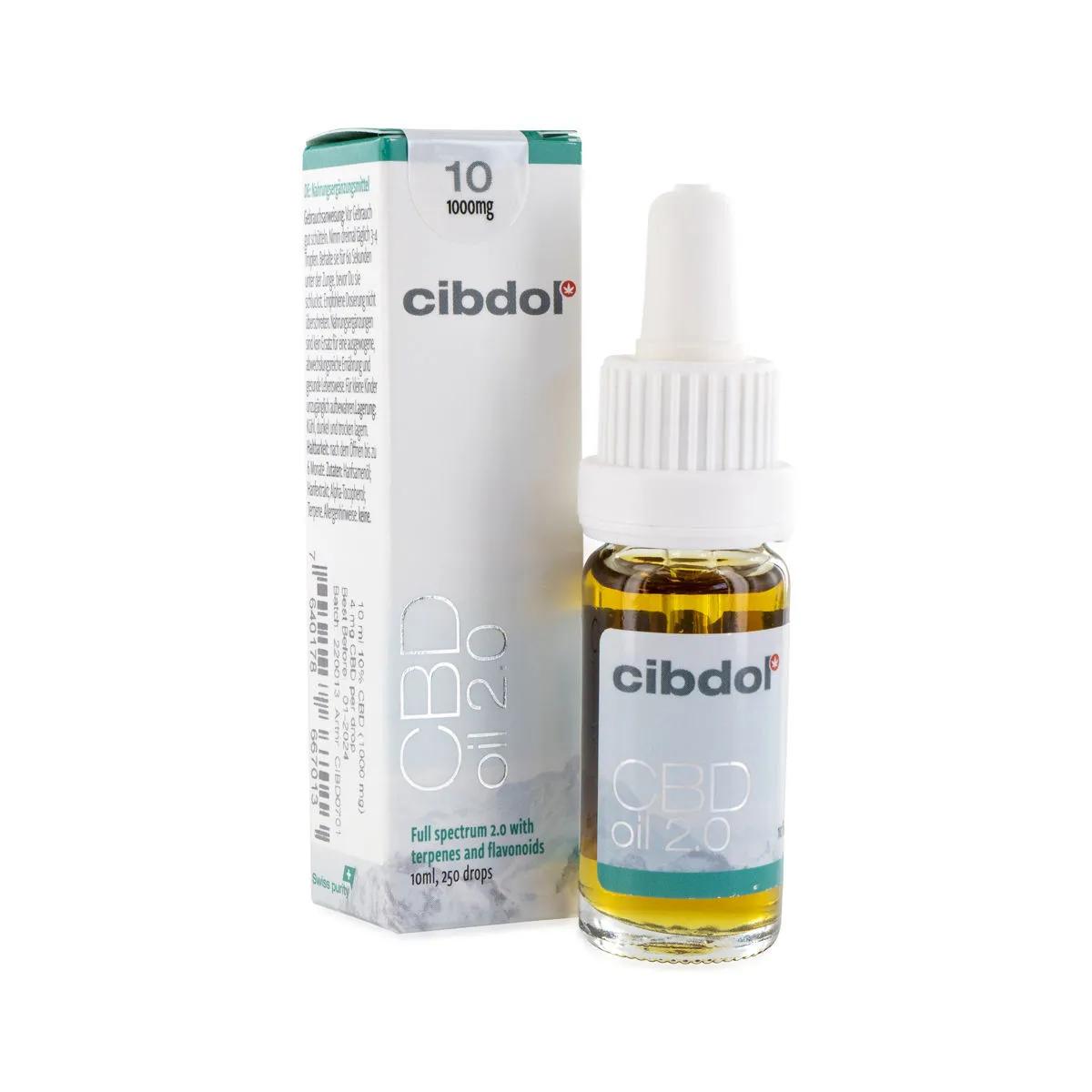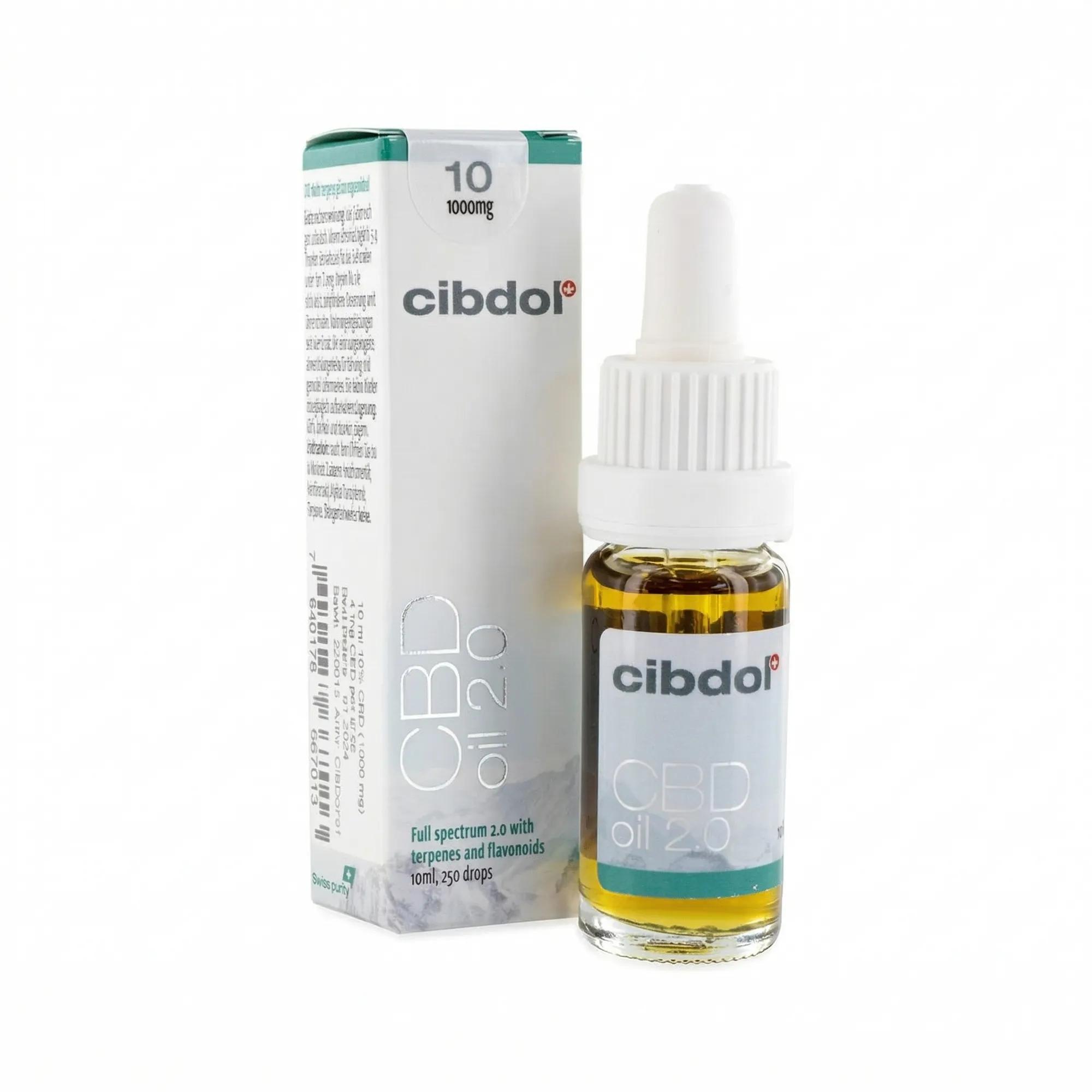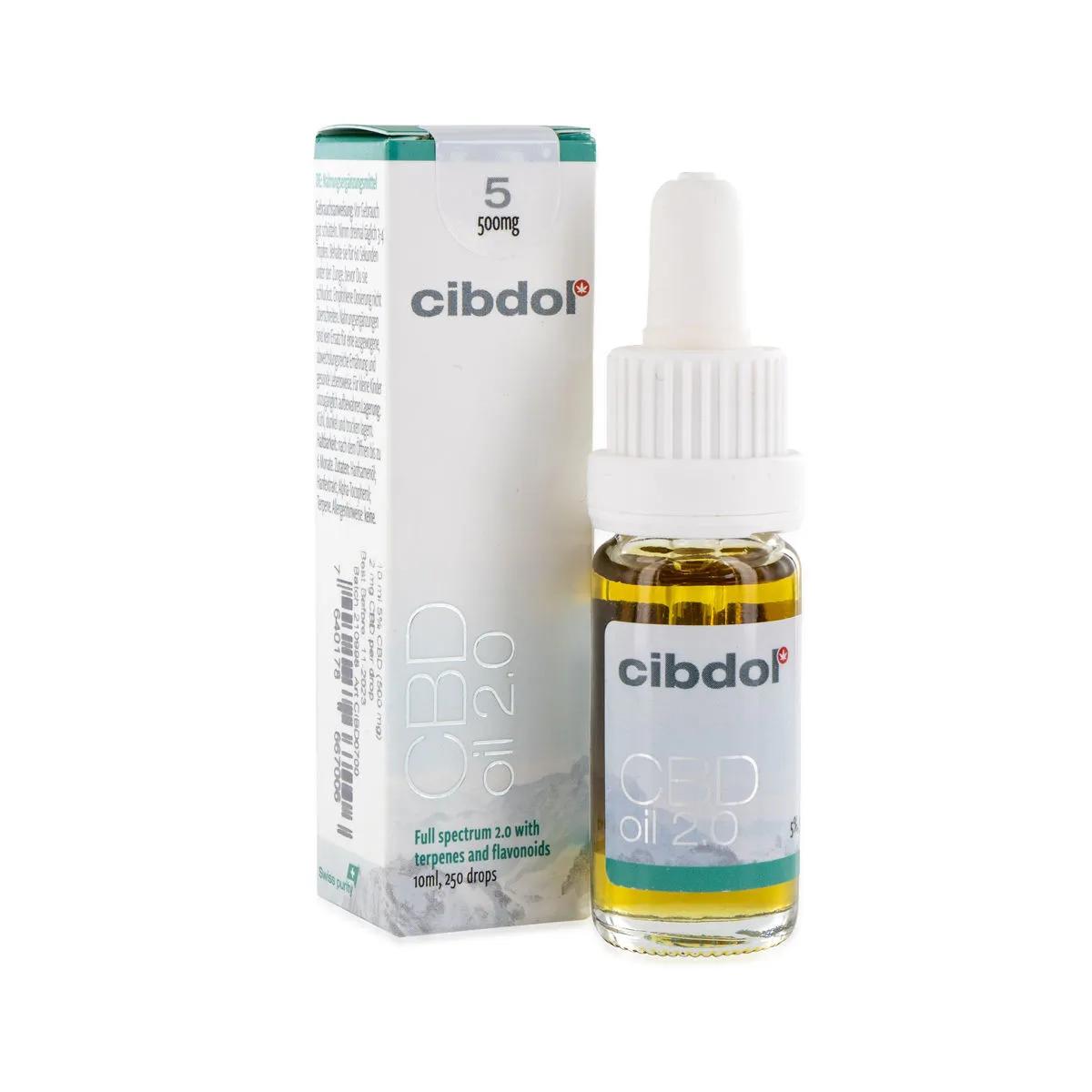
CBD oil
by Cibdol
We'll only email you about this product — no marketing.
Cibdol CBD Oil 5% is a full-spectrum CBD oil that delivers 500 mg of cannabidiol in 10 ml of hemp seed oil, with a standardised 2 mg per drop. This is Cibdol's 2.0 formula — not just CBD on its own, but a controlled blend of secondary cannabinoids (CBC, CBG, CBN, and CBDA) added at consistent levels so every bottle matches the last. If you're new to CBD oil and want to start low without guessing, 5% keeps the maths honest: one drop, two milligrams, no calculator required.
Most CBD oils give you whatever survived the extraction process. Some batches have trace amounts of minor cannabinoids, some have almost none — you never quite know. Cibdol took a different approach with the 2.0 formula: they add standardised levels of four secondary cannabinoids back into every batch, so the profile stays consistent bottle to bottle.
Here's what's in there beyond CBD:
The point isn't just having more cannabinoids — it's having the same ones in the same amounts every time. That matters when you're tracking how a particular dose affects you over weeks. You're not playing a lucky dip with your cannabinoid profile.
Forget percentages for a moment. The number that actually matters is milligrams per dose, and with the 5% concentration, each drop delivers exactly 2 mg of CBD. Cibdol recommends starting with 3 drops (6 mg), up to 3 times daily. That gives you a daily range of 6–24 mg depending on how you build up.
| Drops | CBD per dose | Use case |
|---|---|---|
| 1 drop | 2 mg | Micro-dose, testing tolerance |
| 3 drops | 6 mg | Cibdol's standard starting dose |
| 4 drops | 8 mg | Slight step up after the first week |
| 3 drops, 3x daily | 18 mg | Cibdol's full recommended daily use |
According to general dosing guidance, a safe starting point is approximately 5–10 mg of CBD daily, observing your body's response over a few days. Increasing by small increments every 3–4 weeks is a common approach referenced in clinical literature. At 3 drops once a day, you're right in that starter window with room to adjust.
The carrier here is hemp seed oil, which gives it a clean, nutty flavour — earthy but not unpleasant. It's not going to win any taste awards, but it sits well under the tongue without that bitter, grassy punch you get from some cheaper oils. The consistency is thin enough that drops fall easily from the pipette without clumping.
One honest note: sublingual CBD isn't instant. You're not going to feel a switch flip after 3 drops. Most people we speak to at the counter notice a cumulative effect after consistent daily use over 1–2 weeks. If you're expecting something dramatic from 6 mg, you'll be disappointed. That's not a flaw — that's how low-dose CBD works.
| Specification | Detail |
|---|---|
| Brand | Cibdol |
| Formula | 2.0 (enhanced cannabinoid profile) |
| CBD concentration | 5% (500 mg per bottle) |
| CBD per drop | 2 mg |
| Drops per bottle | 250 |
| Bottle size | 10 ml |
| Carrier oil | Hemp seed oil |
| Additional cannabinoids | CBC, CBG, CBN, CBDA |
| Spectrum | Full-spectrum |
| Lab testing | IFHA independently tested |
| Vegan | Yes |
| SKU | CB0074 |
We've sold CBD oil since it first appeared in smartshops, and the most common mistake new users make is starting too high. Someone buys the 20% because "more is better," takes 3 drops (that's 24 mg per drop at 20%, so 72 mg in one go), and then wonders why they feel groggy. According to a WHO Critical Review Report, common adverse effects at higher doses include fatigue and somnolence — observed at rates of 36% for somnolence versus 10% in placebo groups. Starting at 2 mg per drop gives you granular control. You can increase by a single drop (2 mg) at a time instead of jumping in 10–20 mg increments.
The 5% is also the best option if you're price-conscious and want to figure out whether CBD does anything for you before committing to a stronger bottle. At 250 drops, you've got roughly 12 weeks of supply at the starter dose of 3 drops daily. That's enough time to know if it's worth continuing.
If you've been on 5% for a month or two and find yourself taking 8–10 drops per dose, that's a sign to move up to the Cibdol CBD Oil 10% — same 2.0 formula, same consistency, just 4 mg per drop instead of 2. Saves you counting out half the bottle.
CBD research is still catching up to public interest, but there's a growing body of clinical work worth knowing about. According to a large case series published in The Permanente Journal (Shannon et al., 2019), anxiety scores decreased and remained decreased during the study period in an outpatient psychiatric population taking CBD. Sleep scores, however, showed no sustained improvement over the 3-month study — a reminder that CBD isn't a blanket fix for everything.
According to Healthline, cannabis has been used to address pain since 2900 B.C. in Chinese medicine, and researchers suggest components like CBD may be responsible for some of those effects. Meanwhile, a 2020 review in Cannabis and Cannabinoid Research noted that clinical studies have examined CBD for conditions ranging from epilepsy management to cognitive dysfunction in psychiatric disorders, though many of these studies used doses far higher than what you'd get from a 5% oil.
The honest takeaway: low-dose CBD oil like this 5% isn't a medicine. It's a daily supplement that some people find meaningfully useful and others don't notice much from. The only way to know which camp you're in is to try it consistently for a few weeks.
CBD is generally well tolerated at standard supplemental doses. According to the WHO Critical Review Report on cannabidiol, the most commonly reported adverse effects in clinical settings include loss of appetite (28% vs 5% placebo), somnolence (36% vs 10%), fatigue, and gastrointestinal discomfort. These figures come from clinical trials using pharmaceutical-grade CBD at doses of 10–20 mg per kilogram of body weight — far higher than the 6–18 mg daily range you'd get from this oil.
The one thing to take seriously: CBD interacts with cytochrome P450 liver enzymes, which are responsible for metabolising a wide range of medications. If you're taking blood thinners, anti-epileptics, certain antidepressants, or other prescription medications, speak with your doctor before adding CBD oil to your routine. This isn't a vague precaution — it's a well-documented pharmacological interaction that can alter how your body processes other drugs.
If you find the 5% works well and you want to cut down on drop-counting, the Cibdol CBD Oil 10% doubles the per-drop strength with the same 2.0 formula. For targeted use before bed, pair it with Cibdol Meladol — a CBD and melatonin formula designed specifically for nighttime. And if you'd rather skip the oil entirely, Cibdol CBD Capsules give you a pre-measured dose with no taste and no pipette.
Cibdol recommends 3–4 drops up to 3 times daily. Each drop delivers 2 mg of CBD, so 3 drops gives you 6 mg per dose. Start with 3 drops once a day and hold under the tongue for 60 seconds. Adjust after a week based on how you feel.
At 6 mg per dose, most people don't feel an obvious "effect" the way you might with a painkiller. It's subtler than that — many of our customers describe it as a general sense of taking the edge off after a week or two of consistent use. Don't expect fireworks from the first drop.
According to the WHO Critical Review Report, the most common side effects at clinical doses include fatigue, somnolence, dry mouth, and reduced appetite. At the low doses in a 5% oil (6–18 mg daily), side effects are uncommon. If you feel unusually drowsy, reduce your dose by a drop.
Concentration per drop. The 5% gives you 2 mg per drop; the 10% gives you 4 mg per drop. Same Cibdol 2.0 formula, same hemp seed oil carrier, same bottle size. If you're new, start with 5%. If you already know you need 15–20 mg per dose, the 10% saves you counting out ten drops.
CBD inhibits cytochrome P450 enzymes in the liver, which metabolise many common medications including blood thinners, anti-epileptics, and some antidepressants. If you take prescription medication, talk to your doctor before starting CBD oil. This is a documented pharmacological interaction, not a generic disclaimer.
Cibdol's 2.0 formula adds standardised amounts of CBC, CBG, CBN, and CBDA to the full-spectrum CBD extract. Standard oils rely on whatever minor cannabinoids survive extraction, which varies batch to batch. The 2.0 approach gives you a consistent cannabinoid profile every time.
At Cibdol's starting dose of 3 drops once daily, the bottle contains roughly 83 days' worth — nearly 3 months. At the maximum recommended dose of 4 drops three times daily (12 drops), it lasts about 20 days. Most people land somewhere in between.
Full-spectrum. It contains the full range of cannabinoids, terpenes, and flavonoids from the hemp plant, plus the additional standardised cannabinoids in the 2.0 formula. Full-spectrum oils are thought to produce a broader entourage effect compared to CBD isolate.
Last updated: April 2026
Medical disclaimer. This content is for informational purposes only and does not constitute medical advice. Consult a qualified healthcare provider before use of any substance.