CBD topicals
by Cibdol
We'll only email you about this product — no marketing.
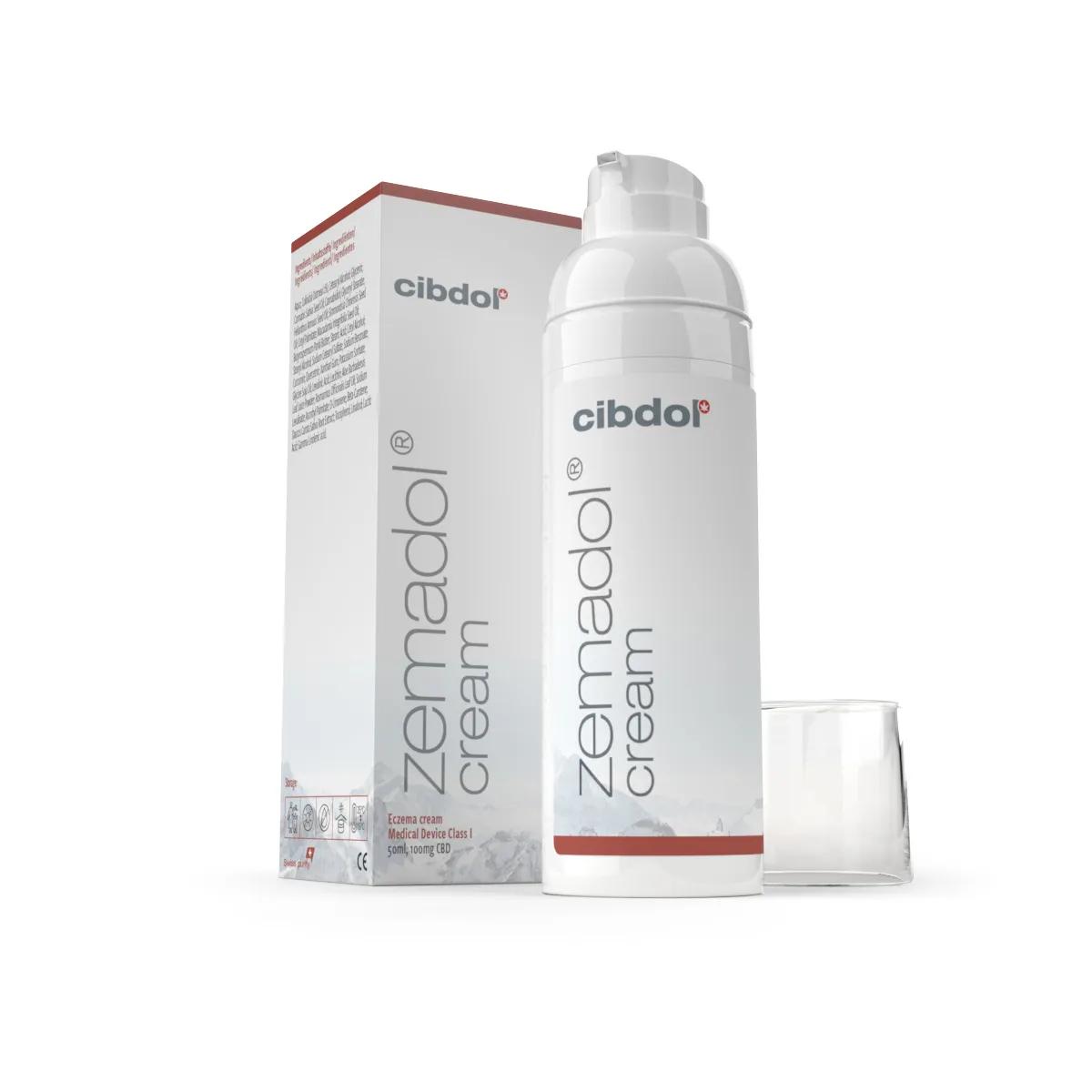
Zemadol is a CBD-infused cream classified as a Class I medical device, designed by Cibdol to support the recovery of irritated, dry skin associated with atopic dermatitis (eczema). What separates it from a standard moisturiser is the liposome delivery system — tiny lipid spheres that carry CBD in its unadulterated form directly into skin cells at higher concentrations, where it metabolises at a slower rate. The result is a cream that doesn't just sit on the surface. It actually gets where it needs to go.
If you've dealt with eczema flare-ups, you already know the cycle: dry skin, itching, scratching, cracking, repeat. According to a systematic review by van Zuuren and colleagues (2017), the mean duration of clinical studies on emollients for atopic dermatitis was just 6.7 weeks, with a mean patient age of 18 — showing that even short-term emollient use is a well-studied intervention (PMC5908267). Zemadol fits into that emollient category, but with the added dimension of cannabidiol delivered via liposomes.
Most over-the-counter eczema creams are straightforward emollients — they form a barrier on the skin to lock in moisture. They work, broadly speaking. According to a Cochrane review (PMC6464068), most moisturisers appeared to be effective for eczema, with 24 studies reporting participant-assessed severity improvements (PMC6464068). So the bar isn't high: keep the skin hydrated and you're already doing something useful.
Zemadol goes a step further with two specific technologies. First, the 100 mg of CBD per 50 ml tube. Second — and this is the bit that actually matters — the liposome encapsulation. Liposomes are microscopic lipid vesicles, essentially tiny fat bubbles that mimic the structure of cell membranes. Because your skin cells recognise them as "friendly," they absorb more readily than a standard cream base. Cibdol uses this to deliver CBD at concentrations that a regular topical simply can't match, and the slower metabolisation rate means the CBD stays active in the skin for longer.
We've had customers come back after trying three or four different eczema creams before landing on Zemadol. The texture is noticeably richer than most CBD topicals — it's a proper cream, not a watery lotion. Slightly thick on application, but it absorbs within a couple of minutes without leaving a greasy film. The scent is neutral, almost clinical, which is actually a plus if your skin is already irritated and you don't want fragrance compounds making things worse.
| Specification | Detail |
|---|---|
| Brand | Cibdol |
| Product type | CBD eczema cream (Class I medical device) |
| Size | 50 ml |
| Total CBD | 100 mg |
| CBD per ml | 2 mg |
| Delivery system | Liposome encapsulation |
| Target condition | Atopic dermatitis (eczema), dry and irritated skin |
| Fragrance | Neutral / minimal |
| Application | Topical — apply to affected areas |
At 100 mg CBD across 50 ml, each millilitre delivers approximately 2 mg of CBD. That's a moderate concentration for a topical, but the liposome delivery system means a higher percentage of that CBD actually reaches the target cells compared to a cream that simply mixes CBD into a standard base. Think of it this way: it's not just about how much CBD is in the tube — it's about how much your skin can actually use.
Eczema isn't just dry skin. Atopic dermatitis involves a compromised skin barrier, immune system overreaction, and chronic inflammation that cycles between flare-ups and remission. A basic moisturiser addresses one piece of that puzzle — the barrier function — but leaves the rest untouched.
According to a review in the Journal of Allergy and Clinical Immunology (2023), topical treatments for atopic dermatitis range from emollients to corticosteroids to newer options like JAK inhibitors, each targeting different aspects of the condition (PubMed 37678572). Zemadol sits in the emollient-plus category: it provides the moisture barrier your skin needs while delivering CBD through liposomes to the deeper layers where the irritation actually lives.
The honest limitation here: Zemadol is not a prescription medication. If you're dealing with severe eczema that's cracking, weeping, or covering large areas of your body, you need a dermatologist, not a cream from a smartshop. But for mild to moderate flare-ups — the kind where your forearms get dry and itchy in winter, or your hands crack from washing — this is a solid daily-use option that goes beyond what a standard emollient offers. We've been stocking Cibdol products since they launched, and Zemadol is one of the few CBD topicals where customers consistently come back for a second tube.
One practical tip from behind the counter: apply Zemadol right after showering, while your skin is still slightly damp. This locks in more moisture and gives the liposomes a better environment to work with. Avoid using it immediately after hot baths — heat opens pores but also increases sensitivity, and you want the cream to soothe, not sting.
Liposomes are spherical vesicles made from phospholipid bilayers — the same type of fat molecules that make up your cell membranes. When CBD is encapsulated inside a liposome, it essentially gets a biological passport through the outer layers of your skin. Standard creams rely on passive absorption, which means most of the active ingredient sits on the surface and gets wiped off on your clothes. Liposomal delivery bypasses that problem.
Cibdol uses this technology specifically because CBD is lipophilic (fat-soluble) — it naturally integrates well with liposomal structures. The result is that the 100 mg of CBD in Zemadol reaches the deeper epidermal layers in higher concentrations and metabolises more slowly than it would in a conventional cream. You're getting more bang for your milligram, essentially.
Compared to Cibdol's Soridol (designed for psoriasis) or their Aczedol (for acne-prone skin), Zemadol is specifically formulated for the dry, flaky, itchy profile of atopic dermatitis. If your skin issue is more oily or involves breakouts, Aczedol is the better pick. If you're dealing with thick, scaly patches, Soridol targets that. Zemadol is the one for classic eczema — dry, irritated, and reactive.
We get a lot of customers asking whether CBD cream "actually does anything" for eczema, and the honest answer is: it depends on your expectations. If you're expecting a miracle cure that clears eczema permanently, no topical product will deliver that — not Zemadol, not prescription corticosteroids, not anything. Eczema is a chronic condition with a genetic component.
What we've seen over years of stocking this product is that people who use Zemadol consistently — daily, not just during flare-ups — report noticeably less dryness and irritation. The liposome technology seems to make a genuine difference compared to CBD creams that just mix cannabidiol into a standard base. The texture is thicker than most CBD topicals we carry, which some people love and others find takes a moment to get used to. It doesn't pill under clothing, which is a common complaint with cheaper eczema creams.
One thing to watch out for: if you're using topical corticosteroids prescribed by your GP, don't layer Zemadol on top without checking first. According to StatPearls (NCBI Bookshelf), potent topical corticosteroids require careful management, particularly for sensitive areas (NBK532940). Zemadol isn't a steroid and won't interact in the same way, but applying multiple topicals to compromised skin without medical guidance is never a good idea.
If you're building a complete CBD skincare routine, Zemadol pairs well with Cibdol's CBD lip balm for dry, cracked lips — another common eczema trouble spot. For internal support, Cibdol's CBD oil range lets you combine topical and oral CBD. And if your eczema is primarily on your hands, consider picking up a pair of cotton gloves to wear overnight after applying Zemadol — it keeps the cream in contact with your skin for hours.
| Feature | Zemadol (Cibdol) | Standard CBD Cream | Non-CBD Emollient |
|---|---|---|---|
| CBD content | 100 mg per 50 ml | Varies (50–500 mg) | None |
| Delivery system | Liposome encapsulation | Standard cream base | Standard cream base |
| Skin penetration | Deep epidermal layers | Surface to mid-layers | Surface barrier only |
| Classification | Class I medical device | Cosmetic (typically) | Cosmetic or OTC |
| Target condition | Atopic dermatitis specifically | General skin irritation | Dry skin broadly |
| Metabolisation rate | Slower (liposomal) | Standard | N/A |
The Class I medical device classification is worth noting. It means Zemadol has been assessed for safety and performance under EU medical device rules — it's not just a cosmetic cream with CBD sprinkled in. That distinction matters if you're choosing between this and a generic CBD body lotion that happens to mention eczema on the label.
No. Zemadol is a topical CBD eczema cream by Cibdol. Zamadol is a completely different product — an oral tramadol-based painkiller. The names are similar but they have nothing in common. Zemadol contains cannabidiol and is applied to the skin only.
Each millilitre contains approximately 2 mg of CBD. A typical application uses about 0.5–1 ml depending on the area covered, so you're looking at roughly 1–2 mg of CBD per application. The liposome delivery means more of that CBD actually reaches the target cells compared to standard creams.
Zemadol is formulated for atopic dermatitis and can be applied to facial skin affected by eczema. Avoid the eye area and any broken or weeping skin. If your eczema is primarily facial, test on a small patch first — facial skin is thinner and more reactive than body skin.
No. Zemadol absorbs within 2–3 minutes and doesn't leave a greasy residue or visible marks on fabric. Wait until it's fully absorbed before dressing, and you won't have any staining issues.
If you're using topical corticosteroids or calcineurin inhibitors, speak to your GP before layering Zemadol on the same area. Using multiple topicals on compromised skin without guidance can affect absorption rates. Zemadol is not a steroid and contains no prescription-strength active ingredients.
With 2–3 daily applications to a localised area (hands, elbows, or a small patch), a 50 ml tube typically lasts 3–5 weeks. Larger coverage areas will use it faster. Most customers treating forearm or hand eczema get about a month per tube.
Last updated: April 2026
Medical disclaimer. This content is for informational purposes only and does not constitute medical advice. Consult a qualified healthcare provider before use of any substance.