Harvest & curing
by Black Leaf
We'll only email you about this product — no marketing.
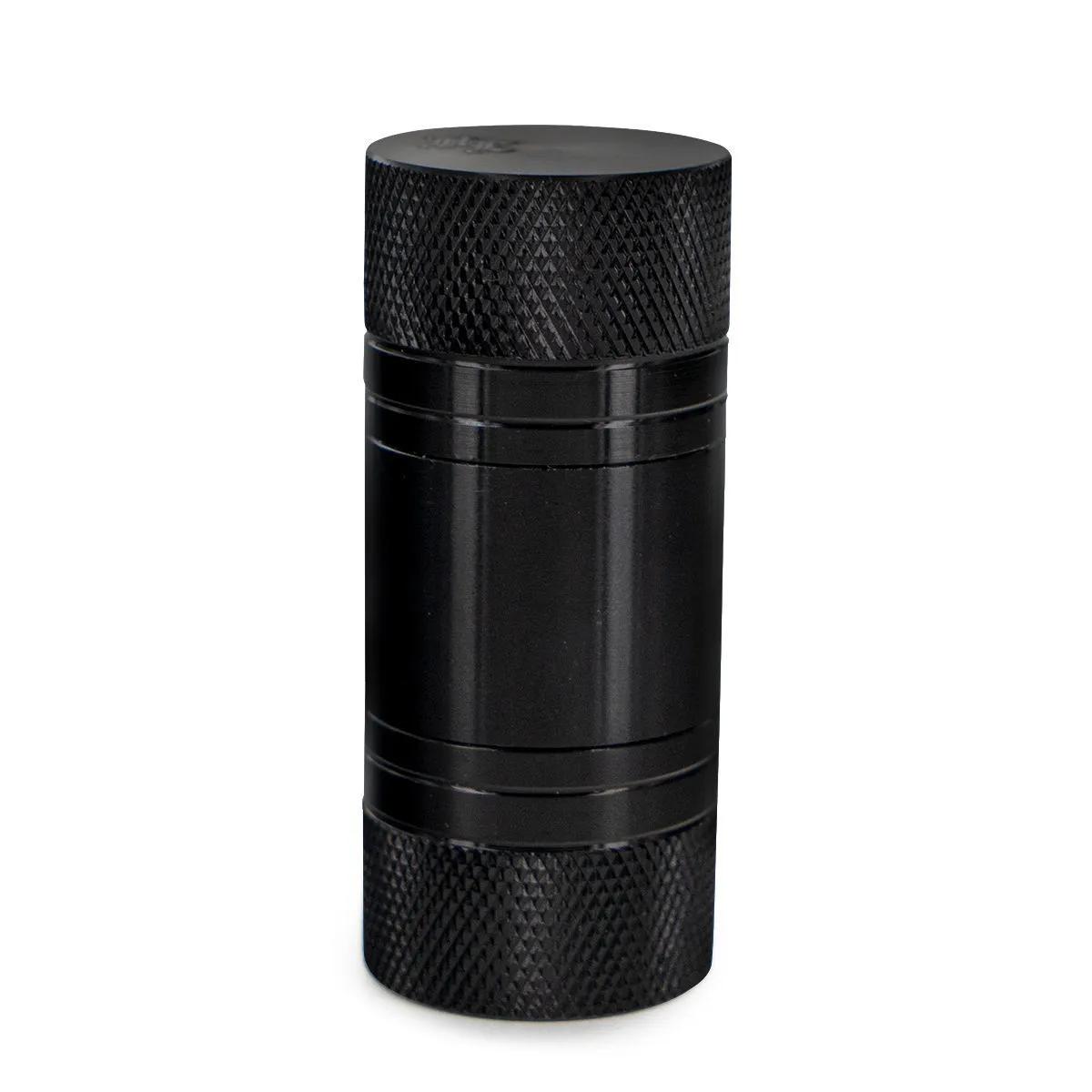
A pollen press is a simple aluminium alloy cylinder that compresses loose kief — the trichome powder collected during cannabis processing — into solid, uniform tablets for long-term storage. The Black Leaf Pollen Press uses two knurled end caps that thread into opposite ends of the barrel, applying even pressure to transform fluffy, hard-to-handle pollen into compact discs you can label, stack, and stash without losing a single grain.
The right size depends on how much kief you collect and how large you want your tablets. Here's the breakdown across all three variants:
| Size | Diameter | Length | SKU | Best for |
|---|---|---|---|---|
| Small | 21 mm | 60 mm | HS0302 | Occasional use — small kief catches from a 2-piece grinder |
| Medium | 26 mm | 60 mm | HS0300 | Regular use — weekly presses from a 4-piece grinder with kief screen |
| Large | 35 mm | 68 mm | HS0301 | Heavy collectors — larger batches, thicker tablets |
There's also a Blue variant (SKU: GSAH0050) if you want something that doesn't look like every other press in the drawer. Same build, different colour.
Our honest take: if you're unsure, go Medium. The 26 mm diameter produces tablets that are easy to handle and break apart, and the barrel is wide enough that you're not fiddling with tiny amounts. The Small works fine, but loading it with a card and getting every last bit of powder inside a 21 mm opening can test your patience — especially after a long session.
| Spec | Value |
|---|---|
| Brand | Black Leaf (Germany) |
| Material | Aluminium alloy |
| Mechanism | Dual knurled threaded end caps |
| Small dimensions | 21 mm diameter, 60 mm length |
| Medium dimensions | 26 mm diameter, 60 mm length |
| Large dimensions | 35 mm diameter, 68 mm length |
| Variants | Small, Medium, Large, Blue |
| Moving parts | None — threaded caps only |
| Category | Harvest and curing accessories |
Complete your setup: a pollen press works best when you've got a steady supply of kief. Pair it with a Black Leaf Pollen Screen Box or a 4-piece grinder with a kief-catching screen — the finer the mesh, the purer your pressed tablets will be. If you're trimming by hand, a set of trim scissors with a resin scraper makes collection much easier.
Loose kief is a nightmare to store. It sticks to plastic bags, blows away if you breathe near it, and degrades faster because every individual trichome head is exposed to air, light, and moisture. We've seen people lose half their collection just transferring it from one container to another — a slight breeze, an accidental sneeze, and weeks of patient collecting vanishes off the edge of a table.
A pressed tablet solves all of that. By compressing the powder into a solid disc, you reduce the surface area exposed to oxygen by roughly 90% compared to the same amount stored loose. The tablet doesn't stick to containers, doesn't scatter, and holds its potency longer because there's simply less surface for oxidation to work on. You can wrap each disc in parchment paper, label it with the strain and date, and stack them in a jar. Six months later, they're still good.
The Black Leaf press does one thing and does it without fuss. There are no springs, no hydraulics, no batteries — just two threaded caps and a cylinder. That means there's nothing to break, nothing to charge, and nothing to replace. The aluminium alloy is light enough to toss in a drawer but solid enough that the threads won't strip even after hundreds of presses. The knurled texture on the end caps gives you proper grip, which matters when you're applying real torque to compress the powder tight.
After years of selling these, the number one complaint we hear isn't about the press — it's about technique. People load too much kief, don't tighten evenly, and end up with a crumbly disc that falls apart. The fix is simple: less material, more patience. A half-full chamber pressed overnight produces a rock-solid tablet. A packed chamber pressed for 10 minutes produces expensive dust.
The one limitation worth mentioning: aluminium alloy is lighter and softer than stainless steel. If you cross-thread the caps — which happens if you rush — you can damage the threads over time. Take the extra two seconds to align the cap before turning. Once you feel it catch cleanly, you're good. We've had the same Medium press behind the counter for ages, and the threads are still smooth because we don't force it.
Compared to a T-press style (the ones shaped like a caulking gun), the Black Leaf cylinder design is more compact and easier to store, but produces smaller tablets. If you're pressing large batches regularly — say, trimming multiple plants — a T-press gives you more use and a bigger chamber. For most people collecting kief from a grinder over the course of a few weeks, this cylinder press is the better fit. It's smaller than a marker pen and disappears into a drawer.
At least 1–2 hours, but overnight gives a much denser result. The longer the compression time, the more cohesive and durable the tablet. Re-tighten the caps after 30 minutes as the material settles.
Yes. Dry-sift hash and kief both press well in this cylinder. For bubble hash, make sure it's fully dried first — any moisture trapped inside will cause mould during storage. Crumble it before loading for even compression.
Diameter and barrel length. The Small (21 mm) makes coin-sized tablets, the Medium (26 mm) makes slightly wider ones in the same 60 mm barrel, and the Large (35 mm, 68 mm barrel) handles bigger batches. Medium is the best all-rounder for most grinder users.
Disassemble both caps and push a dry cloth or cotton pad through the barrel. For sticky residue, dip the cloth in isopropyl alcohol (90%+), wipe the interior, and let it air-dry completely before the next use. Don't submerge the threaded caps — trapped moisture corrodes aluminium over time.
No. Hand-tightening the knurled caps provides enough force to compress kief into a solid tablet. Using pliers or wrenches risks cross-threading the aluminium and will void any goodwill you have with the press. Hands only.
The Medium barrel holds roughly 0.5–1.5g depending on how tightly you pack it. The Small holds around 0.3–0.8g, and the Large can take 1–3g. Don't fill past 80% of the barrel — you need room for the cap to enter and apply pressure.
Three common causes: too much material in the chamber, not enough compression time, or kief that's too dry. Try pressing a smaller amount overnight. A light mist of breath into the chamber before pressing adds just enough moisture to help binding — but don't overdo it.
Last updated: April 2026