Harvest & curing
by Carson
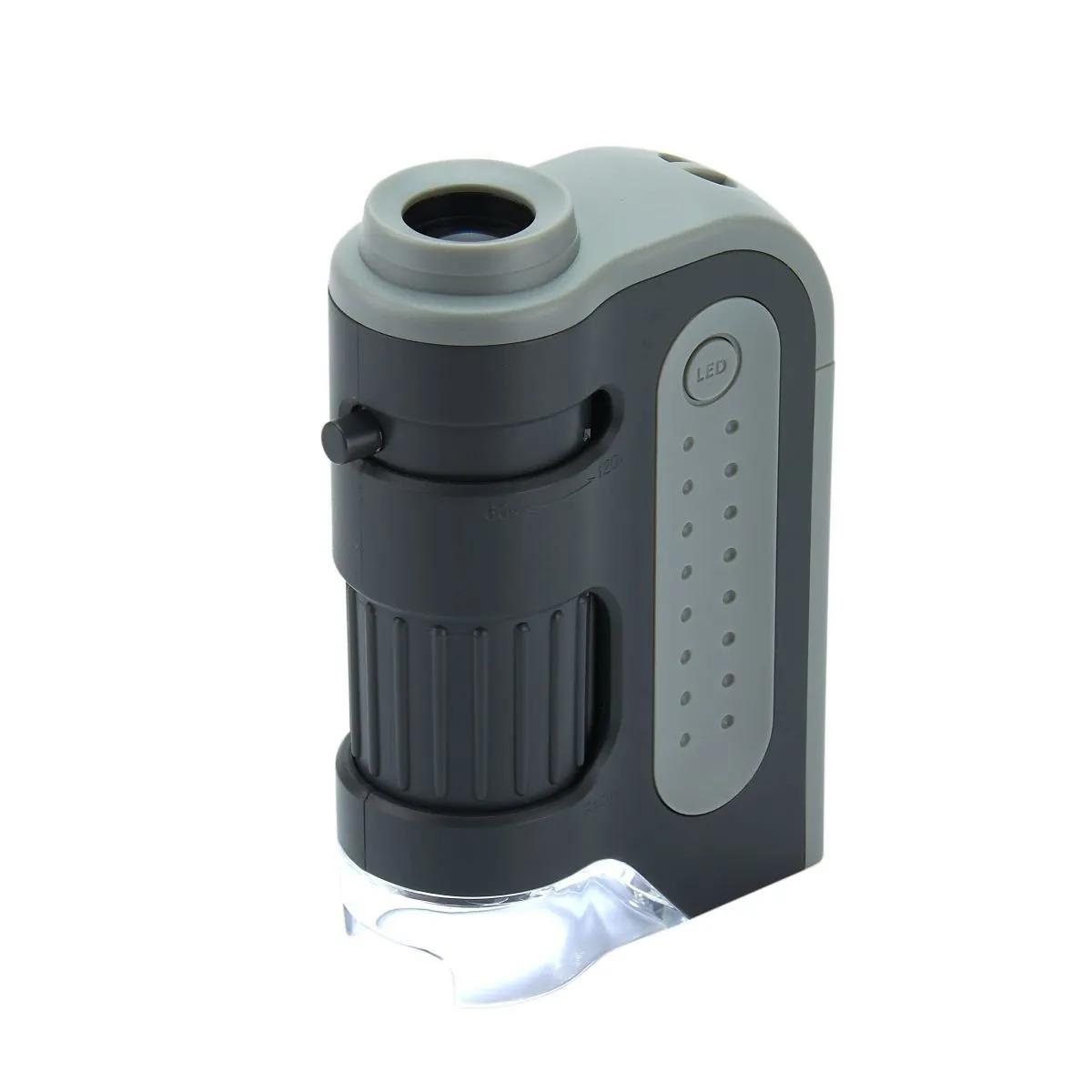
The Carson MicroBrite Plus is a handheld pocket microscope with 60–120x magnification that lets you inspect trichomes, pistils, and potential pests without removing leaves or disturbing your plants. It weighs next to nothing, runs on a single AA battery, and fits in your back pocket — so you can carry it through the grow space and check every corner of the canopy on the spot.
We've had growers come back to us saying this little scope completely changed how they time their harvest. Instead of guessing whether trichomes have gone from clear to milky to amber, you can actually see the shift happening day by day. That's the difference between a decent harvest and a properly dialled-in one.
A pocket microscope is the single most underrated tool in a grower's kit. You can spend hundreds on lights, nutrients, and climate control — but if you can't see what's happening at the cellular level, you're flying blind during the most critical phase of cultivation.
During flowering, trichomes shift from clear to cloudy to amber. That progression tells you exactly when cannabinoid and terpene content is peaking. Harvest too early and you leave potency on the table. Harvest too late and degradation kicks in. The naked eye can't reliably distinguish between these stages — you need magnification, and 60x is the minimum that actually works. The Carson MicroBrite Plus goes up to 120x, which means you can isolate individual trichome heads and watch the colour change in real time.
Then there's pest detection. Spider mites, thrips, and fungus gnats are often invisible until the damage is obvious. By the time you see yellowing leaves or webbing, the infestation is already established. A quick scan with the MicroBrite Plus at 60x reveals eggs, larvae, and early mould before they become a problem. We've seen growers save entire harvests simply because they caught powdery mildew at the microscopic stage, when it's still treatable.
| Spec | Value |
|---|---|
| Model | MM-300 |
| SKU | HS0283 |
| Magnification Range | 60x – 120x |
| Illumination | Built-in LED |
| Power Source | 1x AA battery (not included) |
| Focus Control | Adjustment wheel (lower body) |
| Zoom Control | Lever (top of scope) |
| Form Factor | Pocket-sized, handheld |
| Brand | Carson |
| Category | Harvest and Curing |
Complete your harvest setup: pair the MicroBrite Plus with a set of trimming scissors for precision work and a drying rack to cure your buds properly once you've nailed the timing. If you're growing in a tent, a loupe or microscope is the missing piece between "I think it's ready" and "I know it's ready."
It's lighter than you'd expect — almost plasticky light, which initially made us wonder about build quality. But after months of use around the shop and in grow rooms, the thing holds up. The body is smooth, slightly textured where your thumb grips the focus wheel, and the LED throws a surprisingly bright, even light onto whatever you're examining. No hot spots, no shadows. You press the scope directly against the leaf surface, which stabilises the image far better than trying to hover a jeweller's loupe at the right distance.
The one honest limitation: the eyepiece is small. If you wear glasses, you'll need to take them off or press your eye right up against it. It takes a few seconds to find the sweet spot. Once you do, the image is sharp and detailed — you can count individual trichome stalks and see the gland heads clearly. But that initial fumble is real, especially in a dimly lit grow tent. The built-in LED helps enormously here.
A standard jeweller's loupe gives you 30x or 40x magnification. That's enough to see trichomes as a mass — cloudy, frosty, sparkly. But it won't let you distinguish individual trichome heads or spot the amber shift in a single gland. The Carson MicroBrite Plus at 60–120x puts you in a completely different league. You're looking at individual structures, not a general impression.
| Feature | Jeweller's Loupe (30–40x) | Carson MicroBrite Plus (60–120x) |
|---|---|---|
| Trichome visibility | General mass, cloudy vs. clear | Individual heads, colour shifts visible |
| Pest detection | Adult insects visible | Eggs, larvae, and early mould visible |
| Light source | Usually none | Built-in LED |
| Stability | Handheld — shaky at high mag | Presses against surface — stable image |
| Portability | Pocket-sized | Pocket-sized |
| Zoom range | Fixed | Variable 60–120x via lever |
We'd pick the MicroBrite Plus over a loupe every time for harvest timing. The loupe still has its place for a quick glance, but when you need to make a decision about when to chop, the extra magnification and the LED make a real difference. At this price point, there's no reason not to upgrade.
Press the lens flat against a calyx on your bud. Switch on the LED, focus with the lower wheel, then zoom to 120x using the top lever. You're looking at the mushroom-shaped trichome heads — clear means too early, milky means peak, amber means degradation is starting. Check 3–4 bud sites across the plant for an accurate read.
60x is the minimum for seeing individual trichome heads. The MicroBrite Plus goes to 120x, which lets you clearly distinguish colour changes in the gland heads. A standard 30x loupe shows you the general frostiness but won't reliably reveal whether trichomes are clear, milky, or amber.
Yes, it takes a single AA battery for the built-in LED. The scope itself works without power — you can still magnify — but the LED is what makes the image usable, especially inside a grow tent. Keep a spare battery in your grow kit.
Absolutely. At 60x you can see spider mite eggs, thrips larvae, and the early white patches of powdery mildew before they're visible to the naked eye. Regular weekly scans of the undersides of leaves catch infestations early, when they're still manageable.
For trichome inspection, yes. Phone macro lenses typically max out at 10–15x, which isn't enough to see individual trichome heads or colour shifts. The MicroBrite Plus at 60–120x gives you a direct optical view with proper LED illumination — no autofocus hunting, no shaky hands, no digital artefacts.
Use a dry microfibre cloth or lens tissue. Trichome resin can build up on the lens after repeated contact with buds — a tiny drop of isopropyl alcohol on the cloth sorts it out. Don't submerge the scope or use abrasive materials on the lens surface.
Start checking trichomes about 3–4 weeks into flowering, then increase to daily checks in the final 2 weeks. For pest monitoring, use it from day one — weekly scans of leaf undersides take 5 minutes and can save your entire crop.
Last updated: April 2026