Harvest & curing
by Brewferm
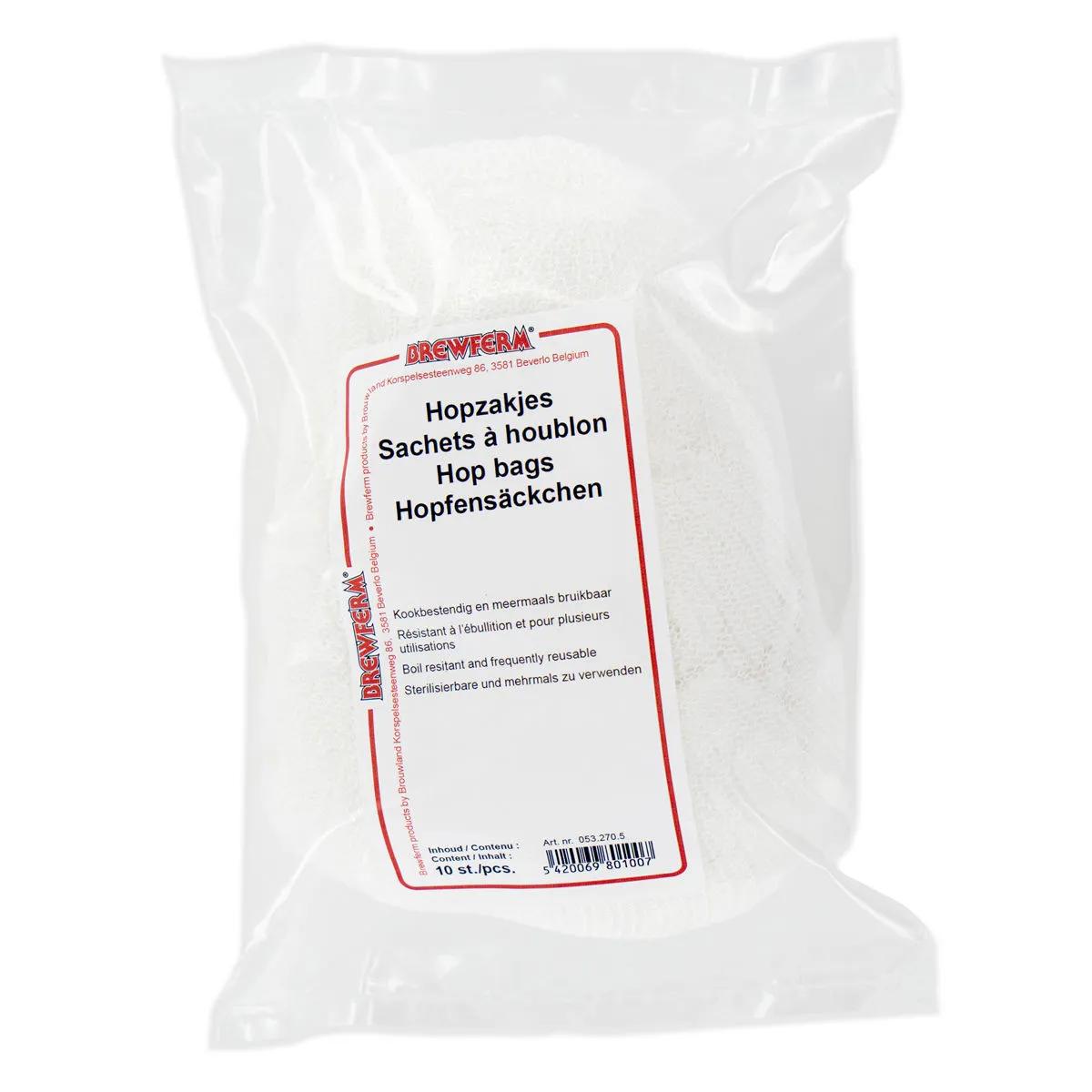
A muslin hop boiling bag is a fine-weave cotton pouch that keeps hop pellets, leaf hops, and grain contained during the boil and fermentation — so you get clean wort without fishing out soggy plant matter. This 10-pack of reusable, sterilisable muslin bags takes the mess out of dry hopping and boil additions, and at this price, you can afford to dedicate fresh bags to each batch.
| Spec | Value |
|---|---|
| Quantity | 10 muslin bags per package |
| Material | Muslin (fine-weave cotton) |
| Reusable | Yes — sterilise between uses |
| Primary use | Dry hopping, boil additions, grain steeping |
| Also works for | Herbal infusions, spice additions, tea blending |
| SKU | HS0044 |
Brewing your own beer or herbal concoctions? Pair these muslin hop boiling bags with a brewing thermometer and hydrometer for proper temperature and gravity readings throughout your batch. If you're into herbal infusions beyond hops, check out our dried herbs and botanicals — same bags, different adventure.
We get it — plenty of homebrewers just toss hops straight into the kettle or fermenter and call it a day. And honestly, it works. But "works" and "works without clogging your siphon, gunking up your tap, and leaving sediment in every bottle" are two very different things. Muslin hop boiling bags keep the chaos contained.
The practical difference is immediate. Late boil additions for an IPA can run to 85–170 grams (3–6 ounces) of hops — that's a serious amount of plant material floating around your wort. Without a bag, all of that ends up in suspension, blocking valves, clogging transfer lines, and creating a thick sludge at the bottom of your fermenter. With a muslin bag, you pull the whole lot out in one go. Cleanup drops from 30 minutes of scrubbing to about 90 seconds of rinsing.
The one honest limitation: muslin bags do reduce hop contact with the liquid slightly compared to free-floating hops. Some brewers compensate by adding 10–15% more hops to the bag, or by giving the bag a gentle squeeze after steeping. For dry hopping specifically — where you're after aromatic oils rather than bittering compounds — the difference is minimal. We'd take the cleaner transfer over a marginal bump in utilisation any day of the week.
After 25-plus years in the shop, we've had this conversation hundreds of times: "Should I use a hop spider or muslin bags?" The answer depends on your batch size. A stainless steel hop spider is brilliant if you're brewing 20-litre batches every weekend and want a permanent, rigid solution. But for occasional brewers, experimental small batches, or anyone dry hopping in a narrow-neck fermenter, muslin bags are the smarter pick. They're flexible enough to fit through any opening, they cost a fraction of a spider, and you get 10 per pack — enough for several brew days.
The texture of these bags is worth mentioning. The weave is tight enough to hold back pellet fragments and most leaf hop debris, but loose enough that water flows through freely. You can feel the difference between cheap muslin (which tears when wet) and proper brewing-grade muslin (which holds its shape even after boiling). These are the latter. They feel like a sturdy cotton handkerchief — not a flimsy cheesecloth.
Muslin bags are lighter, cheaper, and fit into any fermenter opening — they're the best option for dry hopping and small-batch brewing. A hop spider suits larger kettles and frequent brewers who want a rigid, reusable basket. For most homebrewers, a 10-pack of muslin bags covers months of brewing.
Slightly, yes. The bag limits direct contact between hops and wort. Most brewers compensate by adding 10–15% more hops or gently squeezing the bag after steeping. For dry hopping, the difference is negligible since you're extracting aromatic oils over days, not minutes.
Expect 3–5 uses per bag before the weave starts loosening. Boil the bag for 10 minutes between batches to sterilise it. Once the fabric feels thin or tears easily when wet, swap it out. With 10 bags per pack, that's 30–50 brew sessions covered.
Absolutely. They work for steeping specialty grains, adding spices like coriander or orange peel during the boil, making herbal tea infusions, or even straining nut milks. Same principle — contain the solids, extract the flavour, skip the mess.
Drop a few food-safe glass marbles or stainless steel weights into the bag alongside your hops. Boil the weights first to sterilise them. The extra 50–80 grams of ballast keeps the bag submerged so your hops stay in full contact with the wort.
Dry hopping adds hop aroma without extra bitterness — the aromatic oils dissolve at fermentation temperature without isomerising the alpha acids. Using a muslin bag means you can pull all the hop matter out cleanly when steeping is done, reducing sediment and making transfers far easier.
A single bag comfortably holds 28–56 grams of pellet hops. For larger charges — say 85–170 grams for a late-addition IPA — split across 2–3 bags. Overstuffing restricts water flow and reduces extraction. Leave enough room for the hops to swell.
Last updated: April 2026