Functional mushrooms
by Holy Flavour
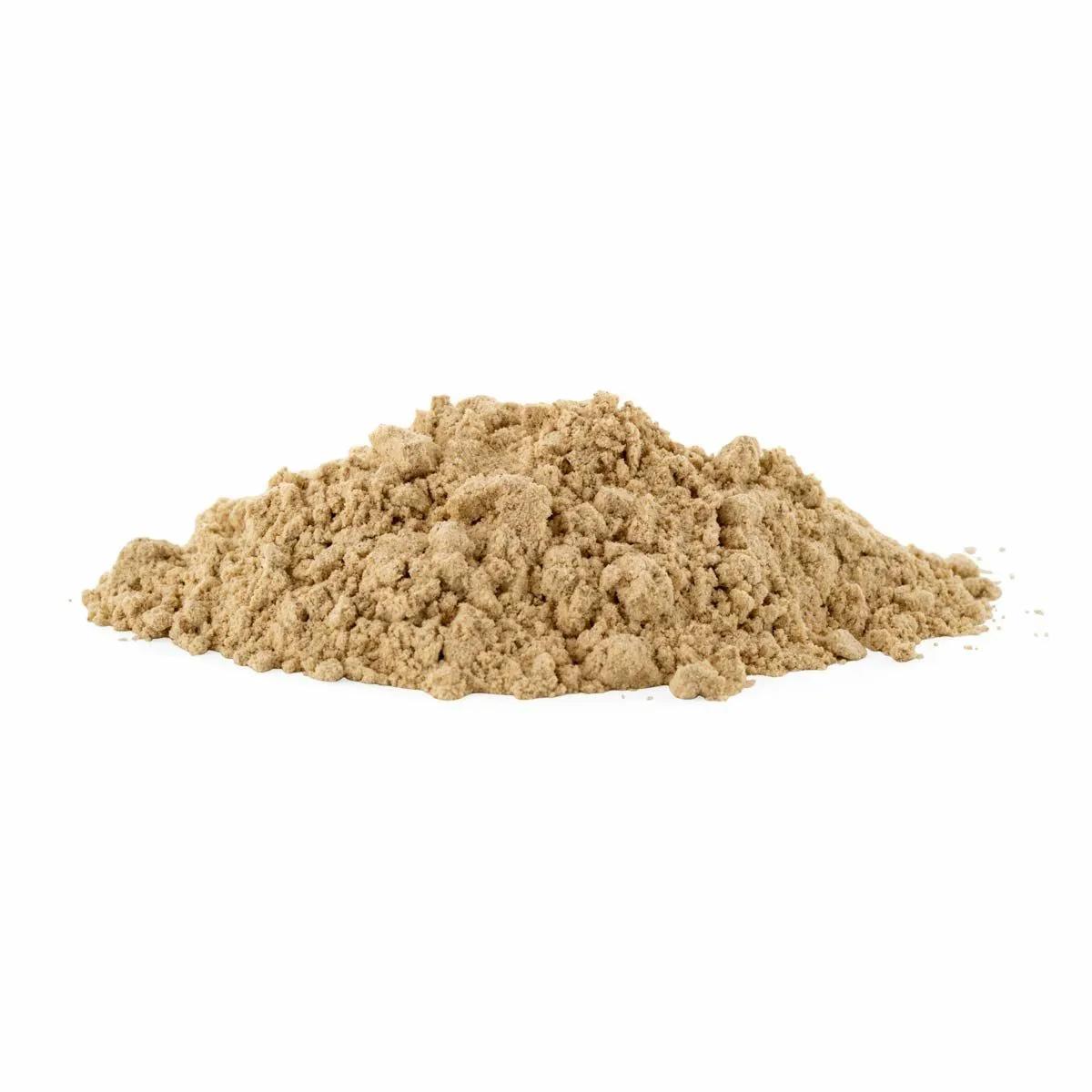
Agaricus campestris field mushroom powder is a finely ground dietary supplement made from organic field mushrooms — the large, white wild cousins of the common button mushroom you see in every supermarket. Unlike the cultivated champignon, field mushrooms grow in open grasslands and pastures, developing a deeper, more complex flavour profile and a denser concentration of nutrients. This powder works double duty: stir it into soups, stews, and sauces as a salt-free savoury seasoning, or take it as a daily supplement to get the bioactive compounds that researchers have been studying for years.
Field mushroom powder fills a gap that most pantry staples miss — genuine umami depth without a grain of sodium. If you've been trying to cut back on salt but find everything tastes flat, this is the fix. A teaspoon stirred into a risotto or scrambled eggs adds that savoury, almost meaty richness that makes you forget the salt shaker exists.
The flavour is earthier and more robust than standard button mushroom powder. Think damp autumn fields after rain — there's a woody, slightly nutty undertone that dried champignon just doesn't deliver. The texture is fine enough to dissolve into liquids without leaving gritty bits, which means it works in everything from gravy to smoothies (yes, really — mushroom in a smoothie sounds odd until you try it in a cacao blend).
Beyond the kitchen, Agaricus campestris has attracted serious scientific attention. The flesh contains carbohydrates, proteins, fibre, and a range of bioactive compounds including beta-glucans — polysaccharides found widely in mushrooms. According to a review published in Molecules, beta-glucans have been found to support the activities of pancreatic tissues by enhancing their function in research models (PMC8700757). That's not a health claim — it's what the data says so far.
Field mushrooms have been eaten for centuries, but the formal research is still catching up. Here's what scientists have found when they put Agaricus campestris under the microscope — and what they haven't confirmed yet.
According to Gray and Flatt (1998), Agaricus campestris demonstrated insulin-releasing and insulin-like activity in laboratory models, published in the Journal of Endocrinology (157:259–266). This finding has been referenced in multiple subsequent reviews, including a 2019 paper in Complementary Therapies in Medicine (PMC6856246) and a 2021 review in Nutrients (PMC7830770).
Research published in 2025 observed anticholinesterase activities in A. campestris extracts, noting that this species showed higher anticholinesterase activity compared to other Agaricus species tested (PMC12222538). A separate 2024 evaluation confirmed antioxidant effects and antimicrobial activity tested on different strains of bacteria and fungi (PMC11998388).
A 2018 review on anti-obesity effects of medicinal and edible mushrooms included Agaricus campestris among the species studied for bioactive compounds in research models (PMC6278646). And a 2005 paper on antiinflammatory and immunomodulating properties of fungal metabolites noted anticomplementary activity screening across 61 strains of higher fungi, with several Agaricus species among those showing immunostimulating potential (PMC1160565).
The honest caveat: most of this research is preclinical — cell studies and animal models. Human clinical trials specifically on Agaricus campestris powder at dietary supplement doses are thin on the ground. We're not going to pretend the science is settled when it isn't. What we can say is that the direction of the research is interesting, and eating mushrooms has never been a bad idea nutritionally.
| Research Area | Finding | Source |
|---|---|---|
| Insulin-like activity | Insulin-releasing and insulin-like activity observed | Gray & Flatt, 1998 (J. Endocrinol.) |
| Anticholinesterase activity | Higher activity than other Agaricus species tested | PMC12222538, 2025 |
| Antioxidant effects | Confirmed across multiple testing methods | PMC11998388, 2024 |
| Antimicrobial effects | Active against various bacteria and fungi strains | PMC11998388, 2024 |
| Beta-glucan content | Polysaccharides widely present in mushroom tissue | PMC8700757, 2021 |
| Immunostimulating potential | Anticomplementary activity screened in 61 fungal strains | PMC1160565, 2005 |
| Spec | Value |
|---|---|
| Species | Agaricus campestris (Field Mushroom) |
| Form | Finely ground powder |
| Source | Organic field mushrooms |
| Diet | Vegetarian and vegan |
| Shelf life | 24 months from production |
| Storage | Cool, dark place at or below room temperature |
| Related species | Agaricus bisporus (button mushroom / champignon) |
| Primary use | Dietary supplement / salt-free seasoning |
Field mushroom powder is genuinely versatile — it's one of those products that rewards experimentation. Here's how to get the most out of it.
We've been stocking functional mushroom powders since before "functional mushrooms" was a phrase anyone used. A few things worth knowing about this one:
The aroma is the first thing you notice — earthy, slightly sweet, with a hint of that classic mushroom mustiness. It's stronger than dried champignon powder and closer to what you'd smell picking wild mushrooms in a Dutch meadow in October. If you've only ever used supermarket mushroom stock cubes, the real thing is a different experience entirely.
The one limitation: this is a single-species powder, not a multi-mushroom blend. If you're after the combined beta-glucan profile of, say, a Lion's Mane and Reishi stack, you'll need to buy those separately and combine them yourself. Agaricus campestris is the best field mushroom powder for culinary use — that earthy, savoury depth is unmatched — but for targeted supplementation, a dedicated extract (like a Lion's Mane 8:1 concentrate) will give you higher doses of specific compounds per gram.
Also worth noting: the 24-month shelf life is generous, but that clock starts ticking faster once you break the seal. We've seen customers complain about flavour loss after leaving an open bag in a warm kitchen for months. Airtight container, cool cupboard — that's the rule.
Building a functional mushroom routine? Pair Agaricus campestris with Lion's Mane powder for cognitive support research compounds, or Reishi powder for a broader beta-glucan profile. If you're using this primarily as a seasoning, our dried herb range includes turmeric and black pepper powders that complement the umami base beautifully.
Agaricus campestris and Agaricus bisporus (the common button mushroom or champignon) are close relatives — same genus, different species. The practical differences matter if you're choosing between them.
Field mushrooms grow wild in grasslands and pastures across Europe, typically appearing from late summer through autumn. They're larger than button mushrooms, with a more open cap at maturity and gills that turn from pink to dark brown as the spores develop. The flavour is noticeably more intense — richer, earthier, with more of that savoury umami character.
Button mushrooms are commercially cultivated year-round in controlled environments. They're milder, more uniform, and cheaper to produce at scale. Both species contain proteins, fibre, and B vitamins, but field mushrooms have historically been valued more highly for their concentrated flavour and traditional use in folk medicine across Europe.
If you've ever found a large white mushroom growing in a field and thought "that looks like a massive champignon" — you were probably looking at Agaricus campestris.
Earthy, savoury, and slightly nutty — deeper and more intense than regular button mushroom powder. It has a strong umami character that works as a natural flavour enhancer without any added salt. Think wild mushroom soup concentrate in powder form.
Traditional use references suggest 2–4 grams daily as a dietary supplement. As a seasoning, half a teaspoon to one teaspoon per serving is a good starting point. Clinical research on Agaricus campestris at specific supplement doses in humans remains limited, so these figures come from traditional practice rather than clinical trials.
No. Agaricus campestris is the European field mushroom; Agaricus blazei (also called Agaricus subrufescens or "almond mushroom") is a different species native to Brazil. They share a genus but have different bioactive compound profiles, flavour, and growing conditions. Don't confuse the two when reading research.
Both. This powder was made to double as a culinary seasoning and a dietary supplement. Stir it into any savoury dish — soups, sauces, risottos, scrambled eggs, broths. Heat doesn't destroy the flavour; it actually helps it integrate into the dish.
Research notes that caution is advised for those taking medications that affect liver enzymes. According to Gray and Flatt (1998), Agaricus campestris showed insulin-like activity in lab models, so if you're on blood sugar-regulating medication, speak with your doctor before adding it as a regular supplement.
Transfer it to an airtight container and keep it in a cool, dark cupboard at or below room temperature. Sealed properly, it keeps for up to 24 months. Exposure to air, heat, and light will degrade the aroma, flavour, and nutrient content faster than you'd expect.
Yes. This powder is made using only organic field mushrooms. It contains no additives, fillers, or salt, and is suitable for both vegetarian and vegan diets.
Last updated: April 2026
Medical disclaimer. This content is for informational purposes only and does not constitute medical advice. Consult a qualified healthcare provider before use of any substance.