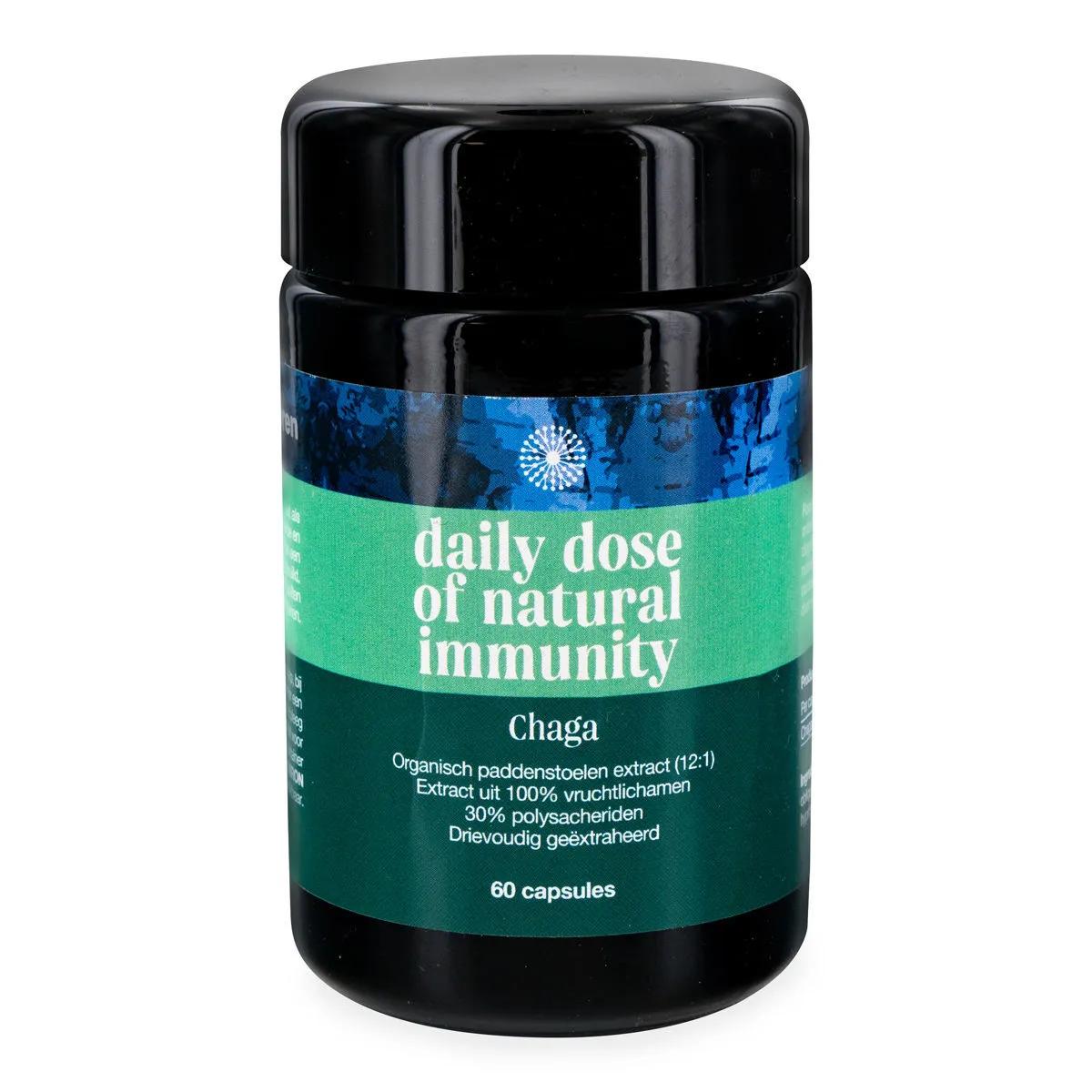
Chaga
by Foodsporen
Chaga Mushroom Capsules are a concentrated 12:1 fruiting body extract of Inonotus obliquus, a fungus that grows as a dense black mass on birch trees in cold northern climates. Siberian shamans called it the "gift from heaven," and modern research is starting to catch up with that reputation. Foodsporen packs 400mg of triple-extracted chaga into each vegetable capsule — no brewing, no foraging, no fuss.
Chaga doesn't look like much — a charred, cracked lump clinging to the side of a birch tree. You could walk past a hundred of them in the Scottish Highlands or a Lithuanian forest and never give them a second glance. But inside that unpromising exterior sits a dense concentration of bioactive compounds, including triterpenes, polysaccharides, and betulinic acid (a cannabinoid derived from birch bark).
The thing is, finding wild chaga takes serious effort. It grows slowly, only in cold latitudes, and you need to know exactly what you're looking at. Even if you do find some, processing it into something your body can actually absorb involves more than chucking it in a blender. That's where Foodsporen's extraction method matters. They use a 3-fold process that includes ultrasound frequency extraction — this targets the specific constituents locked inside chaga's tough chitin walls. Most cheap chaga products skip this step entirely, which means you're essentially swallowing indigestible fungal fibre. Not exactly what you're after.
According to a review in PMC (2024), studies have found that chaga may exert anti-fatigue effects in several animal model studies (Therapeutic properties of Inonotus obliquus). And according to Healthline, a study in mice with cancer found that chaga supplements resulted in a 60% reduction in tumour size (Healthline). Research is still largely preclinical — we're honest about that — but the sheer volume of traditional use across Siberia, Scandinavia, and East Asia suggests there's something worth paying attention to.
Not all chaga supplements are created equal, and we've seen enough mediocre mushroom products pass through the shop to know the difference. Here's what sets these apart from the generic options flooding the market.
First, the 12:1 extract ratio. That means 12 grams of raw chaga fruiting body go into producing 1 gram of extract. Each 400mg capsule therefore represents roughly 4,800mg of raw chaga — a significant concentration. Second, the triple extraction process. Foodsporen uses hot water extraction, ethanol extraction, and ultrasound frequency extraction in combination. Hot water pulls out the water-soluble polysaccharides (beta-glucans). Ethanol targets the fat-soluble triterpenes. Ultrasound breaks open cell walls that would otherwise pass through your gut untouched. Most competitors use hot water alone, which misses a big chunk of the good stuff.
The capsules themselves are hypromellose — a plant-based shell that's completely vegan. Inside, you'll find microcrystalline cellulose as a flow agent alongside the chaga extract. Nothing else. No fillers, no rice flour padding, no mystery "proprietary blends" where you can't tell how much chaga you're actually getting.
The honest limitation? These capsules have a mild earthy smell when you open the bottle — somewhere between damp forest floor and dark roast coffee. It's not unpleasant, but if you're sensitive to mushroomy scents, you'll notice it. The capsules themselves go down easily with water and have no aftertaste.
| Specification | Detail |
|---|---|
| Brand | Foodsporen |
| Species | Inonotus obliquus (Chaga) |
| Extract Ratio | 12:1 Fruiting Body Extract |
| Capsule Size | 400mg per capsule |
| Extraction Method | 3-fold (hot water, ethanol, ultrasound) |
| Capsule Material | Hypromellose (vegetable capsule) |
| Other Ingredients | Microcrystalline Cellulose |
| Suggested Use | 1-2 capsules daily |
| Vegan | Yes |
Foodsporen recommends taking 1 capsule of 400mg once or twice daily. At the upper end of that range, you're getting 800mg of concentrated 12:1 extract per day, which equates to roughly 9,600mg (9.6g) of raw chaga equivalent. Health Canada mushroom monographs recommend a maximum daily intake of 3,600mg of chaga per day in non-concentrated form. Because this is a 12:1 extract, sticking to Foodsporen's 1-2 capsule recommendation keeps you well within reasonable bounds for the concentrated format.
According to Examine.com, chaga has supposed beneficial effects on immune function and cancer risk, though evidence so far is limited mostly to in vitro and animal studies (Examine). According to WebMD, one study found that chaga extract could slow the growth of lung, breast, and cervical cancer cells in a petri dish, and the same study observed effects on tumour growth in mice (WebMD). These are promising signals, but human clinical trials are still thin on the ground — something worth keeping in mind.
Avoid taking these capsules with carbonated drinks or alongside medication. Chaga may interact with diabetes medications by potentially lowering blood sugar levels, and it may also interact with blood-thinning medications. If you're on any prescription drugs, have a conversation with your doctor first. Do not take if pregnant or breastfeeding. There have also been case reports of oxalate nephropathy associated with very high chaga intake, according to a report in Clinical Nephrology cited by PMC (PMC, 2022), so moderation is sensible.
Building a functional mushroom stack? Pair these Chaga Mushroom Capsules with Lion's Mane capsules for cognitive support research suggests may complement chaga's antioxidant profile. Reishi capsules also make a natural companion — traditionally used alongside chaga in Eastern European and Asian folk medicine traditions.
We've carried functional mushroom products since long before they became trendy on social media, and chaga has always been a quiet favourite among customers who've done their homework. It doesn't have the flashy reputation of lion's mane or the spiritual cachet of reishi — chaga is more of a workhorse. The people who buy it tend to come back for it.
Compared to chaga tinctures, capsules are less flexible on dosage but far more convenient. No measuring droppers, no bitter liquid under the tongue, no stained countertops. If you already know you want chaga in your daily stack, capsules are the path of least resistance. If you're still experimenting and want to dial in a specific dose, a tincture gives you more granular control — but honestly, most people just want to pop a capsule with their morning water and get on with their day. Foodsporen's capsules make that dead simple.
One thing we'd flag: if you've never tried a mushroom supplement before, chaga capsules are a solid starting point. The effects aren't dramatic or immediately noticeable like, say, a cup of strong coffee. This is the kind of supplement where you look back after a month and think, "Actually, yeah, something's different." Patience pays off here.
You won't taste much — the hypromellose capsule dissolves in your stomach, not on your tongue. If you open a capsule, the powder inside tastes earthy and slightly bitter, like very dark coffee grounds mixed with forest soil. The capsule format exists precisely to bypass that flavour.
Raw chaga powder is simply ground-up fungus — your body can't break through the chitin cell walls efficiently, so much of it passes through unabsorbed. Foodsporen's 12:1 extract uses a 3-fold extraction process (hot water, ethanol, and ultrasound) to crack those walls open and concentrate the bioactive compounds. You get far more per milligram.
Generally yes, but avoid combining them with carbonated drinks or medication. Chaga may interact with blood sugar-lowering drugs and blood thinners. If you're stacking with other functional mushrooms like lion's mane or reishi, that's a common combination with no known negative interactions.
Most people report noticing subtle changes after 2-4 weeks of consistent daily use. Chaga isn't an acute-effect supplement — it works in the background. Don't expect a single capsule to produce a noticeable shift. Consistency over weeks is what matters.
No. Chaga (Inonotus obliquus) is technically a sclerotium, not a typical mushroom fruiting body. It grows on birch trees in cold climates and contains a distinct profile of triterpenes, polysaccharides, and betulinic acid. Reishi and lion's mane belong to different genera entirely and have different bioactive compound profiles.
Yes. The capsule shell is hypromellose (plant-derived cellulose), and the only other ingredient besides the chaga extract is microcrystalline cellulose. No animal products involved.
Betulinic acid is a triterpene found in birch bark that chaga absorbs as it grows on birch trees. It's classified as a cannabinoid and has been the subject of preclinical research. Chaga is one of the few dietary sources of this compound, which is part of what makes it distinctive among functional mushrooms.
Last updated: April 2026
Medical disclaimer. This content is for informational purposes only and does not constitute medical advice. Consult a qualified healthcare provider before use of any substance.