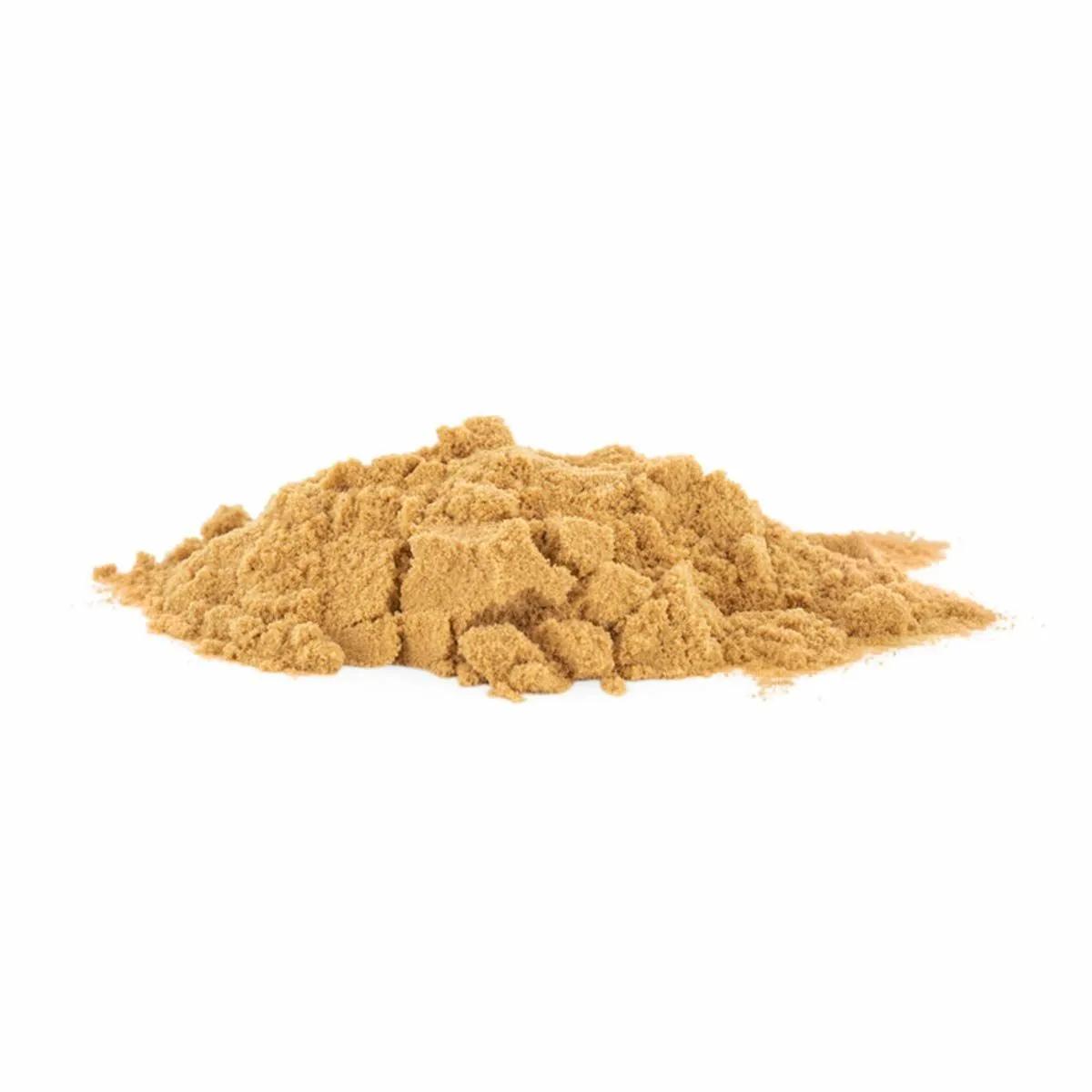
Cordyceps sinensis organic extract is a concentrated mushroom powder that delivers a guaranteed 30% polysaccharides from cultivated fruit bodies — meaning half a teaspoon does the work of several spoons of regular powder. This is the cordyceps you reach for when you want the bioactive compounds researchers actually study, without padding your morning coffee with a tablespoon of mild-tasting filler.
Why this cordyceps sinensis organic extract is worth it
Standard cordyceps powder is just dried, ground mushroom — broad spectrum, but diluted. This extract takes 8 to 10 kilos of raw fruit bodies and concentrates them down to a single kilo of finished powder. That's where the 30% polysaccharide guarantee comes from: real concentration, not marketing.
The fruit bodies are cultivated under organic certification — no wild-harvested mystery material, no fillers, no maltodextrin bulking it out. You get B vitamins (B1, B2, B12), vitamins E and K, essential amino acids, and minerals like potassium, calcium and magnesium. The kind of profile you'd expect from a properly extracted functional mushroom rather than a tub of beige flour pretending to be one.
According to Cordyceps as an Herbal Drug (NCBI Bookshelf, NIH), studies have examined cordyceps for a range of biological activities, though as the NIH's LiverTox monograph notes, "none [of] the purported beneficial effects of cordyceps have been shown in clinical trials" with definitive certainty — so we're staying honest. Research suggests cordyceps sinensis is among the most-studied medicinal fungi, with millions in China taking it traditionally for invigoration and fatigue relief (Chen et al., 2010, PMC3110835).
What you actually get in the jar
The powder is fine and light — almost silky between your fingers. Mild earthy taste with a slightly nutty edge. It dissolves cleanly into warm liquids, which is the honest selling point: a lot of mushroom powders clump or sit on top of your coffee like sad little islands. This one disappears into a chai, smoothie or matcha without a fight.
| Source | Cordyceps sinensis cultivated fruit bodies |
| Concentration ratio | 8:1 to 10:1 |
| Polysaccharides | Minimum 30% (guaranteed) |
| Certification | Certified organic |
| Vitamins | B1, B2, B12, E, K |
| Minerals | Potassium, calcium, magnesium |
| Additives | None — no GMO, no fillers |
| Shelf life | 4 years |
| Texture | Fine, silky, dissolves in warm liquid |
| Taste | Mild earthy, slightly nutty |
Cordyceps extract vs regular cordyceps powder
The shortest answer: an extract gives you more of the compounds researchers care about per gram. Regular powder is the whole mushroom dried and ground; an extract is the bioactive fraction concentrated down. Both have their place, but if polysaccharide content is what you're after, the extract earns its spot.
| Regular powder | This 8:1 extract | |
|---|---|---|
| Polysaccharide content | Variable, often unmeasured | 30% guaranteed minimum |
| Serving size | 1–2 teaspoons | Around half a teaspoon |
| Raw mushroom equivalent | 1:1 | 8 to 10 kg condensed into 1 kg |
| Cost per gram of polysaccharide | Higher | Lower |
| Best for | Whole-spectrum daily use | Targeted polysaccharide intake |
How to use cordyceps sinensis extract
The straightforward way: stir half a teaspoon into a warm drink in the morning. Coffee, chai, hot cocoa, matcha, smoothies — it dissolves into all of them without much encouragement. Research dosing varies considerably; available studies have used cordyceps sinensis at 3 g per day in athletic performance trials (PMC5236007), while traditional use ranges sit lower at around 1–3 g daily.
- Measure roughly half a teaspoon (around 1–1.5 g) of extract.
- Add to a cup of warm liquid — coffee, tea, smoothie, or porridge.
- Stir until dissolved. Warm liquids work better than cold for clean dispersion.
- Take once daily, ideally in the morning. Cordyceps is traditionally associated with daytime use rather than bedtime.
- Store the jar sealed, dry, away from sunlight. Four-year shelf life if kept properly.
From our counter — honest notes
One thing worth flagging: cordyceps "sinensis" sold as a cultivated extract is almost always grown from the mycelium or fruit body of a cultured strain, not the rare caterpillar-parasitised wild material from the Tibetan plateau. That wild stuff costs more per gram than gold and doesn't end up in jars on shop shelves. This is a cultivated organic fruit body extract, which is what you want — consistent, traceable, and not contributing to ecological pressure on wild harvest sites.
The other honest note: research on cordyceps is promising but not conclusive. According to a Healthline review of the literature, a 2024 study found cordyceps extract showed activity in test-tube and small clinical settings with 40 participants, but larger trials are still needed. Treat it as a supportive supplement, not a cure for anything specific.
Pairs well with our Lion's Mane organic extract for a morning stack — cordyceps in your coffee, lion's mane alongside. Or rotate with Reishi extract in the evening for a full functional mushroom routine.
Frequently Asked Questions
What's the difference between cordyceps sinensis and cordyceps militaris?
They're two different species in the same genus. Cordyceps sinensis (now technically Ophiocordyceps sinensis) is the traditional Tibetan caterpillar fungus, while militaris is the bright orange one easier to cultivate. Both contain similar bioactive compounds; this product is sinensis grown from cultivated fruit bodies.
How much should I take per day?
Around half a teaspoon (roughly 1–1.5 g) of this 8:1 extract is a typical serving. Research studies have used cordyceps sinensis at 1–3 g daily of extract or up to 3 g of powder for athletic performance contexts (PMC5236007). Stick with the lower end if you're new to it.
Are there side effects?
Cordyceps is generally considered well-tolerated. According to published reviews, rare and mild side effects can include stomach discomfort, diarrhoea or constipation at higher doses. Cordyceps may also affect anticoagulation — if you take blood thinners, speak to your doctor first.
Can I take it in cold drinks or do I need warm liquid?
Warm liquids dissolve it more cleanly, but cold smoothies work fine too — the high-speed blade does the dispersion job. Avoid stirring it into still cold water with a spoon; you'll get clumps.
Does this contain caffeine or any stimulants?
No. Cordyceps is a functional mushroom extract — no caffeine, no added stimulants, nothing synthetic. Any energising association comes from the mushroom's traditional reputation, not from a stimulant payload.
How long does the jar last?
At half a teaspoon a day, a standard jar lasts a couple of months. Sealed and stored dry away from sunlight, the extract has a four-year shelf life — so no rush to use it up.
Last updated: April 2026