Herbal teas
by Lasse-T
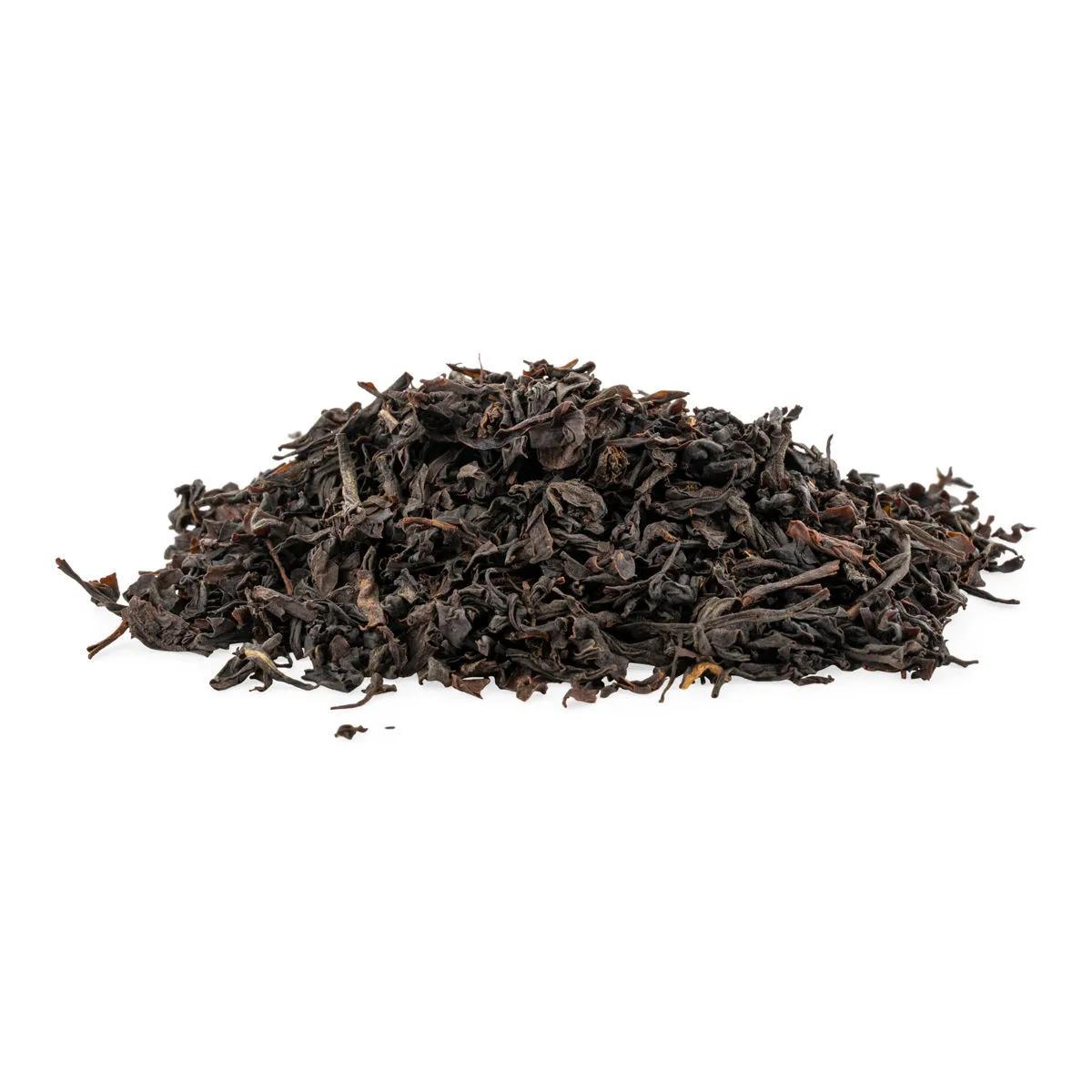
Ceylon tea is a full-bodied black tea grown in Sri Lanka, prized for its rich aroma and distinct spicy notes. Available as 100 g of loose leaves, this is the kind of brew that anchors your morning or pulls you through a sluggish afternoon — proper caffeine, proper flavour, no fuss. Steep it hot for a classic cuppa or pour it over ice when the weather turns warm. Either way, you get a clean, aromatic hit that bag tea simply can't match.
Ceylon tea stands apart from generic black tea blends because of where and how it's grown. Sri Lanka's central highlands — elevations between 600 and 2,500 metres — produce leaves with a brighter, more complex character than lowland teas. You'll notice it the moment you open the bag: a warm, slightly spicy fragrance that's closer to cinnamon bark than to the flat, dusty smell of supermarket teabags. The taste follows through — bold without being bitter, with a natural sweetness that doesn't need sugar to shine.
The loose-leaf format matters here. Whole and broken leaves have more surface area to unfurl during steeping, which means you extract a fuller range of flavour compounds compared to the crushed dust inside most teabags. If you've only ever had Ceylon from a bag, brewing loose leaf is a genuine step up. The colour in the cup is a deep amber-copper, and the body sits somewhere between a muscular Assam and a lighter Darjeeling — right in the sweet spot for an everyday drinker.
| Spec | Value |
|---|---|
| Ingredients | 100% Ceylon black tea |
| Origin | Sri Lanka |
| Tea Type | Black tea (fully oxidised) |
| Format | Loose leaf |
| Pack Size | 100 g |
| SKU | SM0512 |
| Caffeine | Yes — approximately 50–90 mg per 240 ml cup |
| Steep Temperature | 95–100 °C |
| Steep Time | 3–5 minutes |
| Servings per Pack | Roughly 40–50 cups (using 2–2.5 g per cup) |
Getting the best cup out of loose-leaf Ceylon tea takes about five minutes and zero special equipment. Here's the method we use behind the counter:
We've stocked a fair few herbal teas and black teas since 1999, and Ceylon is one of those staples that never leaves the shelf — for good reason. It's the tea equivalent of a reliable friend: not flashy, not trying to reinvent the wheel, just consistently good. The spicy undertone is what keeps people coming back. It's not an in-your-face spice like chai — more of a warm, woody note that sits behind the main flavour and rounds the whole thing out.
One honest limitation: if you're sensitive to caffeine, this isn't your evening drink. A cup brewed at full strength sits around 50–90 mg of caffeine depending on steep time — roughly half a strong coffee. After 3 PM, you might want to switch to something caffeine-free like chamomile or rooibos. And if you're brewing for guests who aren't tea people, keep the steep time closer to 3 minutes. Five minutes produces a cup with real tannin bite that can catch newcomers off guard.
Compared to a standard English Breakfast blend (which usually mixes Assam, Kenyan, and sometimes Ceylon), a pure Ceylon tea is brighter and less malty. If English Breakfast is a warm blanket, Ceylon is a crisp autumn morning — there's more going on in the flavour profile. We'd pick this one over a blended black tea every time when brewing iced tea, because that brightness translates beautifully over ice.
Black tea, including Ceylon, has attracted a fair amount of scientific attention over the years. Here's what the evidence actually says — no exaggeration, no miracle claims.
According to Healthline's review of Ceylon tea nutrition and benefits, studies show that black tea consumption may be associated with improved heart health markers, though the review also notes that "more research is needed, as other studies have not observed a significant impact of black tea on cholesterol levels." That's the honest picture: promising signals, not settled science. Most research points to 2–4 cups per day as the range used in studies looking at cardiovascular markers and blood sugar management.
According to a 2024 review published in PMC examining the effects of differently processed teas on gut microbiota, clinical studies in which humans were treated with tea or tea extract observed changes in gut flora composition. The relationship between tea polyphenols and gut bacteria is an active area of research — early findings suggest that regular black tea consumption may influence the diversity of your gut microbiome, though the specific health implications are still being mapped out.
A moderate intake of 2–3 cups daily is the range most commonly referenced in research as a reasonable amount. Caffeine content per cup runs 50–90 mg, so 3 cups puts you at roughly 150–270 mg of caffeine — well within the 400 mg daily ceiling that most health bodies consider safe for adults.
| Research Area | What Studies Observed | Strength of Evidence |
|---|---|---|
| Heart health markers | Some studies show association with improved cholesterol ratios; others show no significant effect (Healthline review) | Mixed — more research needed |
| Blood sugar management | Observational studies suggest regular black tea drinkers may have more stable blood sugar levels | Preliminary |
| Gut microbiome | Clinical trials observed changes in gut flora diversity after tea consumption (PMC, 2024) | Early-stage |
| Antioxidant content | Black tea contains theaflavins and thearubigins — polyphenols formed during oxidation | Well-established (compositional) |
Pair your Ceylon tea with a stainless steel tea infuser for mess-free brewing — loose leaf needs room to expand, and a good infuser makes all the difference. If you're building out your tea shelf, our Yerba Mate and Guayusa offer a different caffeine profile that complements Ceylon nicely for rotating through the week.
Keep your Ceylon tea in an airtight container, away from light, heat, and moisture. A ceramic or tin caddy works best — avoid clear glass jars on the kitchen counter, because UV light degrades the flavour compounds faster than you'd expect. Stored properly, loose-leaf black tea holds its character for 18–24 months. You'll know it's past its prime when the dry leaves lose their fragrance and the brewed cup tastes thin and papery. It won't make you ill — it just won't be worth drinking.
Ceylon tea is black tea grown exclusively in Sri Lanka (formerly called Ceylon). The leaves are fully oxidised, giving them their dark colour and bold flavour. This particular product is 100% pure Ceylon — no blending with other origins.
Roughly 50–90 mg per 240 ml cup, depending on steep time and leaf quantity. That's about half a cup of filter coffee. Steeping for 3 minutes sits at the lower end; 5 minutes pushes toward the higher end.
Yes. Research commonly references 2–3 cups daily as a moderate intake. At that level, you're looking at 100–270 mg of caffeine — well under the 400 mg daily ceiling most adults can handle comfortably. Adjust based on your own caffeine sensitivity.
Noticeably. English Breakfast is typically a blend of Assam, Kenyan, and sometimes Ceylon teas — it's malty and heavy-bodied. Pure Ceylon is brighter, with spicy, slightly citrusy notes and less malt. It's a cleaner, more defined flavour on its own.
It's one of the best black teas for icing. The bright, spicy character holds up well over ice — unlike maltier teas that go flat when chilled. Brew at double strength (4–5 g per cup), cool briefly, then pour over ice. Add mint or lemon if you like.
Using 2–2.5 g per cup, you'll get roughly 40–50 cups from a single 100 g pack. That's over a month of daily drinking at 1–2 cups per day — solid value for loose-leaf tea.
You can get a second steep, but expect a noticeably lighter cup. Black tea gives up most of its flavour in the first infusion — unlike oolong or green tea, which handle multiple steeps better. If you do re-steep, add an extra minute to the brew time.
Last updated: April 2026
Medical disclaimer. This content is for informational purposes only and does not constitute medical advice. Consult a qualified healthcare provider before use of any substance.