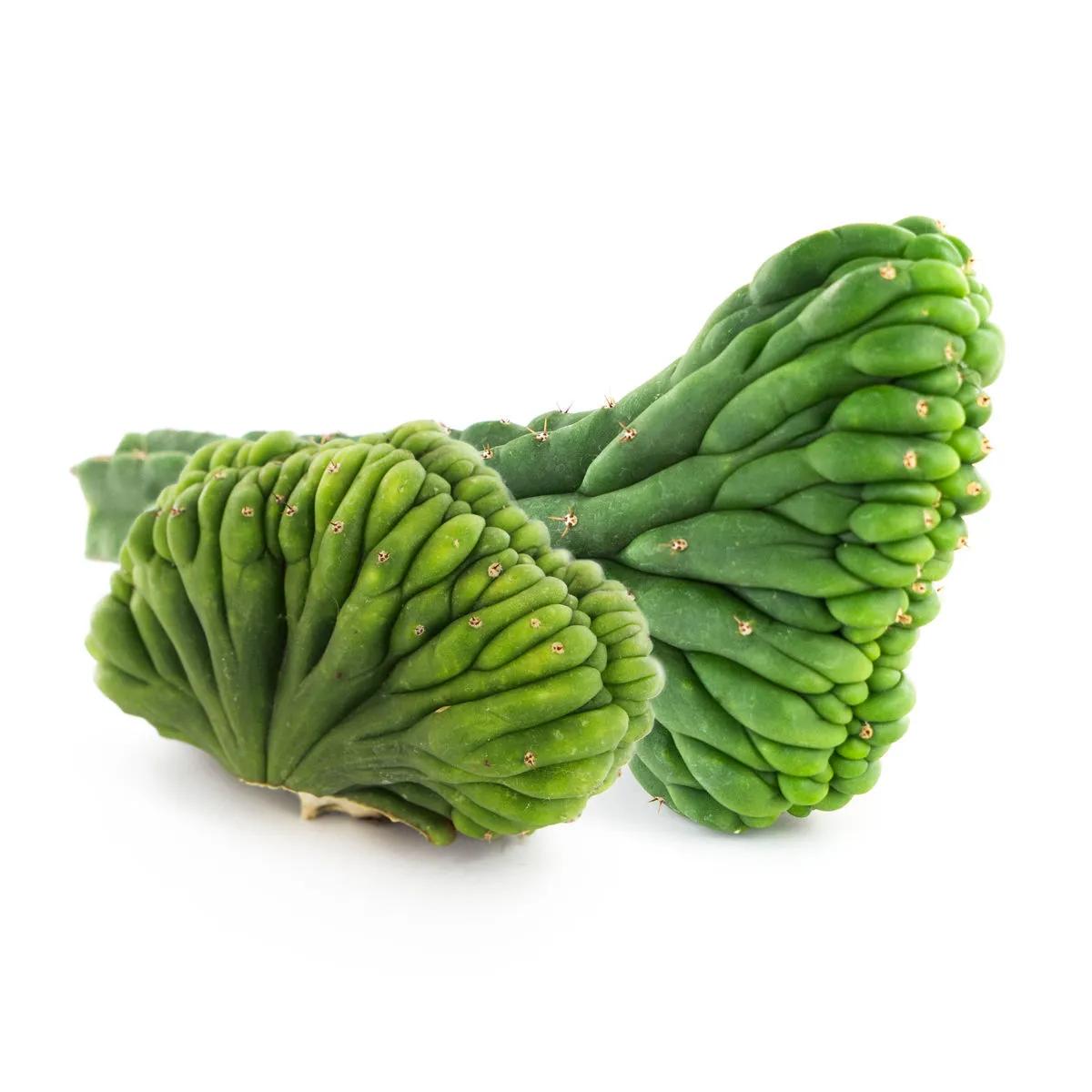
Mescaline cacti
by Unbranded
The Crested San Pedro is a rare fasciated form of the classic Echinopsis pachanoi that grows from multiple growth points instead of one, producing unpredictable, sculptural shapes no two cuttings share. Where a standard San Pedro pushes upward in a single columnar stem, the cristata mutation creates a fan-like, brain-like, or wave-like crest that spreads outward — each growth point developing at its own pace. We've had these on the shop floor for a while now, and honestly, watching one unfold over a few months is more entertaining than most things on telly.
We offer two variants of the Crested San Pedro, and the difference matters for how you pot and display it:
| Variant | SKU | What You Get | Best For |
|---|---|---|---|
| Stemmed | SM0291 | Crested top sitting on a columnar stem section | Traditional upright potting — the stem anchors in soil and the crest fans out above. Easier to stabilise in a pot. |
| Stemless | SM0072 | Pure crest section, no columnar base | Collectors who want the full alien look. Needs a shallow, wide pot and careful positioning while rooting. |
If this is your first crested cactus, go stemmed. The stem gives you a natural handle for potting and roots establish faster with that extra tissue mass. The stemless cutting is the more striking specimen once established, but it demands a bit more patience during the rooting phase — you'll want to prop it with clean stones or a small support until it anchors itself.
Standard San Pedro cacti are handsome enough — tall, ribbed columns that can hit 3-6 metres outdoors over years. But they're predictable. You know what shape you're getting. The Crested San Pedro throws that script out entirely. The fasciation mutation — a naturally occurring genetic quirk where the apical meristem splits into a line rather than a single point — means the cactus produces tissue along an elongated ridge. Each section of that ridge can accelerate or slow down independently, folding the crest into shapes that look like coral, frozen waves, or something out of a Giger painting.
We've been stocking these since they first became available to us, and the thing that still catches us off guard is how different each cutting looks after six months of growth. Two cuttings from the same mother plant, potted the same day, in the same soil — and by summer they've gone in completely different directions. That's the genuine appeal here. You're not buying a cactus; you're buying a slow-motion surprise.
The honest limitation: crested cacti grow more slowly in terms of height than their columnar cousins. If you want a towering cactus quickly, grab a regular San Pedro. The cristata form spreads laterally and builds mass in unexpected ways, but it won't race skyward. Think of it as the difference between a sprinter and a sculptor — different goals, different timelines.
| Specification | Detail |
|---|---|
| Species | Echinopsis pachanoi cristata (syn. Trichocereus pachanoi f. cristata) |
| Common Names | Crested San Pedro, San Pedro cristata |
| Cutting Size | 10-11 cm |
| Variants Available | Stemmed (SM0291), Stemless (SM0072) |
| Growth Form | Fan-shaped / crested (fasciation) |
| Growth Points | Multiple (distributed along crest ridge) |
| Minimum Temperature | 12°C |
| Watering | Moderate — water well, then allow soil to dry fully between waterings |
| Soil | Fertile, well-draining potting mix |
| Light | Bright indirect to full sun (acclimate gradually) |
| Origin | Andes region, South America |
| Active Compounds | Contains mescaline (phenethylamine alkaloid) |
The Crested San Pedro is one of the more forgiving cacti you can grow. Compared to fussy desert species that sulk if you look at them wrong, Echinopsis pachanoi tolerates a bit more water, a bit less light, and a wider temperature range. That said, there are a few things that'll make the difference between a thriving crest and a sad, mushy lump.
We've potted up a fair number of crested San Pedros over the years, and the single biggest killer is overwatering in winter. The crest shape holds moisture in its folds more than a smooth columnar cactus does. If you water during dormancy and the temperature drops, those folds become rot traps. Our rule: if it's below 15°C, put the watering can down and walk away.
The other thing worth mentioning — and this catches people out — is that crested cacti sometimes throw out a normal columnar shoot from the crest. It's called a reversion, and it's not a problem. You can leave it for an interesting hybrid look, or cut it off cleanly with a sterilised blade if you want to maintain the pure crested form. Some growers root the reverted shoot separately and end up with a bonus standard San Pedro. Not a bad deal.
Compared to a Bolivian Torch (Echinopsis lageniformis) or a Peruvian Torch (Echinopsis peruviana), the San Pedro is the most tolerant of the three when it comes to water and cold. If you can keep a San Pedro alive, you can keep a crested one alive — the growth form is different, but the care requirements are nearly identical. The crest just needs a touch more attention to airflow around those folds.
Already growing columnar cacti? Pair your Crested San Pedro with a standard San Pedro cutting or a Peyote cactus for a proper mescaline cactus collection. If you're new to cactus growing entirely, grab a bag of perlite and cactus potting mix while you're at it — getting the soil right from day one saves headaches later.
The Crested San Pedro, like its columnar parent, contains mescaline — a phenethylamine alkaloid that has been used in Andean ceremonial contexts for an estimated 3,000+ years. The mescaline content in crested forms has not been as extensively studied as in standard Echinopsis pachanoi, so exact alkaloid concentrations in cristata specimens are not well documented. What we can say is that the same species, the same genetics, and the same biosynthetic pathways are at play.
According to sources referenced by the psychonautic community, a common mescaline dose range sits between 200-400 mg of pure mescaline, with threshold effects observed below 100 mg and strong effects reported above 400 mg. For dried San Pedro material, roughly 20 grams of dried cactus has been cited as containing approximately 300 mg of mescaline — though this varies significantly with growing conditions, age, and the specific part of the plant used.
Worth being straight about: nausea is commonly reported during the onset phase. This is well-documented across mescaline-containing cacti and is not unique to the crested form. Set and setting matter enormously, as they do with any substance in this category.
These cacti are slow growers but genuinely long-lived. A well-maintained crested San Pedro can develop into a specimen piece over 5-10 years that looks like nothing else in your collection. The crest will widen, fold, and occasionally split into separate cresting zones — each developing its own character.
Repot every 2-3 years into a slightly larger container, refreshing the soil mix each time. The roots on crested forms tend to spread wide rather than deep, so a broad, shallow pot often works better than a tall narrow one — especially for the stemless variant.
Watch for mealybugs in the crest folds. The tight spaces between growth ridges are exactly where these pests like to hide. A cotton bud dipped in rubbing alcohol, applied directly to any white cottony spots, sorts them out. Check monthly during the growing season.
Fasciation — a mutation where the single growing tip (apical meristem) elongates into a line, producing fan-shaped or brain-like growth. It occurs naturally in about 1 in several thousand seedlings. The cause is genetic, though environmental stress can occasionally trigger it.
No. Care requirements are virtually identical — same soil, same watering schedule, same temperature range (minimum 12°C). The only extra consideration is ensuring good airflow around the crest folds to prevent moisture buildup and potential rot.
Slower than a standard columnar San Pedro. Expect visible new growth within 2-3 months during the growing season, but the crest expands laterally rather than shooting upward. Over a year, a healthy cutting might add 3-5 cm of crest width in good conditions.
Stemmed if you want easier rooting and a more stable pot presence. Stemless if you want maximum visual impact from the crest itself. First-time crested cactus growers should start with stemmed — it roots faster and forgives more mistakes during establishment.
Yes. Echinopsis pachanoi cristata is the same species as the standard San Pedro and contains the same alkaloids, including mescaline. Exact concentrations in crested forms are not well-studied, but the biochemistry is identical to the columnar form.
Yes, this happens occasionally. A normal vertical shoot may emerge from the crest. You can leave it for an unusual hybrid look or remove it with a sterilised blade to maintain the crested form. The removed shoot can be rooted as a separate standard San Pedro.
A fertile potting mix with 30-40% perlite or coarse sand added for drainage. Unlike many desert cacti, San Pedro appreciates some organic matter in the soil. Avoid pure mineral substrates — this species likes a richer mix than, say, a lithops or astrophytum.
Water thoroughly, then let the soil dry completely before the next watering. In summer, that's roughly every 7-10 days. In winter, once a month or less. The San Pedro tolerates slightly more water than most cacti, but soggy soil will still cause root rot.
Last updated: April 2026
Medical disclaimer. This content is for informational purposes only and does not constitute medical advice. Consult a qualified healthcare provider before use of any substance.