Cultivation supplies
by Unbranded
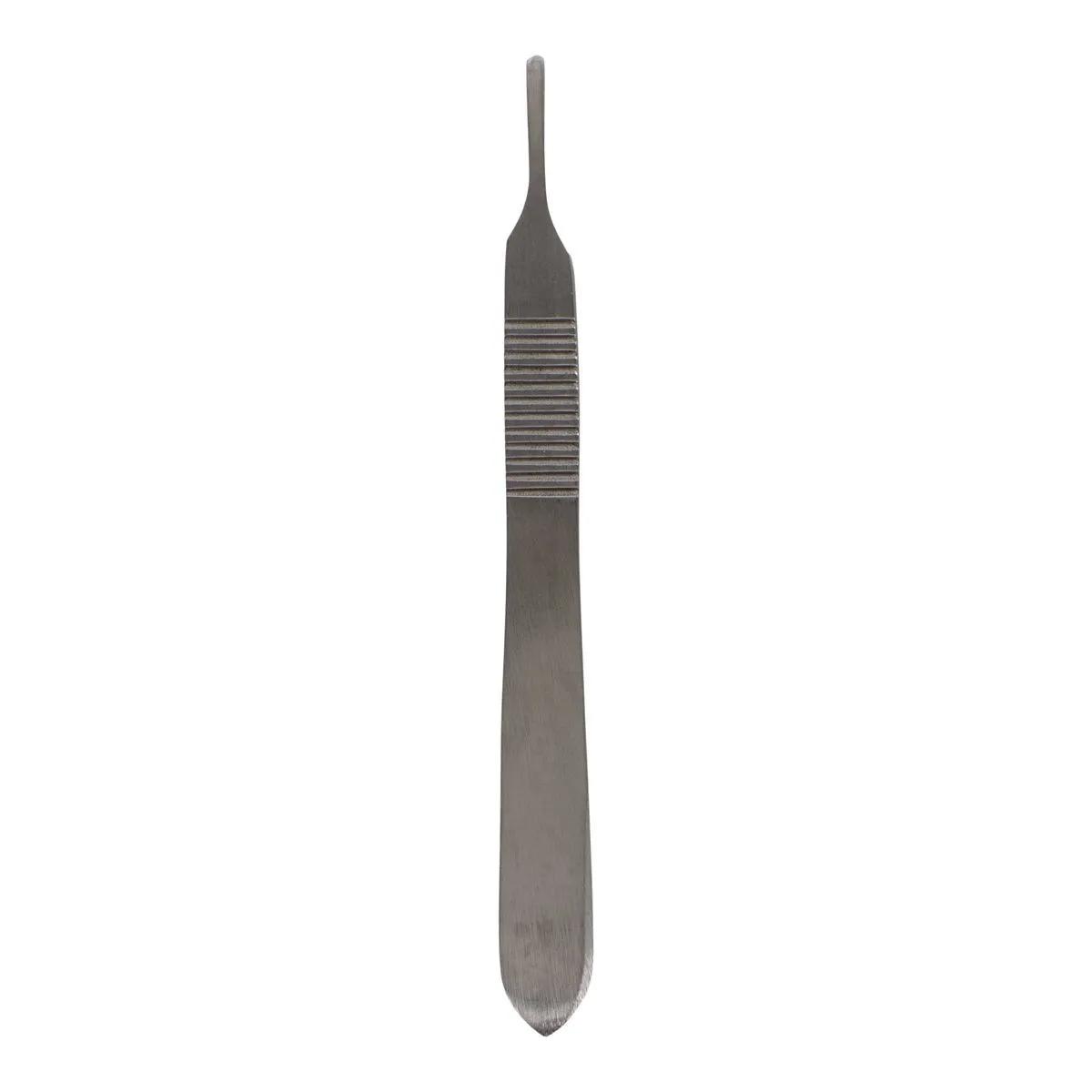
A scalpel handle is a reusable stainless steel instrument that gives you full control over blade placement during delicate cultivation work. If you're doing agar transfers, cloning tissue samples, or trimming colonised grain, this #3 handle turns a loose blade into a proper precision tool. It's the kind of thing you don't think about until you've tried to do fine work without one — and then you wonder how you managed.
This is the #3 scalpel handle — the standard size used across mycology, laboratory work, and fine botanical tasks. It accepts all #3-series scalpel blades (including #10, #11, #12, and #15 blade profiles). The slot-and-groove mechanism at the tip locks the blade firmly in place through friction and mechanical engagement, so there's zero wobble during cuts. If you're buying blades separately, just make sure they're #3-compatible.
| Specification | Detail |
|---|---|
| Handle size | #3 |
| SKU | SH0127 |
| Material | Stainless steel |
| Compatible blades | #3-series (e.g. #10, #11, #12, #15) |
| Blade attachment | Slot-and-groove friction lock |
| Reusable | Yes — sterilise between uses |
| Category | Mushroom grow supplies |
You'll need blades to go with this — pick up a pack of Scalpel Blades (#3-series) so you're ready to work straight away. If you're setting up a full sterile workspace, a Still Air Box and an alcohol lamp or lighter for flame sterilisation round out the kit nicely.
A scalpel handle gives you the grip and control that a bare blade simply can't. We've watched people try to do agar work holding a blade with tweezers, or worse, their fingers — and the results speak for themselves. Uneven cuts, contaminated transfers, and the occasional nick that could've been avoided entirely. The handle weighs next to nothing, but the difference in precision is night and day.
In mushroom growing, contamination is the enemy. Every time you open a Petri dish or cut into a fruiting body for a tissue clone, you're racing against airborne contaminants. A scalpel handle lets you make quick, clean, deliberate cuts — 1-2mm tissue samples from the interior of a mushroom cap, clean agar wedge transfers, precise trimming of colonised grain. The faster and cleaner your cut, the smaller the window for contamination. According to research on scalpel edge performance, blade sharpness and stability directly affect the quality of the cut surface, which in turn affects outcomes (PMC7838729). That applies to tissue work just as much as it does to surgery.
The honest limitation? It's a handle. It does one thing: hold a blade. There's no ergonomic revolution here, no fancy coating. It's a straight stainless steel rod with a blade slot at one end. But that's exactly what you want — something you can autoclave, flame-sterilise, wipe down with isopropyl alcohol, and use again tomorrow. No fuss, no moving parts to harbour spores or bacteria.
We've been selling grow supplies since 1999, and the scalpel handle is one of those items that separates the growers who get consistent results from the ones who keep losing jars to contamination. It's under a tenner, it lasts years, and it makes every sterile procedure you do cleaner and faster. The growers who skip it usually come back for one after their second or third failed transfer.
One thing worth mentioning: the #3 handle is the standard for mycology work because it's slim enough for fine detail but long enough (around 12-13cm) to give you a comfortable pencil grip. If you've used a scalpel in a biology class, this is the same handle. The blade profiles it accepts cover everything you'd need — the #11 pointed blade is the go-to for agar work, and the #10 curved blade is handy for tissue samples. We'd pick the #11 as your everyday blade if you're only buying one type.
The #3 handle accepts all #3-series blades: #10, #11, #12, #15, and their variants. For mushroom cultivation, the #11 (pointed tip) is the most popular choice — it gives you the precision needed for agar wedge cuts and tissue cloning.
Yes. Wipe it down with 70% isopropyl alcohol before and after each session. The stainless steel body can also handle flame sterilisation and autoclaving at 121 degrees Celsius without any damage.
Lift the blade off from the back edge using a blade remover tool or the blunt spine of another blade. Never pull it off with bare fingers toward the cutting edge. Dispose of used blades in a sharps container immediately.
If you're doing any agar work, grain transfers, or tissue cloning — yes. A bare blade gives you no control, and improvised tools introduce contamination. The handle costs very little and makes sterile technique noticeably more reliable.
Indefinitely, with basic care. Stainless steel resists corrosion and repeated sterilisation. The handle itself doesn't wear out — you just replace the blades as they dull, which is typically after 3-5 uses in agar work.
The #3 is slimmer and shorter — built for fine, detailed work. The #4 is larger and accepts bigger blades (#20-#25), designed for broader cuts. For mushroom cultivation and agar work, the #3 is the right choice.
Last updated: April 2026
Medical disclaimer. This content is for informational purposes only and does not constitute medical advice. Consult a qualified healthcare provider before use of any substance.