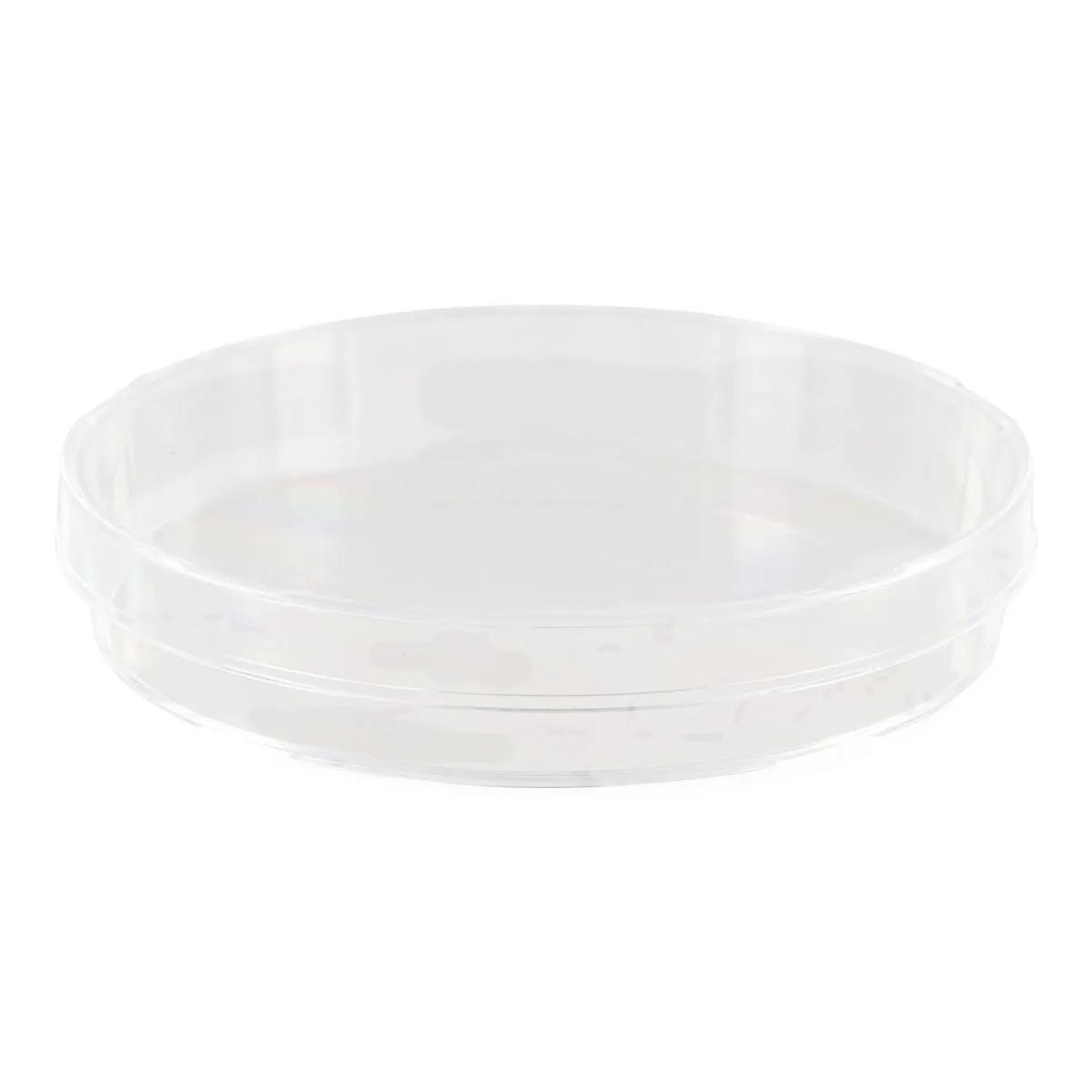
Cultivation supplies
by Unbranded
Sterile Petri dishes are shallow, lidded containers used to germinate spores, isolate cultures, and propagate mycelium in a contamination-free environment. This pack of 20 pre-sterilised dishes gives you enough workspace for multiple agar transfers, spore prints, or seed germination runs without reusing a single dish — because in mycology, single-use sterile gear is not a luxury, it is the baseline. Order a pack and you have 20 guaranteed-clean surfaces ready to go, no autoclaving required.
| Specification | Detail |
|---|---|
| Pack quantity | 20 dishes |
| Material | Clear plastic (polystyrene) |
| Sterilisation | Factory pre-sterilised, individually sealed |
| Lid | Included (slip-fit cover) |
| Use type | Single-use / disposable |
| SKU | SH0122 |
| Primary application | Mushroom spore germination, agar work, seed starting |
| Compatible with | Standard nutrient agar, malt extract agar (MEA), potato dextrose agar (PDA) |
| Dish type | Material | Reusable | Autoclavable | Best for |
|---|---|---|---|---|
| Single-use plastic (this product) | Polystyrene | No | No — warps at 121°C | Home cultivators, beginners, high-volume agar pours |
| Borosilicate glass | Glass | Yes | Yes | University labs, long-term reuse, repeated sterilisation cycles |
| Polypropylene plastic | PP plastic | Limited | Some grades | Mid-range option, check manufacturer specs |
Complete your agar workstation: pair these Petri dishes with a still air box or laminar flow hood for clean transfers. Spore syringes, sterile scalpels, and pre-mixed agar powder are all available separately in our mushroom grow supplies section. If you are starting from scratch, a mushroom grow kit takes the guesswork out of the first harvest while you practise your sterile technique on the side. Browse our full mycology category for grain spawn bags, substrate, and parafilm.
Contamination is the single biggest cause of failed home mushroom projects, according to community surveys and data tracked by cultivation forums over the past decade. We have seen it hundreds of times over the past 25-plus years at our Amsterdam counter: someone cracks open a spore syringe, drops it onto a surface that looked clean, and three days later the dish is green with Trichoderma instead of white with mycelium. The difference between a successful culture and a mouldy mess almost always comes down to one thing — sterile equipment at the moment of inoculation.
A factory-sealed, single-use Petri dish removes one entire variable from that equation. You crack the seal, pour your agar (roughly 1.2 grams of nutrient agar powder per 60 ml of hot water, according to standard preparation guides), drop your spore sample, close the lid, and wrap with parafilm. No scrubbing, no autoclaving, no wondering if the glass dish you boiled for 20 minutes is actually sterile or just hot. For the price of a pack of 20, you get 20 guaranteed-clean surfaces. That is 20 chances to isolate a healthy culture or test a new spore print.
The honest limitation: these are lightweight, disposable plastic. They are not the thick borosilicate glass dishes you would find in a university lab, and they are not designed for repeated autoclaving or long-term storage. If you need dishes you can sterilise and reuse dozens of times, glass is the way to go. But for most home cultivators running agar transfers in a still air box, single-use plastic dishes are the practical choice — cheaper per dish, lighter to ship, and zero prep time. We would pick these over glass for anyone doing their first 10-20 agar plates.
Agar work with sterile Petri dishes follows seven steps, from workspace prep through final transfer to grain spawn or substrate. The entire process takes about two hours of active work plus 3-7 days of incubation.
Sterile Petri dishes provide a sealed, humid microenvironment that is ideal for germinating seeds of all kinds, including cannabis seeds and pepper varieties. The controlled, sealed environment keeps moisture levels consistent and lets you monitor germination progress without disturbing the seed. Place a damp piece of filter paper or cotton wool in the base of the dish, set your seeds on top with 1-2 cm spacing, close the lid, and store in a warm spot (20-25°C). Most viable seeds crack open within 24-72 hours. Once the taproot reaches 1-2 cm, transfer to soil or a growing medium.
The clear plastic makes it dead easy to check on progress without opening the lid — which matters, because every time you open a germination chamber you lose humidity and risk introducing mould spores. With 20 dishes in a pack, you can run multiple strains or varieties simultaneously, each in its own labelled dish, without any cross-contamination risk. If you want to get organised, buy a few extra packs so you always have sterile dishes on hand when a new seed batch arrives.
The most common reason agar plates fail is a break in sterile technique during inoculation, not a defective dish or bad spores. After more than two decades of selling mushroom cultivation supplies from our shop near the Kloveniersburgwal in Amsterdam, the single most common question we get is not about which strain to grow — it is "why did my agar plate go green?" The answer, nine times out of ten, is a break in sterile technique. Either the dish was not sterile, the workspace was not clean, or the cultivator opened the lid for too long during inoculation. Pre-sterilised Petri dishes eliminate the first variable entirely. That leaves the other two up to you — but at least you are starting from a guaranteed-clean surface.
One thing we have noticed: people tend to buy too few dishes on their first order. Agar work is a numbers game. Not every plate will produce a clean culture, especially when you are learning. Having 20 dishes means you can afford to lose a few to contamination without running out of supplies mid-project. And at this price point, there is no reason to ration them.
From our counter, here is a story worth sharing: a regular customer came in last year convinced his spore syringes were all duds. Four plates, four failures. We asked him to walk us through his process. Turned out he was reusing the same plastic Petri dish after wiping it with alcohol — not sterile, just wet. We handed him a fresh sealed pack, he ran the same syringes that evening in a still air box, and three out of four plates showed clean mycelium within five days. The spores were never the problem. The dish was. That is why we always recommend single-use sterile dishes for anyone who is not running a proper autoclave cycle on glass.
Research published by the Beckley Foundation on psilocybin-producing fungi notes the importance of controlled laboratory conditions when working with Psilocybe species — and while home cultivators are not running clinical trials, the principle holds: cleanliness at every step determines your outcome.
No. These are single-use polystyrene dishes. They warp and degrade at autoclave temperatures (121°C). If you want reusable dishes, get borosilicate glass Petri dishes — they handle repeated pressure-cooker cycles without issue.
Standard lab size, approximately 90 mm diameter. This fits the most common agar pour recipes and gives enough surface area for mycelium to colonise before transfer. Most spore syringe and agar protocols assume a 90 mm dish.
Not strictly. A still air box — basically a large plastic tub flipped upside down with two armholes — works well for home cultivators. The key is minimising air movement during inoculation. A laminar flow hood is better but costs significantly more. Start with a still air box and upgrade later if you get serious.
Keep them sealed in the original packaging at room temperature, away from direct sunlight. Do not open the packaging until you are ready to use a dish. Once the seal is broken, use the dish immediately — it is no longer guaranteed sterile after exposure to open air.
Yes. They are standard lab-grade sterile Petri dishes. They work for any application that requires a shallow, lidded, sterile container — bacterial cultures, mould observation, seed germination, or educational science projects. Pour your chosen growth medium and inoculate as needed.
Malt extract agar (MEA) is the most common choice — simple to prepare and widely used across most Psilocybe and gourmet species according to standard mycology references. Potato dextrose agar (PDA) is another solid option. Mix roughly 1.2 g of agar powder per 60 ml of water, sterilise in a pressure cooker, and pour while still warm.
Each dish takes about 15-20 ml of liquid agar. A 1,200 ml batch (24 g agar powder in 1,200 ml water) fills all 20 dishes in this pack. Scale up or down proportionally if you need fewer.
Last updated: April 2026
Medical disclaimer. This content is for informational purposes only and does not constitute medical advice. Consult a qualified healthcare provider before use of any substance.