
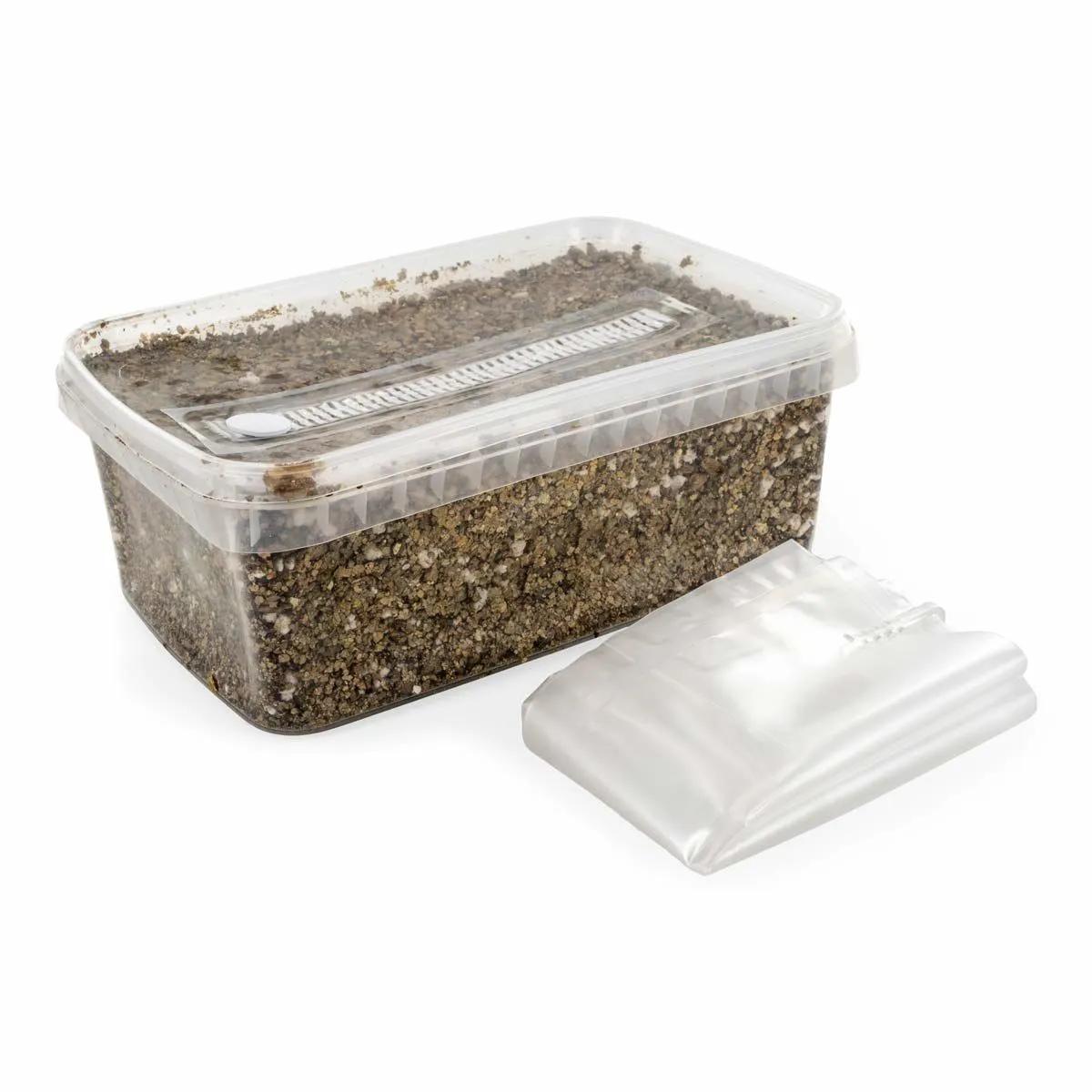
Sterilised Substrate Kit
Cultivation supplies
by Unbranded
Sterilised Substrate Kit for Growing Magic Mushrooms at Home
The Sterilised Substrate Kit is a ready-to-inoculate growing medium that gives Psilocybe cubensis mushrooms exactly what they need to colonise and fruit — without you having to sterilise anything yourself. Inside the sealed box you'll find a mixture of whole oat, vermiculite, perlite, and gypsum at 60–65% moisture content. Just add spores or liquid culture through the injection port, keep things warm, and let biology do the rest. We've sold thousands of these kits, and the single biggest reason people fail at mushroom growing is contamination during substrate prep. This kit removes that entire step.
Which Size Sterilised Substrate Kit Do You Need?
Two sizes, and the choice is simpler than you think. The 1200 ml kit is the one to grab if you're running a single strain or working with a single spore syringe — you'll use roughly half a syringe (5 ml) or half a spore vial to inoculate it. The 2100 ml kit is better value per millilitre of substrate and gives the mycelium more room to colonise, which typically means bigger flushes. Use a full spore vial or 10 ml from a syringe for the larger kit. If you're using a ready-made liquid culture by Acid Shroomz, the guideline is 2–5 ml of culture per litre of substrate — so roughly 2.5–6 ml for the 1200 ml, and 4–10 ml for the 2100 ml.
| Spec | 1200 ml Kit (SH0145) | 2100 ml Kit (SH0165) |
|---|---|---|
| Substrate volume | 1200 ml | 2100 ml |
| Spore syringe amount | 5 ml | 10 ml |
| Spore vial amount | Minimum half vial | Full vial |
| Liquid culture (Acid Shroomz) | 2–5 ml per litre | 2–5 ml per litre |
| Mondo Liquid Culture Vial | 2 ml spores into vial, wait 2+ weeks | 2 ml spores into vial, wait 2+ weeks |
| Best for | Single strain runs, smaller spaces | Larger harvests, better value per ml |
Our honest take: if you're only buying one kit, go for the 2100 ml. The extra substrate volume gives mycelium more nutrition to draw from, and the difference in price is small relative to the extra yield you'll get. The 1200 ml is good if you want to run two different strains side by side without committing a full syringe to each.
Specifications
| Spec | Value |
|---|---|
| Substrate composition | Whole oat, vermiculite, perlite, gypsum |
| Moisture content | 60–65% |
| Suitable species | Psilocybe cubensis |
| Available sizes | 1200 ml / 2100 ml |
| Kit contents | Sterilised substrate box, humidity tent/fruiting chamber, paperclip, alcohol swab, injection port |
| Inoculation method | Spore syringe, spore vial, or liquid culture |
| Sterilisation | Factory-sterilised, sealed with injection port |
| SKU (1200 ml) | SH0145 |
| SKU (2100 ml) | SH0165 |
Complete your setup: you'll need a spore syringe or liquid culture to inoculate this kit — it doesn't come with one. Check out the Acid Shroomz ready-made liquid cultures for the fastest colonisation times, or browse our Shroomshop spore syringes if you want to pick a specific Psilocybe cubensis strain. A Mondo Liquid Culture Vial is also a solid option if you'd rather make your own culture from spores — just factor in the 2-week wait time before you can inoculate.
Why a Sterilised Substrate Kit Matters for Mushroom Growing
Contamination kills more mushroom grows than anything else. We've been in this game since 1999, and the story is always the same: someone prepares their own substrate, skips one step or cuts a corner on sterilisation, and two weeks later they're staring at green mould instead of white mycelium. A single bacterial spore or mould fragment that survives the sterilisation process will outcompete your mushroom mycelium every time. According to research on plant-based substrate composition and preparation, production substrates must be properly sterilised and handled in sterile conditions to prevent competing organisms from taking hold (PMC12348041).
This kit takes the riskiest part of mushroom cultivation — substrate preparation and sterilisation — completely off your plate. The whole oat provides nutrition for the mycelium to feed on. Vermiculite holds moisture without compacting. Perlite adds aeration so the substrate doesn't become anaerobic. Gypsum provides calcium and sulphur while preventing the grains from clumping together. The 60–65% moisture content sits right in the sweet spot: wet enough for mycelium to thrive, dry enough to discourage bacterial growth. You'd need a pressure cooker running at 15 PSI for 90+ minutes to achieve this level of sterilisation at home, and even then, one mistake in your transfer technique can undo all that work.
The sealed injection port is the other detail that matters here. You never open the box during inoculation — you push the needle of your syringe through the self-healing port, inject your spores or liquid culture, and the port seals itself behind the needle. No exposure to open air, no opportunity for contaminants to sneak in. It's the same principle used in laboratory work. The alcohol swab included in the kit is for wiping down the injection port before you pierce it — a small step that makes a measurable difference.
What's in the Box
Everything you need to go from inoculation to fruiting, minus the spores themselves. Here's what you'll find when you open the package:
- One sealed box containing sterilised substrate (whole oat, vermiculite, perlite, gypsum) with a self-healing injection port
- One humidity tent that doubles as your fruiting chamber — this goes over the box once the substrate is fully colonised
- One paperclip for securing the humidity tent and controlling airflow during fruiting
- One alcohol swab for sterilising the injection port before inoculation
What you won't find in the box: spores or liquid culture. That's intentional — it lets you choose your own Psilocybe cubensis strain. The kit is strain-agnostic, so whether you're growing Golden Teacher, B+, McKennaii, or anything else in the cubensis family, the substrate composition works the same way.
How to Use the Sterilised Substrate Kit
- Wash your hands thoroughly and wipe down your work surface. Work in a clean, draught-free room — bathrooms work well because there's less airborne dust than in living areas. Close windows and turn off fans.
- Take the alcohol swab from the kit and wipe the injection port on the substrate box. Let it dry for 30 seconds. This kills any surface contaminants that could hitch a ride on your needle.
- Prepare your spore syringe, spore vial, or liquid culture. If you're using a spore syringe, shake it well to distribute the spores evenly. If you're using a Mondo Liquid Culture Vial, make sure you've already injected 2 ml of spores into it at least 2 weeks prior and that you can see mycelial growth in the liquid.
- Pierce the injection port with your needle and inject the appropriate amount: 5 ml from a syringe for the 1200 ml kit, 10 ml for the 2100 ml kit. For spore vials, use at least half a vial for the 1200 ml and a full vial for the 2100 ml. For Acid Shroomz liquid cultures, use 2–5 ml per litre of substrate.
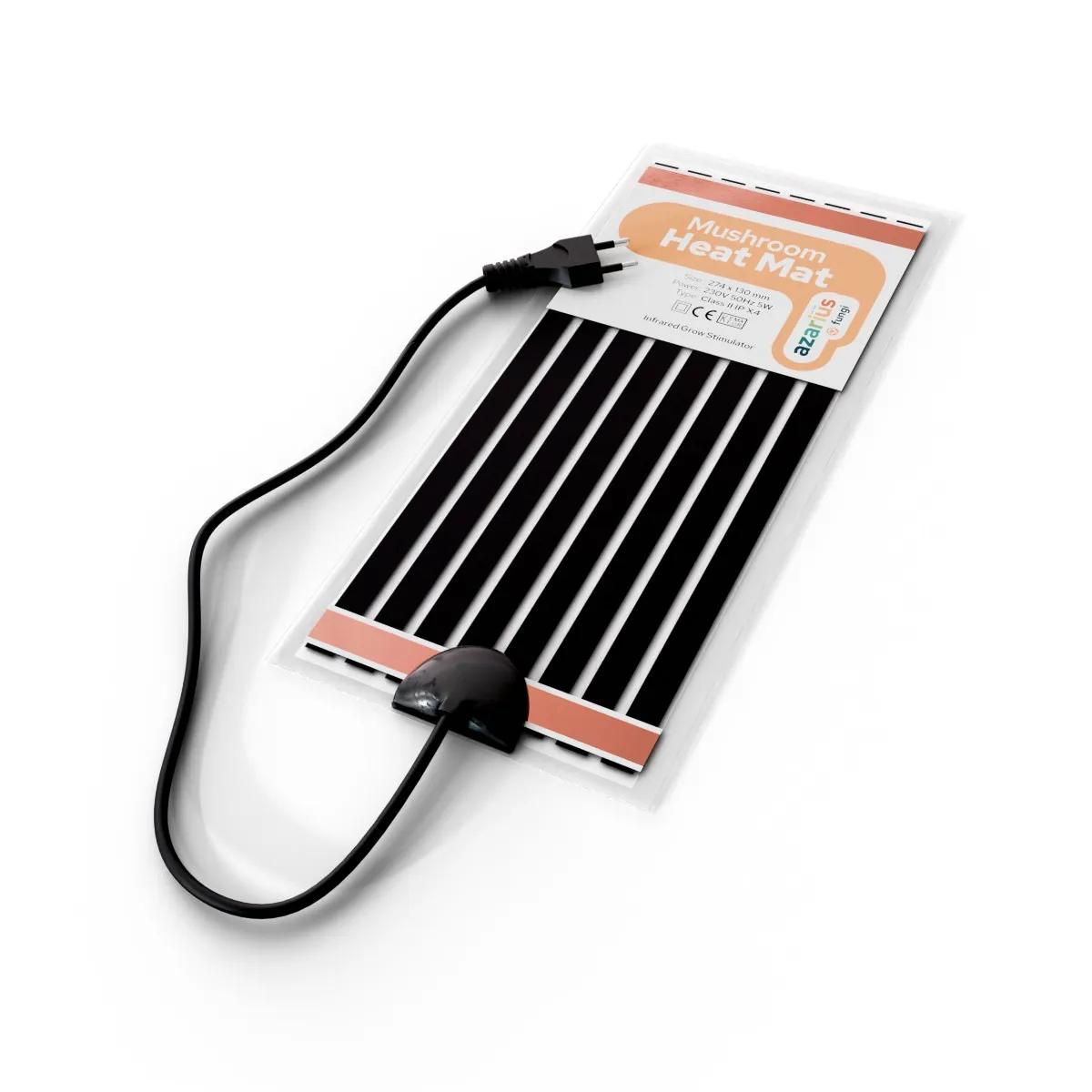
- Place the inoculated box in a warm, dark location. Aim for 24–28°C. A cupboard, a shelf in a warm room, or inside a heat mat setup all work. Do not open the box. The mycelium needs time to colonise the substrate — this typically takes 2–4 weeks depending on the strain, the inoculant type, and the temperature. Liquid cultures colonise faster than spore syringes because the mycelium is already actively growing.
- Check the box every few days by looking through the sides or lid. You're looking for white, fluffy mycelial growth spreading across the substrate. If you see any green, black, or orange patches, that's contamination — don't open the box, and dispose of it.
- Once the substrate is 100% colonised — fully white with no visible uncolonised grain — it's time to fruit. Open the box, place the humidity tent over it, and use the paperclip to secure it with a small gap at the bottom for fresh air exchange.
- Place the setup in a spot with indirect light and temperatures around 21–24°C. Mist the inside of the humidity tent 1–2 times daily to keep humidity high. You should see pins (tiny mushroom primordia) forming within 5–10 days.
- Harvest your mushrooms when the caps begin to open but before they flatten out completely and drop spores. Twist and pull gently at the base. After harvesting, you can soak the substrate in cold water for 12 hours and attempt a second flush.
From Our Counter: What We've Learned Selling These Kits
The number one question we get: "Can I use a liquid culture instead of spores?" Yes, and honestly, we'd recommend it. A liquid culture contains living mycelium that's already growing, so it colonises the substrate significantly faster than spores, which first need to germinate. With a liquid culture, you might see full colonisation in 10–14 days. With a spore syringe, expect closer to 3–4 weeks. The success rate is higher too, because you're introducing an established organism rather than waiting for microscopic spores to find each other and germinate.
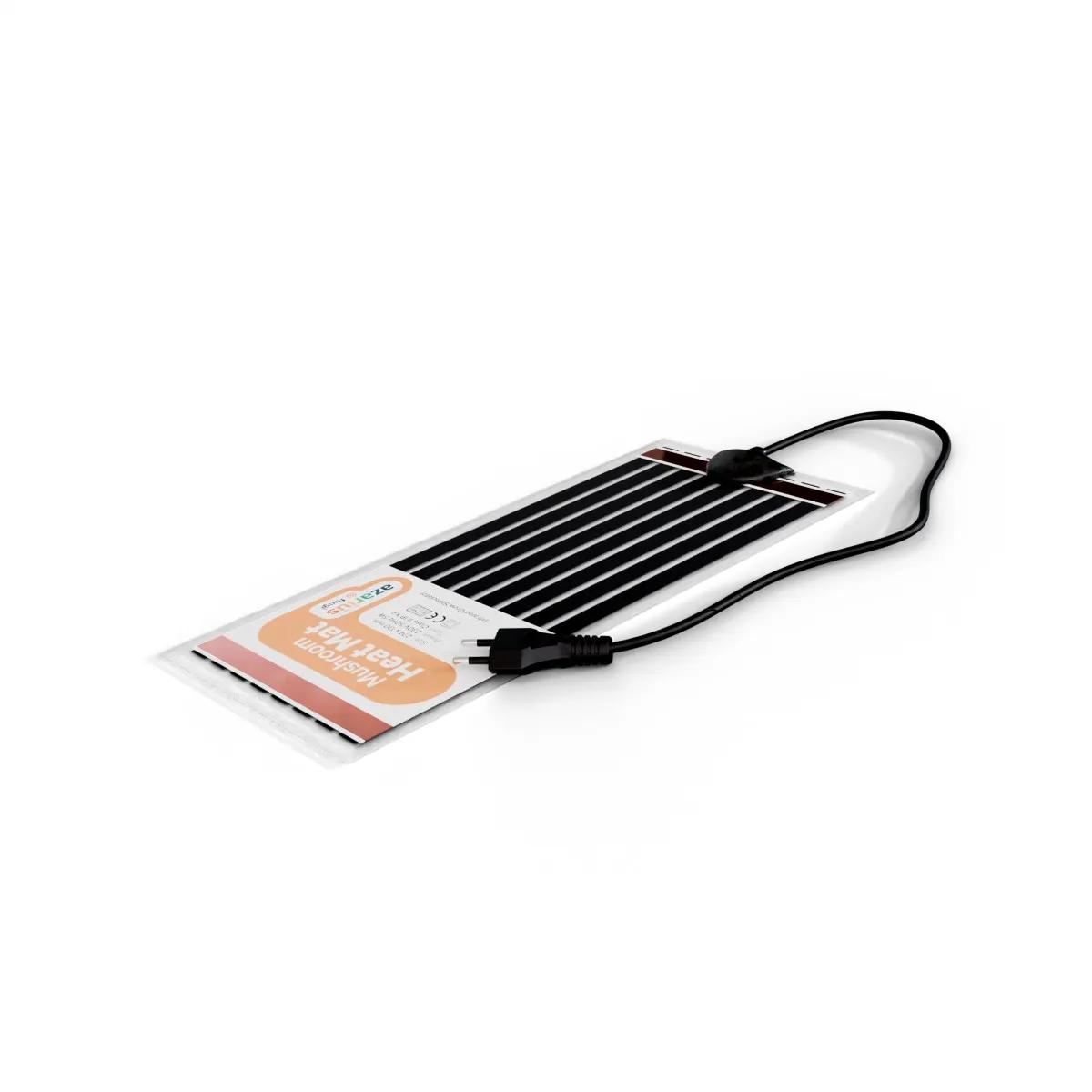
The one thing that catches people out: temperature. If your room sits below 20°C, colonisation slows to a crawl and the risk of contamination goes up because competing organisms get more time to establish themselves before the mycelium can outrun them. If you don't have a naturally warm spot, a seedling heat mat set to 25°C under the box makes a real difference. Don't put the box on a radiator — that's too hot and too uneven.
One honest limitation: this is a single-use substrate. Once you've harvested your flushes (most growers get 1–3 flushes per kit), the nutrition in the oat grains is spent. You can't re-sterilise and reuse it. If you want to keep growing, you'll need a fresh kit. That said, the yield from a single 2100 ml kit is substantial — we've seen growers pull 200g+ wet weight across multiple flushes from the larger size.
Frequently Asked Questions
Do I need a pressure cooker to use this sterilised substrate kit?
No. The entire point of this kit is that the substrate arrives factory-sterilised and sealed. You inoculate through the injection port without ever opening the box during colonisation. No pressure cooker, no autoclave, no sterilisation on your end.
How long does it take for the sterilised substrate to fully colonise?
Typically 2–4 weeks at 24–28°C. Liquid cultures colonise faster (often 10–14 days) because the mycelium is already active. Spore syringes take longer because the spores need to germinate first. Temperature is the biggest variable — below 20°C, everything slows down considerably.
What is the best substrate for Psilocybe cubensis mushrooms?
A grain-based substrate with moisture-retaining additives works best for cubensis. This kit uses whole oat, vermiculite, perlite, and gypsum at 60–65% moisture — a proven combination. The oat feeds the mycelium, vermiculite holds water, perlite provides air pockets, and gypsum prevents clumping.
How do I know if my mushroom substrate is contaminated?
Look for any colour that isn't white. Green patches indicate Trichoderma mould, black spots suggest Aspergillus, and orange or pink usually means bacterial contamination. A sour or sweet fermented smell when you open the box is another red flag. If you spot contamination, don't try to save the kit — bin it and start fresh.
Is a spore syringe or liquid culture better for inoculating substrate?
Liquid culture wins on speed and reliability. It contains living mycelium that colonises the substrate faster and with a higher success rate. Spore syringes work fine but take longer because the spores must germinate first. If this is your first grow, liquid culture gives you the best odds.
Can I reuse the sterilised substrate kit after harvesting?
You can get multiple flushes from a single kit — usually 1 to 3. Between flushes, soak the substrate in cold water for 12 hours to rehydrate it. Once the nutrition in the grains is spent and no more pins appear, the kit is done. You'll need a fresh sterilised substrate kit for your next grow.
Why is sterile technique so critical when growing mushrooms?
Mushroom mycelium grows slowly compared to moulds and bacteria. If even a single contaminant spore lands on your substrate during inoculation, it can outcompete the mycelium and ruin the entire kit. That's why you wipe the injection port with alcohol and work in a clean, draught-free space. The sealed injection port on this kit does most of the heavy lifting for you.
What temperature should I keep the substrate kit at during colonisation?
Aim for 24–28°C. A warm cupboard or a seedling heat mat works well. Avoid direct heat sources like radiators — they create hot spots that can cook part of the substrate while leaving the rest too cool. Consistent, gentle warmth is what you're after.
Last updated: April 2026
Medical disclaimer. This content is for informational purposes only and does not constitute medical advice. Consult a qualified healthcare provider before use of any substance.