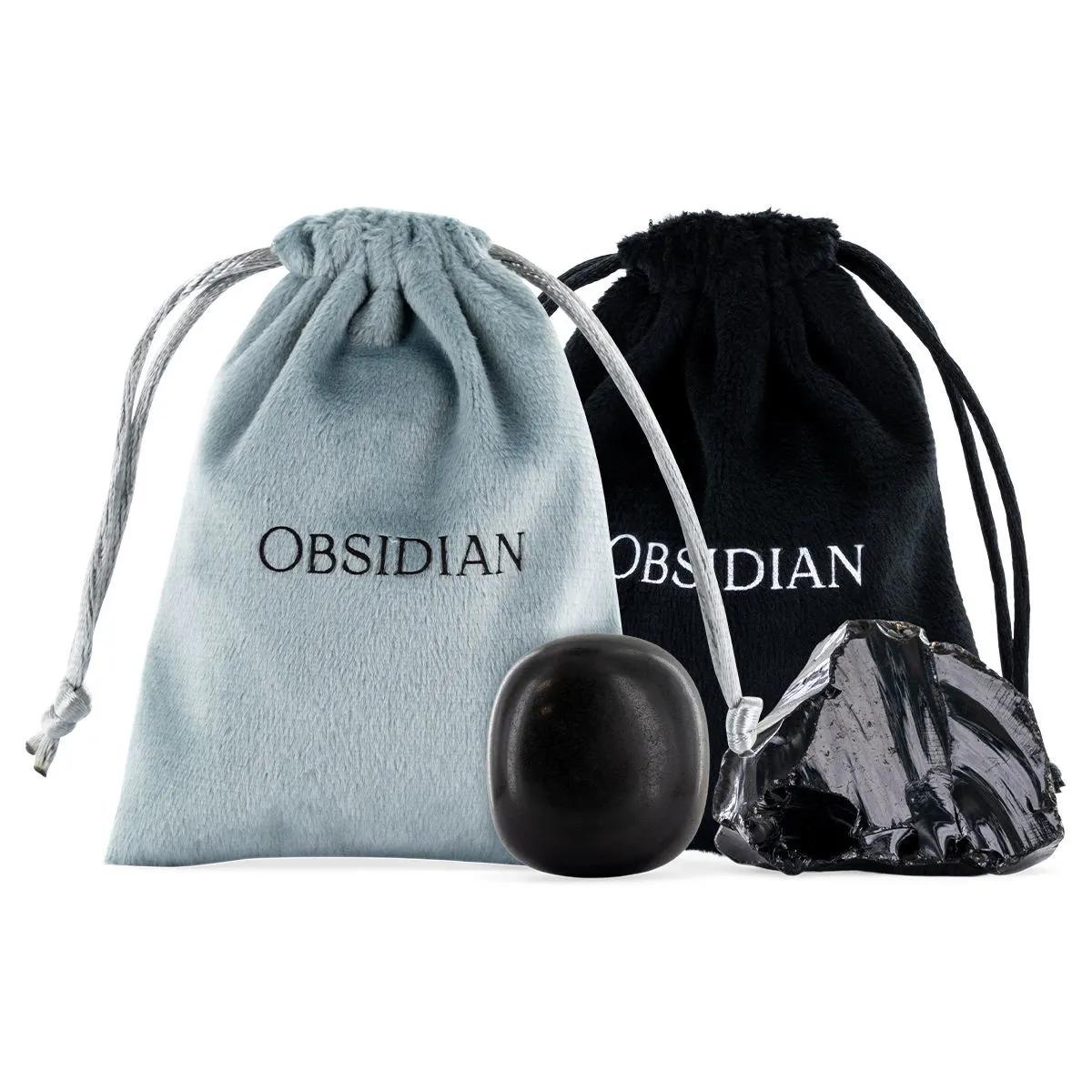
Obsidian is a natural glass mineraloid formed when volcanic lava cools so fast it never gets the chance to crystallise. The result is a deep, mirror-black stone with a glossy fracture you can spot from across a room. Ours comes in 3–5 cm pieces, in either a raw natural finish or polished smooth — pocket-sized, display-ready, and properly mesmerising in lamplight.
Why collectors keep coming back to obsidian
Obsidian sits in a strange spot between geology and folklore. It's not technically a crystal — there's no lattice structure, which is why mineralogists call it a mineraloid — but the volcanic origin gives it a presence that polished quartz can't quite match. Cooled too fast to form crystals, it ends up as natural glass, sharp-edged and glossy. Pre-Columbian cultures in Mexico and Guatemala knapped it into blades and mirrors for thousands of years. Today most collectors keep it on the desk or bedside, where it does a very good job of catching light and conversation.
In feng shui and crystal-healing traditions, obsidian is associated with grounding and clearing what people call "stagnant" energy — a vibe-reset stone, basically. We're not making medical claims here; the metaphysical side is tradition, not science. But there's a reason this particular black stone has stayed in collections for centuries: it just looks the part.
Natural or polished — which obsidian piece suits you?
The two finishes look like completely different stones, and the choice comes down to texture preference.
| Finish | What it looks like | Best for |
|---|---|---|
| Natural (SM0784) | Raw conchoidal fractures, matte-to-glossy patches, sharp-looking edges | Collectors who want the volcanic-origin feel — looks like it was just chipped off a flow |
| Polished (SM0785) | Smooth, mirror-dark, rounded — almost wet-looking under light | Display pieces, pocket carry, anyone who likes a tactile worry-stone |
If it's your first obsidian, we'd pick the polished. It's friendlier in the hand, won't catch on pocket linings, and shows off the deep black gleam that makes the stone famous. The natural finish is for collectors who want the geological story written into the surface — fractures, ridges, the whole volcanic backstory.
Specifications
| Material | Obsidian (natural volcanic glass mineraloid) |
| Origin | Central America, Guatemala, Mexico |
| Size range | 3–5 cm per piece |
| Finishes available | Natural (SM0784) or Polished (SM0785) |
| Mohs hardness | 5–5.5 (handle with care — edges can chip) |
| Cleaning | Water, mild soap, soft cloth |
| Traditional uses | Grounding, feng shui placement, divination |
How to care for your obsidian piece
- Rinse the piece under lukewarm water — no hot taps, sudden temperature swings can stress natural glass.
- Add a drop of mild soap to a soft cloth and wipe gently. No abrasive sponges, no scouring powder.
- Rinse off the soap and pat dry with a clean microfibre or cotton cloth.
- Store away from harder stones (quartz, topaz) — at Mohs 5–5.5, obsidian scratches more easily than people expect.
- If you carry it in a pocket, keep it away from keys. Glass plus metal plus friction equals scuffs.
Honest limitations to know about
A few things we tell people across the counter. Obsidian is glass — properly natural, properly old, but still glass. Drop it on a tiled floor and you'll get a chip or worse. The natural pieces especially can have edges sharp enough to nick a fingertip if you're not paying attention; nothing dangerous, but worth knowing before you hand it to a curious child. And because every piece is cut from a unique raw chunk, no two are identical. Yours might be a touch larger, smaller, or differently shaped than the photo — that's the nature of natural stone, not a flaw.
Obsidian pairs nicely with lighter crystals in a display — rose quartz, clear quartz points, or amethyst clusters all give a good visual contrast against the deep black. Have a browse through our crystals and minerals collection to build out a set.
Frequently Asked Questions
Where does obsidian come from?
Obsidian forms wherever volcanic lava cools fast enough to skip crystallisation — most of the pieces on the market come from Mexico, Guatemala, and other parts of Central America with active or recent volcanic history. Ours is sourced from this same region.
What is the meaning of obsidian in crystal tradition?
In feng shui and crystal-collecting traditions, obsidian is associated with grounding, clearing negative or stagnant energy, and supporting introspection. These are cultural and traditional uses, not scientific claims — but they're why the stone has stayed popular for centuries.
Natural or polished — what's the actual difference?
Natural pieces show the raw conchoidal fractures from how the glass broke, with sharper edges and a more geological look. Polished pieces are tumbled smooth, with a mirror-dark gloss that feels great in the hand. Same stone, completely different aesthetic.
How do I clean my obsidian?
Lukewarm water, a drop of mild soap on a soft cloth, then pat dry. Skip hot water, abrasive cloths, and ultrasonic cleaners — obsidian is glass and doesn't love thermal shock or rough handling.
Will every piece look exactly like the photo?
No — and that's the appeal. Each piece is cut from a unique volcanic chunk, so size, shape, and surface pattern vary within the 3–5 cm range. You'll get a one-of-a-kind stone, not a mass-produced copy.
Is obsidian fragile?
It's harder than you'd think but softer than most crystals — Mohs 5 to 5.5. It'll survive normal pocket carry and display use, but a drop onto a hard floor can chip it. Store it away from harder stones like quartz to avoid scratches.
Last updated: April 2026