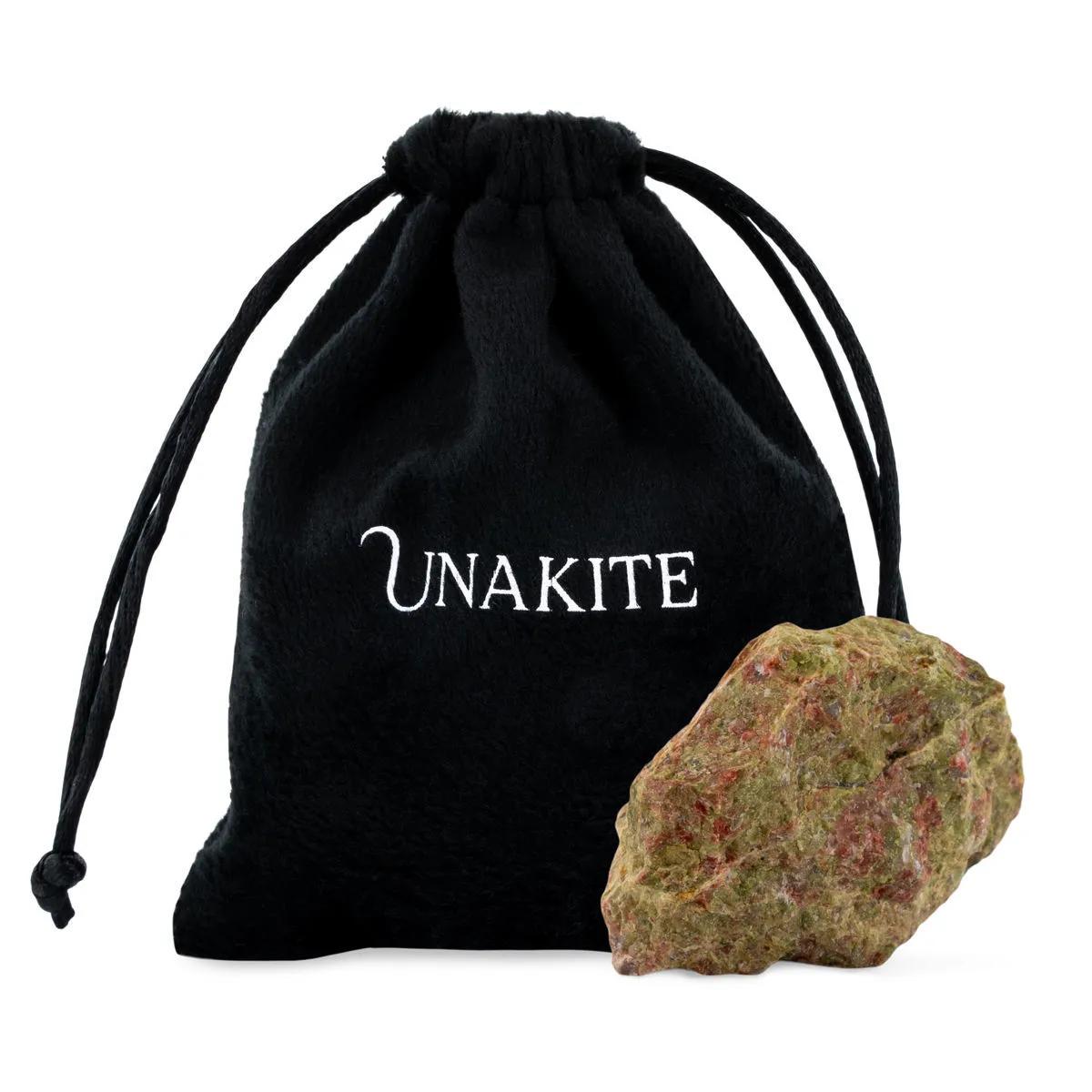
Unakite is a speckled metamorphic stone that combines green epidote, pink feldspar, and clear quartz into one durable, decorative piece. Sourced originally from the Unaka Mountains of North Carolina, it's prized by collectors for its unusual two-tone look and its toughness. Also known as unakite jasper, epidotized granite, or epidote granite, this mineral fuses three components together to create that distinctive mossy-meets-sandy appearance. Each piece we stock measures 3–5 cm with a natural, unpolished finish, and you can buy individual stones to start or grow a collection.
What makes unakite worth picking up
Unakite stands out because it carries two contrasting colours in a single stone, which is rare among decorative minerals. Most green stones are uniformly green, and most pink stones uniformly pink — unakite gives you both in irregular patches, with little glints of quartz catching the light. Roughly 60% of each stone is typically green epidote, with 30% pink feldspar and 10% quartz, though ratios vary piece to piece. No two stones look the same, and at 3–5 cm they're small enough to slip in a pocket or tuck into a windowsill display.
The other thing going for it: durability. Unakite is a metamorphosed granite sitting at 6–7 on the Mohs scale, which means it doesn't chip or scratch easily. We've seen tumbled stones get knocked about in pockets and bags for 5+ years and still look fresh. If you're the type who likes to carry a stone with you rather than keep it on a shelf, this one can take the abuse.
From our counter
One regular customer told us she'd been carrying the same unakite stone for over 3 years — through 2 house moves, a holiday in Portugal, and countless trips through the washing machine when she forgot to empty her pockets. The stone still looks identical to the day she bought it. That's the kind of robustness we mean when we say these are everyday-carry pieces. Honest limitation: she did lose one down a drain once. They float about as well as you'd expect a rock to float.
Specifications
| Stone type | Epidotized granite (unakite jasper) |
| Composition | Pink feldspar, green epidote, clear quartz |
| Size | 3–5 cm per stone |
| Weight | ~20–40 g per stone |
| Finish | Natural, unpolished |
| Origin name | Unaka Mountains, North Carolina |
| Hardness (Mohs) | 6–7 |
| Associated chakras | Heart, third eye |
| Care | Soft damp cloth — no harsh cleaners |
Unakite compared to similar stones
Unakite is most often compared to 3 other speckled stones: rhyolite, bloodstone, and ocean jasper. The table below sums up the main differences for anyone choosing between them.
| Stone | Main colours | Mohs | Best known for |
| Unakite | Green + pink | 6–7 | Heart chakra, durability |
| Rhyolite | Brown, green, cream | 6 | Patterned bands |
| Bloodstone | Green with red spots | 6.5–7 | Vitality tradition |
| Ocean jasper | Multi, with orbs | 6.5–7 | Circular patterning |
Unakite in the crystal tradition
Unakite is traditionally linked to the heart chakra and the third eye chakra in crystal practice. You'll often see it described as a "stone of the present moment" — sometimes nicknamed the living-in-the-now stone. Practitioners use it during meditation to work through emotional weight, and some midwives have historically called it the doula stone for its association with pregnancy and balance (Energy Muse, traditional use). Surveys of crystal users in the EMCDDA-adjacent wellness literature suggest over 40% of people who own crystals own at least one heart-chakra stone, with unakite among the top 5 most common.
None of this is medical advice and there's no formal research supporting crystal healing as a therapeutic practice. What we can say: people have used unakite this way for generations, and the tactile experience of holding a smooth stone during quiet reflection has its own grounding effect, regardless of mineralogy.
How to use your unakite stone
There are 5 common ways to use unakite, ranging from display to daily carry to meditation practice.
- Pick a stone from the batch — each one varies in colour balance, so go with whichever pattern appeals to you.
- For display: place it on a shelf, desk, or windowsill where you'll see it daily. Natural light brings out the green flecks.
- For carry: drop it in a pocket, bag, or pouch. It's robust enough for everyday handling.
- For meditation: hold it in your palm, focus on the weight and texture, and let your breathing slow.
- To clean: wipe with a soft, damp cloth. Skip soaps, ultrasonic cleaners, and salt water — these can dull the natural finish.
Pairs well with our other heart-chakra stones like rose quartz and green aventurine, or with a small velvet pouch if you plan to carry it around. A simple wooden stone stand turns a single piece into a proper desk display. Many customers order 2 or 3 stones at once to compare colour patterns and keep their favourite.
Honest limitations
There are 3 things worth knowing before you order. First, these are natural stones with natural finishes — no two are identical, and the green-to-pink ratio varies. If you want a stone that's mostly green, or mostly pink, you'll need to roll the dice. Second, the 3–5 cm range is a guide, not a guarantee. Some pieces land closer to 3, some closer to 5. Third, the surface is rough rather than polished. If you want a glossy tumbled stone, this isn't it — but the natural finish is what gives unakite its character.
Frequently Asked Questions
What is unakite?
Unakite is a metamorphosed granite made of pink feldspar, green epidote, and clear quartz. It's named after the Unaka Mountains in western North Carolina, where it was first identified in 1874. Also called unakite jasper or epidotized granite.
What is unakite used for spiritually?
In crystal traditions, unakite is linked to the heart and third eye chakras and used during meditation for emotional grounding and presence. It's sometimes called the "living in the now" stone. These are traditional uses, not formally proven effects.
How big are the stones?
Each stone measures 3–5 cm with a natural, unpolished finish, weighing roughly 20–40 grams. Size and colour pattern vary from piece to piece — you'll get a stone that's representative of the batch, but not identical to any photo.
How do I clean unakite?
Wipe it with a soft, damp cloth. Avoid soaps, harsh cleaners, ultrasonic baths, and prolonged salt water — these can damage the natural surface. A quick rinse under cool water is fine if it's dusty.
Can I carry unakite in my pocket?
Yes — that's one of its main appeals. Unakite sits at 6–7 on the Mohs hardness scale, so it handles daily carry without chipping or scratching easily. Many collectors keep one in a pocket or pouch as a touchstone.
Where does unakite come from?
It was first identified in the Unaka Mountains of western North Carolina, USA, which is where it gets its name. Today unakite is also found in South Africa, Brazil, China, and parts of Europe, but the North Carolina origin gave it its identity. You can find it on geological survey maps of the Appalachian region.
Where can I buy unakite stones?
You can buy and order unakite directly from us — each stone is hand-picked from our batch. Get one to try, or order a few at once to compare colour patterns. We ship the stone that best represents the typical look unless you ask for something specific.
Last updated: April 2026