Drug tests
by CleanU
We'll only email you about this product — no marketing.
A urine drug test is a single-use immunoassay strip that detects whether a target substance (or its metabolites) sits above or below a set concentration threshold in your urine. These are the same laboratory-grade strips used in clinical screening — not a watered-down home version. You dip, you wait, you read. One line means positive, two lines means negative. Simple as that, and you get your answer in minutes rather than days.
Each strip targets one specific substance. Pick the one that matches what you need to screen for — there is no multi-panel version here, so if you need to check for more than one substance, grab one of each.
| Variant | SKU | Target Substance |
|---|---|---|
| THC | SM0195 | Cannabis / marijuana metabolites |
| Cocaine | SM0194 | Cocaine and its metabolites |
| Amphetamine | SM0193 | Amphetamine (speed) |
| MDMA/XTC | SM0192 | MDMA and related compounds |
| Methamphetamine | HSHS0000 | Methamphetamine |
The THC strip is by far the most popular — cannabis metabolites linger far longer than most other substances, so there is more uncertainty to clear up. If you had a big weekend and Monday is looming, the amphetamine and MDMA strips are the ones to reach for.
A home urine drug test strip removes the guesswork from drug screening preparation. Over 90% of workplace drug tests rely on urine screening, and the detection window varies wildly depending on the substance, your metabolism, body fat percentage, hydration, and how frequently you have used. Guessing whether you are clean is a gamble — testing yourself is not.
We have been selling these strips since the early days of the shop, and the number one thing customers get wrong is timing. People assume that because they feel sober, they will test clean. That is not how metabolites work. THC in particular stores in fat cells and can show up in urine for days to weeks after last use — according to clinical detection data, marijuana metabolites can be detectable for up to 6 weeks in heavy users. Cocaine clears faster (up to 7 days), amphetamines typically within 4 days, and MDMA in a similar window. But "typically" is doing a lot of heavy lifting in that sentence. Your body is not a textbook.
The honest limitation here: these strips give you a qualitative yes-or-no at a specific sensitivity threshold measured in ng/ml. They do not tell you exactly how much of a substance is in your system, and they cannot predict what will happen if you test 48 hours later. According to a pilot study published in the Journal of Substance Abuse Treatment, the window of detection for most drugs tested via urine immunoassay is relatively brief — roughly 2 to 3 days after use for many substances (Schwilke et al., 2014). THC is the outlier. If you are screening for cannabis, give yourself the widest margin you can.
Each urine drug test strip uses immunoassay technology — the same method used in clinical and workplace laboratories. The strip contains antibodies that react to the target substance or its metabolites at a specific concentration cutoff. Each analyte has its own cutoff threshold in ng/ml, and according to a review in the Mayo Clinic Proceedings, clinicians should be aware that each analyte of a urine drug screen has a cutoff or detection limit that determines sensitivity (Moeller et al., 2017).
The strip has two zones in the reaction field: a control zone and a test zone. The control zone must always show a visible line — that confirms the strip is working. The test zone line only appears if your result is negative (below the detection threshold). No line in the test zone means positive — the substance concentration is above the cutoff. It is counterintuitive at first glance: two lines is the result you want.
According to research investigating agreement between self-reported drug use and urine drug tests, studies typically find moderate to high levels of concordance between the two methods (Jarvis et al., 2017). In other words, these strips are reliable — but no immunoassay is infallible. Cross-reactivity with certain medications or supplements can occasionally produce a false positive, and very dilute urine can push a borderline result under the threshold. According to a critical review of workplace drug testing methods, one documented strategy involves diluting a urine sample using diuretics combined with vitamins (Smith, 2024). We are not recommending that — we are telling you that water-clear urine on test day can look suspicious and may be flagged as over-diluted in a formal screening.
| Substance | Typical Urine Detection Window |
|---|---|
| THC (cannabis) | Up to 6 weeks (heavy use) / days (single use) |
| Cocaine | Up to 7 days |
| Amphetamine | Up to 4 days |
| MDMA | Up to 4 days |
| Methamphetamine | Up to 4 days |
These windows come from published clinical data and represent upper ranges. For most single-use scenarios, clearance is faster. But if you have been using regularly, assume the longer end.
From our counter: the most common mistake people make is reading the strip too early or too late. Set a timer. Five minutes feels like an eternity when you are anxious about the result, but reading at three minutes can give you a faint line that disappears — or no line that would have appeared. Patience.
| Spec | Value |
|---|---|
| Test type | Immunoassay urine test strip |
| Format | Single-use dip strip |
| Available substances | THC, Cocaine, Amphetamine, MDMA/XTC, Methamphetamine |
| Result time | Approximately 5 minutes |
| Result type | Qualitative (positive/negative at ng/ml threshold) |
| Strips per pack | 1 |
| Storage | Room temperature, sealed pouch until use |
| Sample required | Fresh urine |
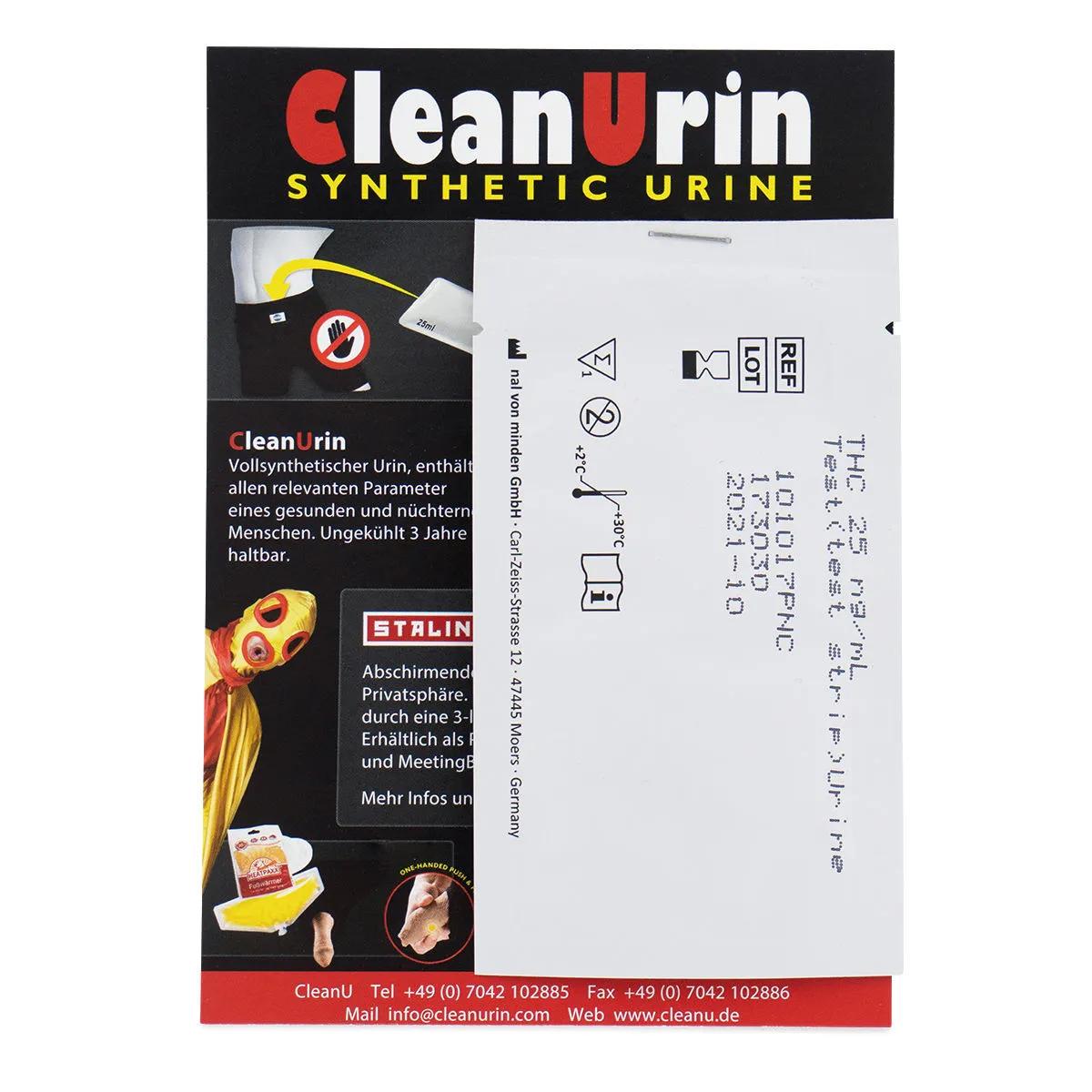
If you are preparing for a screening and want to cover all bases, pick up one strip for each substance you need to check. The THC and cocaine strips are the most commonly paired — different clearance windows, different metabolites, and knowing your status for both gives you the full picture. Also worth grabbing: a set of synthetic urine for practice runs if you want to familiarise yourself with how the strip looks when it is definitively negative.
We have stocked urine drug test strips since the early 2000s, and the questions are always the same. "Will I pass?" We cannot answer that — your body, your metabolism, your usage pattern. What we can do is put the same tool in your hands that a lab technician would use. That is genuinely what these strips are. Not a novelty item, not a rough estimate. The same immunoassay technology, the same ng/ml thresholds.
The one thing these strips will not do is tell you the exact amount of a substance in your system. They are qualitative, not quantitative. You get a yes or no at a set cutoff. If you are borderline — a very faint line in the test zone — that is your cue to wait longer and retest. Buy two strips if you are in any doubt. The cost of a second strip is nothing compared to the cost of a surprise positive.
One more thing we tell everyone: detection time depends on more than just the substance. According to clinical sources, how long a drug lasts in your body depends on the type of drug, how much you used, how long you were using it before the test, and how your body reacts to the drug. Body fat percentage matters enormously for THC specifically, because THC metabolites are lipophilic — they store in fat tissue and release slowly. A lean person who smoked once might clear in 3 to 5 days. A heavier person who uses regularly could test positive for weeks.
These are the same immunoassay strips used in laboratory screenings, with sensitivity calibrated to standard ng/ml cutoff thresholds. According to research published in the Journal of General Internal Medicine, studies investigating agreement between self-report and urine drug tests typically find moderate to high concordance. No immunoassay is 100% — false positives from cross-reactive substances and false negatives from dilute samples are possible but uncommon.
THC metabolites can be detected in urine for up to 6 weeks in heavy, frequent users. Single or occasional use typically clears within 3 to 10 days. Body fat percentage, hydration, and metabolism all affect clearance time. If you are unsure, test yourself and retest a few days later.
Yes. The strip tests the urine sample, not the person. As long as you have a fresh urine sample collected in a clean container, the strip will work the same way regardless of who provided it.
A faint line in the test zone still counts as negative — any visible line means the substance concentration is below the detection threshold. The intensity of the line does not indicate how close you are to the cutoff. That said, if the line is barely visible, you may be near the threshold, and retesting in a day or two is sensible.
Excessive hydration can dilute your urine and temporarily push metabolite concentrations below the detection threshold. However, formal screening facilities often check for over-dilution — water-clear urine with very low creatinine levels can be flagged as an invalid sample. A better strategy is to test yourself at home first and know where you stand.
No. These urine drug test strips are available for THC, cocaine, amphetamine, MDMA, and methamphetamine only. Alcohol requires a different type of test (typically an ethyl glucuronide or EtG strip), which is not included in this range.
Yes, cross-reactivity is a known limitation of immunoassay testing. Certain medications — particularly some antidepressants, antihistamines, and NSAIDs — can trigger false positives on amphetamine or MDMA panels. If you are taking prescription medication and get an unexpected positive, a confirmatory lab test (GC-MS) would be the next step.
First morning urine is the most concentrated sample of the day and gives you the most conservative reading. If you test negative with first morning urine, you can be more confident than if you tested negative with a mid-afternoon sample after drinking two litres of water.
Last updated: April 2026
Medical disclaimer. This content is for informational purposes only and does not constitute medical advice. Consult a qualified healthcare provider before use of any substance.