Chillums
We'll only email you about this product — no marketing.
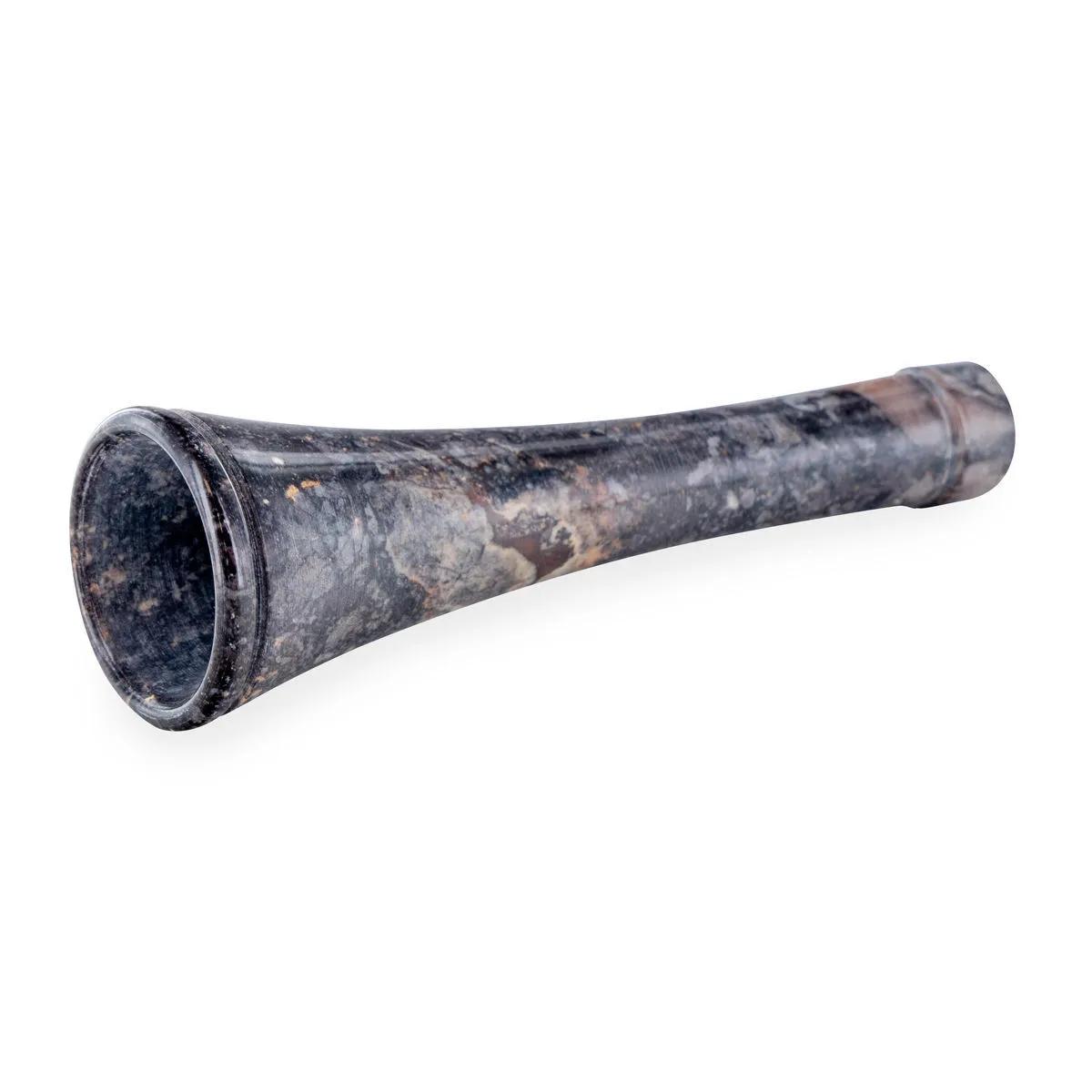
The Soapstone Chillum Plain Small is a compact stone smoking pipe made from soapstone (magnesium silicate) that naturally dissipates heat as you smoke. At roughly the length of your index finger, it slips into a pocket or palm without fuss — and the smooth, unadorned surface means there are no crevices for residue to hide in. If you want a no-nonsense pipe that cools your smoke and cleans up in seconds, this is the one.
A soapstone chillum has one trick that glass and clay simply cannot match: thermal regulation. Soapstone is a metamorphic rock composed primarily of talc, chlorite, and magnesium silicate minerals. That mineral composition gives it a high specific heat capacity — it absorbs and disperses warmth gradually rather than conducting it straight to your lips. The result is a noticeably cooler draw compared to glass or metal pipes of similar size.
We've had customers bring back glass chillums with hairline cracks after a single drop onto tiles. Soapstone is far more forgiving. It's a relatively soft stone (1 on the Mohs hardness scale for pure talc, though carved soapstone pipes tend to sit around 2–3), which means it absorbs minor impacts instead of shattering. The trade-off? It can pick up shallow scratches over time. Honestly, most people find that adds character rather than detracting from it — after a few weeks of use, the stone develops a subtle patina that's entirely its own.
The plain finish on this particular chillum is deliberate. No carved motifs, no painted decoration — just a smooth cylinder of stone. That simplicity is the whole point: fewer details means fewer places for tar and resin to accumulate, which means a quicker clean and a purer taste from session to session.
| Spec | Value |
|---|---|
| Material | Soapstone (magnesium silicate) |
| Size | Small |
| Design | Plain, smooth surface |
| SKU | HS0636 |
| Cleaning | Pipe cleaner, isopropyl alcohol, or boiling water |
| Heat properties | Naturally heat-dissipating |
Complete your setup with a set of brass pipe screens to keep loose material from pulling through — they sit snugly inside the bowl end and save you from an unpleasant mouthful. A small stash tin also pairs well for keeping your chillum and material together on the go.
Big pipes have their place, but a small soapstone chillum solves a specific problem: portability without compromise. Full-size pipes are awkward in a jacket pocket, fragile in a bag, and a hassle to clean on the move. This one weighs next to nothing, fits in your hand with room to spare, and you can run a pipe cleaner through it in about 10 seconds flat.
We'd pick this over a metal one-hitter any day. Metal pipes heat up fast and stay hot — after 2 or 3 consecutive draws, you're basically holding a tiny radiator. The soapstone stays manageable because the stone itself absorbs that thermal energy rather than passing it straight through to your fingers. It's a small difference on paper but a big one in practice, especially if you tend to take a few draws in quick succession.
The honest limitation? Size means capacity. You're loading a pinch at a time, not packing a full bowl. That's actually a feature if you prefer single-hit portions and don't want to waste material, but if you're sharing with a group, you'll be reloading constantly. For group sessions, look at a larger soapstone chillum or a full-size pipe instead.
We've stocked soapstone chillums since the early days of the shop, and the thing that keeps surprising us is how many people come back for a second one — not because the first broke, but because they want a spare for a different jacket or bag. At under 10 centimetres, it genuinely disappears into your daily carry. One regular customer told us he'd had the same soapstone chillum for 4 years and it still smoked cool and clean. That kind of durability from a pipe this small and affordable is hard to argue with.
The one thing we always mention at the counter: don't use a torch lighter directly on soapstone for extended periods. A standard flame lighter or hemp wick is all you need. Concentrated torch heat won't crack it immediately, but over months it can cause micro-fractures in the stone. Treat it gently and it'll outlast every glass pipe you own.
A chillum is a straight, conical pipe with no carb hole or separate bowl — the channel runs from one end to the other. You pack the wider end, light it, and draw from the narrow end. They originated in South Asia and have been used for centuries. The soapstone version adds natural cooling to this simple design.
Yes. Soapstone has a high specific heat capacity, meaning it absorbs thermal energy from the smoke as it passes through the stone channel. The effect is modest but noticeable — especially compared to glass or metal pipes, which transfer heat rather than absorbing it. After 2–3 draws, you can feel the stone warming slightly in your hand, which is the heat being pulled away from the smoke.
Run a pipe cleaner through the channel after each session to remove loose ash. For a deeper clean, soak it in isopropyl alcohol (90% or higher) for 15–20 minutes, then rinse with warm water. You can also boil it briefly. Let it dry fully before using it again — soapstone is slightly porous and you don't want residual moisture.
Soapstone is much more impact-resistant than glass. A drop onto carpet or grass won't do anything. A drop onto concrete from waist height might chip the rim, but it's unlikely to shatter. That said, it's still stone — treat it with basic care and it'll last years.
Not strictly, but we'd recommend one. A small brass pipe screen sits inside the bowl end and stops fine particles from pulling through into your mouth. Without a screen, pack your material a touch more firmly and use a slightly gentler draw. Screens cost almost nothing and make the experience noticeably cleaner.
Clay chillums are porous and absorb flavours over time, which some people like and others find stale. Soapstone is denser, absorbs less residue, and dissipates heat more effectively. Clay is also more fragile — a dropped clay chillum rarely survives intact. Soapstone handles knocks better and cleans up more thoroughly.
Last updated: April 2026