Cone Cutter
Joint filters
by RAW
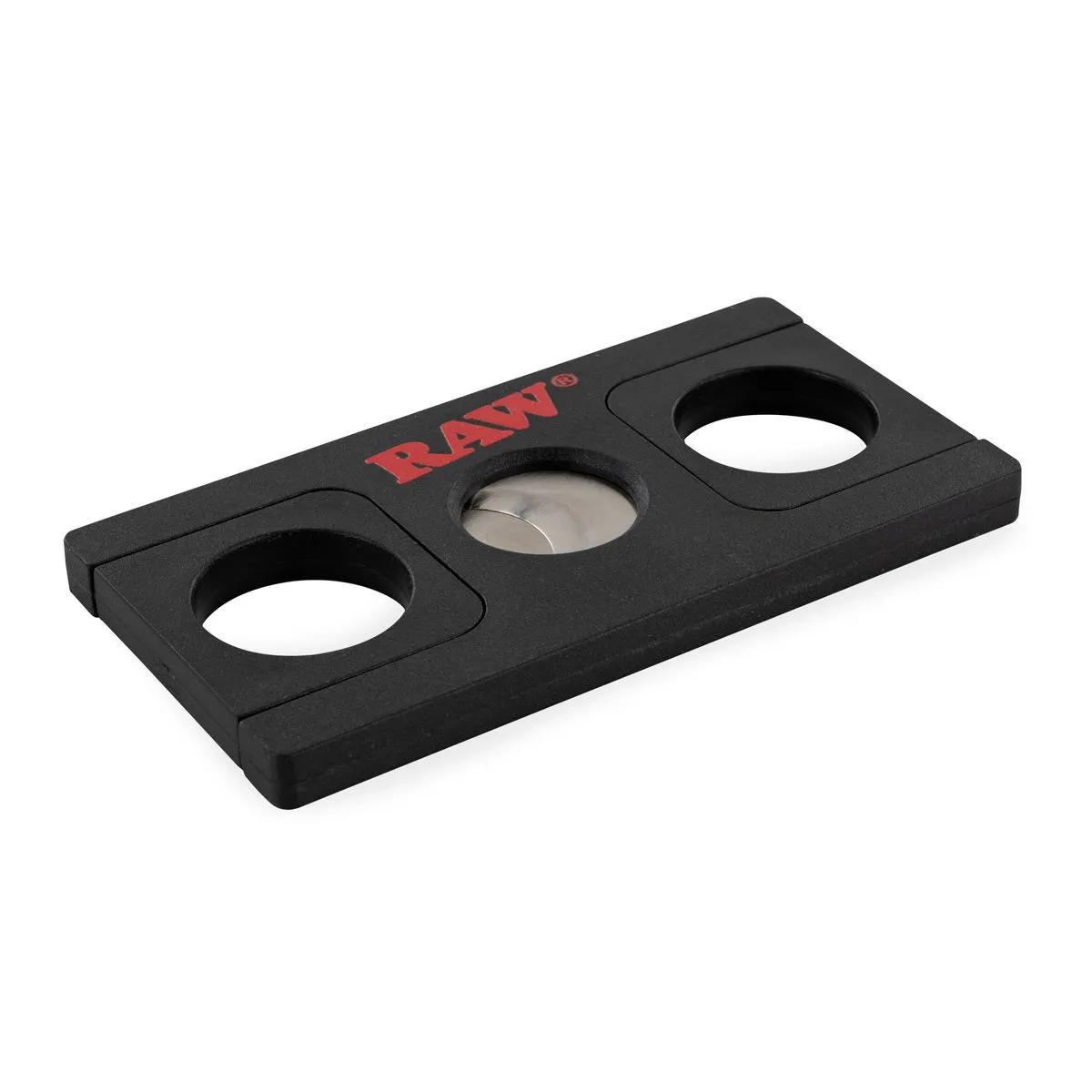
RAW Cone Cutter
The RAW Cone Cutter is a pocket-sized joint maintenance tool that trims charred ends off half-smoked cones and packs the remaining herb back into shape. If you've ever relit a joint and winced at that stale, metallic taste, this is the fix. A single clean snip at 80 degrees removes the ashy tip, and the built-in poker tamps everything down so your cone looks — and smokes — like you just rolled it.
Why You Need a Joint Cutter
We've all been there. You roll a solid cone, smoke half, stub it out, and pocket the rest for later. Smart move — waste not, want not. But the moment you spark that roach back up, the first drag tastes like licking a battery. That burnt, oxidised layer at the tip has been sitting there absorbing moisture and turning into a flavour-killing cap of ash and resin. Most people just power through it. You don't have to.
The problem isn't the leftover herb — it's the charred crust sitting on top of it. Tear it off with your fingers and you'll rip the paper, lose tobacco or herb, and end up with a misshapen mess that canoes on the first puff. A lighter held too close just makes it worse. What you actually need is a clean, precise cut that removes the dead material and leaves a fresh surface ready to light evenly.
That's exactly what the RAW Cone Cutter does. The 80-degree blade angle matches the taper of a standard cone, so you're cutting flush rather than hacking across at a weird angle. One snip, and the ashy tip drops away. Then you flip the tool, use the poker to gently press the exposed herb back down, and you've got a joint that looks and tastes like it just came off the rolling tray. It's a small thing, but once you've used one, going back to the finger-tear method feels barbaric.
Honest limitation: this is a single-purpose tool. It won't replace your scissors, your grinder, or your rolling skills. If you never save half-smoked joints, you genuinely don't need it. But if you regularly pocket roaches for later — and most of the people we talk to do — this pays for itself in rescued flavour within a week.
Specifications for the RAW Cone Cutter
| Spec | Value |
|---|---|
| Brand | RAW |
| SKU | HS1260 |
| Blade Angle | 80 degrees |
| Built-In Poker | Yes, flush-fitted |
| Primary Use | Trimming ash from half-smoked cones |
| Secondary Use | Packing down herb after trimming |
| Portable | Yes — pocket-sized |
How to Use the RAW Cone Cutter
- Take your half-smoked joint and hold it steady. Don't squeeze — you'll compress the herb and restrict airflow.
- Open the Cone Cutter and position the 80-degree blade just below the charred, ashy section. You want to cut into fresh paper, not into the blackened part.
- Close the blade in one clean motion. The angled cut should remove the entire burnt tip in a single snip. If there's still a thin layer of char, trim a millimetre more.
- Flip the tool and use the flush-fitted poker to gently tamp the exposed herb back down into the cone. Don't ram it — a light press is enough to create an even surface.
- Light the freshly trimmed end. You'll notice the difference immediately: cleaner taste, even burn, no metallic hit on the first drag.
Pair the RAW Cone Cutter with RAW pre-rolled cones for a seamless workflow — fill, smoke half, trim, and relight without ever touching rolling papers. A small RAW rolling tray keeps the trimmed ash and loose bits off your table.
From Our Counter: The Relight Problem
We get asked about this more than you'd think. Someone comes in, mentions they hate relighting joints, and asks if there's a better way to store them. Storage helps — a doob tube keeps moisture out — but the real issue is that charred tip. Even a perfectly stored half-joint still has a layer of combusted material sitting on top. The RAW Cone Cutter addresses the cause, not the symptom. It's the best cone cutter for daily smokers who save joints regularly.
Compared to using small scissors or nail clippers (yes, we've seen both), the 80-degree angle on this tool makes a noticeable difference. Scissors cut flat across, which doesn't match the cone shape. You end up with an uneven surface that burns down one side. The angled blade follows the natural taper of the cone, giving you a cut that lights evenly from the centre outward. It weighs next to nothing and fits in a pocket alongside your lighter — no reason not to carry it.
Frequently Asked Questions
Does the RAW Cone Cutter work with king-size joints?
Yes. The 80-degree blade accommodates standard and king-size cones. As long as the joint tapers like a cone rather than sitting perfectly straight, the angled cut will follow the shape cleanly.
Can I use the cone cutter on straight rolled joints, not just cones?
You can, though the angled blade is optimised for cone-shaped joints. On a straight cigarette-style roll, the cut will be slightly diagonal rather than flush. It still removes the charred tip — just trim a touch more to even it out.
How do I clean the RAW Cone Cutter?
Wipe the blade with a dry cloth or paper towel after each use. Resin builds up over time, so a quick wipe with isopropyl alcohol every few weeks keeps the blade cutting cleanly. Don't submerge the whole tool — just spot-clean the blade edge.
Is the poker sharp enough to damage the joint?
No. The poker is flush-fitted and blunt-tipped — it's designed to press herb down gently, not puncture the paper. Use light pressure and you won't poke through even thin rice papers.
Why does relighting a joint taste metallic?
The charred tip contains oxidised plant material and combustion residues. When you relight through that layer, those compounds vaporise before the fresh herb underneath, producing that harsh, metallic first hit. Trimming the burnt section away exposes clean material and eliminates the off-taste entirely.
Is the RAW Cone Cutter better than just breaking off the ash by hand?
Significantly. Tearing the tip off by hand rips the paper unevenly, loosens the herb, and often causes the joint to canoe or run. A clean blade cut preserves the paper's integrity and the cone's shape, so it smokes evenly on relight.
Last updated: April 2026