Digital scales
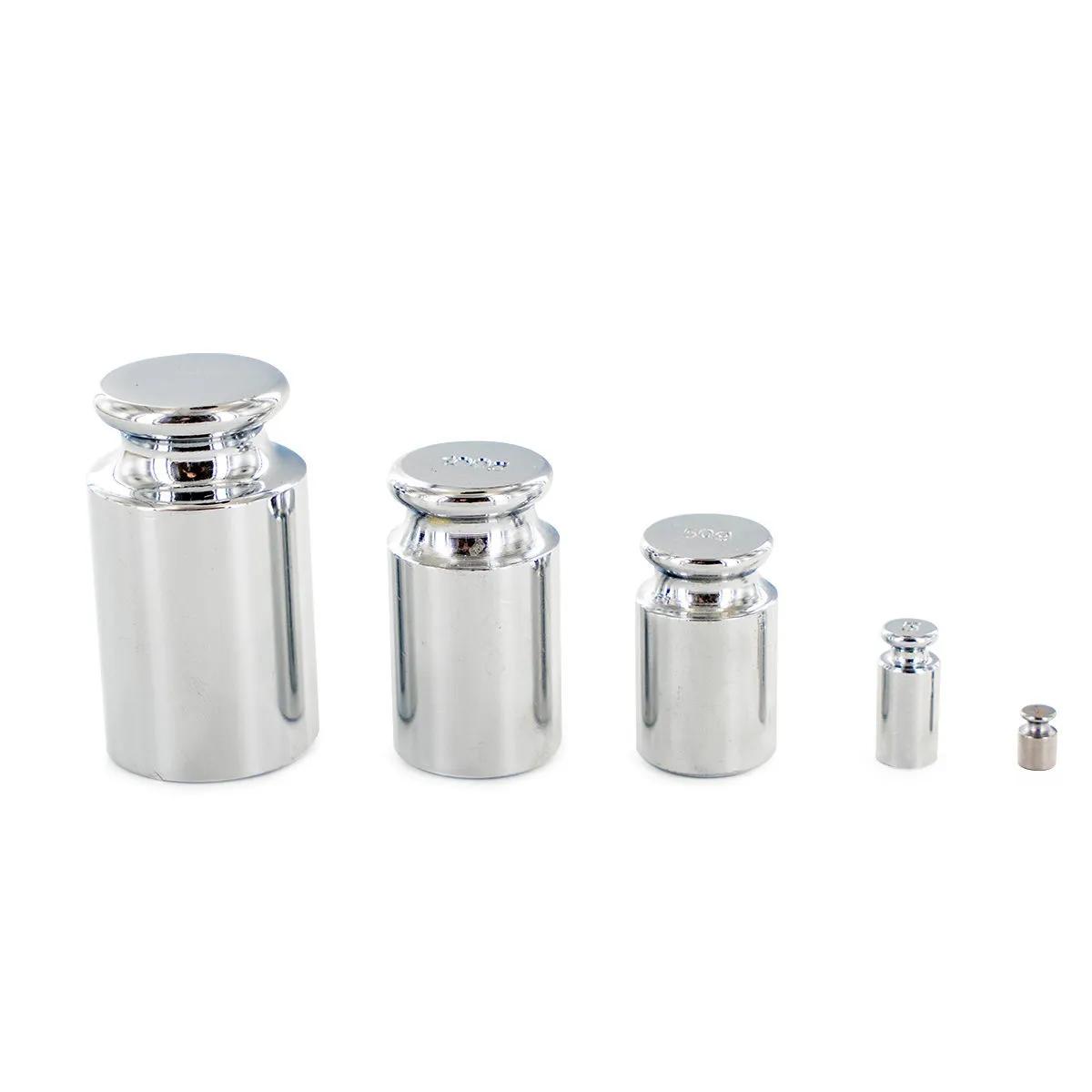
A calibration weight is a precision-machined stainless steel reference mass used to verify and recalibrate your digital scale. If your scale's been reading slightly off — or you've just moved it to a new surface — a single calibration weight brings it back to accurate readings in under a minute. We carry 8 sizes from 1g right up to 500g, so you can match the weight to your scale's calibration range exactly.
Your scale's manual will tell you which weight to use for calibration — it's usually tied to the scale's maximum capacity. Here's a rough guide:
| Calibration Weight | SKU | Best For |
|---|---|---|
| 1 g | HS0111 | Milligram scales and micro-balances |
| 5 g | HS0112 | Precision scales with low max capacity |
| 10 g | HS1663 | Pocket scales (10–50g capacity) |
| 20 g | HS1664 | Pocket scales (20–100g capacity) |
| 50 g | HS0113 | Pocket scales (50–200g capacity) |
| 100 g | HS0114 | Standard digital scales (100–500g capacity) |
| 200 g | HS0115 | Kitchen and mid-range scales (200–1000g capacity) |
| 500 g | HS0116 | Larger bench scales (500g+ capacity) |
Not sure? Check the bottom or back of your scale — most manufacturers print the required calibration weight right on the label. If your scale says "CAL 100g", grab the 100g weight.
| Specification | Detail |
|---|---|
| Material | Stainless steel |
| Available weights | 1g, 5g, 10g, 20g, 50g, 100g, 200g, 500g |
| Number of variants | 8 |
| Shape | Cylindrical knob style |
| Surface finish | Polished stainless steel |
| Storage | Keep in a dry, clean container — avoid handling with bare fingers |
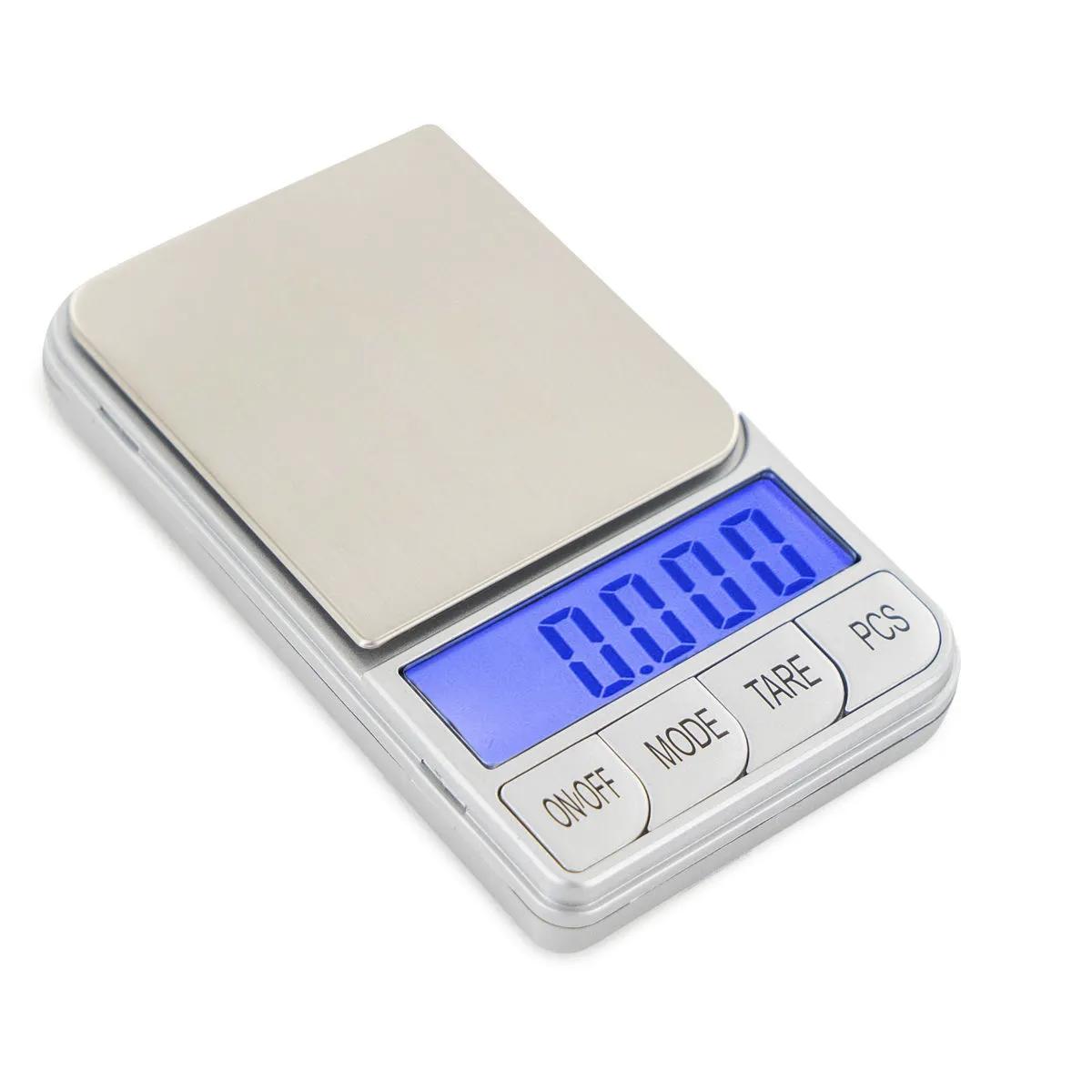
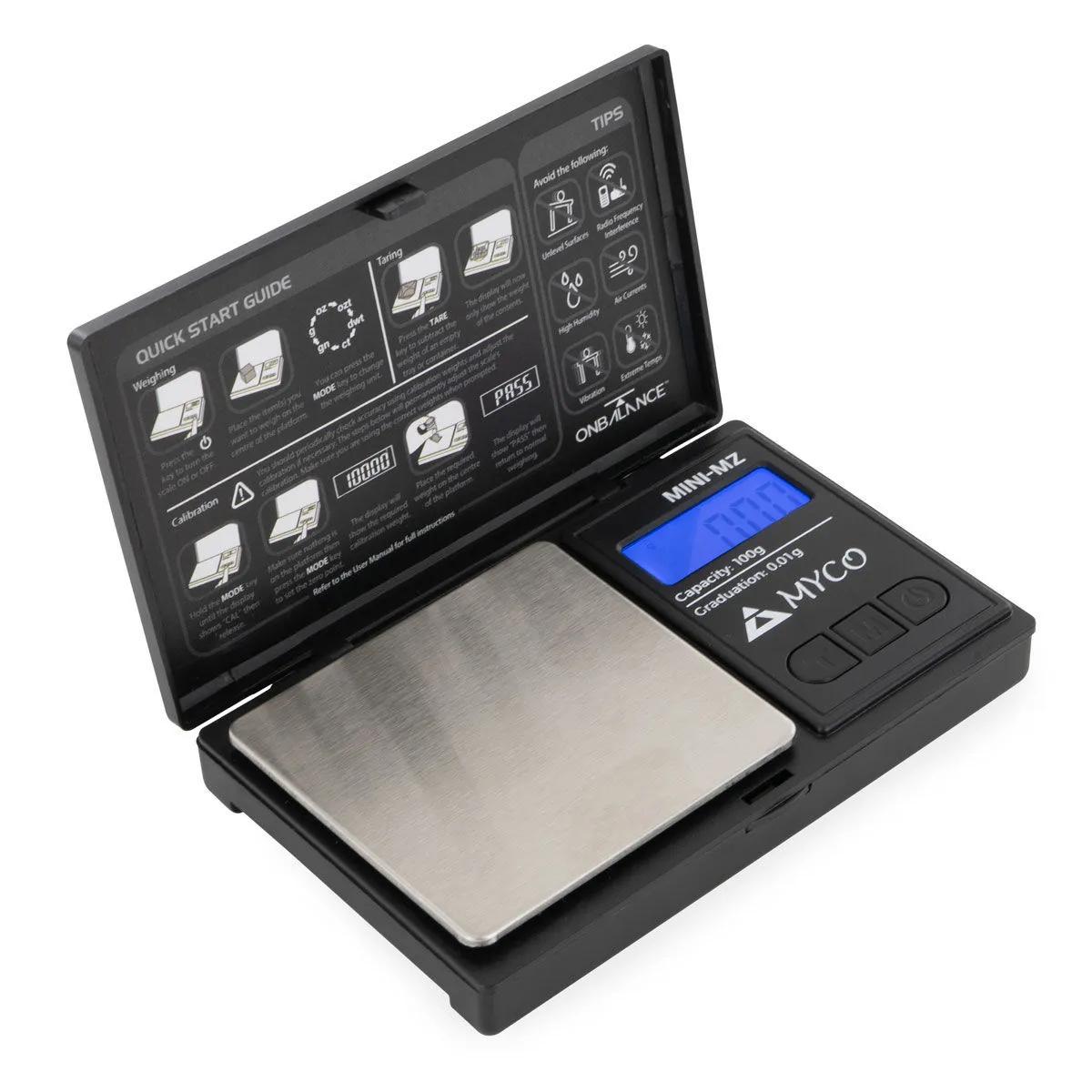
If your scale is beyond saving, pair this calibration weight with a fresh digital scale from our scales category — the On Balance CT-250 and Myco MZ-100 are both popular picks that calibrate in seconds with the right reference weight. You can also find more background on scale accuracy in our wiki article on digital scales.
Every digital scale drifts from its factory accuracy over time — it's an unavoidable consequence of mechanical stress on the load cell. Temperature changes, vibrations, moving the scale between surfaces, even dust on the weighing platform can shift readings. According to a study published in Pediatric Emergency Care, more than 15% of scales tested were off by more than 6 units at higher weights, with precision decreasing as weight increased. The EMCDDA's technical guidance on analytical equipment similarly notes that regular instrument calibration is essential for maintaining measurement reliability. That's a significant margin of error if you're measuring anything where accuracy matters.
We've sold digital scales since the early 2000s, and the most common complaint we hear is "my scale is broken" — when nine times out of ten, it just needs recalibrating. A proper calibration weight and 30 seconds of your time resolves what people assume requires a replacement. The stainless steel construction on these weights means they won't corrode, chip, or lose mass over time the way cheaper zinc or brass alternatives do. Order one once and it stays accurate for years.
The honest limitation? These are functional reference weights for consumer and prosumer digital scales — they're not ASTM-certified lab standards. If you're calibrating analytical equipment in a pharmaceutical setting, you'd need certified weights with traceable certificates. For calibrating a pocket scale, kitchen scale, or bench scale at home? These do the job properly. According to research published in BMC Public Health, instrument calibration error can measurably impact results — even small deviations compound when you're making repeated measurements. Compared to brass calibration weights, which oxidise and gain mass over months, stainless steel holds its reference value far longer — it's the reason every serious scale manufacturer recommends steel.
Calibrating a digital scale takes under a minute: enter calibration mode, place the correct reference weight on the platform, and wait for confirmation. Here is the full step-by-step process.
Here's something we've noticed after 25 years of selling scales at our shop in Amsterdam: people calibrate once when they first buy their scale, then never again. Your scale should be recalibrated every few weeks if you use it regularly, or whenever you move it to a different location. Even sliding it from one end of a desk to the other can shift the internal sensors enough to affect readings at the milligram level. A study on e-scales published in the Journal of Medical Internet Research found measurement concordance between properly calibrated scales was strong — but that concordance depends entirely on regular calibration.
One more thing — the weight of the calibration weight itself matters more than you'd think. Don't use a stack of coins or a random object you weighed somewhere else. Coins vary in mass depending on wear, and "close enough" isn't calibration. Stainless steel reference weights exist for a reason: they're a known, stable mass that doesn't change. If you're ready to get your scale back to factory accuracy, buy the weight your manual specifies and run through the calibration steps above — it genuinely takes less time than reading this paragraph did.
We also keep hearing from customers who try to use kitchen spoons of water or sugar packets as makeshift calibration references. It doesn't work. Water volume changes with temperature, and food packaging weights include the wrapper. A dedicated stainless steel calibration weight from our accessories range is the only reliable option. Browse our blog for more tips on getting the most from your digital scale setup.
Every 2–4 weeks with regular use, or any time you move the scale to a new surface. If you notice readings seem inconsistent — weighing the same object twice gives different numbers — calibrate immediately.
No. Your scale requires a specific calibration weight, usually printed in the manual or on the scale itself. Using the wrong weight will either fail calibration or set an incorrect reference point. Most pocket scales use 100g or 200g; milligram scales often need 5g or 10g.
Check three things: the surface must be perfectly flat and stable, the calibration weight must match what your scale expects, and the platform must be clean. If all three check out and it still reads wrong, the load cell may be damaged — that's a hardware issue, not a calibration issue.
Stainless steel weights are extremely stable. The main risk is contamination — fingerprints, dust, and moisture add micro-mass. Handle them by the edges, store them dry, and they'll stay accurate for years. Cheaper metals like brass can oxidise and gain mass noticeably.
Certified lab weights (ASTM Class 1–4) come with traceable certificates and are manufactured to tolerances measured in fractions of a milligram. These stainless steel weights are accurate reference masses for consumer and prosumer digital scales — more than sufficient for home use, but not intended for analytical laboratory calibration.
Only if your milligram scale's manual specifies 100g as the calibration weight. Many milligram scales require much smaller weights — often 1g, 5g, or 10g. Always follow the manufacturer's specification. We carry all sizes from 1g upward.
Last updated: April 2026