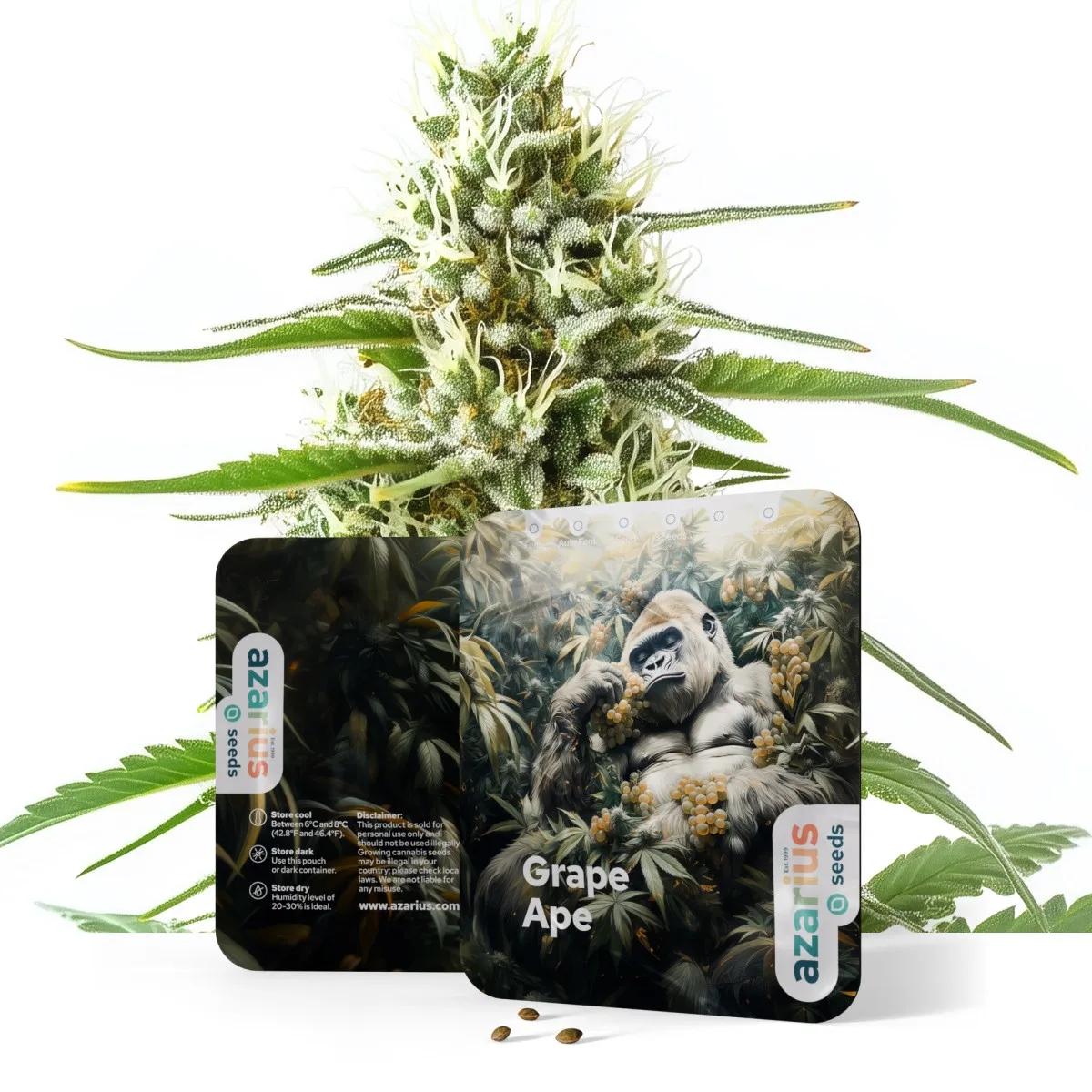
Feminized seeds
by Azarius
Grape Ape is a heavy indica strain (90% Indica / 10% Sativa) that crosses Mendocino Purps, Skunk, and Afghani into one deeply relaxing, grape-scented package. With THC levels around 20% and a flowering time of up to 9 weeks, these feminized photoperiod seeds produce dense, purple-tinged buds that smell exactly like they sound — sweet grape candy with earthy, spicy undertones. If you want a strain that pins you to the sofa in the best possible way, this is the one.
Grape Ape feminized seeds come in packs of 1, 3, 5, and 10. For a single plant in a small tent, grab the 1-seed pack and treat it well — feminized means every seed counts. Running a full 1m² canopy? Five seeds gives you room to select your best phenotype and still fill the space. The 10-pack is your best value per seed if you're planning multiple runs or want to gift a few to a mate.
| Pack Size | Best For |
|---|---|
| 1 seed | Single-plant grows, test runs, tight spaces |
| 3 seeds | Small tent (60x60 or 80x80), picking your favourite pheno |
| 5 seeds | Full 1m² canopy, pheno selection with backup |
| 10 seeds | Multiple cycles, sharing with friends, best per-seed value |
Grape Ape traces its roots to three legendary parent strains, each contributing something distinct to the final result. Mendocino Purps brings the grape flavour and those deep purple hues that develop during late flowering. Skunk adds vigour and resin production — it's the backbone that keeps yields respectable. Afghani rounds it out with that classic, heavy-limbed indica stone and compact bud structure. The combination produces a plant that's about 90% indica and 10% sativa, bred in the United States and now grown worldwide.
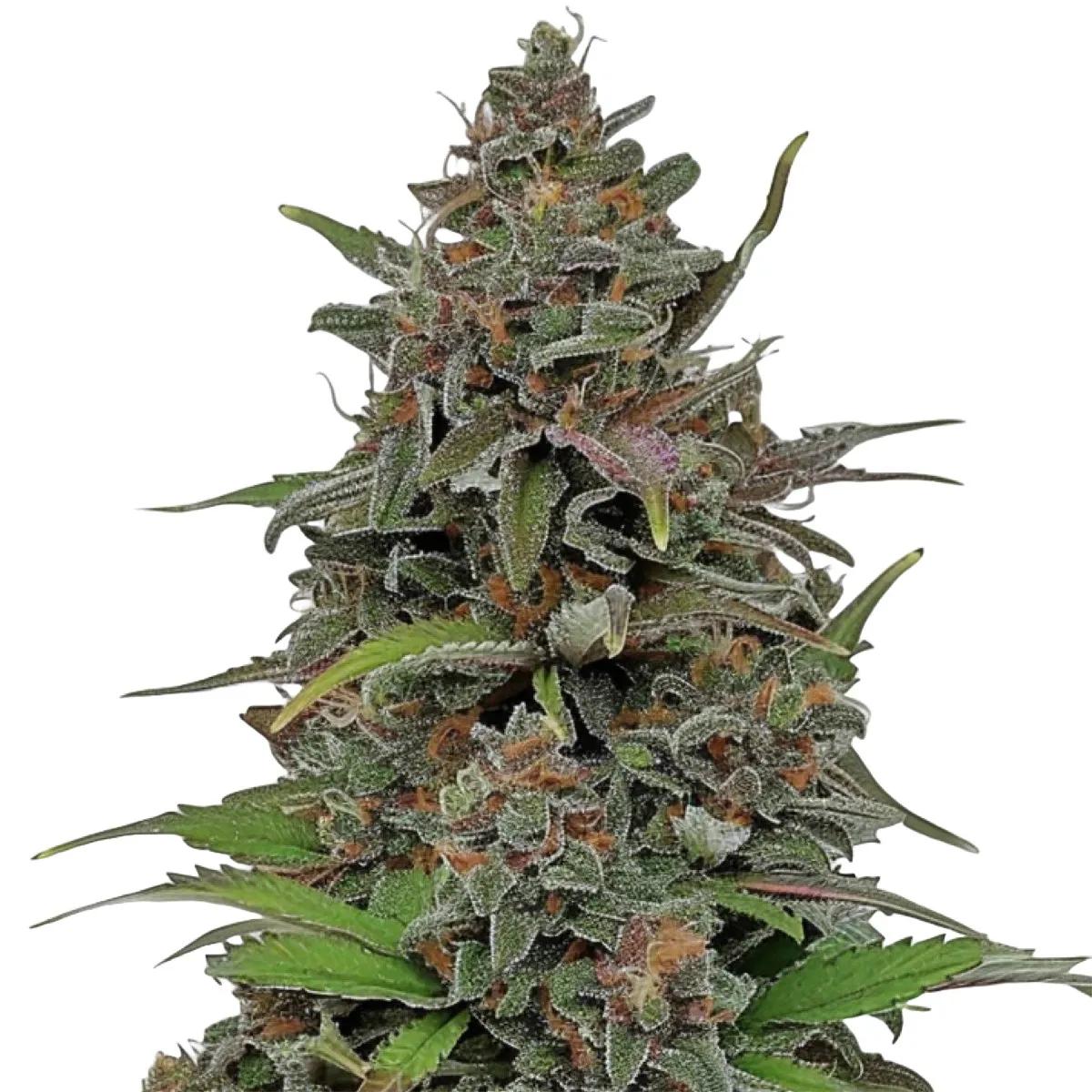
What you get in practice is a stocky, bushy plant with broad fan leaves that often turn purple as temperatures drop during the dark period. The indica dominance shows in everything: the growth pattern, the bud density, the effect. This isn't a strain that surprises you with a racy head rush. It does one thing — full-body relaxation — and it does it thoroughly.
| Specification | Detail |
|---|---|
| Genetics | Mendocino Purps x Skunk x Afghani |
| Type | 90% Indica / 10% Sativa |
| Seed Type | Feminized Photoperiod |
| THC Content | ~20% |
| CBD Content | Low |
| Flowering Time | Up to 9 weeks |
| Indoor Yield | Up to 400g/m² |
| Outdoor Yield | Up to 550g/plant |
| Dominant Terpenes | Myrcene (40%), Caryophyllene (20%), Pinene (15%) |
Grape Ape smells like someone crushed a bag of grape sweets inside an old wooden box. The dominant terpene is myrcene at roughly 40% of the profile, which drives that sweet, fruity, almost candy-like grape note that hits you the moment you open the jar. Caryophyllene (20%) adds a peppery, spicy edge — you'll catch it on the exhale more than the inhale. Pinene (15%) contributes a subtle pine freshness that keeps the sweetness from becoming cloying.
The taste follows the nose closely. On the inhale, it's unmistakably grape — not artificial, more like actual Concord grapes with a sugary coating. The exhale brings out the earthy and diesel undertones that the Afghani and Skunk genetics contribute. There's a faint cheese note lurking in the background too, though it varies by phenotype. We've seen some phenos lean heavily into the candy grape side and others that bring more diesel and earth forward. Either way, the jar appeal on this strain is outstanding — it's one of those where people ask "what is that?" from across the room.
One honest note: the grape aroma intensifies dramatically during the last two weeks of flowering and through the cure. If you chop early or rush the dry, you'll lose a good chunk of that signature smell. Give it at least a two-week cure in jars, burping daily, and the terpene profile really opens up.
Grape Ape is a forgiving strain to grow, which makes it a solid pick if you've got a couple of runs under your belt but aren't yet running a dialled-in operation. The Afghani genetics give it natural resistance to mould and cooler temperatures, while the Skunk parentage keeps it vigorous through veg without much fuss.
As a photoperiod strain, you'll need to flip to 12/12 lighting to trigger flowering. Expect up to 9 weeks from the flip to harvest. Indoor yields top out around 400g/m², which is respectable for an indica of this density. Outdoors, in a warm climate with a long season, you're looking at up to 550g per plant — those Afghani genetics really stretch their legs when given root space.
The plant stays compact and bushy. Expect short internodal spacing and thick, dense colas that benefit from some defoliation in weeks 3-4 of flower to improve airflow. The density of these buds is the one thing to watch — in humid environments, that tightly packed structure can invite bud rot if air circulation is poor. A small oscillating fan pointed at the canopy and good extraction make all the difference.
If you want those purple colours to really pop, drop your night-time temperatures to around 15-18°C during the last two weeks of flowering. The anthocyanins in the Mendocino Purps genetics respond to cold snaps, and the colour change is genuinely dramatic — deep violet to almost black on the sugar leaves.
Grape Ape delivers a body-forward stone that starts in the temples and rolls downward through your shoulders, back, and legs within about 15-20 minutes. With THC around 20% and minimal CBD, the effect is pronounced but not overwhelming — it's a warm, heavy blanket rather than a sledgehammer. You'll feel your muscles unclench, your breathing slow, and your motivation to stand up quietly evaporate.
The mental side is calm and content rather than foggy. There's a gentle mood lift that settles in alongside the physical relaxation — not giddy, just... good. Conversation flows easily, food tastes better, and whatever you're watching on the screen becomes significantly more interesting. It's an evening strain through and through. Smoking this at noon and expecting to be productive is a bold strategy that won't pay off.
Compared to Granddaddy Purple — which shares some genetic heritage through the Mendocino Purps line — Grape Ape tends to be slightly less sedating and more mood-boosting. GDP will put you to sleep; Grape Ape will put you on the sofa but keep you pleasantly awake. If you want the absolute knockout, GDP is your strain. If you want to actually enjoy the evening before you drift off, Grape Ape has the edge.
The one limitation worth mentioning: dry mouth is almost guaranteed with this strain, and some people report dry eyes too. Keep water within arm's reach — you won't want to get up for it once the effect sets in.
Grape Ape's terpene profile is dominated by myrcene at 40%, which is responsible for both the sweet grape flavour and the deeply relaxing physical effect. Myrcene is the most common terpene in indica-dominant strains and is associated with sedation and muscle relaxation in preliminary research. According to a study on grape polyphenols, compounds found in grape-derived products may have protective effects in conditions where oxidative stress is involved (PMC7971097, 2021).
Caryophyllene at 20% adds the spicy, peppery notes and is the only terpene known to bind directly to CB2 receptors in the endocannabinoid system — essentially functioning as a dietary cannabinoid. Pinene at 15% contributes the subtle pine freshness and may help counteract some of the short-term memory fog that THC can produce, though research on this interaction is still early.
The remaining 25% of the terpene profile includes traces of limonene, linalool, and humulene, which contribute the citrus, floral, and earthy background notes. This complex mix is what gives Grape Ape its layered aroma — it's not just "grape," it's grape-candy-pine-earth-pepper all at once.
Growing Grape Ape indoors? Pair these seeds with a complete grow tent kit — tent, lighting, ventilation, and carbon filter in one box. The dense bud structure on this strain makes proper airflow non-negotiable, and a carbon filter will keep that intense grape aroma contained. If you're growing outdoors, grab some fabric pots to give those Afghani-heritage roots room to spread.
We've carried Grape Ape seeds since the strain first gained traction outside California, and it remains one of the most requested indica varieties in the shop. The reason is simple: it delivers exactly what it promises. No surprises, no anxiety, no racing thoughts. Just a reliable, flavourful, deeply physical stone that works every single time.
For growers, the appeal is equally straightforward. It's compact enough for small tents, resistant enough for less-than-perfect environments, and the bag appeal on the finished product is exceptional. Those purple buds covered in frosty trichomes, smelling like grape candy — that's the kind of harvest that makes you want to show it off before you smoke it.
The one thing Grape Ape won't do is give you a creative, energetic, get-things-done kind of session. That's not what it's for. If you need a daytime strain, look at something with more sativa genetics — Green Crack or Jack Herer would be better picks. Grape Ape is for the end of the day, when the work is done and you've earned the right to sink into the sofa and not move for three hours. For that specific job, it's the best indica we'd recommend at this price point.
Grape Ape flowers in up to 9 weeks from the 12/12 light flip. Most phenotypes finish around week 8, but letting it run the full 9 weeks improves resin production and deepens the grape flavour. Check trichome colour with a loupe rather than counting days.
Yes, it's forgiving. The Afghani genetics give it natural mould resistance and tolerance for temperature swings. The main thing to watch is humidity during late flower — those dense buds can trap moisture. Keep RH below 50% and you'll be fine.
Up to 400g/m² indoors with proper lighting and training. Topping once during veg and running a flat canopy (SOG or SCROG) will get you closer to that ceiling. Without training, expect around 300-350g/m² from the single-cola natural structure.
Both share Mendocino Purps genetics and similar grape flavours. Grape Ape is slightly less sedating — it relaxes deeply but keeps you conscious and sociable. GDP tends to push harder toward sleep. Grape Ape also yields a bit more indoors. Pick GDP for insomnia, Grape Ape for a chill evening.
The purple colour comes from anthocyanins — pigments inherited from the Mendocino Purps parent. They activate when night temperatures drop below 18°C during the final weeks of flowering. Not every pheno will turn deep purple, but most show at least some violet colouring on the sugar leaves and calyxes.
Myrcene (40%), caryophyllene (20%), and pinene (15%) dominate the profile. Myrcene drives the grape sweetness and body relaxation, caryophyllene adds spicy pepper notes, and pinene contributes a fresh pine edge. The remaining 25% includes traces of limonene, linalool, and humulene.
The Afghani genetics give it decent cold tolerance, and cooler nights actually enhance the purple colouring. It needs to finish before sustained frost, so harvest by mid-October in northern Europe. In genuinely cold, wet climates, an indoor or greenhouse grow is the safer bet to avoid bud rot in those dense colas.
Last updated: April 2026
Medical disclaimer. This content is for informational purposes only and does not constitute medical advice. Consult a qualified healthcare provider before use of any substance.