
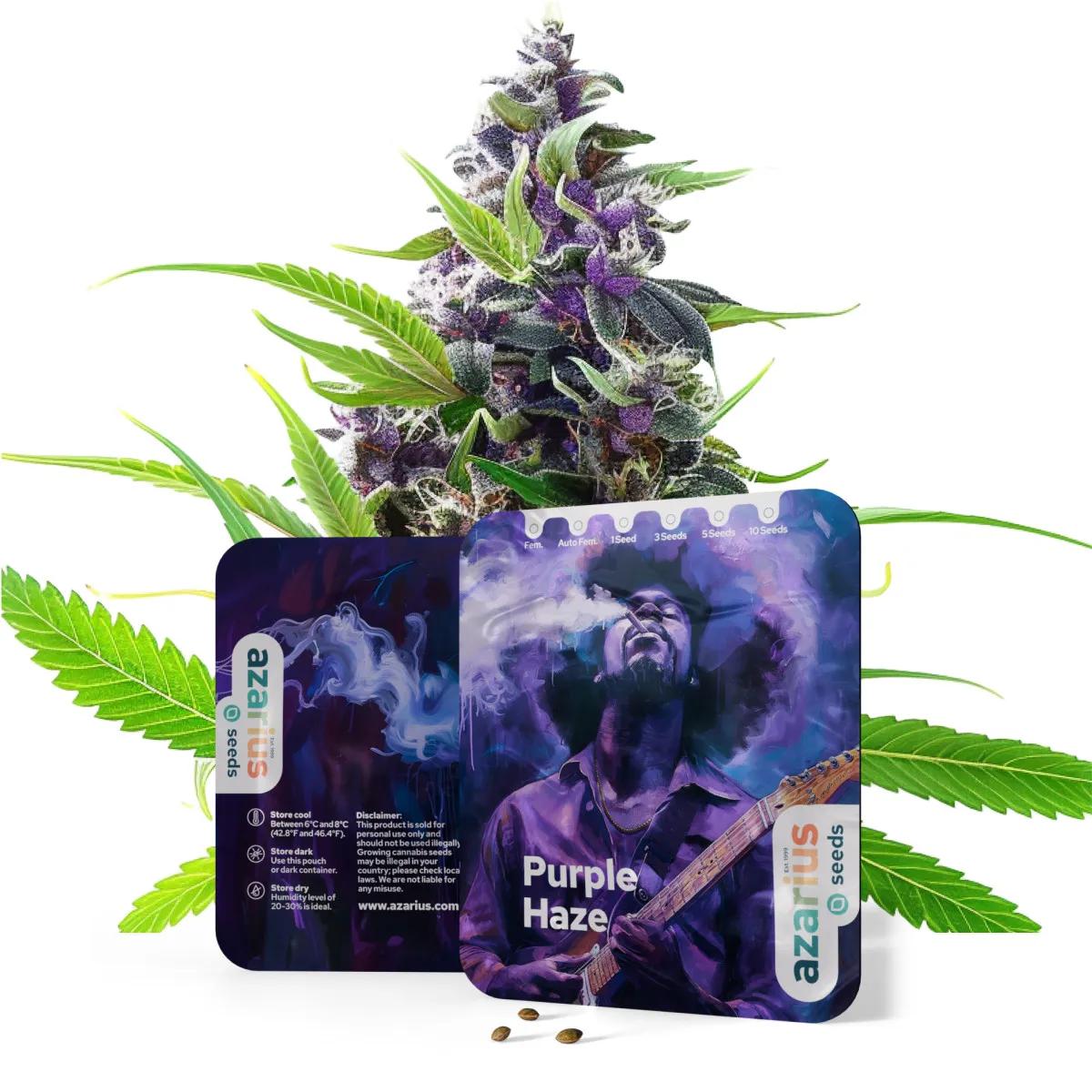
Purple Haze
Feminized seeds
by Azarius
Purple Haze Seeds — Sativa-Leaning Feminized Cannabis Seeds
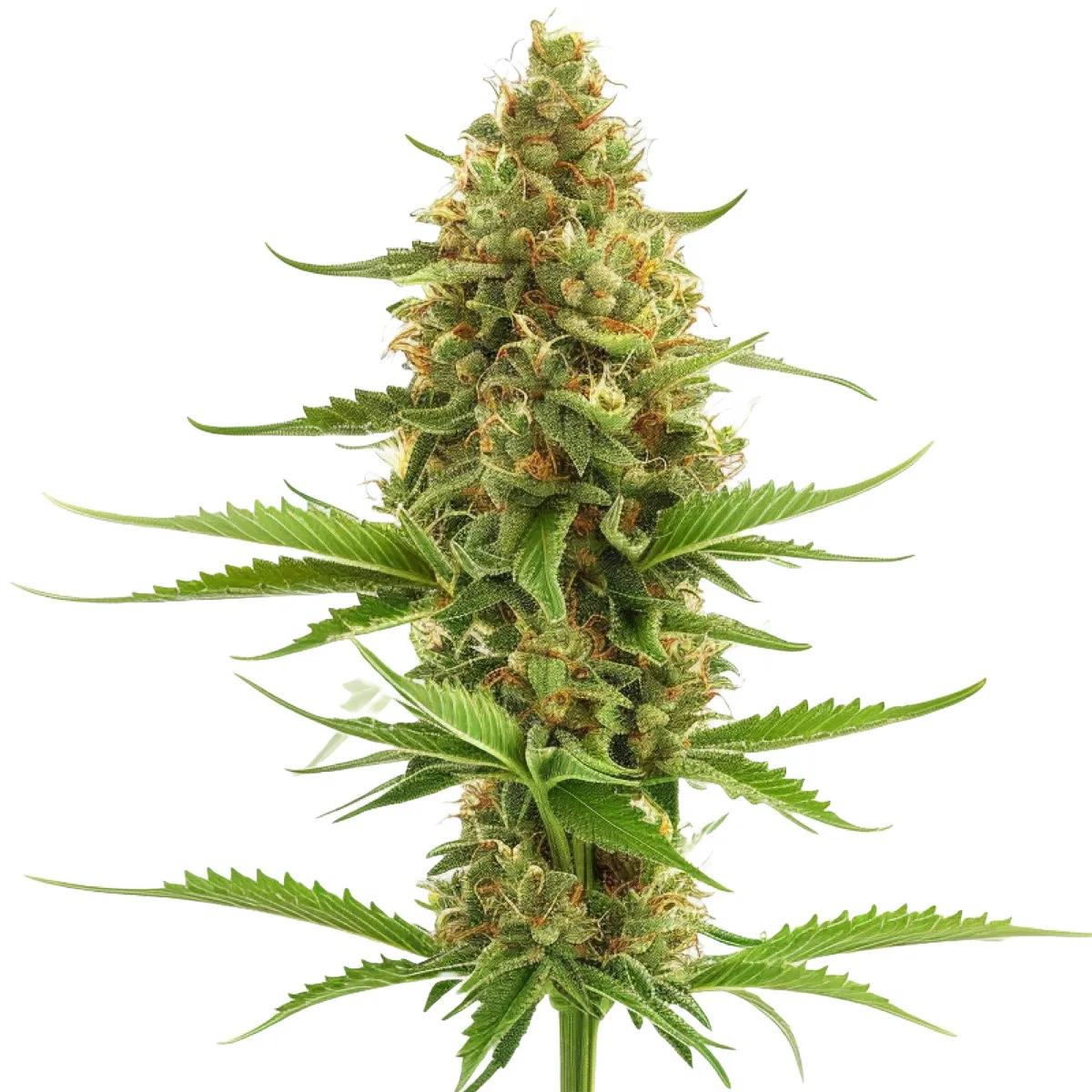
Purple Haze seeds are feminized cannabis seeds from a mostly sativa hybrid bred from Haze and Purple Thai genetics. They produce exclusively female plants that flower in 8–10 weeks and yield up to 400 g/m² indoors. With 14–18% THC and roughly 2% CBD, this strain delivers a clear-headed, creative high with a gentle relaxing undertone — no couch-lock, no overwhelming intensity. The flavour profile runs earthy and sweet with incense-like notes that linger on the exhale. If you want a dependable sativa grower that doesn't demand expert-level attention, this is the one to start with.
Choosing Your Purple Haze Seed Pack
Purple Haze feminized seeds come in packs of 1, 3, 5, or 10. The right size depends entirely on your grow space and how much room you want for error.
| Pack Size | Best For |
|---|---|
| 1 seed | A single test run or slotting one plant into an existing canopy. Low commitment, good for sampling the genetics before going bigger. |
| 3 seeds | A small indoor tent grow. Enough to fill a 1 m² space and pick the strongest phenotype from the batch. |
| 5 seeds | A dedicated indoor or balcony project. Gives you a buffer if one or two seeds are slow starters — and they sometimes are. |
| 10 seeds | Multiple cycles or a full outdoor plot. Best value per seed, with plenty of backup for pheno hunting or staggered planting. |
Our honest take: the 5-pack hits the sweet spot for most indoor growers. You get enough genetic variety to find a standout phenotype without overcommitting on space. The 10-pack is the move if you're planning successive harvests or want to run a proper selection.
What Makes Purple Haze Worth Growing
Purple Haze seeds produce plants with a terpene profile that smells like walking into an old incense shop — earthy base, sweet top notes, and something slightly spicy underneath. The buds often develop purple and violet hues as they mature, especially when nighttime temperatures drop below 15°C during late flowering. It's genuinely one of the better-looking plants you'll pull out of a tent.
The genetics trace back to a Haze and Purple Thai cross. Haze contributes the sativa-dominant structure and cerebral character, while Purple Thai brings the colour expression and that distinctive sweetness. At 14–18% THC with around 2% CBD, the potency sits in a comfortable middle range. You get an uplifting, focused head feel without the racing thoughts that higher-THC sativas can trigger. The ~2% CBD — a secondary cannabinoid that may moderate the intensity of THC's effects — adds a subtle smoothness to the overall experience.
One thing to watch: these plants stretch. Sativa-dominant genetics mean vertical growth can get away from you if you don't top or train early. In a 1.2 m tall tent, start thinking about low-stress training by the third week of veg. Outdoors, the stretch is less of a problem — more of a feature, really.
Purple Haze Seeds — Specifications
Purple Haze is a photoperiod, feminized strain with sativa-dominant genetics. Here's what you're working with:
| Specification | Detail |
|---|---|
| Genetics | Haze x Purple Thai |
| Type | Mostly Sativa Hybrid |
| Seed Type | Feminized (photoperiod) |
| THC Content | 14–18% |
| CBD Content | ~2% |
| Flowering Time | 8–10 weeks |
| Indoor Yield | 350–400 g/m² |
| Difficulty | Straightforward — good for growers with basic experience |
| Flavour Profile | Earthy, incense, sweet |
| Pack Sizes | 1, 3, 5, or 10 seeds |
Complete your grow setup with a propagation kit for germination and a full-spectrum LED panel to push those yields toward the 400 g/m² mark. A carbon filter is also worth grabbing — Purple Haze gets aromatic in late flower, and your neighbours don't need to know about your hobby.
How to Germinate and Grow Purple Haze Seeds
Purple Haze feminized seeds germinate reliably with the paper towel method. Here's the process we've seen work thousands of times:
- Soak your Purple Haze seeds in a glass of room-temperature water (20–22°C) for 12–24 hours. They should sink to the bottom — give stubborn floaters a gentle tap.
- Transfer the seeds to a damp paper towel on a plate. Fold the towel over, cover with a second plate to keep it dark and humid. Check moisture daily.
- Within 2–5 days, a white taproot should emerge. Once it reaches 1–2 cm, transplant into your growing medium — root pointing down, about 1 cm deep.
- Keep seedlings under 18/6 light at around 22–25°C. Humidity at 65–70% for the first two weeks helps establish strong roots.
- Vegetate for 4–6 weeks depending on your space. Top or LST early to manage the sativa stretch — these plants can double in height during the first two weeks of flower.
- Flip to 12/12 to trigger flowering. Expect 8–10 weeks before harvest. Watch for the purple colouration to develop in weeks 6–8, especially if you can drop nighttime temps to 15–18°C.
- Harvest when trichomes shift from clear to milky-white with 10–20% amber. Dry in a dark room at 18–20°C and 55–60% humidity for 7–10 days, then cure in glass jars for at least two weeks.
From Our Counter: What We've Learned About Purple Haze
We've been shipping seeds from Amsterdam since 1999, and Purple Haze has been a consistent seller for years — not because it's the strongest or the flashiest, but because it does what it says. Customers growing in small tents (60x60 or 80x80) regularly report 350 g/m² without any advanced techniques. Just decent light, consistent watering, and a bit of patience.
The one limitation worth mentioning: if you're chasing maximum THC, this isn't your strain. At 14–18%, Purple Haze sits below the 20%+ monsters in our catalogue. But that's actually the point. The moderate potency makes it a better daily-use option — functional, clear, creative. We'd pick it over a 25% THC indica any morning of the week.
Compared to something like Amnesia Haze, Purple Haze finishes faster (8–10 weeks vs. 10–12), yields similarly indoors, and doesn't require the same level of feeding precision. If Amnesia Haze is the sports car, Purple Haze is the reliable hatchback that starts every morning and never breaks down. Less glamorous, more practical.
Flavour and Aroma Profile
Purple Haze develops a distinctive terpene profile that sets it apart from most sativa-dominant strains. The dominant notes are earthy and sweet, with an incense-like quality that becomes more pronounced during the cure. Crack open a jar after three weeks and you'll get a wave of something between sandalwood and dried berries — it's the Purple Thai genetics coming through.
When smoked or vaporised, the sweetness hits first, followed by a deeper, slightly spicy earthiness on the exhale. According to research on cannabis terpene profiling (PMC12939766), the aromatic complexity of cannabis strains depends heavily on the interaction between multiple terpene compounds rather than any single dominant molecule. Purple Haze carries myrcene, caryophyllene, and pinene as its primary terpenes — a combination that contributes to both the flavour and the character of the experience.
Frequently Asked Questions
Is Purple Haze an indica or a sativa?
Mostly sativa. It's a hybrid of Haze and Purple Thai genetics with a strong sativa lean. The growth pattern, flowering structure, and effects all reflect that sativa dominance — tall plants, airy buds, and a clear-headed, creative character rather than heavy sedation.
How long does Purple Haze take to flower?
8–10 weeks from the flip to 12/12. Most phenotypes finish closer to 9 weeks indoors. Outdoor growers in northern Europe can expect harvest around mid-October, depending on latitude and weather.
What yield can I expect from Purple Haze seeds indoors?
350–400 g/m² under decent lighting and standard feeding. Hitting the upper end requires a proper full-spectrum LED or 600W HPS and some training to keep the canopy even. Without training, the sativa stretch can reduce light penetration to lower bud sites.
Are Purple Haze seeds good for beginners?
Yes, with one caveat: manage the stretch. These plants grow tall and fast once you flip to flower. If you top once during veg and use basic low-stress training, you'll be fine. The feeding requirements are straightforward — no special CalMag demands or pH sensitivity beyond the normal range.
Why do Purple Haze buds turn purple?
The purple colouration comes from anthocyanins — pigments inherited from the Purple Thai parent. They express most strongly when nighttime temperatures drop below 15–18°C during late flowering. If your grow room stays warm around the clock, you may get less colour expression, but the genetics and effects remain identical.
What does Purple Haze smell and taste like?
Earthy and sweet with a distinct incense-like quality. The aroma intensifies during the cure — after two to three weeks in jars, you'll notice dried berry and sandalwood notes. The smoke is smooth, with sweetness on the inhale and a spicy earthiness on the exhale.
How does Purple Haze compare to Amnesia Haze?
Purple Haze finishes 2–3 weeks faster (8–10 weeks vs. 10–12), has lower THC (14–18% vs. 20–22%), and is less demanding to feed. Amnesia Haze hits harder and yields slightly more in expert hands, but Purple Haze is the more forgiving, reliable option — especially in smaller grow spaces.
Can I grow Purple Haze outdoors?
Absolutely. The sativa structure handles outdoor conditions well, and the plants can reach 1.5–2 m in open ground. You'll want a long enough growing season — harvest typically falls in mid-October in central and southern Europe. Northern growers should consider a greenhouse to extend the season if needed.
Last updated: April 2026
You might also like
Medical disclaimer. This content is for informational purposes only and does not constitute medical advice. Consult a qualified healthcare provider before use of any substance.