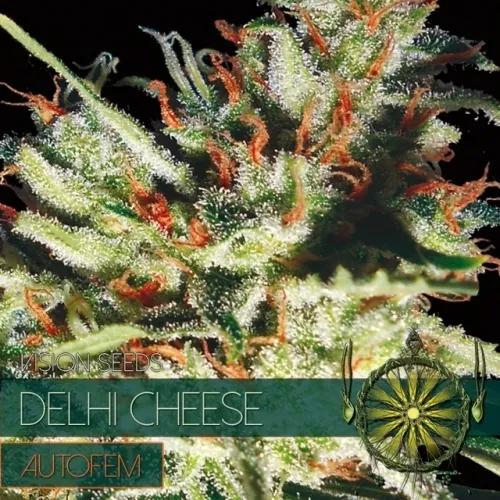
Vision Seeds
by Vision Seeds
Delhi Cheese Autoflowering is an Indica-dominant autoflowering cannabis seed strain from Vision Seeds that produces CBD-rich buds with a pungent cheesy aroma. A genetic cross of Cheese, Critical Impact, and Ruderalis, this compact plant reaches just 50cm indoors yet delivers roughly one gram of dried bud per centimetre of height — making it one of the best autoflowering seeds for growers with limited space who want medicinal-grade cannabinoid profiles.
| Pack size | SKU | Best for |
|---|---|---|
| 3 seeds | CSVS0025 | Single-plant growers or first-time testers |
| 5 seeds | CSVS0063 | A full micro-grow or keeping a mother rotation |
With autoflowering genetics, every seed is feminized — no males to cull. The 5-pack gives you room for one or two phenotype variations without committing to a large order.
Most autoflowering strains race to finish. Delhi Cheese Autoflowering takes a slightly longer path — a few extra days in the grow room — but pays you back with a cannabinoid ratio that's genuinely unusual in the auto world. The 12% THC sits alongside a notably high CBD content, which means the smoke delivers body-level relief without flooring you mentally. If you've grown fast autos before and found the end product a bit one-dimensional, this is the strain that changes your mind.
The Cheese lineage is unmistakable. Crack open a cured jar and you'll get hit with that sharp, funky, almost Stilton-like stink that Cheese strains are famous for. It's not subtle — your carbon filter earns its keep here. The "Delhi" in the name nods to the heavy Indica structure: short internodes, dense bud formation, and a plant that stays squat and bushy rather than stretching toward the light.
One honest limitation: the longer flowering window means you won't be harvesting in 8 weeks flat like some speed-demon autos. Budget around 10–12 weeks from seed to chop. That said, the yield-per-centimetre ratio is outstanding for a plant this small — we're talking approximately 50 grams from a 50cm plant indoors. Outdoors, in a sunny climate, plants can stretch to 2 metres and produce considerably more.
| Specification | Detail |
|---|---|
| Seed bank | Vision Seeds |
| Genetics | Cheese x Critical Impact x Ruderalis |
| Type | Autoflowering, feminized |
| Dominance | Indica-dominant |
| THC content | 12% |
| CBD content | High (exact % not specified by breeder) |
| Indoor height | Approximately 50cm |
| Outdoor height | Up to 200cm |
| Yield (indoor) | ~1g per cm of plant height |
| Aroma/flavour | Intense cheese, funky, sharp |
| Flowering trigger | Automatic (age-based, not photoperiod) |
| Available packs | 3 seeds / 5 seeds |
Complete your grow setup with a compact grow tent — the 60x60cm size suits Delhi Cheese Autoflowering's short stature. Pair with a carbon filter from day one; that cheese smell announces itself early and doesn't let up. A basic NPK nutrient kit designed for autoflowering strains will keep feeding simple without overcomplicating the short lifecycle.
This strain is forgiving enough for newer growers but rewards a bit of attention. The Indica structure means you won't need to do much training — she stays compact naturally. The main thing to watch: don't overfeed. Autoflowering plants have a shorter vegetative phase, so they need less nitrogen than photoperiod strains. Heavy feeding early on stunts them, and with a plant that's already compact, you can't afford lost centimetres.
The strong odour is worth repeating. We've seen growers underestimate Cheese genetics before — "it can't be that bad" — and then scramble for carbon filter solutions mid-flower. Set up your ventilation and odour control before you pop the seeds. Your housemates (and neighbours) will thank you.
The 12% THC might look modest on paper — especially if you're used to seeing 20%+ numbers on modern photoperiod strains. But Delhi Cheese Autoflowering isn't trying to compete on THC alone. The high CBD content creates a balanced cannabinoid profile where the two compounds work in tandem. THC addresses mood, stress, and mental tension; CBD — a non-intoxicating cannabinoid that interacts with CB2 receptors and modulates the effects of THC — handles the physical side: muscle tightness, inflammation, general bodily discomfort.
For growers interested in medicinal applications, this ratio is genuinely hard to find in autoflowering genetics. Most breeders chase THC numbers because that's what sells. Vision Seeds went the other direction here, and the result is a strain that won't leave you couch-locked or mentally foggy — just physically at ease with a gentle mood lift. Compare that to something like a pure Cheese photoperiod at 18–22% THC: heavier, more sedating, less functional. Delhi Cheese Autoflowering is the one you can smoke and still have a conversation.
There's no polite way to put this: Delhi Cheese Autoflowering smells like a wheel of aged blue cheese left in a warm room. It's sharp, tangy, almost savoury — nothing fruity or sweet about it. The Cheese lineage (originally a UK phenotype of Skunk #1) passes on those unmistakable sulphurous, dairy-like terpenes that polarise people. You either love it or you keep it sealed in jars with a Boveda pack.
On the inhale, the flavour matches the nose: creamy, musky, with a slight earthy undertone from the Ruderalis genetics. Exhale is where the funk really sits — it lingers on the palate. If you're growing in a shared space, factor in the smell from week 3 of flower onwards. It's not a strain you can hide.
Expect around 10–12 weeks total from germination to harvest. That's slightly longer than many autoflowering strains, but the extra time produces denser, more resinous buds with a higher CBD content.
Yes — outdoors in a warm, sunny climate, plants can reach up to 2 metres tall and yield significantly more than the 50cm indoor average. The strong smell is the main concern; pick a spot where the aroma won't bother neighbours.
Not at all. The high CBD content modulates the THC, producing a clear-headed, physically relaxing effect rather than an intense mental hit. It's functional — you'll feel it, but you won't be incapacitated.
No. Autoflowering strains flower based on age, not light schedule. Keep them on 18–20 hours of light throughout their entire lifecycle for best results. No 12/12 switch needed.
It's strong — genuinely pungent. A carbon filter is non-negotiable for indoor grows. The smell starts mid-flower and intensifies through harvest and curing. Plan your ventilation before you plant.
A 7–11 litre pot is ideal for indoor growing. The plant stays compact at around 50cm, so it doesn't need a massive root zone. Go straight to your final pot — autoflowers don't respond well to transplanting.
Yes. The compact size, autoflowering genetics, and forgiving Indica structure make it straightforward. The main pitfall is overfeeding — keep nutrients lighter than you would for a photoperiod strain.
Last updated: April 2026
Medical disclaimer. This content is for informational purposes only and does not constitute medical advice. Consult a qualified healthcare provider before use of any substance.