CBD topicals
by Cibdol
We'll only email you about this product — no marketing.
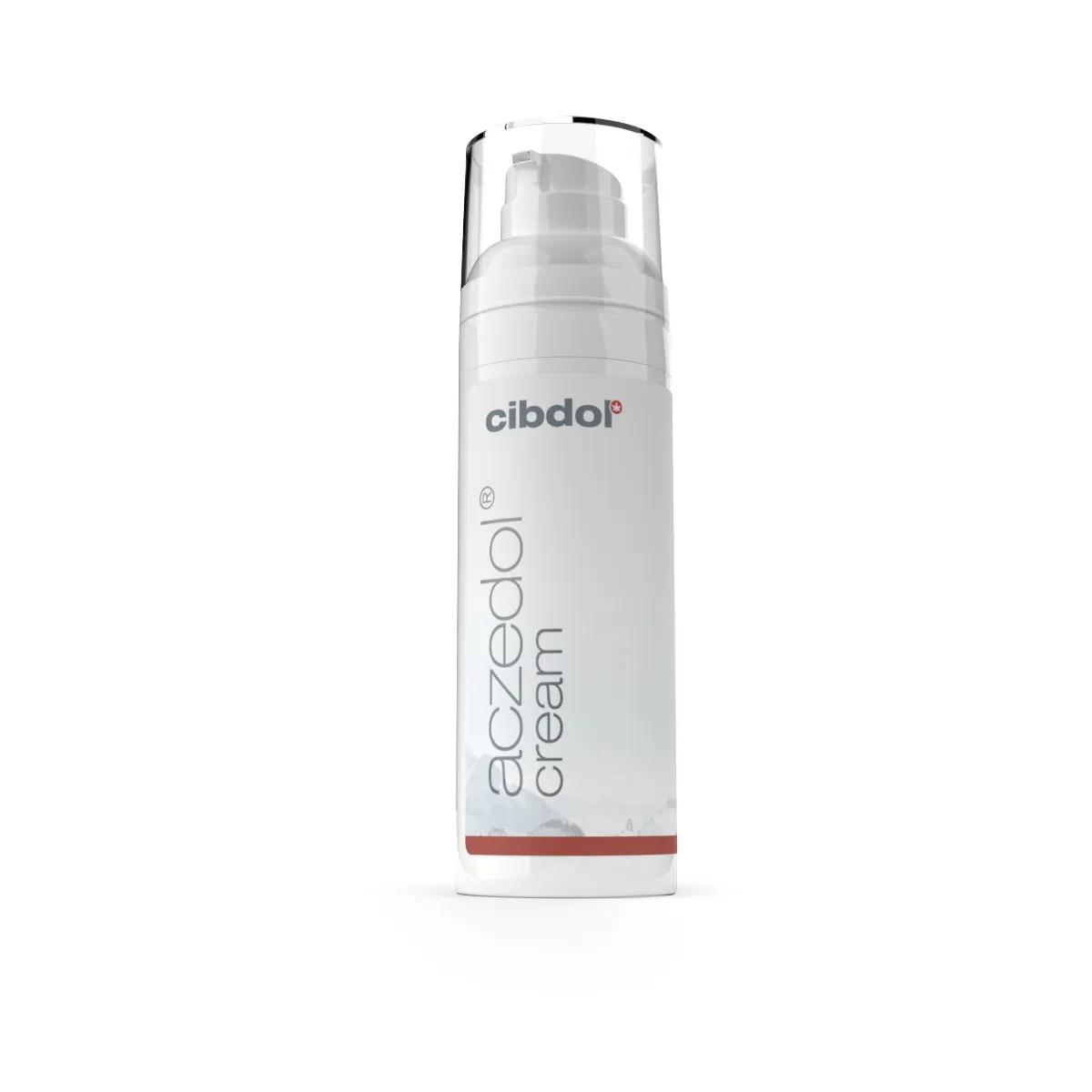
Aczedol is a CBD acne cream by Cibdol — a class I medical device salve formulated with 100 mg of cannabidiol and liposome delivery technology to target the itch, redness, and burning sensation that come with acne vulgaris. If you've tried half the skincare aisle and your skin still flares up, this is a different approach: CBD's antibacterial and restorative properties carried deep into the skin layers where over-the-counter washes rarely reach.
Most acne products hammer your skin with drying agents or harsh acids. Aczedol takes a different route. Cibdol designed this as a medical device salve — not a cosmetic, not a supplement — specifically to soothe the symptoms of acne vulgaris. The 100 mg CBD content works alongside a liposome delivery system. Liposomes are microscopic lipid spheres that encapsulate the active ingredients and ferry them past the outer skin barrier, releasing CBD exactly where inflammation sits. That's not marketing fluff — it's the same delivery tech used in pharmaceutical topicals.
The texture is worth mentioning: it's a light, non-greasy cream that absorbs quickly. No shiny residue, no clogged pores from the product that's supposed to be helping your pores. You can apply it under makeup or sunscreen without layering issues. It smells clean and faintly botanical — nothing perfumey, nothing medicinal. If you've ever used a benzoyl peroxide cream and winced at the bleaching and flaking, Aczedol feels like the opposite experience on your skin.
| Spec | Value |
|---|---|
| Brand | Cibdol |
| Product type | CBD acne salve (class I medical device) |
| CBD content | 100 mg per tube |
| Volume | 50 ml |
| CBD concentration | 2 mg per ml |
| Delivery system | Liposome technology |
| Target condition | Acne vulgaris symptoms (itch, burning, redness) |
| Application frequency | 2–3 times daily |
| Texture | Lightweight cream, non-greasy |
Acne vulgaris is driven by a combination of excess sebum, bacterial overgrowth (primarily Cutibacterium acnes), and inflammation. According to the StatPearls overview on acne vulgaris, the overall prognosis with appropriate treatment is generally good, though the condition can have significant psychological impact (NIH Bookshelf, NBK459173). That psychological toll — the self-consciousness, the frustration of recurring breakouts — is something we hear about from customers regularly. It's not vanity. It genuinely affects how people move through their day.
Conventional topical treatments have their own trade-offs. According to research on topical tretinoin, its efficacy and safety in acne vulgaris have been extensively evaluated in multiple randomised trials, but irritation and dryness are common side effects (PMC12653878). And according to a review of acne treatments, studies have indicated that isotretinoin may be associated with an increased incidence of mood changes, such as depression and suicidal tendencies (PMC11266290). These are systemic medications, of course, not topicals — but it shows why people look for gentler alternatives.
Aczedol doesn't replace prescription treatments for severe acne. What it does is offer a CBD-based topical option for managing the surface symptoms — the itch, the burning, the redness — without the drying and peeling that come with benzoyl peroxide or retinoid creams. The liposome encapsulation means the CBD isn't just sitting on top of your skin evaporating; it's being actively transported into the dermal layers where inflammation occurs.
Here's the honest reality of dealing with acne: most people cycle through 4 or 5 products before finding something that works without making things worse. Foaming cleansers strip your moisture barrier. Benzoyl peroxide bleaches your pillowcases and dries your skin until it overproduces sebum to compensate — creating the exact problem you were trying to solve. Salicylic acid works for some, does nothing for others. According to research on benzoyl peroxide for acne, various formulations and concentrations have been studied, but tolerability remains a limiting factor for many users (PubMed 32175593).
Aczedol approaches the problem differently. Rather than trying to nuke bacteria or chemically exfoliate your face into submission, it uses CBD's antibacterial and restorative properties delivered via liposomes to calm the inflammatory response itself. The 100 mg CBD in 50 ml gives you a 2 mg/ml concentration — enough to be functional without being wasteful. At 2–3 applications daily, a tube lasts roughly 3–4 weeks depending on how much skin you're covering.
One honest limitation: if you have severe cystic acne, Aczedol alone probably won't be enough. It's designed for the symptoms of acne vulgaris — the everyday breakouts, the irritation, the burning. For deep cystic lesions, you'd want to talk to a dermatologist about prescription options and potentially use Aczedol alongside those treatments for surface symptom relief. According to recommendations on acne outcomes, topical treatments work best as part of a broader management approach that addresses both active lesions and post-inflammatory changes (PMC11909303).
We've been stocking Cibdol products for years, and Aczedol is one of those items where customers either come back for a second tube within a month or they were expecting a miracle overnight. Set your expectations right and it delivers. The customers who get the best results are the ones who use it consistently — 2–3 times daily, every day, for at least 3 weeks. The ones who dab it on once before a night out and expect clear skin by morning are always disappointed.
Compared to Cibdol's Soridol (their psoriasis cream) or Zemadol (eczema), Aczedol has the lightest texture of the three. Soridol is thicker and more occlusive because psoriatic skin needs that barrier protection. Aczedol is deliberately lightweight — acne-prone skin doesn't need more occlusion, it needs targeted delivery without pore-clogging. If you're not sure whether your skin condition is acne or something else, a dermatologist visit is worth the 15 minutes. Using the wrong topical for the wrong condition is a waste of product and patience.
If you're building a complete CBD skincare routine, pair Aczedol with Cibdol's CBD Face Cream for daily moisturising on non-affected areas, or look at Cibdol's CBD Skin Oil for targeted overnight treatment. For internal support, Cibdol's CBD oil drops can complement your topical regimen — research on acne management increasingly points toward combined approaches for better outcomes.
| Feature | Aczedol (CBD cream) | Benzoyl peroxide cream | Topical retinoid |
|---|---|---|---|
| Active mechanism | CBD antibacterial + anti-inflammatory via liposomes | Oxidising agent kills bacteria | Increases cell turnover |
| Common side effects | Minimal reported | Dryness, peeling, bleaching of fabrics | Dryness, irritation, sun sensitivity |
| Texture | Lightweight, non-greasy | Varies; often drying | Gel or cream; can be sticky |
| Application frequency | 2–3 times daily | 1–3 times daily | Once daily (evening) |
| Suitable under makeup | Yes | Can cause flaking | Can cause peeling |
| Classification | Class I medical device | OTC medication | Prescription (most formulations) |
Most users notice a reduction in redness and burning sensation within 1–2 weeks of consistent use (2–3 times daily). For visible improvement in breakout frequency, give it a full 3–4 weeks. Skin cell turnover takes roughly 28 days, so patience is part of the process.
Anti-acne topicals generally have limited drug-drug interactions, especially when one is a CBD-based salve. That said, layering multiple actives can irritate sensitive skin. If you're using prescription retinoids or benzoyl peroxide, apply them at different times of day — for example, Aczedol in the morning and your prescription product in the evening.
Extremely unlikely. Aczedol is a topical cream with 100 mg CBD in 50 ml, applied to the skin surface. Transdermal absorption of cannabinoids from topical products is minimal and generally does not produce detectable blood levels. No THC is listed in the formulation.
Yes — it's one of the gentler acne topicals available. Side effects are minimal according to the manufacturer. The liposome delivery system means less surface irritation because the active ingredients are transported below the skin barrier rather than sitting on top. If you react to a new product, discontinue and consult a dermatologist.
In the EU, a class I medical device is the lowest risk category. It means Aczedol has been registered as a device intended to alleviate specific symptoms (itch and burning from acne vulgaris) rather than classified as a cosmetic or food supplement. This gives it a more defined intended use than a generic CBD moisturiser.
A small, thin amount — roughly pea-sized for the face. You don't need to slather it on. The liposome technology means a little goes further than a standard cream. One 50 ml tube lasts approximately 3–4 weeks at 2–3 daily applications.
Last updated: April 2026
Medical disclaimer. This content is for informational purposes only and does not constitute medical advice. Consult a qualified healthcare provider before use of any substance.