Harvest & curing
by Ice-O-Lator
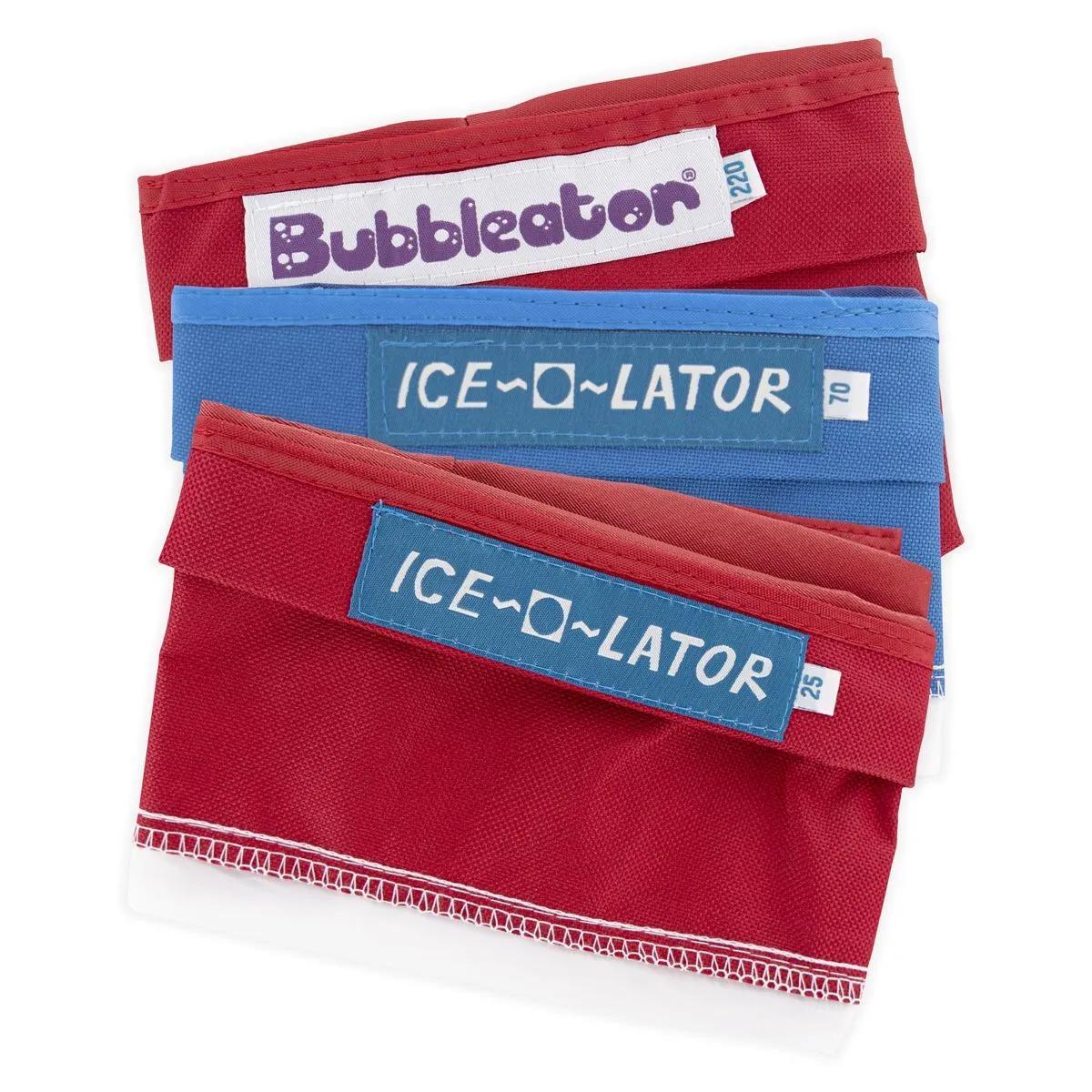
The Ice-O-Lator Small is a cold water extraction bag set that separates trichome resin from plant material using nothing but ice, water, and progressively finer mesh screens. Designed for batches of up to 200 grams of plant material per run, these bags fit snugly on a standard 20-litre (5-gallon) bucket with a 30cm diameter opening. Available in 2-bag, 3-bag, 4-bag, 5-bag, 6-bag, 7-bag, and 8-bag configurations, the Ice-O-Lator Small lets you dial in exactly the grade of solventless concentrate you want — from a quick two-bag separation to a full eight-bag spectrum of trichome sizes.
This is where most people get stuck, so here's the honest breakdown. The number of bags determines how many grades of resin you collect. More bags means more separation — finer grades, cleaner end product, but also more work per run.
| Set | Bags | Mesh Sizes | Best For |
|---|---|---|---|
| Indoor (2 bags) | 2 | 1x 220mc, 1x 70mc | Quick runs with indoor-grown material — fewer leaf contaminants |
| Outdoor (2 bags) | 2 | 1x 185mc, 1x 45mc | Outdoor-grown material with more plant matter to filter out |
| 3 Bag Set | 3 | 1x 220mc, 1x 70mc, 1x 25mc | Good middle ground — catches a finer grade without overcomplicating things |
| 4 Bag Set | 4 | 1x 220mc, 1x 185mc, 1x 70mc, 1x 25mc | Proper multi-grade separation for anyone serious about quality |
| 5 Bag Set | 5 | Multiple graduated meshes | More grades, more control over final product |
| 6 Bag Set | 6 | Multiple graduated meshes | Detailed separation for experienced extractors |
| 7 Bag Set | 7 | Multiple graduated meshes | Near-complete trichome spectrum |
| 8 Bag Set | 8 | Full graduated mesh range | Maximum separation — every trichome size gets its own bag |
Our honest take: if you're doing your first ice water extraction, the 4-bag set hits the sweet spot. You get enough separation to see real differences between grades without spending your entire afternoon scraping eight screens. The 2-bag Indoor set is fine for a fast run when you know your starting material is clean, but you'll be mixing good and mediocre resin together. The 2-bag Outdoor set uses a tighter 45-micron mesh on the collection bag because outdoor material tends to carry more contaminant — that finer screen keeps the rough stuff out.
Ice water extraction — the method the Ice-O-Lator is built around — produces solventless concentrate with zero chemical residues. No butane, no ethanol, no CO2 tanks. You're using ice and water to make trichome heads brittle enough to snap off the plant, then filtering them through progressively finer mesh screens. The result is pure resin that tastes exactly like the plant it came from, because you haven't blasted it with anything that strips terpenes or leaves behind trace solvents.
We've sold these bags since the early 2000s, and the principle hasn't changed because it doesn't need to. The 220-micron bag is your work bag — it catches the big plant material and lets the trichomes pass through. Everything below that is collection, with finer meshes catching smaller and smaller trichome heads. The 70-micron range is generally considered the sweet spot for potency and flavour. The 25-micron bag catches the tiniest heads — these are often the most concentrated but produce the smallest yield.
One thing to know upfront: ice water extraction is messier than dry sifting. You're working with cold water, your hands will go numb, and drying the collected resin properly takes patience — at least 24 to 48 hours on cardboard or a pressing screen in a cool, dark room. Rush the drying and you'll get mould. That's the trade-off for a cleaner, tastier product.
| Specification | Detail |
|---|---|
| Edition | Small |
| Capacity | Up to 200g plant material per run |
| Bag diameter | 30cm |
| Fits bucket size | 20 litres / 5 gallons |
| Available sets | 2-bag (Indoor), 2-bag (Outdoor), 3, 4, 5, 6, 7, 8 bag |
| Indoor 2-bag meshes | 220mc + 70mc |
| Outdoor 2-bag meshes | 185mc + 45mc |
| 3-bag set meshes | 220mc + 70mc + 25mc |
| 4-bag set meshes | 220mc + 185mc + 70mc + 25mc |
| Extraction method | Ice water (solventless) |
| Category | Harvest and curing equipment |
Complete your extraction setup: you'll need a sturdy 20-litre bucket (any hardware shop will do), plenty of ice, and a way to agitate the mix — a large wooden spoon or a purpose-built stirring attachment for a drill both work. For drying the collected resin, a pressing screen or pollen press helps you get a clean, compact final product. If you're processing larger batches, the Ice-O-Lator Large handles up to 500g per run on a bigger bucket.
The process is straightforward, but the details matter. We've walked hundreds of customers through their first run, and the mistakes are almost always the same: not enough ice, agitating too aggressively, or not drying the resin long enough. Here's how to do it properly.
A second run on the same material often yields a decent amount — not as potent as the first, but still worth collecting. Some people do three runs before discarding the plant material.
After 25-plus years behind the counter, we've heard every Ice-O-Lator question going. The single most common issue? People use tap water that's too warm. Amsterdam tap water in summer sits around 18°C — that's far too warm. You need the water ice-cold from the start, and you need enough ice to keep it there for the full 20-minute stir. Buy a bag of ice from the petrol station if your freezer can't keep up.
The second most common issue is impatience with drying. Wet resin looks like it should be ready because it's already sticky and fragrant. It's not. That moisture will turn into mould within a week if you press or store it too early. Give it the full 48 hours. Your nose will thank you — properly dried ice water hash has a clean, terpene-rich aroma that wet resin simply doesn't.
Compared to dry sift screens, the Ice-O-Lator produces a cleaner separation because the water carries away water-soluble contaminants that dry sifting leaves behind. The trade-off is time and mess. If you want speed and simplicity, dry sift is easier. If you want the cleanest possible solventless concentrate from a home setup, ice water extraction with these bags is the way to go.
Ice water extraction is a solventless method that uses freezing water and agitation to snap trichome resin heads off plant material. The trichomes are then filtered through mesh bags of decreasing micron size, separating them by grade. No chemicals involved — just ice, water, and mechanical separation.
The 70-micron range is widely considered the sweet spot — it catches full-sized trichome heads with the highest concentration of active compounds and terpenes. The 25-micron bag collects the smallest heads, which are potent but yield very little. The 220mc and 185mc bags are work bags that filter out plant debris.
Yields vary enormously depending on the quality and trichome density of your starting material. A reasonable expectation is 5-15% return by weight from well-grown, trichome-heavy material. Trim runs produce less than full flower runs. Two passes on the same material can increase total yield by 20-30%.
The Indoor set (220mc + 70mc) works best with cleaner material that has fewer leaf contaminants. The Outdoor set (185mc + 45mc) uses a tighter collection mesh because outdoor-grown material typically carries more plant debris. If you're unsure, the 4-bag set covers both scenarios.
Yes, these bags are designed for repeated use. Rinse them thoroughly with cold water after each run — never hot water, as heat can deform the mesh. Let them air dry completely before storing. With proper care, a set lasts for dozens of runs.
That usually means the resin hasn't dried long enough, or you agitated too aggressively and broke up plant material into the collection bags. Dry for a full 48 hours in a cool, dark room with airflow. Next run, stir more gently — slow circles, not vigorous shaking.
The Small edition handles up to 200g of plant material and fits a 20-litre bucket (30cm diameter bags). The Large edition handles up to 500g and fits a bigger bucket. If you're processing more than 200g regularly, the Large saves you from doing multiple runs.
Last updated: April 2026