Fertilizers & nutrients
by Royal Queen Seeds
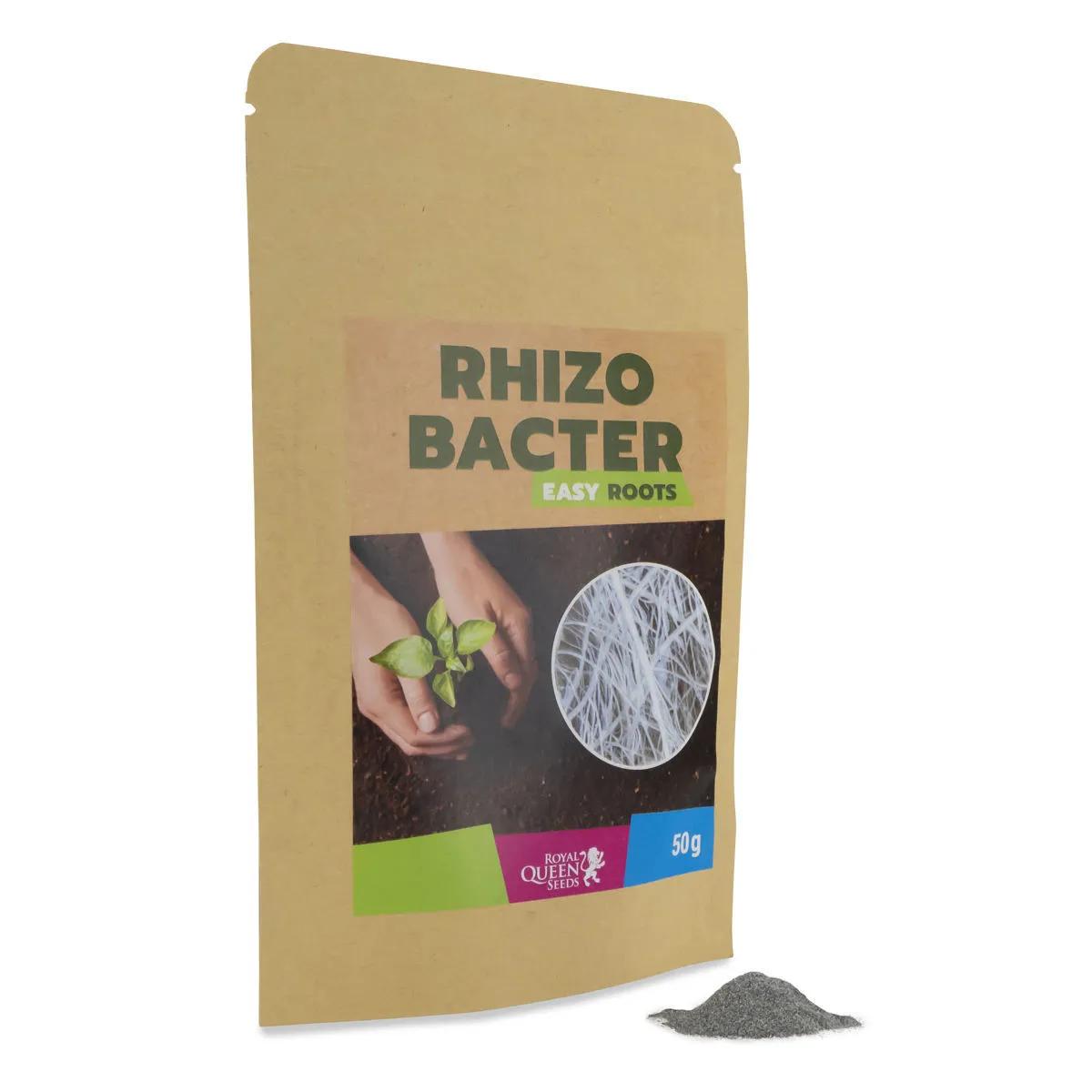
Easy Roots Rhizobacter is a concentrated biological soil amendment containing beneficial bacteria, microbes, and algae that you introduce directly into your root zone. Rather than just feeding your plants, it builds a living ecosystem underground — one that breaks down nutrients, protects roots, and keeps your substrate healthy throughout the grow cycle. One 50g sachet covers up to 50 litres of soil, and the powder format makes dosing dead simple whether you're mixing fresh soil or transplanting into new pots.
We've stocked plenty of root-zone products over the years. What sets Rhizobacter apart is the combination approach: you're not just getting one bacterial strain, you're getting a consortium of microorganisms plus algae containing 60 trace elements. That's a lot of biological firepower in a little packet. If you want to buy a single product that addresses root-zone biology comprehensively, this is where we'd point you.
Rhizobacter contains several types of bacteria, microbes, and algae that form a symbiotic relationship with your plant's root system — making it a biological inoculant rather than a fertiliser in the traditional sense. Your plant feeds the microbes through root exudates, and in return, the microbes break down organic matter into plant-available nutrients, offer protection from pathogens, and help stabilise the substrate.
The algae component is worth highlighting on its own. According to the manufacturer, it delivers 60 trace elements that support growth while helping prevent fertiliser irritation and pH fluctuation — two issues that catch out a lot of growers, especially those running organic soil mixes where pH can drift without warning. Research published in PMC found that plant growth-promoting rhizobacteria (PGPR) modify root system architecture, which contributes to enhanced shoot growth (Zamioudis et al., 2013, PMC4772406). That's the science behind what you'll actually see: thicker stems, more vigorous vegetative growth, and roots that colonise the pot faster.
Here's the honest limitation: Rhizobacter works best in living soil or organic substrates. If you're running a sterile hydro setup with synthetic nutrients, the microbes won't have much to work with. This is a soil grower's product through and through.
| Specification | Detail |
|---|---|
| Brand | Easy Roots (by Royal Queen Seeds) |
| Product type | Biological soil inoculant |
| Contents | Beneficial bacteria, microbes, and algae |
| Trace elements | 60 (from algae component) |
| Application rate | 1g per litre of soil |
| Reapplication interval | Every 21 days |
| Medium compatibility | Soil, coco-soil blends, organic substrates |
| SKU | HS0936 |
Most bagged potting soil contains far fewer beneficial microbes than healthy ground soil due to sterilisation and packaging processes. Healthy soil in nature is teeming with microbial life — billions of organisms per gram. The bagged potting soil from the garden centre? The sterilisation and packaging process kills off most of the beneficial biology, leaving you with a structurally fine but biologically dead medium. Your plant can still grow in it, sure, but it's doing all the heavy lifting on its own.
Adding Rhizobacter reintroduces that missing biology. According to a 2023 study on rhizobacterial strains, researchers found that characterised plant-growth-promoting rhizobacteria significantly enhanced plant development when introduced to the root zone (PMC, 2023, PMC11644663). Separately, research into PGPR consortiums demonstrated that multiple rhizobacteria strains working together proved more effective than single-strain inoculants for enhancing stress tolerance in plants (PMC, 2023, PMC10603187). Data from the European Monitoring Centre for Drugs and Drug Addiction (EMCDDA) on plant cultivation trends across Europe has also highlighted growing interest in biological soil amendments as part of sustainable cultivation practices. That consortium approach is exactly what Rhizobacter uses — multiple microbial species, not just one.
We've seen growers skip the biology and wonder why their plants look pale and sluggish despite feeding them properly. The nutrients are there in the soil — the plants just can't access them efficiently without microbial help. It's like having a fridge full of food but no hands to open it.
Mix 1g of Rhizobacter powder per litre of soil before planting, or dissolve in room-temperature water for top-up applications every 21 days. Here's the full breakdown:
One thing to watch: don't mix Rhizobacter into boiling or very hot water. You'll kill the bacteria before they reach the roots. Room temperature or lukewarm is fine. Also, avoid applying it alongside hydrogen peroxide or other sterilising agents — they'll wipe out the microbes you just added.
Growers who order Rhizobacter frequently report visible improvements in root development within the first 10 days, particularly during transplant recovery. Plants that would normally sulk for a week after being moved to a bigger pot seem to bounce back faster when the new soil is pre-inoculated. That's not a clinical trial, that's 25 years of shop-floor conversations, but it tracks with what the research says about rhizobacteria modifying root architecture.
The powder itself is fine-grained, almost like a light flour with a faintly earthy, mushroomy smell — which makes sense given the microbial content. It's dry and free-flowing, so measuring with a small kitchen scale is easy. The 50g packet goes further than you'd think at 1g per litre; a single sachet can inoculate 50 litres of soil outright, plus several top-up applications.
If we had one gripe, it's the 21-day reapplication window. It's easy to forget, especially mid-grow when you're focused on feeding schedules and light cycles. Set a reminder on your phone. Seriously. The microbes don't last forever in a pot, and letting the biology die off mid-flower defeats the purpose of adding it in the first place.
Complete your root-zone setup with Easy Roots Mycorrhiza Mix for an additional layer of fungal symbiosis alongside the bacterial inoculant. If you're starting seeds, pair Rhizobacter with an Easy Start seedling pot to give your plants the best possible foundation from germination onward. For growers looking to get the most out of their organic substrate, combining Rhizobacter with BioBizz All-Mix creates a richly populated living soil from the start.
Rhizobacter populates your soil with beneficial organisms, while standard fertilisers deliver nutrients directly — the two serve fundamentally different roles and work best together. Think of fertiliser as the food and Rhizobacter as the kitchen staff that prepares and serves it.
| Feature | Standard fertiliser | Rhizobacter |
|---|---|---|
| Primary function | Delivers NPK and micronutrients | Introduces beneficial microbes and 60 trace elements |
| Root protection | None | According to the manufacturer, microbial barrier against pathogens |
| pH stability | Can cause fluctuation | Algae component helps buffer pH |
| Reapplication | Every feed (weekly or more) | Every 21 days |
| Best used | Throughout the grow cycle | From planting/transplant onward |
| Works alone? | Yes | No — complements your existing feed schedule |
The two aren't competing products. You'd use Rhizobacter alongside your regular feeding regime, not instead of it. According to research on Bacillus subtilis (a common plant-growth-promoting rhizobacterium), these organisms can modify plant responses to environmental stress through interactions with root hormone signalling (PMC, 2021, PMC8508976). Your fertiliser can't do that. Additionally, a study on the effects of PGPR on plants under salinity stress found that appropriate rhizosphere bacteria can diminish the negative effects of environmental stress on plant growth (PMC, 2020, PMC7690891).
Soil growers running organic or semi-organic setups will get the most out of this product. If you're growing in living soil, super soil, or amended coco-soil blends, the microbes have organic matter to feed on and will thrive. The 1g-per-litre dosing makes it practical for everything from a single houseplant to a full tent with 11-litre pots.
New growers: this is one of the best investments you can make early on. It's cheap, it's hard to mess up, and it addresses one of the most common beginner problems — poor root development leading to slow, stunted growth. We'd pick Rhizobacter over a fancy bottled nutrient every time if we had to choose one product for a first grow. You can order Easy Roots Rhizobacter right here at Azarius and have it shipped to your door.
If you're running pure hydro with inert media and synthetic salts, this isn't the product for you. The microbes need organic matter and a soil-like environment to establish. No shame in that — just different growing philosophies.
Yes. Rhizobacter is a biological inoculant, not a fertiliser, so it complements your existing feeding schedule. Just avoid mixing it with hydrogen peroxide or sterilising solutions, as these will kill the beneficial microbes.
The manufacturer specifies 1g per litre of soil. For a standard 11-litre pot, that's 11g. The 50g sachet covers roughly 50 litres of soil before top-ups, so one packet handles several plants comfortably.
Microbial colonies in a pot don't sustain themselves indefinitely the way they do in open ground. After roughly 3 weeks, the population declines enough that a fresh application is needed. Dissolve 1g per litre in room-temperature water and drench the roots.
It works in coco-soil blends and amended coco substrates where organic matter is present. In pure, unbuffered coco running only mineral salts, the microbes won't have enough to feed on to establish properly.
According to the manufacturer, the microbes form a symbiotic relationship with roots that provides added protection from pathogens and pests. Research on PGPR consortiums supports this — beneficial bacteria can outcompete harmful organisms in the root zone. It's preventative, though, not a cure for an existing infection.
Absolutely. Mix it into your planting holes or top-dress every 21 days. Outdoor soil often has more existing biology than indoor potting mixes, but the concentrated microbial boost still makes a noticeable difference, especially in poor or depleted garden soil.
It's a fine, light-coloured powder with a faintly earthy, mushroomy scent. It dissolves easily in water and mixes into soil without clumping. Nothing unpleasant — you'd barely notice it once it's in the pot.
Last updated: April 2026