Grow tents
by Dark Box
We'll only email you about this product — no marketing.
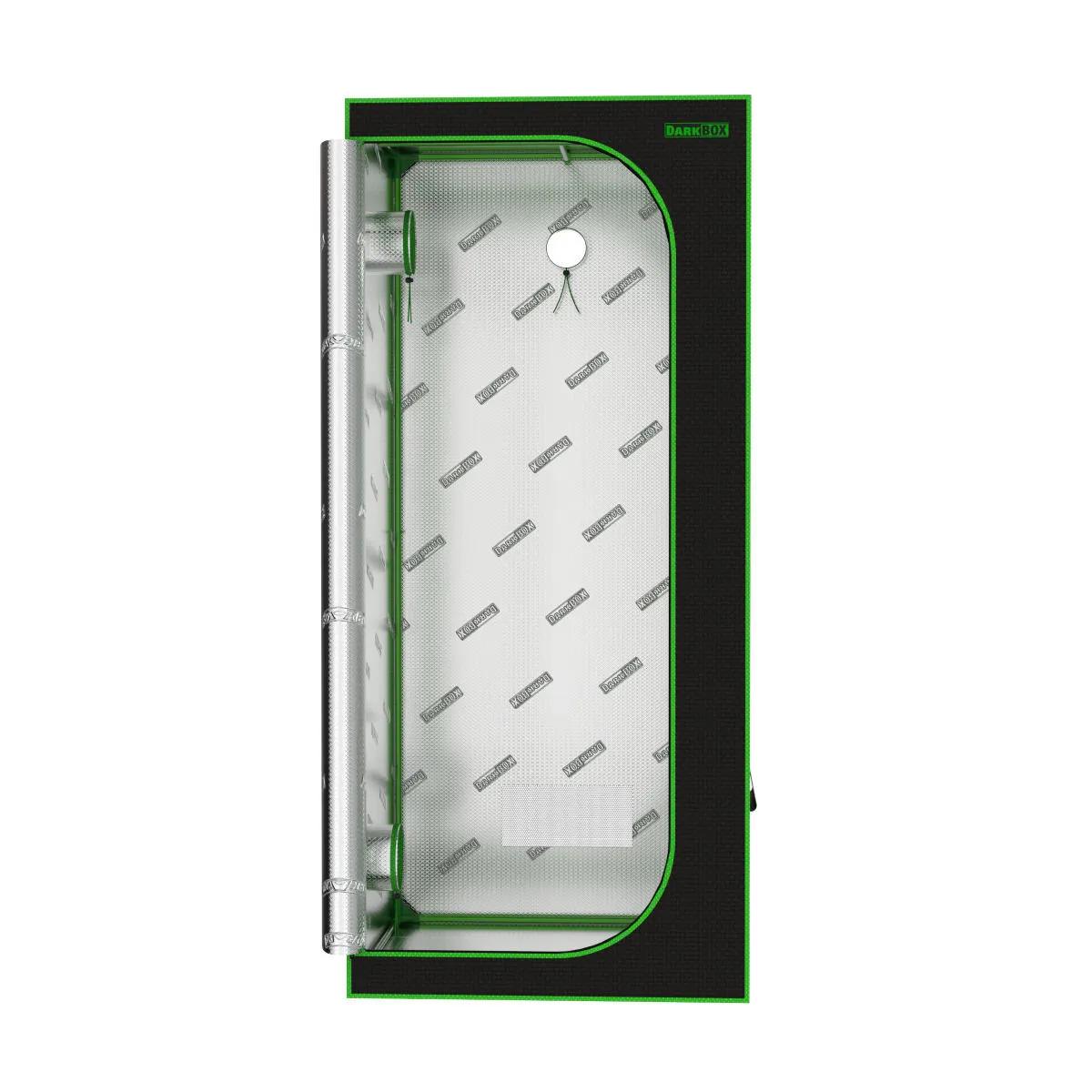
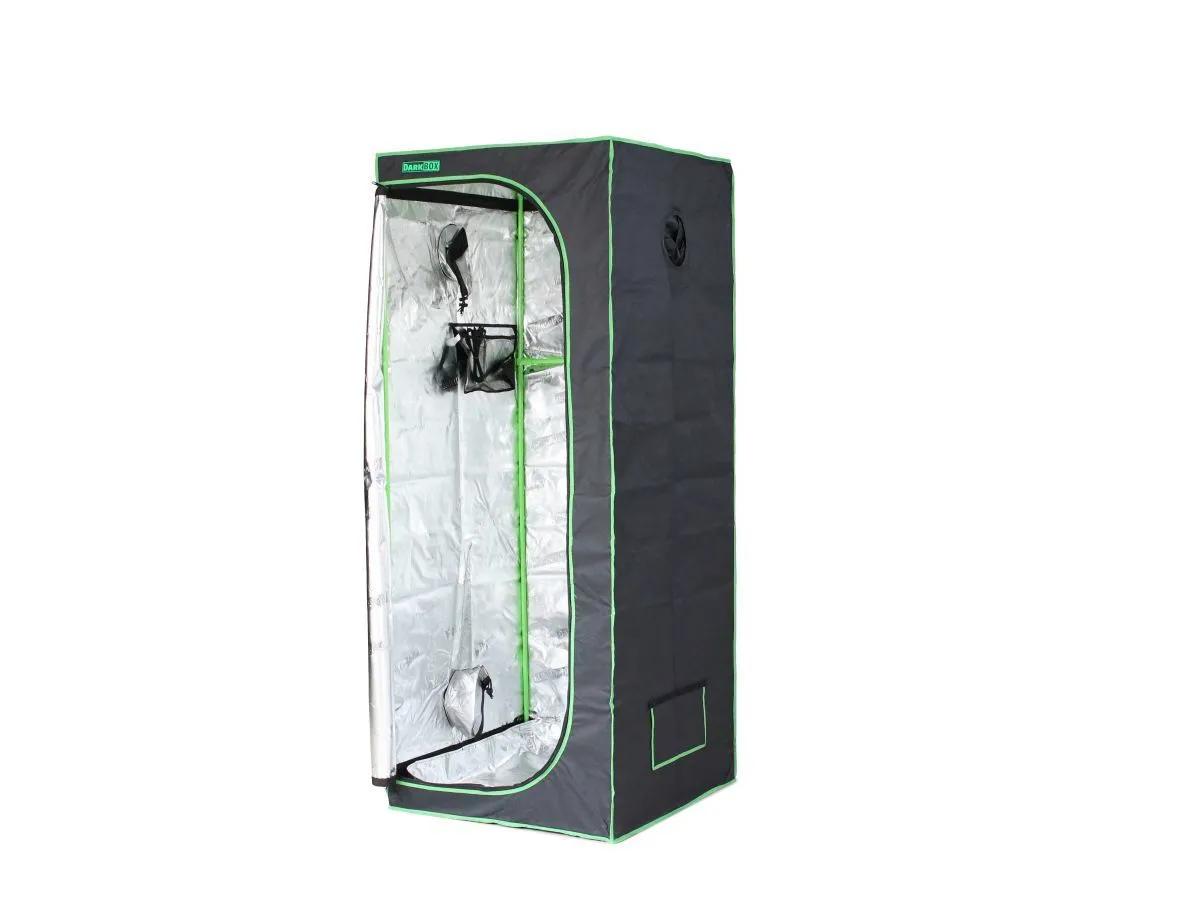
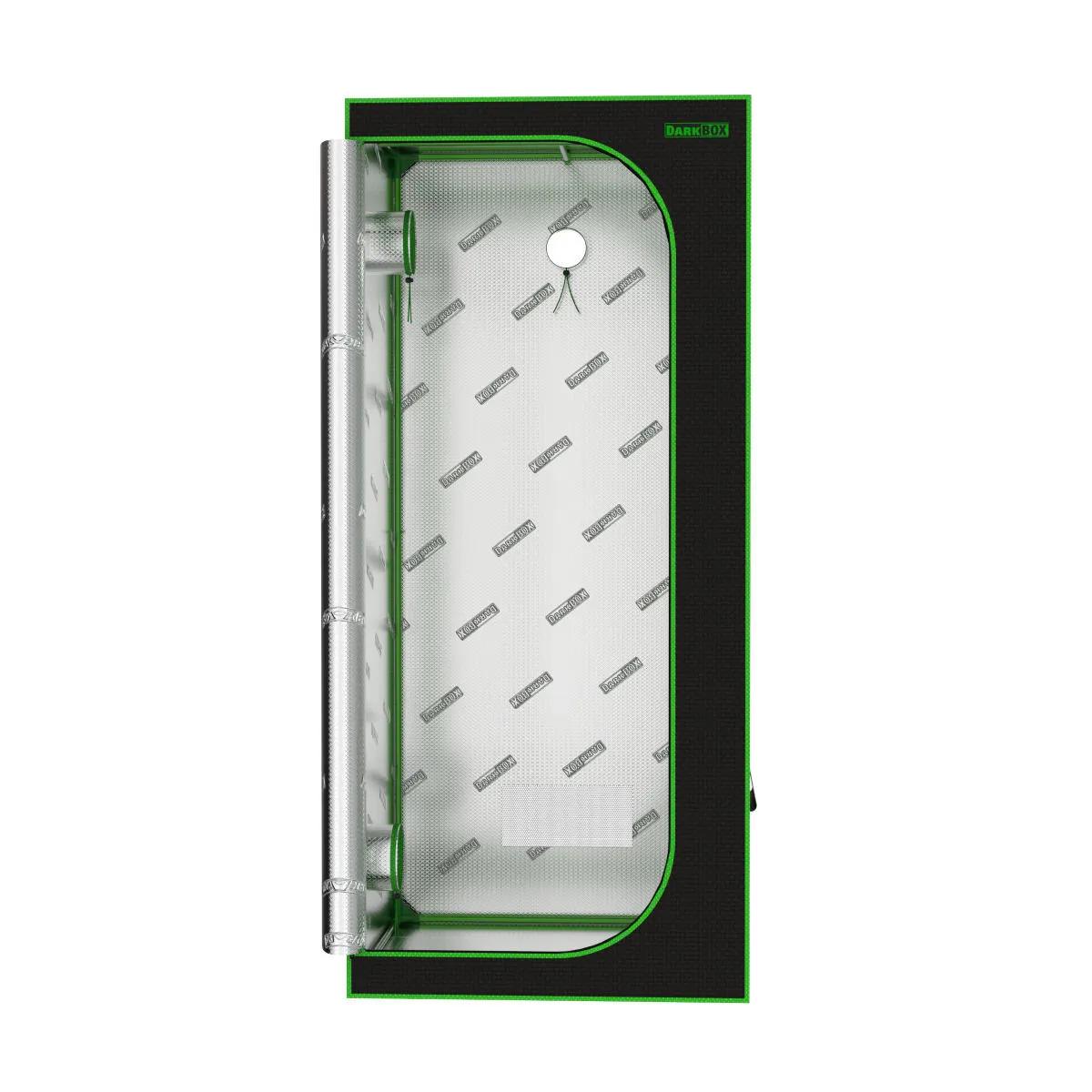
The Dark Box 60x60x180cm grow tent is a compact indoor growing enclosure that turns any corner of your flat into a controlled cultivation space. At just 60cm wide and 60cm deep, it's the smallest footprint tent we carry — built for 1-3 plants, a single LED panel, and growers who'd rather start small than not start at all. Steel frame, 600D oxford cloth exterior, diamond mylar reflective lining inside. Assembles in about 15 minutes with zero tools.
The Dark Box ships as a tent only — no lights, no fans, no filters. Here's exactly what you get in the box and what you'll need to source separately.
| In the Box | Not Included (Buy Separately) |
|---|---|
| Steel corner connectors and poles | LED grow light |
| 600D outer canvas with zippers | Inline extraction fan |
| Diamond mylar inner lining | Carbon filter |
| Multiple cable and ducting ports | Clip fan for circulation |
| Removable floor tray | Pots, soil, nutrients |
We'd rather be upfront about this: the tent is the shell. You'll still need a light, ventilation, and your growing medium. If you want everything in one go, check out our complete grow tent kits — but if you've already got a spare LED panel or want to piece together your own setup, the standalone Dark Box is the way to go.
Every number you need before you measure that cupboard space or spare corner.
| Spec | Value |
|---|---|
| Dimensions (W x D x H) | 60 x 60 x 180 cm |
| Floor area | 0.36 m² |
| Volume | ~648 litres |
| Outer material | 600D Oxford cloth |
| Inner lining | Diamond-pattern mylar (reflective) |
| Frame | Steel poles with push-fit connectors |
| Duct ports | Multiple (various diameters) |
| Floor tray | Removable, waterproof |
| Assembly time | ~15 minutes, no tools |
| SKU | GS0027 |
Complete your setup: pair the Dark Box 60x60 with an inline extraction fan and carbon filter for proper airflow and odour control. A small LED grow light rated for a 60x60 footprint — around 100-150W — will cover the canopy without overheating this compact space. Browse our LED grow lights and ventilation kits to build out the rest.
Growing indoors without a tent is like cooking without a kitchen — technically possible, but messy, inefficient, and hard to control. A tent gives you light containment, reflective walls that bounce photons back onto your plants instead of wasting them on your bedroom ceiling, and a sealed environment where you can manage temperature, humidity, and airflow independently of the rest of your flat.
The 60x60 specifically works for people with limited space. A studio flat, a wardrobe alcove, a corner of the garage. At 0.36 m² of floor space, you can comfortably fit 1-3 small to medium plants in pots up to about 11 litres each. It's also the best size for a first grow — small enough that mistakes don't cost a fortune in wasted electricity and nutrients, but large enough to actually produce a meaningful harvest.
The honest limitation: 180cm of vertical height sounds generous, but once you hang a light (with driver and heatsink) and account for the distance between the light and your canopy, you're looking at maybe 120-130cm of usable growing height. That's fine for most autoflowering strains and compact photoperiod varieties, but if you're planning to grow tall sativas, you'll want the 80x80x180 or larger. We've seen growers squeeze a scrog net into a 60x60 and pull decent results, but it's tight. If you have the room, the 80x80 is the one we'd pick — you'll thank yourself during week 4 of flower when everything stretches.
In 0.36 m² of floor space, you can realistically fit 1-3 plants depending on pot size and training method. Here's what we've seen work:
| Setup | Plants | Pot Size | Notes |
|---|---|---|---|
| Single large plant (scrog/LST) | 1 | 15-20L | Fills the canopy, maximises yield per plant |
| Medium plants | 2 | 11L | Good balance of canopy coverage and airflow |
| Small autoflowers | 3-4 | 7-8L | Tight but doable — keep them short |
| SOG (Sea of Green) | 4-9 | 3-5L | Many small plants, short veg, quick flip |
One plant trained well will often out-yield four untrained plants crammed together. In a 60x60, less is usually more.
We've sold these tents since we started stocking grow equipment, and the feedback pattern is consistent. First-time growers love the 60x60 because it's not intimidating — it fits in a wardrobe space, the electricity bill barely moves, and you can learn the basics (watering, feeding, light schedules, humidity control) without risking hundreds of euros in a bigger setup. The ones who stick with growing almost always upgrade to an 80x80 or 100x100 within a year. That's not a knock on the 60x60 — it's proof the tent did its job. It got them growing.
The most common mistake we see: underestimating heat. A 60x60x180 tent has roughly 648 litres of air volume. Even a modest LED panel will raise the temperature inside by 5-8°C above ambient if you don't have extraction running. In summer, without air conditioning in the room, temps inside can hit 35°C+ — and that's where problems start. An inline fan rated at 100-150 m³/h is enough for this tent size. Run it continuously during lights-on, and on a timer or thermostat controller during lights-off.
The mylar interior on the Dark Box is the diamond-pattern type, not the flat reflective paint you'll find on cheaper tents. You can feel the texture when you run your hand across it — tiny facets that scatter light in multiple directions rather than creating hotspots. It makes a real difference in a tent this small, where every photon counts and your canopy is never more than 30cm from the walls.
For a 60x60x180cm tent (648 litres of air volume), you want to exchange the air at least once per minute during lights-on. That means a minimum extraction rate of around 39 m³/h — but in practice, carbon filters add resistance and reduce effective airflow by 20-30%. A fan rated at 100-150 m³/h gives you headroom. A 100mm (4-inch) inline fan is the standard choice for this tent size. Anything larger is overkill and will create negative pressure issues — you'll see the tent walls sucking inward like a vacuum bag.
Yes, when all ports are sealed and zippers fully closed. The 600D oxford cloth blocks external light effectively. Check the zipper seams during dark periods — if you see any pinpricks of light from inside, tape over them. Light leaks during the 12/12 cycle can cause stress and hermaphroditism in photoperiod plants.
You can, but we wouldn't recommend it. A 250W HPS in 0.36 m² of space generates serious heat — you'd need aggressive extraction and likely still overshoot 30°C. LED panels run cooler, draw less power, and produce comparable yields per watt in a tent this size. Save yourself the headache.
Yes. Without a carbon filter, everything inside the tent escapes through the duct ports and fabric seams. An activated carbon filter paired with your inline extraction fan scrubs odour before the air leaves the tent. Budget for one — it's not optional if discretion matters to you.
Your inline extraction fan is your primary humidity control — pulling moist air out and drawing drier air in through the passive intakes. In a tent this small, a single plant transpiring can push relative humidity above 70% quickly. If you're struggling, a small USB dehumidifier or increasing fan speed helps. During late flower, keeping humidity below 50-55% is critical to prevent mould.
Absolutely. One or two autoflowering plants in 11-litre pots, a 100-150W LED, and a 4-inch fan with carbon filter — that's a complete first setup. You'll learn everything you need to know about indoor growing without the cost or complexity of a larger tent. Most growers we talk to started with a 60x60 or similar.
Wipe it down with a damp cloth and a mild hydrogen peroxide solution (3%) between grows. Don't use abrasive cleaners or scrub hard — you'll damage the reflective surface. Keeping the interior clean reduces the risk of mould and pests carrying over from one cycle to the next.
The 80x80 gives you 0.64 m² of floor space versus 0.36 m² — nearly double. That means room for 2-4 plants comfortably, a larger LED panel, and better airflow. If you have the space, the 80x80 is the better long-term investment. The 60x60 is the right call if space is genuinely tight or you want a dedicated veg/clone tent alongside a larger flower tent.
Last updated: April 2026