Grow tents
by Dark Box
We'll only email you about this product — no marketing.
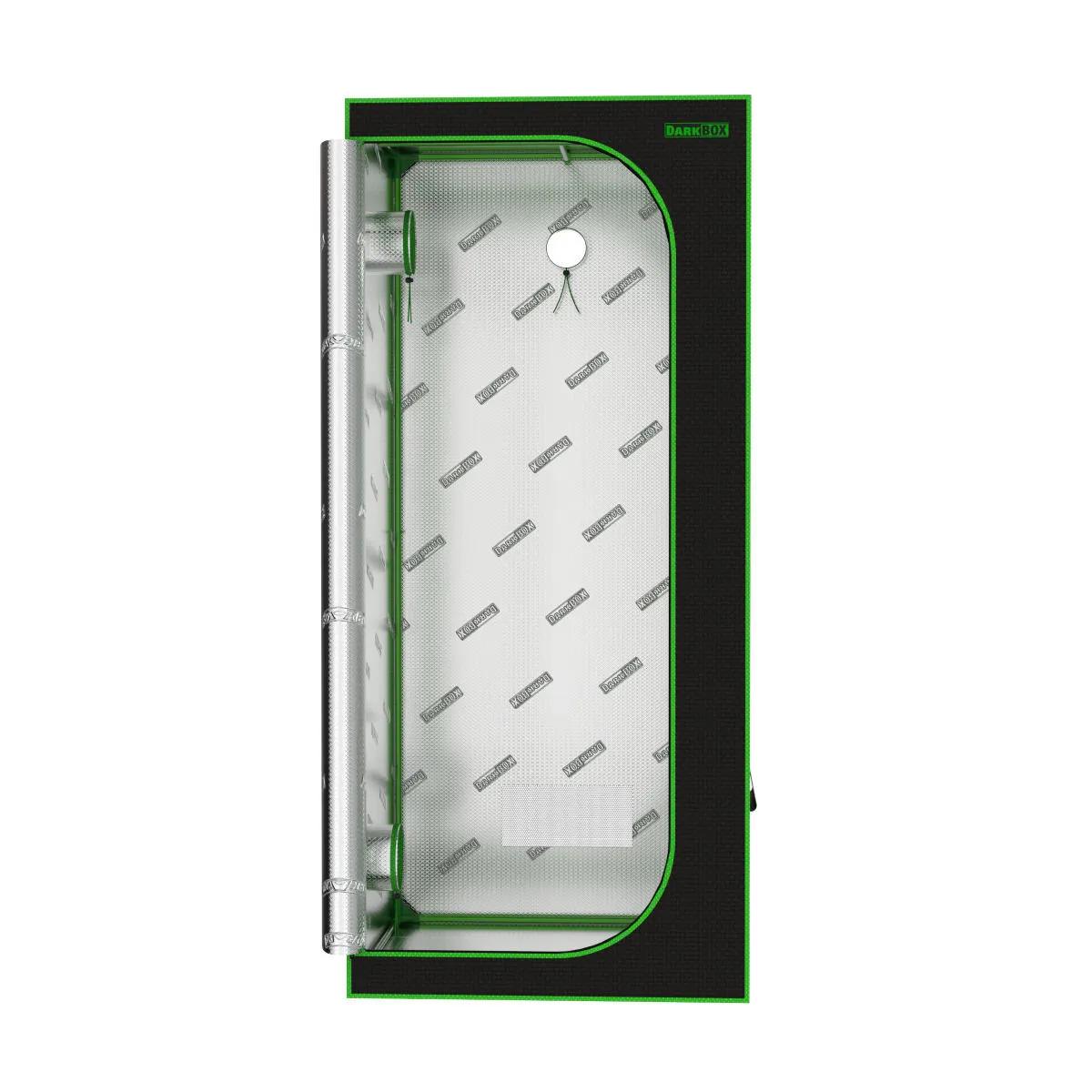
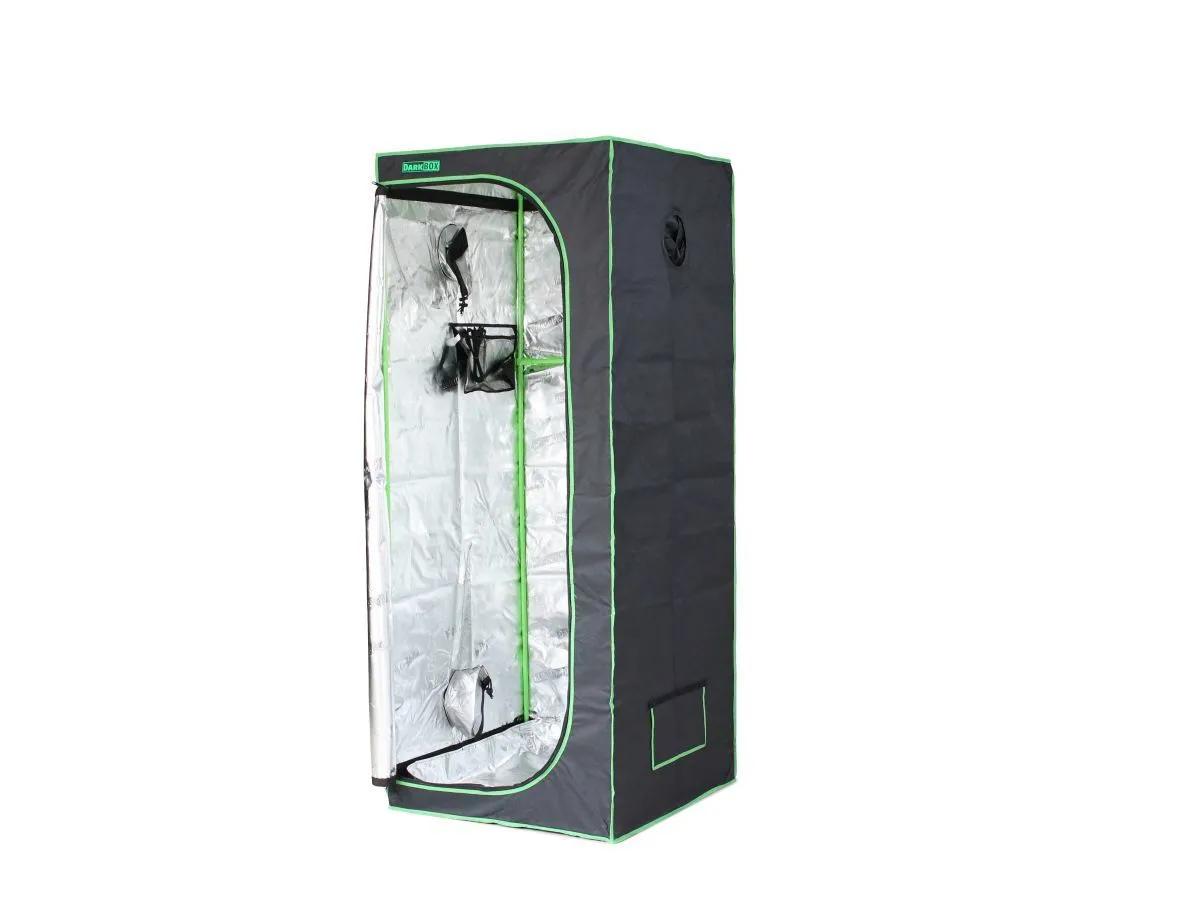
The Grow Tent Kit 80x80 from Dark Box is a complete indoor growing setup that gives you everything you need — tent, LED light, ventilation, carbon filter, and climate monitoring — in one purchase. Sized at 80 x 80 x 200 cm, it comfortably fits 1-2 plants and assembles in under 20 minutes without tools. This is the kit we'd recommend to anyone setting up their first indoor grow space who doesn't want to spend weeks researching individual components.
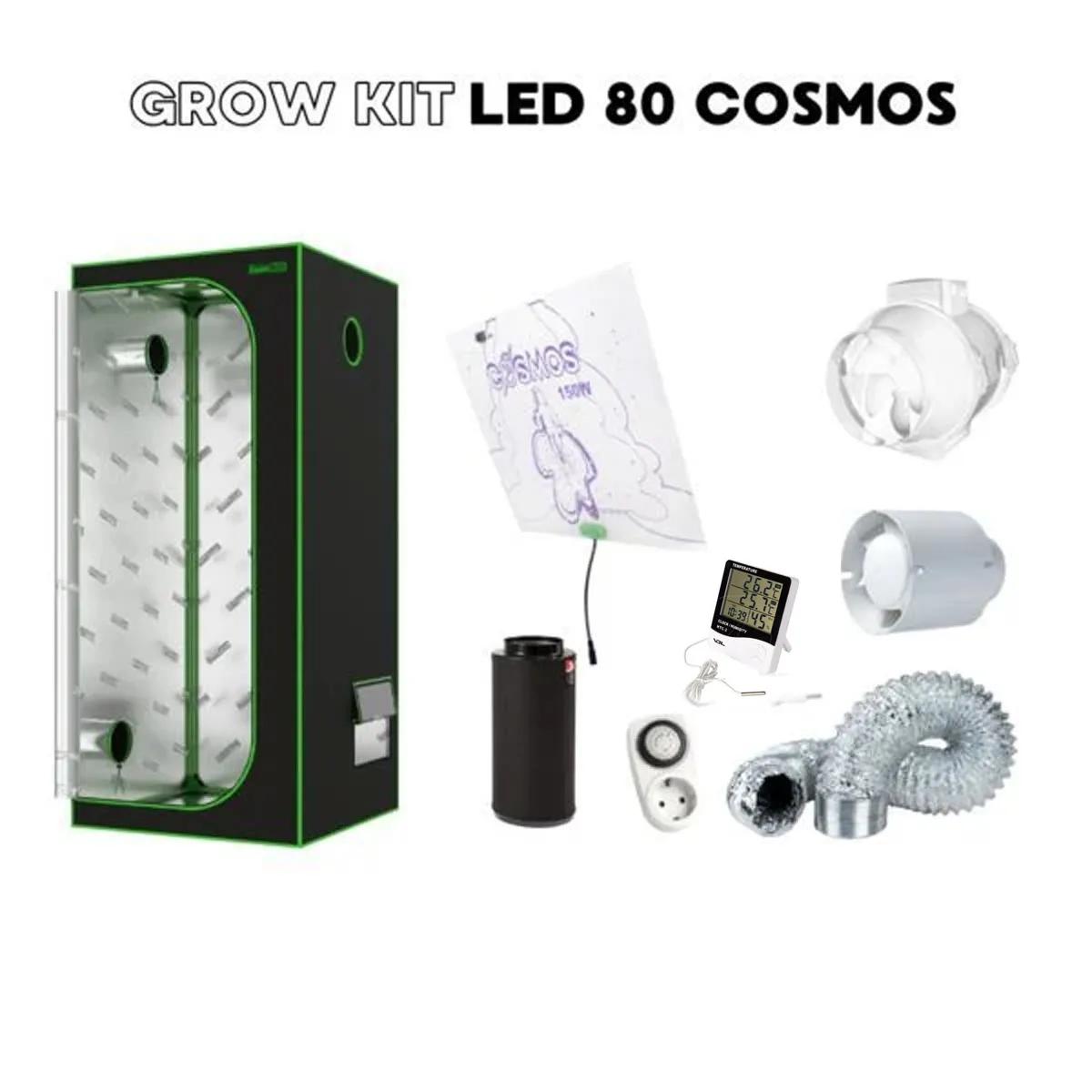
Every component in this kit has been matched to the tent's footprint — no guessing whether your fan fits the ducting or your light covers the canopy. Here's the full breakdown of what arrives in the box.
| Component | Specification |
|---|---|
| Grow Tent | 80 x 80 x 200 cm, light-tight construction, multiple cable and duct ports |
| LED Grow Light | Cosmos LED board, 150W, full spectrum with veg and bloom modes |
| In-line Extractor Fan | 100 mm, quiet operation, air intake and extraction |
| Extractor Fan TT | 100 mm, adjustable speed, pre-wired, wall-mount system |
| Carbon Air Filter | 100/200 mm, odour neutralisation |
| Ventilation Duct | 102 mm diameter, 5 metres, aluminium and polyester flexible tube |
| Thermo Hygrometer | Digital temperature and humidity tracking |
The 80 x 80 cm footprint is the sweet spot for home growers — and we'd pick it over the smaller 60x60 every single time. Here's why: a 60x60 tent gives you 0.36 m² of canopy. Sounds fine on paper, but once you hang a light and install ducting, your actual usable space shrinks fast. The 80x80 gives you 0.64 m² — nearly double — and that extra breathing room makes a real difference when your plants start stretching in flower.
We've seen growers buy the smaller tent, harvest once, and immediately upgrade. Save yourself the hassle and the second purchase. The 80x80 fits in a corner of most rooms, inside a wardrobe, or in a spare cupboard without dominating the space. At 200 cm tall, you've got enough vertical clearance to let your plants develop properly without light burn from the LED sitting too close to the canopy.
The one honest limitation: if you're planning to grow more than 2 plants, or if you're running tall sativa-dominant genetics, you'll want to look at the 100x100 or 120x120 kits instead. For 1-2 plants of average height, though, this is the size that makes the most sense.
These are the numbers that matter when you're comparing kits or checking whether this fits your space.
| Spec | Value |
|---|---|
| Tent dimensions | 80 x 80 x 200 cm |
| Grow area | 0.64 m² |
| Plant capacity | 1-2 plants |
| LED wattage | 150W (full spectrum) |
| Light modes | Vegetative + flowering (switchable) |
| Fan diameter | 100 mm |
| Duct length | 5 metres |
| Duct diameter | 102 mm |
| Carbon filter size | 100/200 mm |
| Assembly | Tool-free, steel frame |
| SKU | GS0009 |
The included Cosmos LED board pulls 150W and delivers full-spectrum light tuned for both vegetative growth and flowering. You can switch between veg and bloom modes depending on your plant's stage, which means you're not running unnecessary wavelengths and wasting energy during early growth.
At 150W, you're getting roughly 234W per square metre of canopy in this 0.64 m² tent — well within the 200-400W/m² range where most indoor plants thrive. The board-style design spreads light more evenly than old-school blurple panels, and the heat dissipation is noticeably better. We've held our hand under this light after 8 hours of operation — warm, not hot. That matters because in an 80x80 tent, there's not much room between the light and your canopy. Poor heat management means crispy leaf tips. This one keeps things under control.
Compared to running a separate HPS or MH setup, you skip the ballast, the reflector, and the massive electricity bill. A 150W LED running 18 hours a day in veg costs roughly a third of what a 400W HPS would.
This kit includes both an in-line extractor fan and a TT extractor fan at 100 mm, plus a carbon air filter rated at 100/200 mm and 5 metres of flexible aluminium-polyester ducting at 102 mm diameter. That's a complete air management system — intake, extraction, and odour scrubbing.
The carbon filter is the component most beginners underestimate. Without it, your neighbours will know exactly what's growing in your spare room. The 100/200 mm filter in this kit neutralises odour before air leaves the tent through the ducting. The TT extractor fan features adjustable speed control and comes pre-wired, so you can dial airflow up during flowering when humidity and smell both spike, and bring it down during early veg when things are calmer.
The in-line fan runs quietly — noticeably quieter than the cheap clip-on fans some growers try to get away with. It maintains negative pressure inside the tent, which means air only exits through the carbon filter, not through zip seams or cable ports. That's how you keep a grow truly odour-free.
One thing to watch: the 5-metre duct gives you plenty of length to route air wherever you need it, but every bend reduces airflow efficiency. Keep your ducting as straight and short as practically possible. Excess length? Trim it. Don't coil it up inside the tent.
The included digital thermo hygrometer tracks both temperature and humidity inside your tent. This is a small component that does critical work. Cannabis plants want 20-28°C and 40-60% relative humidity during flowering. Stray too far outside those ranges and you're inviting mould, nutrient lockout, or stunted growth.
The digital readout gives you instant numbers — no squinting at analogue dials. Place it at canopy level, not at the top of the tent where hot air rises and readings skew high. Check it twice a day until you understand how your tent's microclimate behaves, then adjust fan speed accordingly.
Complete your setup with growing medium, nutrients, and pH testing equipment. A fabric pot or air pot in the 11-15 litre range works well inside the 80x80 footprint. If you're growing from seed, check out our feminised seed selection — we carry genetics from Dutch Passion, Royal Queen Seeds, and Barney's Farm that stay compact enough for this tent size.
We've been selling grow equipment since 1999, and the number one mistake we see with tent kits isn't the equipment — it's overcomplicating things. People buy a kit like this and then spend three weeks watching YouTube videos about advanced training techniques before they've even germinated a seed. Start simple. Put a plant in soil, turn the light on, keep the fan running. You'll learn more from one actual grow cycle than from 50 hours of content.
The second most common issue: overwatering. In an 80x80 tent with proper ventilation, soil dries out slower than you'd expect because humidity stays consistent. Stick your finger 2-3 cm into the soil. If it's still damp, leave it alone. More indoor plants are killed by too much water than by too little.
The Dark Box kit handles the environment. Your job is the plant. Keep it that simple and your first harvest will surprise you.
A grow tent kit bundles every component — tent, light, fans, filter, ducting, and monitoring — into one matched package. You skip the compatibility headaches. The Dark Box 80x80 kit means your 100 mm fans match your 102 mm ducting and your 150W LED covers the 0.64 m² canopy properly. Buying separately risks mismatched specs.
Yes — it's the size we recommend most often. The 0.64 m² footprint fits 1-2 plants comfortably without overwhelming you with space to manage. Everything's included, so you're not guessing which fan pairs with which filter. Set it up, add soil and seeds, and you're growing.
One to two plants comfortably. You could squeeze in three smaller plants, but airflow and light penetration suffer. For best results with the included 150W LED, stick to two plants in 11-15 litre pots.
Yes. The included 100/200 mm carbon air filter scrubs odour from the air before it exits through the ducting. Combined with the extractor fan maintaining negative pressure, air only leaves through the filter — not through seams or ports. Replace the carbon filter every 12-18 months for continued effectiveness.
The 150W LED is the main draw. Running 18 hours daily during veg, that's 2.7 kWh per day. During 12/12 flowering, it drops to 1.8 kWh. Add roughly 30-50W for both fans running continuously. Total daily consumption sits around 3-4 kWh in veg — significantly less than a comparable HPS setup.
Absolutely. The full-spectrum 150W LED and climate control setup works for herbs, chillies, tomatoes, lettuce — anything that benefits from controlled indoor conditions. The 200 cm height accommodates taller fruiting plants too.
About 15-20 minutes for the tent itself — the steel frame slots together without tools. Allow another 20-30 minutes to mount the light, connect the fans, and route the ducting. Total setup from box to running: under an hour.
Last updated: April 2026