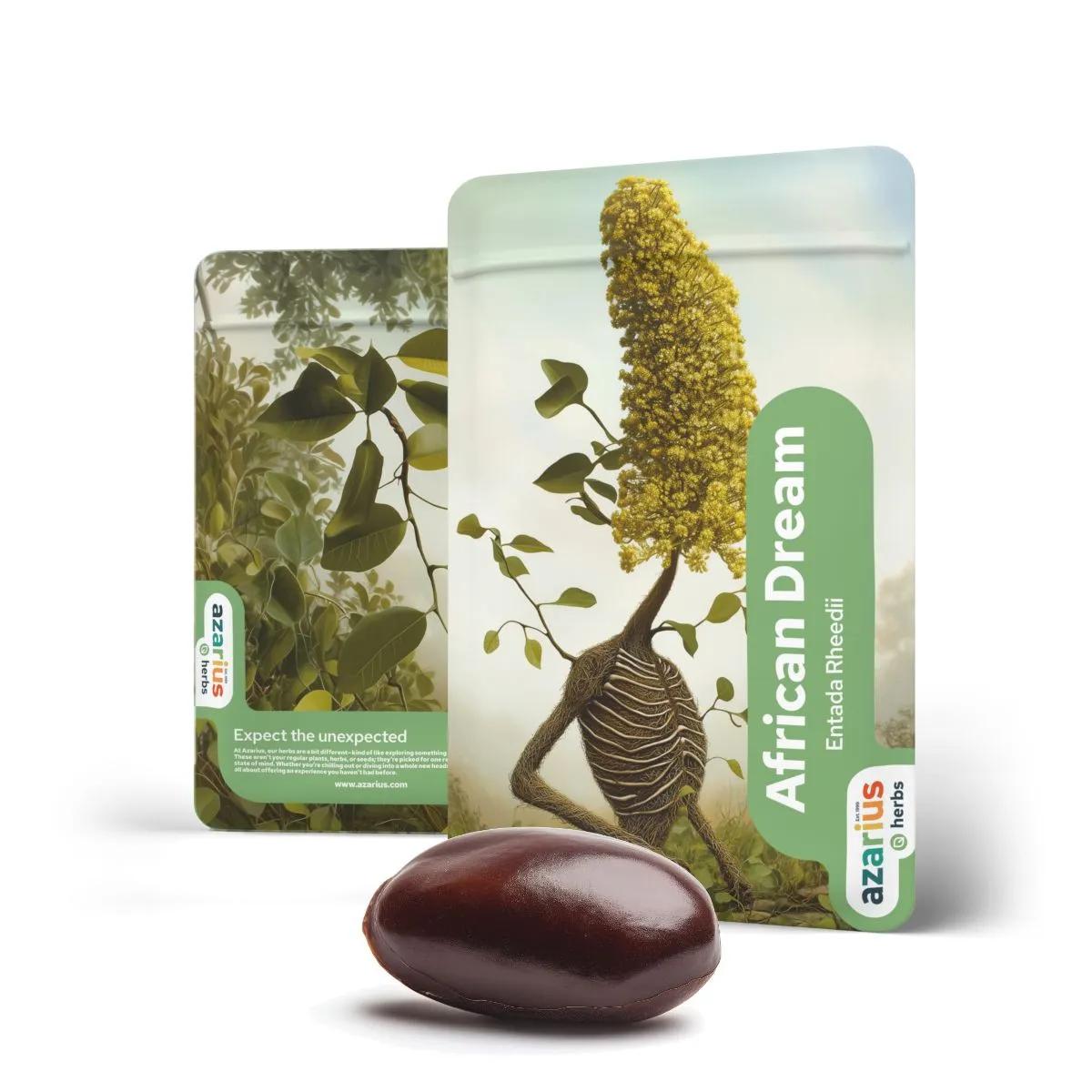
African Dream
by Azarius
African dream seed is a large tropical legume traditionally used in African spiritual practices to promote vivid dreaming and deeper sleep states. The inner white meat of the seed from Entada rheedii — sometimes called the snuff box sea bean — has been prepared as tea, chewed, or smoked before bed for generations. If you've been chasing more memorable, immersive dreams, this is where most people start.
African dream seeds have been used by indigenous communities across sub-Saharan Africa for centuries — long before "lucid dreaming" became a YouTube rabbit hole. The seed's inner flesh contains natural compounds that, according to traditional practice, stimulate dream activity and sharpen mental clarity during sleep. Named after the Dutch botanist Hendrik Rheede, Entada rheedii belongs to a small family of plants that have earned the collective nickname "dream herbs."
What makes this particular seed interesting is its versatility. You can crack it open and chew the white meat directly, brew it into a tea, or even dry it and smoke it before bed. Each method has its own onset and character. We've had customers tell us the tea route gives a gentler, more gradual effect, while chewing the raw flesh tends to hit a bit more directly. Your mileage will vary — dreams are personal things, after all.
The honest limitation here: this is not a guaranteed lucid dreaming switch. Nobody sells that. What African dream seeds offer is a nudge — a way to make your dream life more vivid and more likely to stick in memory when you wake up. Some nights it works brilliantly. Some nights you sleep like a rock and remember nothing. That's the nature of working with traditional botanicals rather than synthetic compounds.
| Feature | African Dream Seed (Entada rheedii) | African Dream Root (Silene capensis) | Calea zacatechichi |
|---|---|---|---|
| Plant part used | Inner seed meat | Root bark | Dried leaves |
| Traditional origin | Sub-Saharan Africa | Xhosa people, South Africa | Chontal Maya, Mexico |
| Preparation | Tea, chewing, smoking | Foam method or capsules | Tea or smoking |
| Taste | Mild, slightly nutty | Bitter, soapy | Intensely bitter |
| Reported onset | During sleep that night | Often after 2-3 days of use | Same night |
| Best for | First-timers, gentle approach | Committed dreamwork practice | Experienced users comfortable with bitter herbs |
If you're new to dream herbs, African dream seed is the best starting point for beginners — the taste is manageable, the preparation is straightforward, and the effects tend to be gentle rather than overwhelming. African dream root (Silene capensis) is the one to step up to once you've got a dream journaling practice going. According to a study published in PMC, "the Xhosa people from South Africa" have used Silene capensis as a dream root for hundreds of years, and researchers have documented its use in traditional dream rituals (PMC, 2024). Calea zacatechichi is genuinely hard to stomach — we're talking proper medicinal bitterness — but it has its devotees.
We've been stocking dream herbs at Azarius for over 25 years, and the questions haven't changed much. The number one thing people ask: "Will I definitely lucid dream?" And the honest answer is: probably not on the first night, and possibly not at all if you don't pair it with some basic dream recall habits. Keeping a notebook by your bed and writing down whatever fragments you remember the moment you wake up — that single habit does more for dream recall than any herb on its own.
The second most common question: "What does it taste like?" The inner meat of the Entada rheedii seed is surprisingly mild. Slightly nutty, a bit bland, nothing that'll make you wince. Compare that to Calea zacatechichi, which tastes like someone brewed a cup of regret. If you're making tea from the seed, adding honey or mixing it into a blend with chamomile makes for a pleasant bedtime drink.
One thing we'd flag: the seeds are large and hard-shelled. You'll need to crack them open to get at the white flesh inside. A sturdy knife or even a small hammer works. Don't try to bite through the shell — you'll regret it.
| Specification | Detail |
|---|---|
| Botanical name | Entada rheedii |
| Common names | African dream seed, snuff box sea bean, African dream herb |
| Plant family | Fabaceae (legume family) |
| Part used | Inner seed meat (white flesh) |
| Origin | Tropical Africa |
| Preparation methods | Tea infusion, chewing, smoking |
| Sourcing | Ethically sourced, 100% natural |
Pair your African dream seeds with African Dream Root (Silene capensis) for a more complete dreamwork toolkit — the root builds dream intensity over several days while the seeds work on a single-night basis. A dream journal is the other essential companion; writing down fragments within 5 minutes of waking trains your brain to hold onto more detail each night.
Scientific research on Entada rheedii specifically is limited — most formal studies have focused on its botanical cousin in the dream herb world, Silene capensis (African dream root). According to a study published in Neuropsychopharmacology Reports (PMC, 2024), the Xhosa people of South Africa have used Silene capensis for dream induction for centuries, and researchers have documented traditional dream reports associated with its use. The roots of African dream root contain compounds called triterpene saponins, and according to Healthline, "researchers believe these compounds help stimulate vivid or lucid dreams" (Healthline, 2023).
For Entada rheedii itself, the evidence base is primarily ethnobotanical — meaning it comes from documented traditional use rather than clinical trials. A review published in PMC (2024) on psychoactive plants noted that several African dream herbs have been used for hundreds of years in spiritual and healing contexts. This doesn't mean the effects aren't real; it means Western science hasn't caught up to what traditional practitioners have known for generations. We're comfortable saying: the traditional track record is long, the anecdotal reports from our customers are consistently positive, and the risk profile appears low. But we can't point you to a double-blind placebo-controlled trial on Entada rheedii dream enhancement. That study simply doesn't exist yet.
Because formal research on African dream seeds is limited, there's no standardised safety profile to reference. According to available literature, side effects from dream herbs in the broader category may include dry mouth, dizziness, and confusion at higher doses. Large amounts may cause nausea or vomiting — which is your body's way of saying you've overdone it.
Start small. A few grams of the inner flesh brewed as tea is plenty for your first session. If you're taking any medication — particularly anything affecting serotonin, sleep, or the central nervous system — speak with your doctor before adding any new botanical to your routine. This isn't us being overly cautious; it's just common sense when mixing substances.
Pregnant or breastfeeding? Give this one a miss until more safety data is available.
African dream seeds are the seeds of Entada rheedii, a tropical legume. The white inner flesh contains natural compounds traditionally believed to stimulate dream activity during sleep. You crack open the hard shell, prepare the flesh as tea or chew it before bed, and the effects typically manifest during that night's sleep cycle.
Crack the outer shell, extract the white inner meat, chop it into small pieces, and steep in hot water for 10-15 minutes. Strain and drink 30-60 minutes before sleep. You can also chew the raw flesh directly or dry and smoke it — tea is the most popular method among our customers.
African dream seed comes from Entada rheedii (a legume), while African dream root comes from Silene capensis (a flowering plant). The seed tends to work on a single-night basis with mild effects. The root often builds intensity over 2-3 days of consecutive use and has more formal research behind it, including documented use by the Xhosa people of South Africa.
There's no standardised dose for Entada rheedii. Most people start with a few grams of the inner flesh brewed as tea. For the related African dream root (Silene capensis), clinical context suggests starting around 100-300mg of extract. With the whole seed, start conservatively and increase gradually over subsequent sessions.
At reasonable amounts, side effects are uncommon. Overconsumption may cause nausea or vomiting. Because formal safety research is limited, start with a small amount and avoid combining with sleep medication or other CNS-active substances without medical advice.
They can increase dream vividness and recall, which are preconditions for lucid dreaming — but they're not a guaranteed switch. Pairing them with dream journaling and reality-check habits during the day significantly improves your chances. Some customers report lucid experiences on the first night; others need several sessions.
Yes. The dried inner flesh can be smoked before bed. Some users report a more immediate onset compared to tea. The flavour when smoked is mild and slightly herbal. Most people prefer the tea method for comfort, but smoking is a traditional preparation method as well.
Last updated: April 2026
Medical disclaimer. This content is for informational purposes only and does not constitute medical advice. Consult a qualified healthcare provider before use of any substance.