Calamus
by Indian Spirit
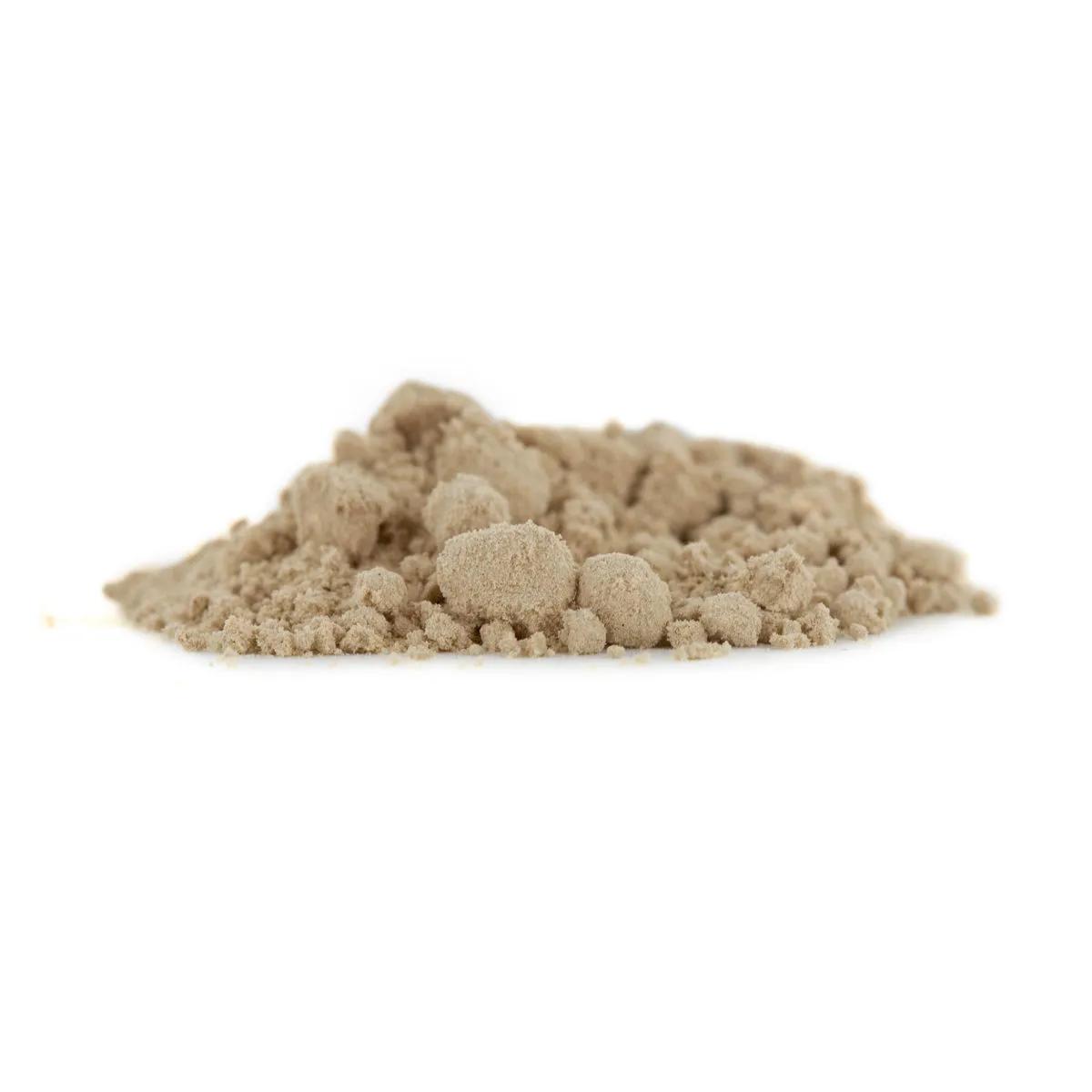
Calamus is a semi-aquatic perennial herb whose aromatic rhizome has been used across cultures for centuries, from Ayurvedic practitioners in India to herbalists in medieval Europe. Available here as 80 grams of dried root in either shredded or powder form, Acorus calamus — commonly called sweet flag — carries a distinctive warm, spicy scent that sits somewhere between cinnamon and ginger, with a bitter, lingering aftertaste that lets you know it means business.
We carry two variants of calamus root. The powder mixes directly into hot water for a quick infusion — no straining fuss, faster onset, slightly more bitter taste. The shredded cut is better if you prefer a traditional decoction: simmer it, strain it, sip it slowly. The shredded form also stores a touch longer since less surface area is exposed to air. If you're new to calamus, we'd lean towards the powder for simplicity. If you already know you enjoy making herbal decoctions and want to control the steeping time more precisely, go shredded.
Acorus calamus root contains a complex essential oil profile with decadienal, caryophyllene, humulene, curcumene, methyl isoeugenol, cyclohexanone, and — most notably — beta-asarone, which is the primary compound responsible for calamus's traditional reputation. According to a review published in PMC, Acorus calamus has been traditionally attributed with properties including neuroprotection, antioxidant activity, and anticonvulsant effects (PMC, 2023). In Ayurvedic medicine, it's known as "Vacha" and has been used for centuries, as documented by researchers at PMC who describe it as "a traditional Indian medicinal herb practiced to treat a wide range of health ailments" (PMC, 2020).
That said — and this is the honest bit — clinical evidence in humans is still thin on the ground. Most of the research so far has been in vitro or in animal models. According to a 2022 review on advances in Acorus calamus research, beta-asarone has been observed to influence tyrosine hydroxylase expression and brain-derived neurotrophic factor (BDNF) pathways in laboratory settings (PMC, 2022). Interesting? Absolutely. Proven in the way a pharmaceutical would be? Not yet. We sell calamus because it has a long ethnobotanical history and a dedicated following — not because we can promise you specific outcomes.
The essential oil in calamus root is where the action is. Here's what's inside and why it matters.
| Compound | Notes |
|---|---|
| Beta-asarone | Primary active component; most studied compound in the rhizome |
| Caryophyllene | Sesquiterpene also found in black pepper and cloves |
| Humulene | Sesquiterpene shared with hops; contributes to the earthy aroma |
| Curcumene | Related to compounds found in turmeric |
| Decadienal | Contributes to the distinctive warm, fatty aroma |
| Methyl isoeugenol | Phenylpropanoid with a sweet, spicy scent |
| Cyclohexanone | Ketone compound present in the essential oil fraction |
According to a PMC review on cognitive enhancement compounds, calamus has also been studied for potential hypoglycaemic, hepatoprotective, and immunoregulatory properties in preclinical settings (PMC, 2024). A separate study examined hepatoprotective and nephroprotective activity of Acorus calamus with supporting histopathological evidence — again, in animal models (PMC, 2021).
| Spec | Value |
|---|---|
| Botanical name | Acorus calamus L. |
| Common names | Calamus, Sweet Flag, Vacha, Rat Root |
| Plant family | Acoraceae |
| Part used | Rhizome (root) |
| Pack weight | 80 grams |
| Available forms | Shredded (SSHS0028) / Powder (SM0163) |
| Primary active compound | Beta-asarone |
| Preparation method | Hot water infusion or decoction |
| Storage | Cool, dry, dark place — sealed container |
Preparation is straightforward, but the details matter. Here's how to get the most out of your 80g pack.
We've stocked calamus since the early days of the shop, and the customers who come back for it tend to fall into two camps. The first group are herbalists who use it as one ingredient in larger blends — calamus pairs well with other aromatic roots and has a long history in traditional formulations. The second group are the curious experimenters who've read about its reputation and want to see what the fuss is about.
Here's the honest bit: calamus is subtle. If you're expecting something dramatic from your first cup, you'll probably be underwhelmed. The flavour is the first thing you'll notice — warm, aromatic, slightly bitter, with a numbing quality on the tongue that's quite distinctive. It's not unpleasant, but it's not chamomile tea either. Some customers add honey or mix it with ginger to smooth out the bitterness. We'd recommend trying it plain first so you know what you're working with.
The one thing to watch out for: beta-asarone content varies between calamus varieties (there are diploid, triploid, and tetraploid strains, and they differ significantly in their chemical profiles). Our product contains the whole rhizome material, not a standardised extract, so batch-to-batch variation is natural. This isn't a pharmaceutical — it's a dried plant root, and that's part of what it is.
Calamus root has been used traditionally for centuries, but that doesn't mean you should treat it carelessly. According to Drugs.com's pharmacological monograph, Acorus calamus is documented under several common names including Calamus, Kalmus, and Rat Root, with a long history of traditional use (Drugs.com). A 2025 in vitro safety assessment published in PMC evaluated cytotoxicity parameters to ensure observed biological activity wasn't simply the result of cell death at tested concentrations (PMC, 2025).
Pregnant women should avoid calamus. If you're taking medication — particularly anything affecting the central nervous system, blood sugar regulation, or liver metabolism — speak to a healthcare professional before combining it with calamus. Beta-asarone is metabolised by the liver, so anything that competes for the same metabolic pathways could interact.
Keep your doses reasonable. The traditional herbal maximum referenced in ethnobotanical literature is approximately 4g of dried root per day (roughly three-quarters of a teaspoon of powder). There's no good reason to exceed this, especially when you're getting to know the herb.
If you're building an herbal collection, calamus pairs well with other traditional botanicals. Have a look at our Blue Lotus (Nymphaea caerulea) for a different aromatic profile, or Damiana (Turnera diffusa) if you're interested in herbs with overlapping traditional uses. Both make interesting additions to blended infusions.
How does calamus stack up against other popular herbs in the shop? It's a fair question, especially if you're browsing the botanicals section and wondering where to start.
Compared to something like valerian root, calamus is less sedating in character — traditional use leans more towards clarity than relaxation. Compared to ginseng, it's less stimulating and more aromatic. Calamus occupies its own niche: a warm, spicy root herb with a profile that doesn't neatly fit into "relaxing" or "energising" categories. That's part of its appeal for herbalists who work with complex blends.
If you're specifically after a calming evening tea, calamus probably isn't your first pick — look at passionflower or valerian instead. If you want something with a distinctive character that's been valued in European and Asian herbal traditions for over a thousand years, calamus is exactly that. Best for: the herbally curious, blend builders, and anyone who appreciates a root with genuine historical depth.
Warm, aromatic, and distinctly bitter with a slight numbing sensation on the tongue. The flavour sits somewhere between cinnamon bark and ginger root, but earthier. Most people find it palatable in small amounts — adding honey or blending with other herbs helps if the bitterness is too much on its own.
Both come from the same Acorus calamus rhizome. The powder dissolves more readily in hot water for a quick infusion, while the shredded form is better suited to slow simmering (decoction). Powder is more convenient; shredded gives you more control over extraction time and keeps slightly longer in storage.
Clinical and ethnobotanical literature references a range of 125-500mg for concentrated extracts, while traditional preparations use approximately 3-4g of crude dried root per cup (about one tablespoon of powder). Start with a single cup on an empty stomach and assess before preparing more.
Beta-asarone is the primary bioactive compound in calamus essential oil. It's the component most studied in research on Acorus calamus, with preclinical studies examining its effects on BDNF pathways and tyrosine hydroxylase expression (PMC, 2022). It's also the reason calamus has its distinctive aromatic and bitter profile.
Calamus has a long history of use in herbal blends — it's rarely used in isolation in traditional formulations. That said, avoid combining it with substances that affect the central nervous system or liver metabolism without consulting a healthcare professional. Keep combinations simple until you know how calamus affects you individually.
Keep it in a sealed container in a cool, dry, dark place. The essential oils that give calamus its properties are volatile — exposure to heat, light, and air degrades them over time. Properly stored, dried calamus root holds its potency for 12-18 months. You'll know it's past its best when the aroma fades significantly.
Yes. Sweet flag is the most common English name for Acorus calamus. Other names include Vacha (Ayurvedic tradition), Kalmus (German), and Rat Root (North American folk name). They all refer to the same semi-aquatic plant and its aromatic rhizome.
Last updated: April 2026
Medical disclaimer. This content is for informational purposes only and does not constitute medical advice. Consult a qualified healthcare provider before use of any substance.