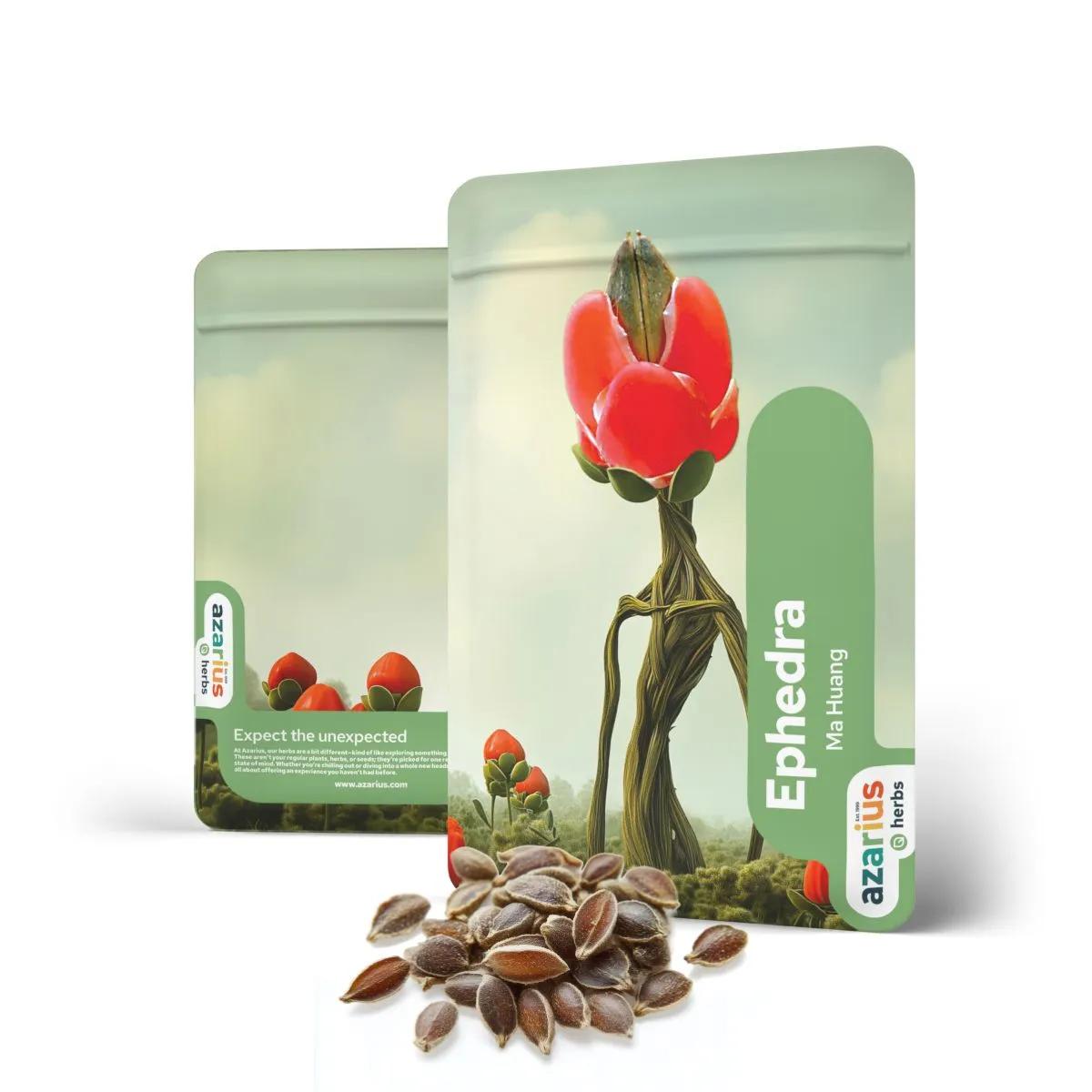
Ephedra
by Azarius
Ephedra seeds are the starting point for cultivating Ephedra sinica, a hardy perennial shrub with a deep history in traditional Chinese medicine. Growing your own Ma Huang from seed gives you a direct connection to one of the oldest stimulant plants on record — and a fresh, renewable supply of dried stems for tea and infusions. These seeds germinate slowly and demand patience, but the reward is a drought-tolerant, low-maintenance plant that thrives for years once established.
Buying dried ephedra herb is straightforward, but growing the plant yourself puts you in control of freshness and handling. Dried stems lose potency over time — especially if they've been sitting in a warehouse. A living plant on your windowsill or balcony gives you material you can harvest, dry, and brew the same week. That freshness matters when you're making tea.
There's also something satisfying about the process itself. Ephedra is a genuinely ancient genus — the name comes from the Greek ephedros, meaning "sitting upon," because the plant tends to hug the ground in dense, low clusters. Sinica points to its Chinese origin, where it's been documented in herbal texts for well over 2,000 years. According to a complete review in Molecules (2023), more than 60 species of Ephedra have been identified, with E. sinica being the most extensively studied for its phytochemistry and traditional applications (PMC, 2023).
The honest limitation: these seeds are not fast growers. You're looking at 4 to 8 weeks for germination, sometimes longer. If you want instant results, buy dried herb instead. If you enjoy the slow game of growing something unusual and historically significant, these seeds are worth the wait.
Ephedra has been a fixture in traditional Chinese medicine (TCM) for centuries, primarily valued for respiratory applications. According to a systematic review published in the Journal of Ethnopharmacology (2023), Ephedra has long been used in TCM for its wide range of traditional applications, especially concerning respiratory function (PubMed, 2023).
Research into the genus has also explored other areas. A 2022 study examined the antioxidant and antihyperglycaemic effects of Ephedra extracts, noting that future pharmacological studies should investigate cell-level mechanisms more closely (PMC, 2022). Separately, a 2023 animal study on Ephedra alata seeds observed potential kidney-protective properties, though no clinical signs or mortality were recorded in any test groups (PMC, 2023).
We should be clear: these are seeds for growing a botanical specimen. The plant itself has a long ethnobotanical record, but the research is still evolving. What we can say is that Ephedra has been brewed as a tea in East Asia for a very long time, and the dried stems have a distinctive sharp, slightly bitter, almost pine-like taste. It's not pleasant in the way chamomile is pleasant — it's bracing. You know you're drinking something with character.
| Specification | Detail |
|---|---|
| Species | Ephedra sinica (Ma Huang) |
| Common names | Ma Huang, Chinese Ephedra, Joint Fir |
| Plant type | Perennial gymnosperm shrub |
| Germination time | 4–8 weeks (can take longer) |
| Soil preference | Sandy, well-drained, slightly alkaline |
| Watering | Minimal — drought-tolerant once established |
| Sunlight | Full sun preferred |
| Hardiness | Frost-tolerant down to approximately -20°C |
| Mature height | 30–60 cm |
| Harvest | Stems, typically after 2+ years of growth |
Ephedra sinica germination requires a bit of preparation. These aren't the kind of seeds you toss in a pot and forget about. The key is cold stratification — mimicking the winter conditions the seeds would experience in their native habitat across northern China and Mongolia. Without this step, germination rates drop significantly.
We've been selling botanical seeds since the early 2000s, and Ephedra sinica is one of those species that attracts a specific kind of grower — the patient type. The most common question we get is "why hasn't it germinated yet?" and the answer is almost always the same: did you cold stratify? If you skipped that step, start over. It makes the difference between a 10% germination rate and a 60%+ rate.
The other thing worth knowing: young Ephedra plants look like almost nothing. Thin green stems, no leaves to speak of (it's a gymnosperm — related to conifers, not flowering plants). Don't mistake a healthy seedling for a dying one. That sparse, reed-like appearance is exactly what it should look like. Give it two growing seasons and you'll have a dense little bush that looks after itself.
Ephedra has a well-documented safety profile that demands respect. According to the NCBI LiverTox database, despite its apparently safe use for centuries in traditional Chinese medicine, Ma Huang has been linked to serious and potentially fatal side effects when used improperly (NCBI, LiverTox). The most commonly reported adverse effects include nervous irritability, anxiety, heart palpitations, and hypertension — though in most cases these are minor and reversible at appropriate amounts.
Interactions are a real concern. Ephedra should not be combined with stimulant drugs, MAOIs (monoamine oxidase inhibitors), or other substances that raise heart rate and blood pressure. According to WebMD's interaction data, taking ephedra alongside stimulants may cause serious problems including increased heart rate and high blood pressure (WebMD). If you're on any medication — especially cardiovascular or psychiatric — talk to your doctor before using ephedra in any form.
Research-referenced dosage context: clinical and traditional sources have documented ephedrine-containing preparations at various levels, with adverse reactions reported at amounts exceeding 32 mg of ephedrine per day (Drugs.com). We're not telling you how much to take — we're telling you the numbers that appear in the literature. Start conservatively and pay attention to how your body responds.
| Concern | Detail |
|---|---|
| Cardiovascular | May raise heart rate and blood pressure — avoid with heart conditions |
| Stimulant interactions | Do not combine with caffeine, amphetamines, or other stimulants |
| MAOI interactions | Potentially dangerous combination — avoid entirely |
| Pregnancy / breastfeeding | Not recommended |
| Anxiety disorders | Stimulant effects may worsen symptoms |
Growing Ephedra sinica? A sandy, fast-draining substrate is critical. Our Perlite bags make the ideal base for your germination mix. If you're looking to brew dried ephedra stems once your plant matures, pair it with a fine mesh Tea Strainer for clean infusions without sediment.
If you want to brew a cup of Ma Huang tea this weekend, seeds aren't the answer — you'll be waiting months (realistically a year or more) before your plant produces enough stem material to harvest. For immediate use, dried Ephedra herb is the better pick. Seeds are for growers who want a long-term, self-renewing supply and enjoy the cultivation process itself.
The advantage of growing your own is freshness and connection to the source. Dried herbs degrade over time, especially alkaloid-containing plants stored in warm conditions. A living plant gives you the option to harvest small amounts as needed, dry them yourself in controlled conditions, and brew within days of cutting. That's a level of freshness no packaged product can match.
Ephedra seeds are the reproductive seeds of Ephedra sinica, a perennial shrub native to northern China and Mongolia. You plant them to grow your own Ma Huang — a species documented in traditional Chinese medicine for over 2,000 years. The seeds require cold stratification before sowing.
Expect 4 to 8 weeks after sowing, assuming you've cold stratified the seeds for 4–6 weeks beforehand. Some growers report germination taking up to 10 weeks. Patience is non-negotiable with this species.
Sandy, well-drained, slightly alkaline soil. A mix of roughly 60% coarse sand, 20% perlite, and 20% potting soil works well. Ephedra roots rot in heavy or waterlogged substrates — think arid steppe, not garden bed.
Yes, particularly during the germination and seedling phase. Place it in a bright, south-facing window. Once mature, ephedra prefers full outdoor sun and tolerates frost down to -20°C, so moving it outside after the first year is recommended.
Realistically, after two full growing seasons. Young plants need time to establish their root system and build enough stem mass. Harvesting too early weakens the plant and reduces long-term yield.
The seeds themselves are not a significant source of alkaloids. Ephedrine and pseudoephedrine are concentrated in the mature green stems of the plant, not in the seed. You're buying these to grow a plant, not for direct consumption.
The germination phase requires specific conditions — cold stratification, sandy soil, controlled moisture. Once past the seedling stage, ephedra is remarkably low-maintenance. It's drought-tolerant, frost-hardy, and doesn't need feeding. The hard part is the first three months.
Last updated: April 2026
Medical disclaimer. This content is for informational purposes only and does not constitute medical advice. Consult a qualified healthcare provider before use of any substance.