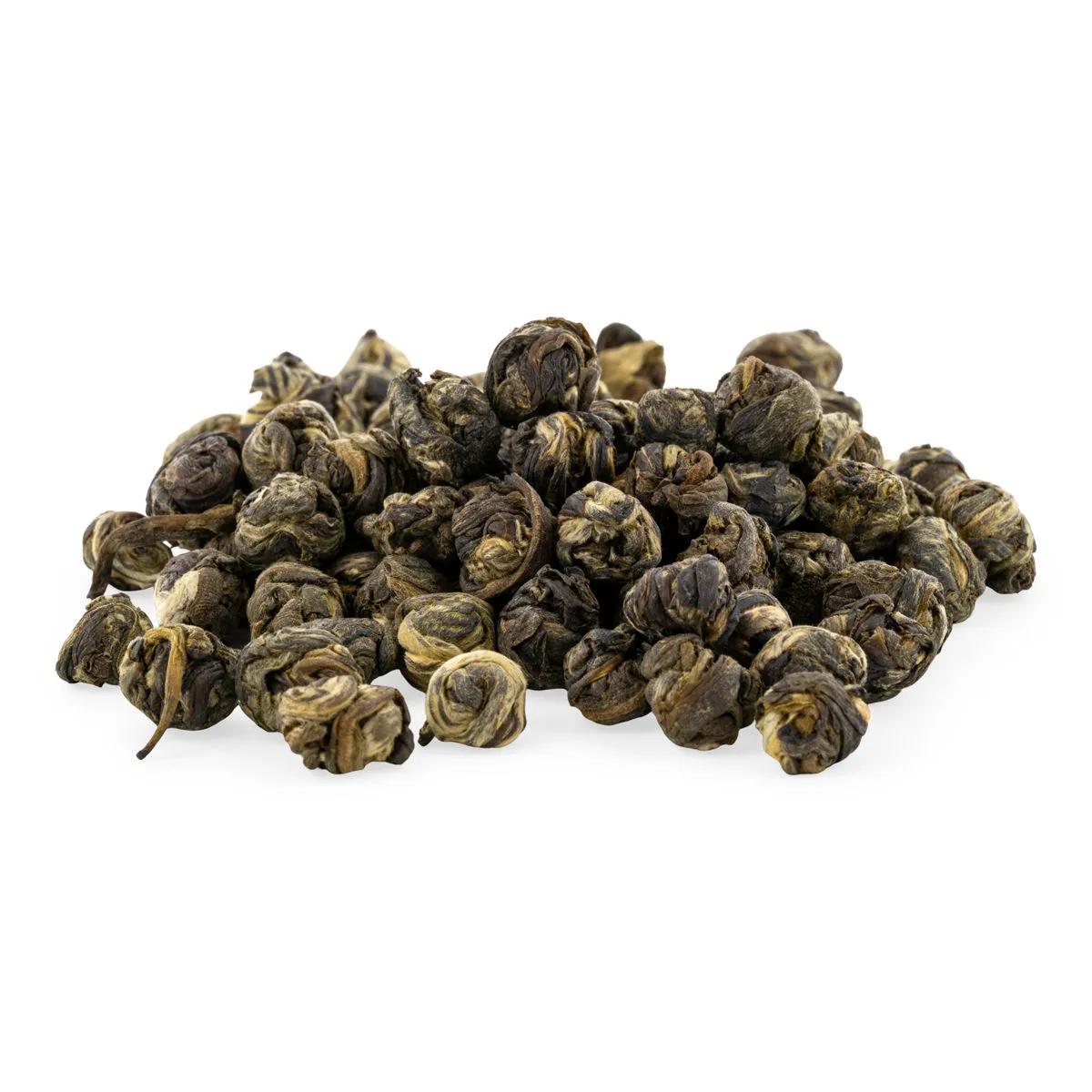
Chinese Jasmine Dragon Pearl Tea is a hand-rolled green tea that combines tender leaves with fresh jasmine blossom, pressed into tight pearls that unfurl in hot water. The pearls release a pale yellow liquor with a sweet, floral aroma and a grassy green tea backbone — sensual, sessionable, and a proper wake-up for anyone bored of their usual morning brew. We've stocked loose-leaf teas since the early 2000s, and these pearls remain one of the most consistently reordered on the shelf.
Why Chinese Jasmine Dragon Pearl Tea is worth the ritual
Dragon pearls are what you get when someone takes the time to roll green tea leaves and jasmine blossoms together by hand into little green spheres. The payoff is twofold: the pearls keep the tea fresh longer than loose leaf (less surface area exposed to air), and they put on a small show in the pot — each pearl slowly opens as it steeps, releasing the jasmine scent in waves rather than all at once.
The flavour profile sits in that sweet spot where the grassy, vegetal notes of green tea meet the honeyed perfume of jasmine. Nothing is overwhelming. The jasmine isn't soapy (which is the failure mode of cheap jasmine tea — too much scenting, not enough tea), and the green tea base isn't so astringent it needs sugar. Brewed right, it's pale yellow in the cup and rounded on the palate.
What the research says about green tea and jasmine
Green tea and jasmine have been studied separately and together for decades. According to Healthline's review of jasmine tea research, observational studies have linked regular green tea consumption (around 1.2 litres daily in one Japanese trial) to measurable antioxidant activity in the body. A separate paper on antioxidant compounds in Chinese teas (Zhao et al., 2015, PMC4486814) observed antioxidant and anti-mutagenic activity in vitro across several traditional Chinese tea preparations. These are research findings — not claims we're making about this specific tin — but they're why green tea has the reputation it does.
How to brew jasmine dragon pearl tea properly
The short answer: cooler water, shorter steeps, more sessions. Green tea punishes boiling water — you'll pull out bitter tannins and lose the delicate jasmine on top. Aim for 75–80°C and treat the pearls like a gongfu session: multiple short infusions, not one long steep.
| Method | Pearls | Water | Temp | Steep |
|---|---|---|---|---|
| Western mug | 5–7 pearls | 250 ml | 75–80°C | 2–3 min |
| Teapot (sharing) | 2 g (~10 pearls) | 500 ml | 80°C | 2 min, then re-steep |
| Gongfu style | 3 g | 150 ml gaiwan | 80°C | 20s, +10s each re-steep |
| Cold brew | 6–8 pearls | 500 ml | Fridge cold | 4–6 hours |
- Pre-warm your pot or gaiwan with a splash of hot water, then tip it out.
- Add the pearls — they'll roughly triple in size once they open, so don't overload.
- Pour water just off the boil (let the kettle sit for 2 minutes after boiling to hit ~80°C).
- Steep 2–3 minutes for the first infusion. Taste it. Pull the leaves out or decant.
- Re-steep the same pearls 2–4 more times — each infusion brings out a different layer.
How much caffeine is in it, and how many cups a day
A cup of green tea typically contains 25–35 mg of caffeine — roughly a third of a drip coffee. Enough to wake you up, not enough to wire you. Research on jasmine green tea consumption suggests that 3–4 cups daily is the range most studies use when measuring health-related outcomes, though this is research context rather than a personal recommendation. Most of our customers drink 2–3 cups spread through the day — one in the morning, one mid-afternoon, sometimes a cold-brewed bottle for summer.
Who this tea is for (and who should skip it)
Good if you want a gentler caffeine source than coffee and you actually enjoy tea for its own sake, not just as a vehicle for sugar and milk. Also good if you're new to Chinese teas — jasmine pearls are one of the easiest entry points because the jasmine does a lot of the heavy lifting on flavour.
Skip it if you want something robust and malty (go for a black tea instead — our Earl Grey or a proper Assam will serve you better), or if you're sensitive to caffeine in the afternoon. It's still real caffeine. The one honest limitation: because these are hand-rolled, pearl size varies slightly between batches. You're buying a natural product, not a uniform industrial one.
Pairs well with a proper cast-iron teapot or a glass gaiwan so you can watch the pearls unfurl — half the experience is visual. If you want to branch out into other loose-leaf Chinese teas, our gunpowder green and silver needle white are the next stops on the tour.
Specifications
| Product | Chinese Jasmine Dragon Pearl Tea |
| Format | Hand-rolled pearls, loose leaf |
| Weight | 100 g |
| Ingredients | Green tea, jasmine blossom |
| Origin | China |
| Caffeine | Yes (naturally occurring, ~25–35 mg per cup) |
| Brew temperature | 75–80°C |
| Liquor colour | Pale yellow |
| Re-steeps | 3–5 infusions per batch of pearls |
From our counter
The mistake we see most often with green tea is people treating it like a builder's brew — boiling kettle, five-minute steep, wondering why it tastes like bitter lawn clippings. Dragon pearls are forgiving but they're not indestructible. Let the kettle cool for a minute or two after it boils. That single change is the difference between "why do people drink this" and "oh, I get it now."
Frequently Asked Questions
Does jasmine dragon pearl tea contain caffeine?
Yes. It's a green tea base, so it naturally contains caffeine — roughly 25–35 mg per cup, about a third of a coffee. Enough to feel, not enough to rattle you.
How do I know if my jasmine pearls are good quality?
Tightly rolled, uniform green-grey pearls with a fresh floral aroma when you open the tin. Dusty, broken pearls or a flat smell mean it's been sitting around. Good pearls unfurl cleanly in hot water over a couple of minutes.
Can I re-steep dragon pearls?
Absolutely — that's half the point. A single batch of pearls handles 3 to 5 infusions, and the flavour shifts each time. First steep is floral and bright, later steeps pull more of the grassy green tea underneath.
Is jasmine tea good for you?
Green tea has been studied extensively for its antioxidant content. Research suggests regular green tea consumption is associated with antioxidant activity (Zhao et al., 2015), though we're not making specific health claims about this tin. Drink it because it tastes good and gives you a gentle caffeine lift.
Can I drink it cold?
Yes — cold brewing is excellent with jasmine pearls. Put 6–8 pearls in 500 ml of cold water, leave in the fridge for 4–6 hours, and you get a smooth, naturally sweet iced tea with none of the astringency hot brewing can pull out.
How should I store the pearls?
Airtight container, away from light, heat, and strong smells. Tea absorbs odours from its surroundings — don't store it next to your coffee or spices. Kept properly, 100 g of pearls easily lasts 3–4 months of daily drinking.
Last updated: April 2026