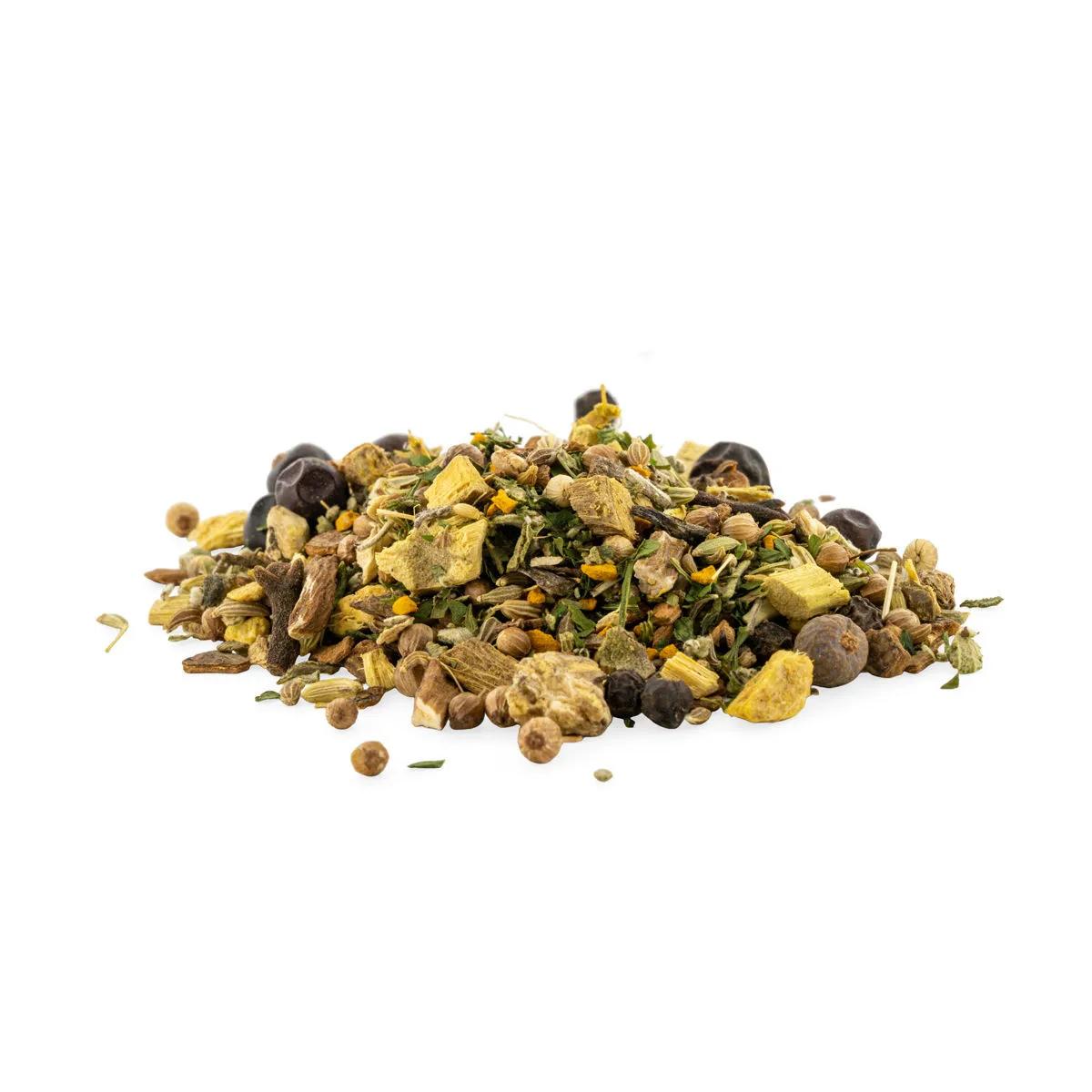
Herbal Detox Tea is a loose-leaf botanical blend that combines 14 traditional herbs and spices into one aromatic cup. Liquorice root leads the flavour, cinnamon and ginger warm it up, and dandelion root, burdock, fennel, juniper berries and turmeric round out a mix that's been showing up in European apothecary cabinets for centuries. It's the kind of tea you brew in the morning when you want something more interesting than peppermint and more grown-up than fruit blend.
Why this herbal detox tea earns its shelf space
Because the ingredient list actually means something. A lot of "detox" teas on the market are basically senna laxatives with a marketing budget — this isn't that. There's no senna, no aggressive diuretic stacking, no overnight-flat-stomach promises. What you get is a traditional European-style herbal blend: liquorice root for sweetness, dandelion and burdock as the bitter base notes, cinnamon and clove blossom for warmth, and fennel, anise and coriander doing the digestive-tea work that cultures from India to the Mediterranean have relied on for centuries.
A quick reality check on the word "detox" itself. Your liver and kidneys handle detoxification without outside help — that's their job. According to Healthline's review of herbal detoxes, teas containing strong diuretics can actually increase the risk of dehydration and low electrolyte levels, so the "more cups the better" approach is the wrong one. Research suggests certain herbal teas may support digestion through gut fermentation of leftover carbohydrates (Healthline, Detox Tea: Side Effects and Benefits), but the honest framing is: this is a pleasant, traditionally-used botanical drink that fits into a sensible routine — not a reset button.
What we like about this particular blend is the balance. The liquorice is dominant but not cloying, the turmeric adds earthiness without turning it into a curry, and the juniper and sage give it an unusual savoury depth that most "wellness" teas lack. It tastes like something a herbalist put together, not a marketing team.
What's actually in the 100 g bag
All 14 ingredients, no filler. Here's what each one brings to the cup:
| Ingredient | Role in the blend |
|---|---|
| Liquorice root | Natural sweetness, backbone flavour |
| Cinnamon | Warmth, rounds out the bitter herbs |
| Burdock root | Earthy base note, traditional bitter |
| Ginger | Spice, digestive warmth |
| Dandelion root | Roasted bitterness, coffee-like depth |
| Fennel | Sweet anise note, digestive tradition |
| Anise | Liquorice echo, aromatic top note |
| Juniper berries | Resinous, slightly gin-like |
| Coriander | Citrus-spice edge |
| Paprika | Mild colour and body |
| Parsley | Fresh green note |
| Sage | Savoury, herbaceous lift |
| Turmeric | Earthy warmth, golden colour |
| Clove blossom | Sweet-spicy finish |
How it compares to other herbal teas on our shelf
If you've been drinking single-herb infusions, this sits in a different category. Here's a quick map of where it fits among the other loose-leaf blends we carry:
| Tea style | Flavour profile | Best time of day |
|---|---|---|
| Herbal Detox Tea (this one) | Liquorice-forward, warm, earthy | Morning or early afternoon |
| Chamomile / lemon balm blends | Soft, floral, mellow | Evening |
| Energy-style herbal blends (guarana, yerba maté) | Bitter, stimulating, caffeinated | Morning only |
| Peppermint / digestive singles | Clean, menthol, simple | After meals |
How to brew it properly
Loose leaf needs a bit more attention than a teabag, but nothing complicated. The ingredient mix here includes woody roots (burdock, dandelion, liquorice) that need hot water and time to give up their flavour — under-steep and you'll get a thin, grassy cup.
- Bring fresh, cold water to a rolling boil and let it sit for 30 seconds.
- Use 1 teaspoon of the blend per cup (around 240 ml). For a stronger brew, go up to 1 tablespoon.
- Pour water over the herbs in a teapot or infuser.
- Steep for 5–8 minutes. Roots and barks need the longer end of that range.
- Strain and drink. No sugar needed — the liquorice does that job.
- You can re-steep the same leaves once; the second cup will be lighter and more herbal.
According to general guidance on herbal tea intake, 1–3 cups per day is a sensible routine for ongoing use. Some detox-style protocols suggest 2–3 cups per day for short 1–2 week stretches (Detox Tea Herbal Ingredients guide), but with this blend specifically, we'd keep it at 1–2 cups daily because of the liquorice content.
Who should skip this one
Honest limitations matter. Liquorice root (glycyrrhizin) can raise blood pressure and affect potassium levels when consumed heavily — the product note is clear about this. If you have high blood pressure, are pregnant, on blood thinners, antidepressants, metformin, or any medication with a narrow therapeutic window, research suggests herbal teas can have meaningful interactions (Healthline, Herbal Detoxes: Myths, Facts, and What to Know). Talk to your GP before adding it to a daily routine.
Also worth knowing: case reports have documented rare instances of liver injury from unregulated "detox" tea products (Drug-Induced Liver Injury from Herbal Liver Detoxification, PMC9830300; Yogi Detox Tea case report, PMC5674495). This blend doesn't contain the high-risk ingredients those cases focused on, but the general rule holds — moderation, not megadoses. One report also documented acute hyponatremia (low sodium) linked to excessive detox tea use (PMC8083992), which is another reason not to treat herbal tea as a substitute for water.
This guide is written for adults. Herbal tea isn't appropriate for children.
Pairs well with a proper loose-leaf teapot or a stainless mesh infuser — the roots and barks in this blend expand quite a bit, and a cramped ball infuser won't let the water circulate. If you like this style, our other loose-leaf herbal blends (chamomile for evenings, yerba maté for mornings) round out a proper shelf.
Frequently Asked Questions
What is Herbal Detox Tea?
It's a loose-leaf blend of 14 botanicals — liquorice, cinnamon, burdock, ginger, dandelion, fennel, anise, juniper, coriander, paprika, parsley, sage, turmeric and clove blossom — traditionally used as a warming daily infusion. It's caffeine-free and comes in a 100 g pack.
What does a detox tea actually do?
Your liver and kidneys handle detoxification on their own — no tea "flushes" toxins. According to Healthline, some herbal teas may support digestion and gut health through fermentation of leftover carbohydrates. Treat it as a pleasant daily drink, not a cleanse.
Is this detox tea safe to drink every day?
For most healthy adults, 1–2 cups per day is fine. Because of the liquorice root, we wouldn't push it past that long-term — glycyrrhizin can affect blood pressure and potassium levels with heavy, sustained use.
Can I drink this if I'm on medication?
Check with your GP first. Research suggests herbal teas can interact with antidepressants, blood thinners, omeprazole and metformin, among others. Liquorice in particular has documented interactions — don't guess, ask.
Will it help me lose belly fat?
No herbal tea does that on its own, and we're not going to pretend otherwise. Any weight change from "detox teas" is usually water loss from diuretic herbs, which comes back within a day. Diet and movement do the actual work.
How long should I steep it?
5–8 minutes with freshly boiled water. The roots and barks in the blend need time to release their flavour — shorter steeps will taste thin and grassy.
Does it taste like liquorice?
Yes, liquorice and anise are the dominant notes, softened by cinnamon, ginger and clove. If you don't like liquorice, this isn't the blend for you — try a chamomile or peppermint base instead.
Last updated: April 2026