Indian masala chai tea is a caffeine-free spiced herbal blend that brings the warming character of traditional chai without the late-night jitters. Cinnamon, ginger, pink peppercorns, cardamom and cloves — five spices doing the heavy lifting, with no black tea base and no milk powder hiding in the mix. If you want to get the chai flavour at 11pm without staring at the ceiling until 3am, this is the one to buy.
What's actually in the tin
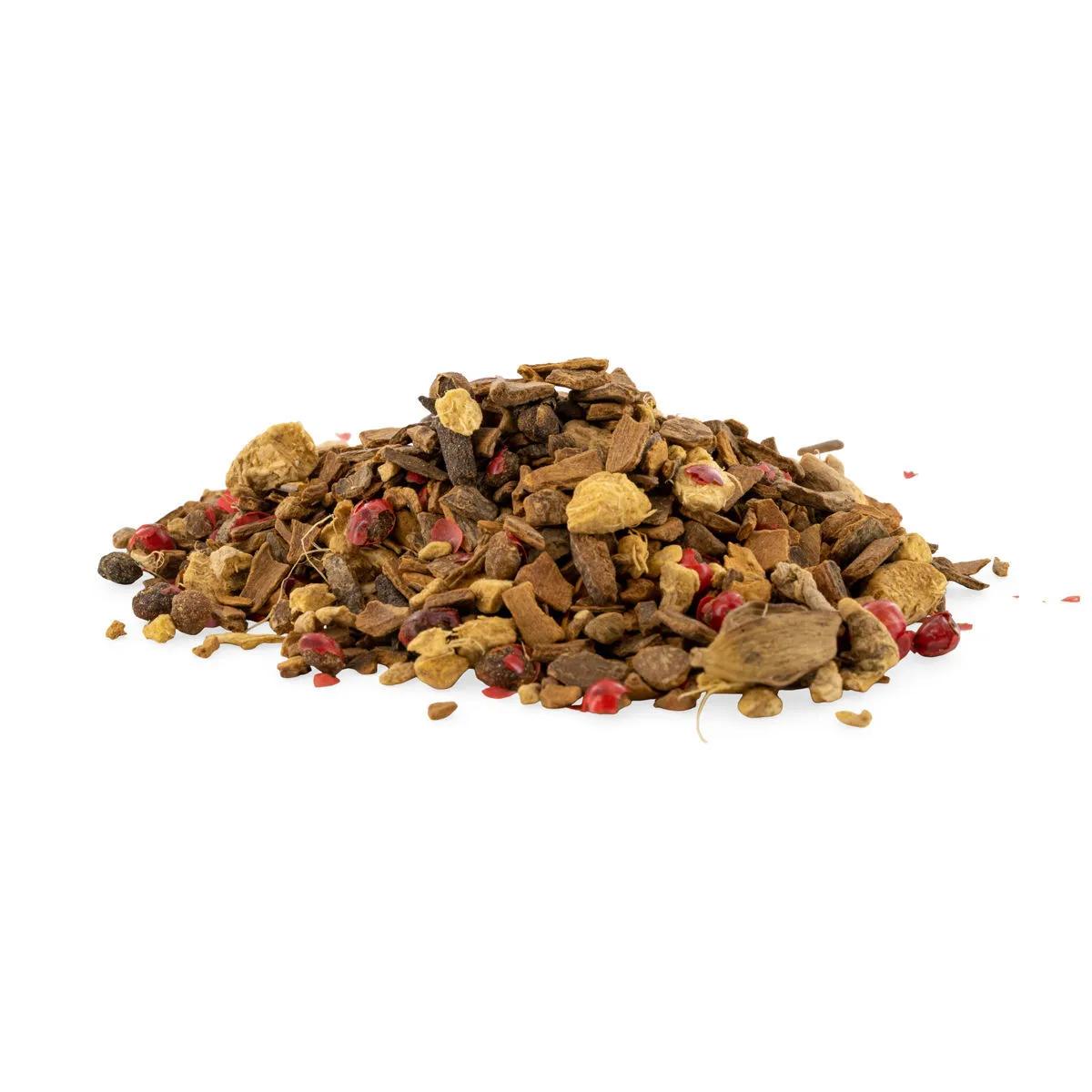
This Indian masala chai tea is a straight-up spice blend — no tea leaves, no sweeteners, no fillers. The pink peppercorns are the twist here: softer and fruitier than black pepper, they add a warm tingle rather than a sharp bite. Cinnamon and cardamom carry the aroma, ginger brings the kick in the throat, and cloves round it out with that deep, slightly medicinal warmth that makes chai taste like chai.
Because there's no Camellia sinensis in the blend, you won't get the tannic astringency of a classic Assam-based masala chai. It's lighter on the tongue, spicier on the finish. Think of it as the spice half of chai served solo — closer to a herbal infusion than a breakfast brew.
Ingredients at a glance
| Ingredient | What it brings |
|---|---|
| Cinnamon | Sweet warmth, the dominant aroma |
| Ginger | Heat and a slight throat kick |
| Pink peppercorns | Fruity, soft spice — milder than black pepper |
| Cardamom | Floral, citrus-edged top note |
| Cloves | Deep, resinous finish |
Why the caffeine-free thing matters
Caffeine-free means you can drink this after dinner without wrecking your sleep. Most masala chai is built on a strong black tea base — Assam CTC usually — which means a standard cup carries 40–60mg of caffeine. Fine in the morning, less fine after dinner. This blend skips the tea entirely, so you get the full spice profile at any hour. It's also lactose-free and gluten-free, which the usual chai latte at the café definitely isn't.
Research suggests the spices in masala-style blends have some interesting properties on their own. According to Healthline (citing animal studies), cinnamon — one of the main ingredients in chai — may lower blood pressure in certain contexts. A 2016 review on ginger (PMC4997408) noted clinical interest in its effects on gut health and inflammation. Traditionally, cardamom and cloves have been used across South Asia as digestive aids after heavy meals — which is why you'll often see chai served after dinner rather than with it. Dutch retailers like those listed on Maps and local herbal shops have stocked similar blends for years.
Product specifications
This Indian masala chai tea comes as a 100g loose spice blend with zero caffeine and no declared allergens.
| Format | Loose spice blend |
| Weight | 100 g |
| Caffeine | 0 mg (no tea leaves) |
| Allergens | None declared — lactose-free, gluten-free |
| Ingredients | Cinnamon, ginger, pink peppercorns, cardamom, cloves |
| Best served | Hot with milk, or iced with lemon |
| SKU | SM0517 |
How masala chai compares to the usual suspects
Masala chai sits between a herbal infusion and a proper black tea brew, and this caffeine-free version leans further toward the herbal end than most.
| Blend | Caffeine | Character | Best for |
|---|---|---|---|
| Indian Masala Chai (this one) | None | Spicy, warming, no tea base | Evenings, after dinner |
| Traditional black-tea masala chai | 40–60mg | Tannic, malty, spiced | Morning kickstart |
| Rooibos chai | None | Sweet, earthy, spiced | People who find spice too sharp |
| Plain ginger tea | None | Single-note heat | Sore throat, upset stomach |
How to brew it properly
Brew this Indian masala chai tea with boiling water and a 5–7 minute covered steep — anything shorter and the whole spices won't open up.
- Use roughly 1 heaped teaspoon (about 2–3g) per cup.
- Bring water to a full rolling boil — 100°C, not 80°C.
- Steep for 5–7 minutes covered. Longer = spicier.
- For the traditional version: simmer the spices in half water, half milk (or oat/almond) for 5 minutes on the hob. Sweeten with honey or jaggery if you want it proper.
- For iced: brew double-strength hot, chill, pour over ice with a squeeze of lemon.
From our counter: The biggest mistake people make is under-steeping. These whole spices need time to open up. Customers who order this and tell us the first cup tasted thin almost always come back saying cup two, brewed for seven minutes, was a different drink entirely. Give it the time.
Pairs well with a proper cast-iron teapot or a simple stovetop milk pan — and if you want to buy a caffeinated chai for the mornings, have a look at our black tea range to build your own base. A tin of raw honey on the shelf finishes it off nicely.
Honest limitations
This Indian masala chai tea isn't a replacement for a classic Assam-based chai if that's what you're after — no tea means no body, no tannin, no proper morning punch. It's also not subtle. If you don't like cloves, you won't like this; cloves carry the finish on every cup. And because it's a whole-spice blend, you'll want an infuser or a fine strainer — loose cardamom pods and peppercorns in the bottom of your mug aren't ideal. Compared to a pre-ground supermarket chai powder, this takes more effort; compared to a proper stovetop chai from an Indian kitchen, it's still missing the tea leaves.
Frequently Asked Questions
Is there any caffeine in this masala chai?
No. This blend contains only spices — cinnamon, ginger, pink peppercorns, cardamom and cloves — with no black tea base. You can drink it in the evening without affecting your sleep.
How do you make the perfect cup of chai with this?
Simmer one heaped teaspoon in half water, half milk (dairy or plant-based) for 5 minutes on the hob, then strain. Sweeten to taste with honey or jaggery. For a lighter version, steep in boiling water for 6–7 minutes covered.
Can I drink masala chai every day?
Traditionally masala chai spices have been consumed daily across South Asia for centuries. The spices in this blend are culinary amounts, not supplement doses. If you're on blood thinners or blood-pressure medication, check with your GP — ginger and cinnamon can interact with certain drugs.
What does pink peppercorn taste like in chai?
Softer and fruitier than black pepper, with a light floral note and a gentle warmth rather than a sharp bite. It rounds out the ginger and clove without overpowering the cardamom.
Does it work as an iced tea?
Yes, and it's genuinely good cold. Brew double-strength hot (2 teaspoons per cup, 7 minutes), chill in the fridge, then pour over ice with a squeeze of lemon or a splash of milk. Summer chai, sorted.
How many cups do you get from 100g?
Roughly 35–45 cups, depending on how strong you brew it. One heaped teaspoon per cup is the sweet spot — lighter if you want something gentle, heavier for a proper spice hit.
Where can I buy this Indian masala chai tea?
You can order it directly from Azarius — the 100g tin ships across Europe. If you want to get started, a single tin gives you well over a month of daily cups.
Last updated: April 2026