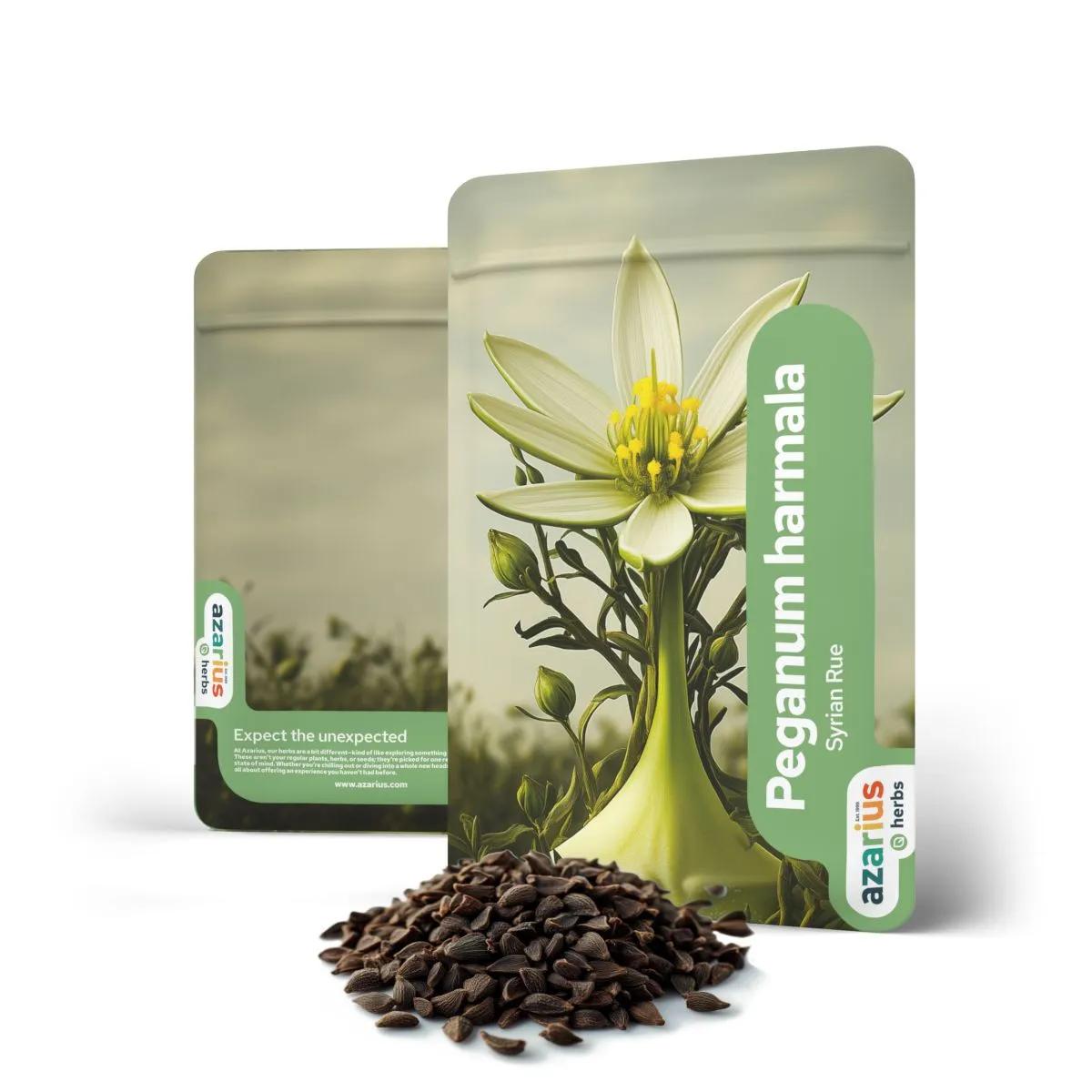
Peganum Harmala
by Azarius
Peganum harmala is a hardy perennial plant whose seeds contain potent harmala alkaloids — primarily harmine, harmaline, and tetrahydroharmine. These compounds act as monoamine oxidase inhibitors (MAOIs), which means they slow the breakdown of neurotransmitters like serotonin and dopamine in the brain. Used for centuries across the Middle East, North Africa, and Central Asia in spiritual ceremonies and traditional practices, Syrian rue seeds remain one of the most respected botanical tools for those looking to deepen meditation and introspection. We've stocked these seeds since the early days of the shop, and they're still one of the most asked-about items on our shelves.
Syrian rue seeds are one of the most concentrated natural sources of beta-carboline alkaloids on the planet. The two main players — harmine and harmaline — inhibit the MAO-A enzyme, which normally breaks down serotonin, dopamine, and norepinephrine. By temporarily slowing this enzyme, the seeds allow these neurotransmitters to remain active in the brain for longer, which can produce altered states of awareness, heightened emotional sensitivity, and deep reflective states.
The name "Syrian rue" is a bit misleading. It references the plant's historical association with the Syrian region and its visual resemblance to common rue (Ruta graveolens), but the two are botanically unrelated. Peganum harmala belongs to the Nitrariaceae family, and you'll also hear it called wild rue, esphand, or harmal depending on where you are in the world. In Iran and Turkey, the dried seeds are still burned as incense — the smoke is traditionally thought to ward off negative energy. Walk into certain shops in Istanbul and you'll smell it immediately: sharp, herby, slightly acrid.
One honest note: these seeds taste genuinely bitter. We're not talking mildly unpleasant — we're talking wince-level bitter. Most people make a tea or extract to get around this, and even then, the flavour is something you tolerate rather than enjoy. That bitterness is actually the alkaloids themselves, so it's a sign of potency, not a defect.
| Specification | Detail |
|---|---|
| Botanical name | Peganum harmala L. |
| Common names | Syrian rue, wild rue, esphand, harmal |
| Plant family | Nitrariaceae |
| Part used | Seeds |
| Key alkaloids | Harmine, harmaline, tetrahydroharmine |
| Alkaloid content | Approximately 2–6% by dry weight (typically ~3%) |
| Mechanism | Reversible MAO-A inhibition |
| Origin | Middle East / Central Asia |
| Form | Whole dried seeds |
The psychoactive properties of Syrian rue come down to three beta-carboline alkaloids, each with a slightly different pharmacological profile. Harmine is the most abundant, typically making up around 1–3% of seed dry weight. Harmaline follows at roughly 0.5–1.5%, and tetrahydroharmine rounds out the trio in smaller quantities. All three inhibit MAO-A, but harmaline tends to be the most potent inhibitor of the three.
According to a review published in the Journal of Pharmacy and Pharmacology, the aqueous extract of Peganum harmala seeds demonstrates antispasmodic, anticholinergic, antihistaminic, and antiadrenergic effects (PMC3841998). Research also suggests antioxidant and anti-inflammatory properties, with one study observing significant effects in hamsters treated with P. harmala oil extract at doses of 80, 160, and 320 mg/kg over 14 days (PMC8512429).
| Alkaloid | Approximate % of Seed Weight | Primary Action |
|---|---|---|
| Harmine | 1–3% | MAO-A inhibition, fluorescent properties |
| Harmaline | 0.5–1.5% | Strongest MAO-A inhibitor of the three |
| Tetrahydroharmine | Trace–0.5% | Weak MAO-A inhibition, mild serotonin reuptake activity |
There are a few common preparation methods, and the one you choose depends on how much bitterness you're willing to tolerate and how precise you want your dose to be. The most popular approach is a simple water extraction — essentially making a tea. Here's how most experienced users go about it:
A word from behind the counter: we've had customers try to skip the extraction and just chew the seeds raw. You can, technically. But the nausea is significantly worse with whole seeds compared to a strained tea. The seed material itself seems to irritate the stomach, so filtering it out makes a real difference to the experience.
According to Erowid's Syrian Rue Vault, extracted Peganum harmala seed doses for psychoactive effect are categorised as follows: light at 0.5–3g of seeds (extracted), medium at 2–4g (extracted), and strong doses above that range. These figures refer to the weight of seeds used before extraction, not the weight of the final liquid.
A toxicity evaluation of Algerian Peganum harmala seed extract concluded that chronic use of the hydromethanolic extract appears safe at doses of 100mg or below. In longer-term animal studies, aqueous extract administered orally six times per week at doses of 1g/kg, 1.35g/kg, and 2g/kg over a three-month period showed dose-dependent effects.
Start conservative. If you've never worked with MAO inhibitors before, begin at the lower end and give yourself at least 90 minutes before deciding it isn't working. We hear "I didn't feel anything so I took more" stories regularly, and they almost never end well.
This is the section you actually need to read. Peganum harmala seeds are not casual — they contain genuine MAO inhibitors, and that comes with real dietary and pharmacological restrictions.
MAO-A inhibition means your body temporarily loses its ability to break down tyramine, an amino acid found in aged cheeses, cured meats, fermented foods, soy sauce, and certain alcoholic drinks (especially red wine and beer). Consuming tyramine-rich foods while MAO is inhibited can cause a dangerous spike in blood pressure — this is called a hypertensive crisis, and it's a medical emergency.
Syrian rue contains harmaline and harmine, which interact significantly with drug metabolism. Research shows these alkaloids affect the expression of cytochrome P450 enzymes (CYP), the primary system your liver uses to process medications. This means Peganum harmala can alter how your body handles prescription drugs, over-the-counter medications, and other substances.
Specific interactions to be aware of:
People with heart conditions, stomach ulcers, or gastrointestinal blockages should avoid Syrian rue entirely. The alkaloids can exacerbate all three conditions. And if you're pregnant or nursing — this is a firm no. The alkaloids cross biological barriers readily.
Nausea is the most common side effect even at moderate doses. Some people experience it mildly; others find it quite intense. Having an empty stomach (fasted 4–6 hours) and using a strained extraction rather than consuming whole seeds both help reduce stomach upset.
Working with Peganum harmala seeds demands precision. A quality digital scale with 0.01g accuracy is non-negotiable — check out the On Balance CT-250 or similar precision scales in our accessories section. If you're interested in other MAO-related botanicals, Banisteriopsis caapi vine is worth a look as a traditional alternative with a different alkaloid ratio.
Peganum harmala has deep roots in Middle Eastern and Central Asian culture stretching back thousands of years. In Iran, the practice of burning esphand (the dried seeds) over hot coals is still common at weddings, celebrations, and when welcoming guests. The sharp, distinctive smoke is believed to cleanse spaces and protect against ill intent — you'll find seed vendors at most bazaars in Tehran and Isfahan.
In parts of North Africa, the seeds have been used in traditional practices for generations. According to preliminary research, Peganum harmala has historically been referenced in connection with a variety of traditional applications, including mood support and spiritual practice (PMC3453127).
The connection to ayahuasca traditions is worth noting. While Peganum harmala is not part of traditional Amazonian ayahuasca (which uses Banisteriopsis caapi as its MAOI source), it contains the same class of beta-carboline alkaloids. This has made it a subject of interest for researchers studying the pharmacology of ayahuasca analogues. The seeds are sometimes used in what's informally called "pharmahuasca" or "anahuasca" preparations, though this is a modern practice rather than a traditional one.
Peganum harmala has attracted growing scientific interest over the past two decades. Here's what the research literature currently shows:
All of these are preliminary or animal studies. None constitute medical advice, and the jump from "observed in a lab" to "works in humans at the doses you'd use" is substantial. We mention them because they're interesting and because transparency matters — not because they're a reason to self-medicate.
Crush the seeds with a mortar and pestle, simmer in acidified water (add lemon juice) for 15–20 minutes, then strain through a fine filter. This tea method extracts the alkaloids while removing the seed material that causes the worst stomach irritation. Some people do a second extraction with fresh water and combine both pulls.
Yes, and they're serious. Syrian rue seeds are MAO inhibitors, which means they interact dangerously with SSRIs, SNRIs, stimulants, certain opioids (especially tramadol), and tyramine-rich foods like aged cheese, cured meats, and fermented products. If you're on any medication, research the interaction thoroughly before use.
No. The harmala alkaloids cross biological barriers readily and have shown uterotonic effects in research. Pregnant and nursing individuals should avoid Syrian rue entirely.
The three main alkaloids are harmine (1–3% of seed dry weight), harmaline (0.5–1.5%), and tetrahydroharmine (trace amounts). All three are beta-carbolines that inhibit the MAO-A enzyme, with harmaline being the most potent inhibitor of the group.
Extremely bitter — it's one of the most intensely bitter botanicals we stock. The bitterness comes directly from the alkaloids, so it's actually a sign of potency. Most people make a strained tea and chase it with orange juice or something acidic to cut through the flavour.
Keep them in a cool, dry, dark place — an airtight jar in a cupboard works well. Properly stored, dried seeds retain their alkaloid content for years. Avoid moisture and direct sunlight, which can degrade the active compounds over time.
Both contain beta-carboline alkaloids that inhibit MAO-A, but they come from completely different plant families and regions. Banisteriopsis caapi is a South American vine used in traditional ayahuasca; Peganum harmala is a Middle Eastern/Central Asian shrub. Syrian rue tends to have a higher concentration of harmaline relative to harmine compared to caapi, and the overall alkaloid profile differs subtly.
MAO inhibition changes how your body processes nearly everything — other botanicals, supplements, medications, and even certain foods. We don't recommend combinations without thorough independent research. The interaction profile of harmala alkaloids is broad and the consequences of getting it wrong are serious.
Last updated: April 2026
Medical disclaimer. This content is for informational purposes only and does not constitute medical advice. Consult a qualified healthcare provider before use of any substance.