Herbshop
by Holy Flavour
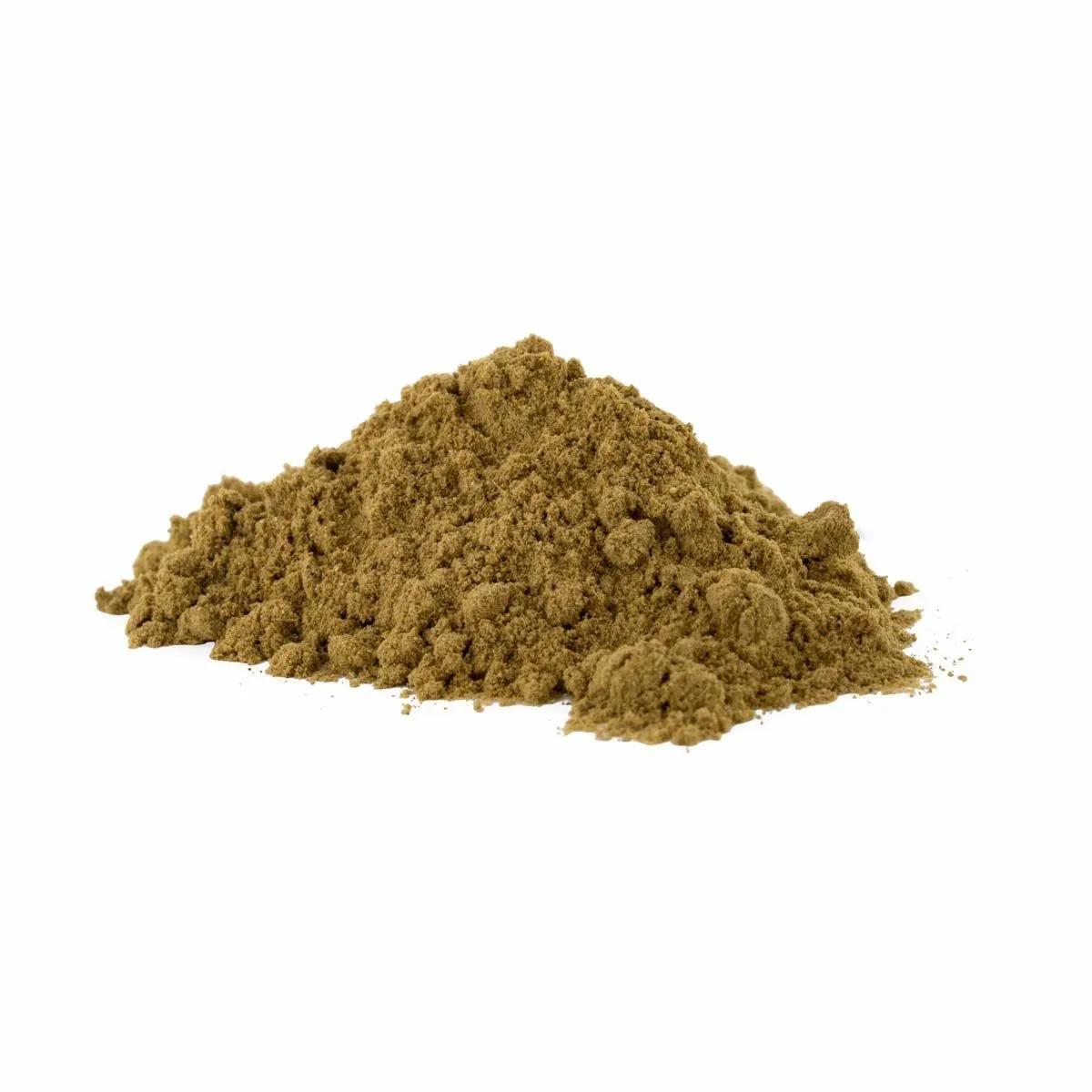
Organic sage powder is a finely milled single-ingredient herb that dissolves into liquids, coats proteins evenly, and brings a concentrated spicy, piney kick to everything from morning smoothies to slow-cooked stews. Made from 100% Salvia officinalis leaves grown to organic standards, this powder format gives you the full flavour and aromatic intensity of Mediterranean sage without the chewy leaf fragments you get from crushed or rubbed varieties. We've carried sage in various forms since our early Amsterdam days, and the powder remains the most versatile option on the shelf — it does what dried leaf sage does, but faster and with less fuss.
The flavour profile sits somewhere between eucalyptus and warm pepper, with a resinous, slightly bitter finish that cuts through fatty dishes like roast pork or buttered squash. Open the pouch and you get hit with that unmistakable camphoraceous, almost medicinal warmth — it smells like a Provençal kitchen in late summer. A quarter teaspoon stirred into hot water already colours the liquid a pale greenish-gold and fills the room.
If you've only ever used sage as dried leaves crumbled into stuffing, the powder form will change how you think about this herb. It dissolves into liquids in roughly 30 seconds, integrates into batters and doughs without leaving bits behind, and coats a chicken breast or pork chop far more evenly than torn leaves ever could. The trade-off — and this is worth knowing — is that the powder loses its aromatic punch faster once exposed to air than whole leaves do. Keep the pouch sealed between uses and store it in a cool, dark cupboard. Treated right, it holds its flavour for months.
Sage powder works best when you need the herb to disappear into a dish rather than sit on top of it. Smoothies, pan sauces reducing by the second, compound butters, bread doughs, pasta fillings — anywhere you want sage flavour distributed evenly without visible leaf pieces. A quarter teaspoon is enough for a single cup of sage tea; half a teaspoon seasons a pan sauce for two.
Beyond cooking, Salvia officinalis has a long history in traditional European herbalism. According to a systematic review published in PMC (Ghorbani & Esmaeilizadeh, 2017), Salvia officinalis has been investigated for a range of pharmacological properties, including antioxidant and antimicrobial activity, with clinical trials exploring several of these areas. A separate systematic review of clinical trials (Miroddi et al., 2014) examined sage's effects on cognitive parameters, noting that the keywords "Salvia officinalis" and "memory" frequently appear together in the research literature. And according to Akbari et al. (2020), sage has been studied in the context of menopausal symptoms, with researchers noting that phytoestrogens — plant compounds present in sage — have drawn interest as an area of investigation.
None of that means your morning sage tea is a medicine. But it does mean this humble kitchen powder has attracted serious scientific curiosity — and that's more than most spice-rack residents can claim.
| Spec | Value |
|---|---|
| Botanical Name | Salvia officinalis |
| Common Name | Sage |
| Form | Finely milled powder |
| Ingredients | 100% Salvia officinalis leaf |
| Certification | Organic |
| Additives | None |
| Packaging | Sealed resealable pouch |
| SKU | HE0074 |
Sage pairs brilliantly with other Mediterranean botanicals. If you're building a herbal tea rotation, have a look at our dried rosemary and thyme — they share that warm, resinous character and blend well with sage in a single cup. For cooking, our organic turmeric powder and black pepper make a solid seasoning trio alongside sage for roasted root vegetables.
The problem with dried sage leaves is timing. You crumble them into a dish and some bits hydrate while others stay papery. In a smoothie, they catch in your teeth. In a sauce, they float. Powder solves all of that. You measure, you stir, it's done — the sage flavour distributes evenly through the entire dish in seconds rather than minutes.
The organic certification matters too. Sage is a leaf crop, which means whatever was sprayed on it ends up in your cup or your pan. With certified organic sage powder, you're getting one ingredient and nothing else — no pesticide residues, no fillers, no anti-caking agents. Just ground Salvia officinalis.
One honest limitation: because this is so finely milled and concentrated, it's easy to overdo it. Sage has a strong, slightly bitter, camphoraceous character that can bulldoze a dish if you're heavy-handed. A quarter teaspoon is a sensible starting point for a single serving. You can always add more; you can't take it out. We'd pick this powder over rubbed sage leaves for any application where the herb needs to dissolve or integrate — but if you want visible sage leaves for presentation (say, crisped in brown butter), grab whole leaves instead.
Sage has been the subject of a surprising amount of clinical and preclinical research for a common kitchen herb. According to a pharmacological review (Ghorbani & Esmaeilizadeh, 2017), researchers have investigated Salvia officinalis for antioxidant, antimicrobial, and anti-inflammatory properties, among others, with some findings supported by clinical trials. The same review noted that certain biological actions — including interaction with benzodiazepine receptors — have been observed in laboratory settings.
A 2021 study published in Nutrients (Kennedy et al., 2021) examined the acute effects of sage supplementation on cognitive performance and mood in healthy adults, building on earlier work that explored cholinesterase-inhibiting properties of the plant. And according to a 2020 study on menopausal symptoms (Akbari et al., 2020), Salvia officinalis drew interest partly because of its phytoestrogen content — plant compounds structurally similar to oestrogen.
More recently, a 2025 study (PMC, 2025) explored the potential antioxidant and anti-inflammatory properties of Salvia officinalis extract in an animal model, with histopathological examination revealing effects on inflammatory markers. And a separate investigation (PMC, 2025) explored the therapeutic impact of sage across several assessment parameters.
All of this is promising, but none of it constitutes medical advice. We sell sage as a food ingredient and a traditional botanical — the research context is there for the curious, not as a prescription.
A quarter teaspoon (about 0.5g) per cup is a solid starting point. Steep in hot water at around 90°C for 5 minutes. You can go up to half a teaspoon once you know how you like it, but sage is potent — start conservative.
The flavour is the same — spicy, piney, slightly bitter — but more concentrated per measure because there's no stem or vein material diluting it. You'll use less powder than you would crushed leaves for the same intensity.
Yes, that's one of the main advantages over leaf sage. This organic sage powder is milled fine enough to dissolve into blended liquids without leaving gritty bits. A quarter teaspoon blends out completely in a standard smoothie.
Keep the pouch sealed tightly and store it in a cool, dark cupboard away from heat and light. The sealed pouch format helps, but once opened, the essential oils start degrading with air exposure. Use it within 6–12 months for the best flavour.
No. This is Salvia officinalis — common garden sage, the culinary herb. Salvia divinorum is a completely different species with different properties. They share a genus name but that's where the similarity ends.
According to pharmacological references, Salvia officinalis may interact with medications metabolised by CYP2C19 and CYP2C9 liver enzymes, and may affect the activity of certain drug transport pumps. If you're on medication, speak with your doctor before using sage in concentrated or supplemental quantities.
Single ingredient, certified organic, no anti-caking agents or fillers. Most supermarket sage is rubbed leaf, not powder — meaning coarser texture, less even distribution, and often mixed with stem material. This is pure milled leaf.
Last updated: April 2026
Medical disclaimer. This content is for informational purposes only and does not constitute medical advice. Consult a qualified healthcare provider before use of any substance.