Herbshop
by Azarius
San Pedro seeds are the most affordable entry point into growing Echinopsis pachanoi, a fast-growing columnar cactus native to the Andes mountains of Peru, Ecuador, and Bolivia. Each pack contains roughly 20 seeds with a 70–85% germination rate, meaning you can realistically expect 14–17 viable seedlings from a single packet. Visible sprouts appear within 7–14 days at 20–25 °C — no heated propagator, no grow lights, no fuss. Once established, these cacti put on 20–30 cm of height per year, which is roughly three times faster than Peyote (Lophophora williamsii). That speed matters: it means you go from tiny green dots on soil to a proper cactus you can be proud of in a single growing season.
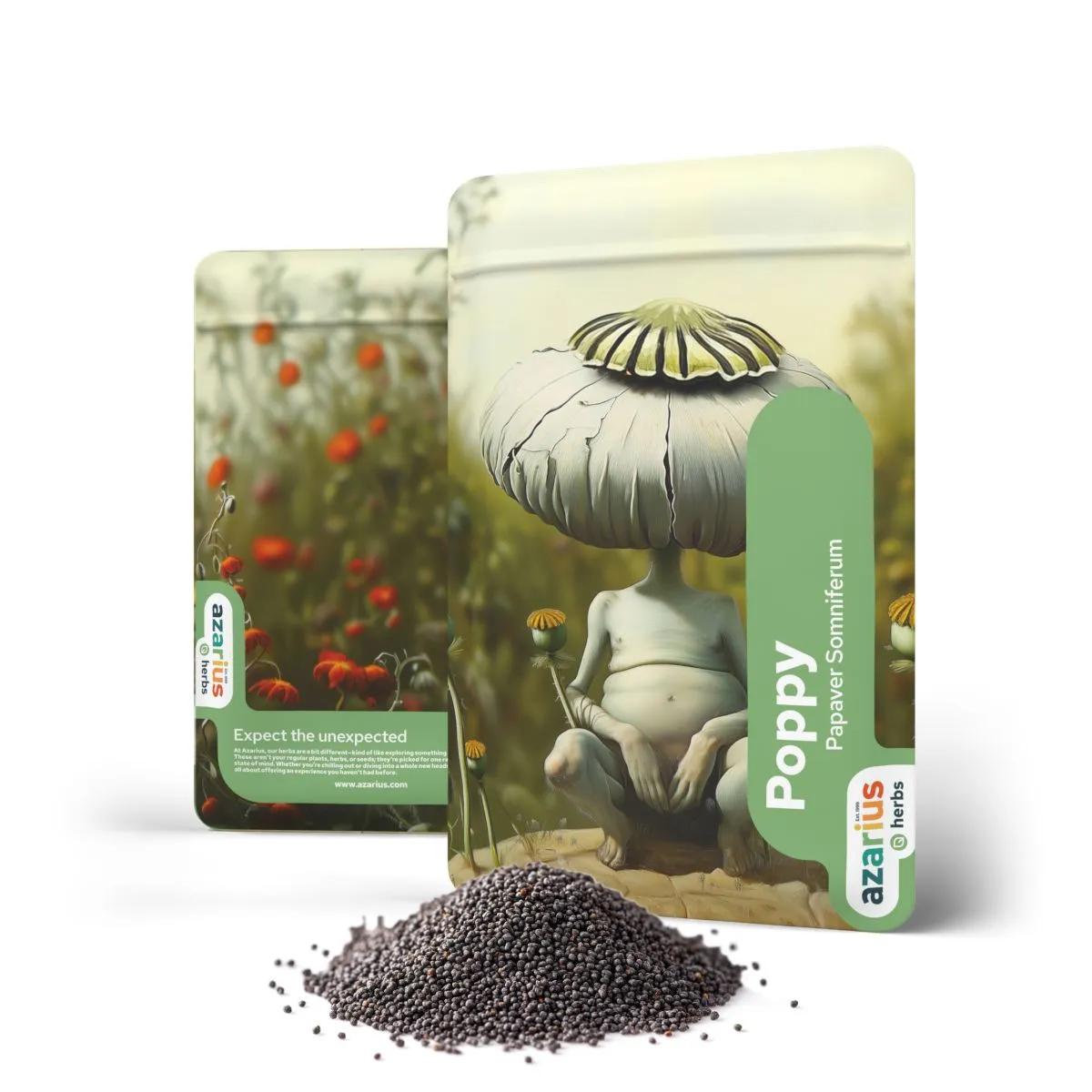
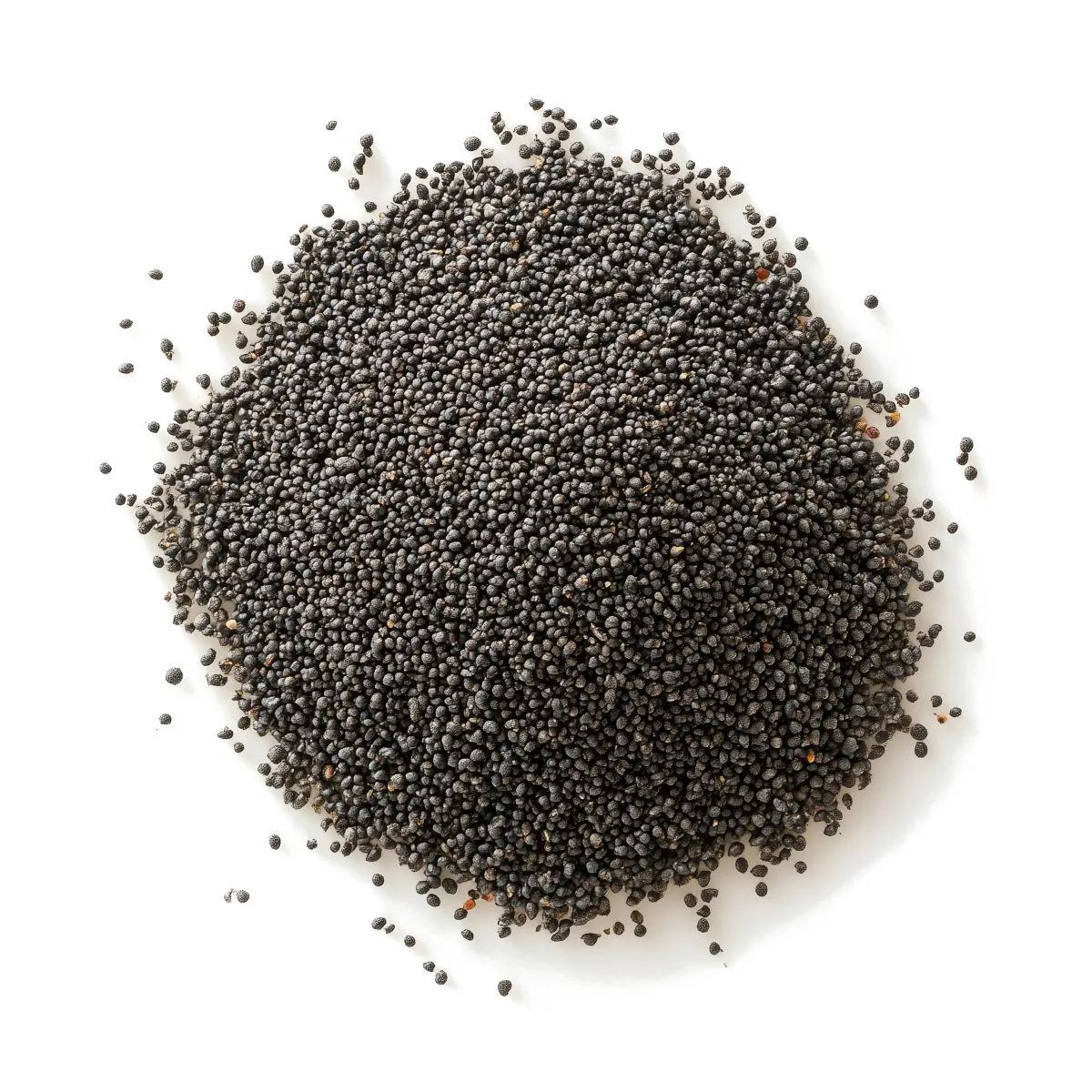
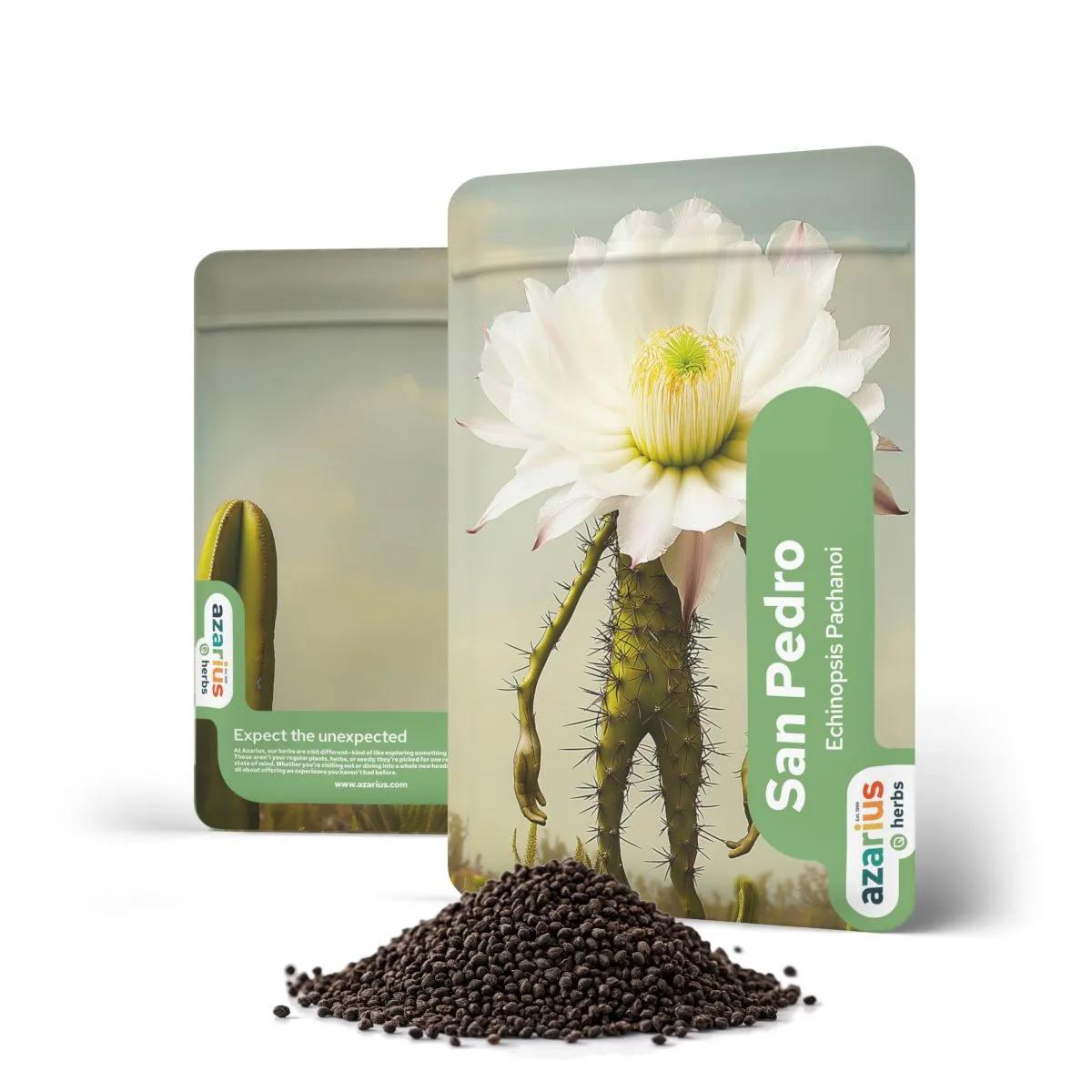
Each packet contains approximately 20 seeds of Echinopsis pachanoi (synonym: Trichocereus pachanoi). The seeds themselves are tiny — black, slightly rough to the touch, barely larger than a poppy seed. Don't let their size fool you. Under the right conditions, each one can become a cactus that reaches 3–6 metres tall outdoors after several years. That's taller than most ceilings.
The germination rate sits at 70–85%, which is solid for cactus seeds. We've seen customers report even higher rates when they nail the humidity and temperature. At the lower end, you're still looking at 14 seedlings from 20 seeds — more than enough to keep the best growers and gift the rest.
| Specification | Value |
|---|---|
| Species | Echinopsis pachanoi (syn. Trichocereus pachanoi) |
| Common name | San Pedro cactus |
| Origin | Andes mountains, 2,000–3,000 m altitude (Peru, Ecuador, Bolivia) |
| Seeds per pack | ~20 |
| Germination time | 7–14 days at 20–25 °C |
| Germination rate | 70–85% |
| Growth rate | 20–30 cm/year (established plants) |
| Mature height | 3–6 m (outdoors, after several years) |
| Light | Full sun to partial shade |
| Watering | Moderate — more than most cacti, less than tropical plants |
| Hardiness | Down to −5 °C briefly; bring indoors below 5 °C for extended periods |
| Active compound | Mescaline (phenethylamine alkaloid) |
| Difficulty | Easy — one of the most forgiving cacti to grow from seed |
San Pedro seeds are the cheapest way to start a collection. A cutting gives you instant gratification — a thick green column you can pot up straight away — but seeds give you quantity and the satisfaction of watching something grow from nothing. From 20 seeds, you could end up with a dozen or more healthy cacti. Try doing that with cuttings and your wallet will feel it.
There's also something genuinely rewarding about the process. The first time you see those tiny green spheres poking through the soil — barely visible, almost translucent — you'll understand why people get hooked on cactus growing. Within a few months, they develop their first spines. Within a year, they start looking like proper miniature cacti. By year two or three, they're putting on serious height.
The honest limitation: patience. Seeds take longer than cuttings to reach a mature size. You're looking at 3–5 years before a seed-grown San Pedro looks like the chunky columns you see in photos. If you want something substantial on your windowsill right now, a cutting or live plant is the faster route. But if you enjoy the growing process itself — and you want multiple plants for the price of one cutting — seeds are the way to go.
Growing San Pedro from seed is straightforward. This is genuinely one of the most forgiving cacti you can start from scratch — no special equipment needed, though a few cheap supplies help.
San Pedro seedlings are tougher than they look, but the first year is when you'll lose plants if you're going to lose them. The number one killer we've seen? Overwatering. These are cacti — they want to dry out between drinks. The second biggest killer is not enough light once they're out of the humidity dome.
Once established (roughly 12 months old), Echinopsis pachanoi is remarkably low-maintenance. It wants more water than most cacti — think of it as a cactus that grew up in the mountains where afternoon rain is common — but far less than your average houseplant. Water thoroughly, then leave it alone until the soil is dry a couple of centimetres down. In winter, cut watering back to once a month or less.
Light-wise, full sun to partial shade. In northern Europe, give it the brightest spot you have. A south-facing windowsill or a balcony in summer works well. These plants naturally grow at 2,000–3,000 metres altitude in the Andes, so they can handle cool nights down to −5 °C briefly — but bring them indoors if temperatures stay below 5 °C for extended periods.
| Growth stage | Age | What to expect |
|---|---|---|
| Germination | 0–2 weeks | Tiny green spheres, barely 1–2 mm |
| Seedling | 2–12 weeks | First spines appear, still under humidity dome |
| Juvenile | 3–12 months | 1–5 cm tall, recognisably a cactus, ready for individual pots |
| Established | 1–3 years | Columnar growth begins, 20–30 cm/year |
| Mature | 3+ years | Thick columns, may produce offsets and eventually flowers |
If you're choosing between growing San Pedro and Peyote, San Pedro wins on almost every practical metric. Growth rate is the big one: 20–30 cm per year versus Peyote's painfully slow 1–2 cm per year. A San Pedro seedling reaches a respectable size in 2–3 years. A Peyote button the size of a golf ball can take a decade.
San Pedro is also far more forgiving of mistakes. Overwater a Peyote and it rots. Overwater a San Pedro and it'll probably shrug it off. Forget to water either of them for a month and the San Pedro barely notices — Peyote can handle drought too, but it stops growing entirely, and it wasn't growing fast to begin with.
Both contain mescaline, a phenethylamine alkaloid. According to research published in Frontiers in Pharmacology (Dinis-Oliveira, 2019), mescaline's pharmacokinetic profile has been studied primarily in the context of Lophophora williamsii, but Echinopsis pachanoi contains the same compound. According to ethnobotanical research (De Feo, 2004), San Pedro has been used in traditional Andean healing ceremonies for thousands of years — archaeological evidence suggests use dating back over 3,000 years.
Already have a San Pedro growing and want to expand your cactus collection? Peyote seeds are the natural next step for patient growers. For something faster, look at our Peruvian Torch (Echinopsis peruviana) seeds — a close relative of San Pedro with similar growth characteristics. And if you'd rather skip the seedling stage entirely, check our live San Pedro cuttings for instant results.
San Pedro isn't just another houseplant. Echinopsis pachanoi has deep roots — literally and culturally — in Andean tradition. According to De Feo (2004), published in the Journal of Psychoactive Drugs, archaeological evidence places San Pedro use in ceremonial contexts dating back over 3,000 years in Peru. The cactus is named after Saint Peter, who in Christian tradition holds the keys to heaven — a reference that tells you something about how it was regarded.
According to research on traditional medicinal plant use in northern Peru (Bussmann & Sharon, 2006), San Pedro remains an active part of traditional healing practices in the Andes. The researchers documented its continued use by curanderos (traditional healers) in the region around Trujillo and Chiclayo. It appears that patients who receive traditional treatments with San Pedro typically ingest sub-psychoactive doses and do not experience the intense effects associated with higher amounts.
When conditions are right — usually just after a rainfall — mature San Pedro cacti produce enormous fragrant white blossoms that open at night. They're worth staying awake for. The flowers are pollinated by moths and close by morning. Growing from seed, you'll need to wait several years before your plant is mature enough to flower, but it's a genuine reward when it happens.
We've been shipping San Pedro seeds from Amsterdam since the early days — Azarius opened in 1999, and these have been in the catalogue almost as long. The most common question we get: "How many will actually grow?" With 70–85% germination, most customers report 15–18 seedlings from a pack of 20. The ones who get lower numbers almost always skipped the sterilisation step and lost seedlings to mould.
The second most common question: "Can I grow them indoors in the Netherlands?" Yes, absolutely. San Pedro does well on a bright windowsill. It won't grow as fast as it would in the Peruvian highlands, but 15–20 cm per year indoors is realistic once the plant is established. We've got a few in the office that are pushing a metre tall after four years from seed. They're not exactly speed demons, but watching them grow is part of the appeal.
One thing we'll be honest about: the first three months are the trickiest. Seedlings are tiny and vulnerable to mould, drying out, or getting scorched by direct sun. After that initial period, they toughen up fast. If you've ever kept a houseplant alive for a year, you can grow San Pedro.
Expect visible seedlings within 7–14 days at 20–25 °C. Keep the soil moist and covered with cling film or a clear lid. Some seeds may take up to 21 days in cooler conditions, but most pop within the first two weeks.
Mature plants can be propagated from cuttings — slice a section of column, let it callous for a week, then plant it in dry soil. Seeds are cheaper but slower. Cuttings give you a head start of several years.
Yes. Scatter them on the soil surface and press gently — don't bury them. They need light exposure to trigger germination. A bright spot with indirect sunlight at 20–25 °C is the sweet spot.
San Pedro puts on 20–30 cm per year once established — roughly three times faster than Peyote and comparable to Peruvian Torch. It's the fastest-growing mescaline cactus you can realistically grow at home.
During summer, yes — it loves being outside in a sunny spot. Bring it indoors when temperatures drop below 5 °C for extended periods. It can handle brief dips to −5 °C, but prolonged cold will damage or kill it.
A 50/50 mix of cactus soil and perlite or coarse sand. Good drainage is critical — seedlings rot quickly in waterlogged soil. Sterilise the mix with boiling water before sowing to prevent mould.
Typically after 4–6 years at the earliest, and only if conditions are good. The flowers are large, white, fragrant, and open at night. Not every indoor-grown plant will flower, but outdoor plants in warm climates are more likely to bloom.
Last updated: April 2026
Medical disclaimer. This content is for informational purposes only and does not constitute medical advice. Consult a qualified healthcare provider before use of any substance.