Wild Dagga
by Indian Spirit
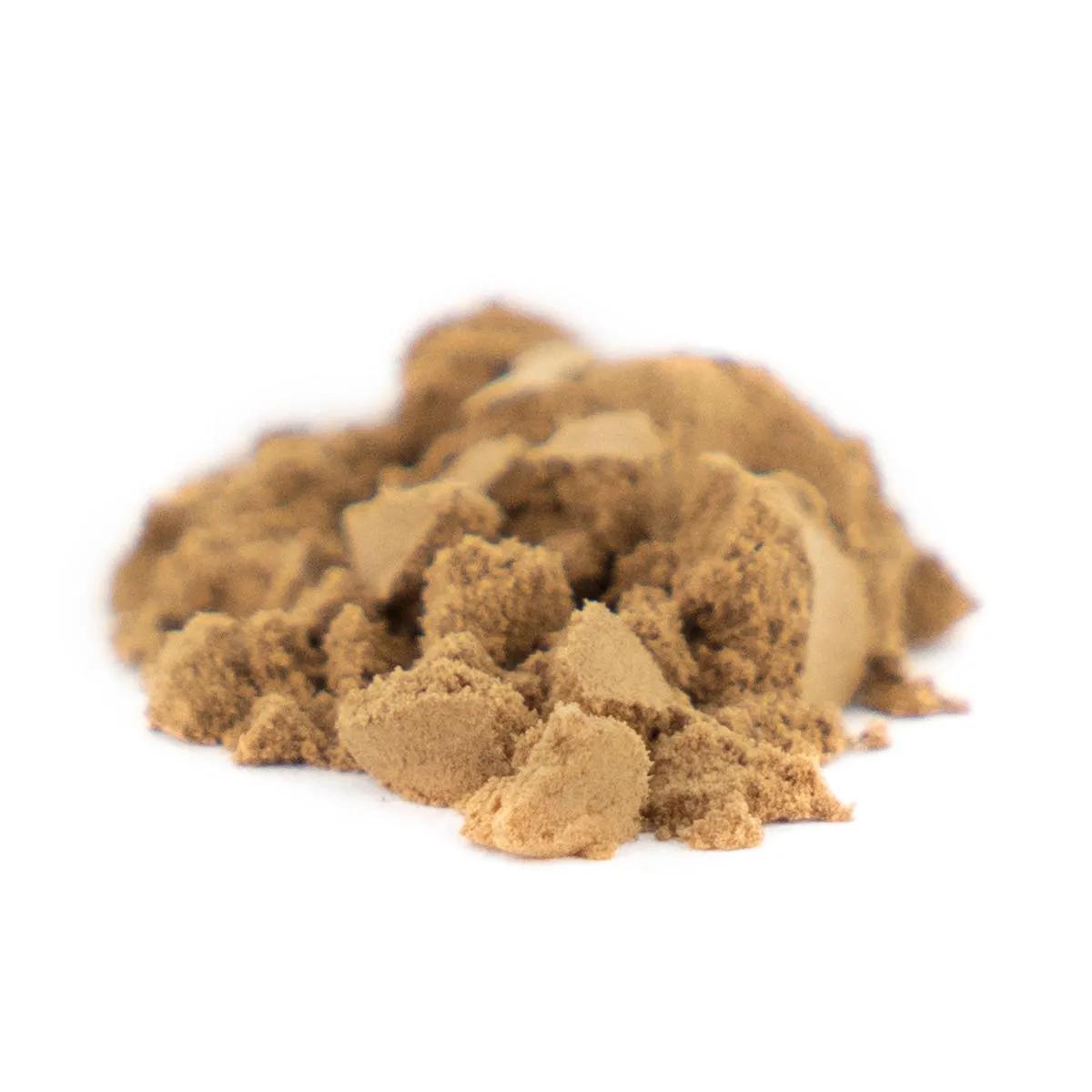
Leonotis leonurus 20x extract is a concentrated powder made from the leaves and buds of the wild dagga plant, a striking South African shrub traditionally used by the Khoikhoi and Bushmen peoples. At twenty times the strength of dried leaf, you need far less material — just 0.4 to 1 gram stirred into a drink — to experience what this plant has to offer. The powder is fine, earthy, and slightly bitter, with a resinous quality you can smell the moment you open the bag.
Wild dagga (Leonotis leonurus) has been used for generations across Southern Africa — long before anyone tried to isolate its active compounds in a lab. According to a review published in PMC, Leonotis leonurus is "commonly used in Southern Africa to treat fevers, headaches" and other complaints in traditional medicine (Labdane Diterpenoids from Leonotis leonurus, PMC). In Mexico and parts of California, it earned a reputation as a cannabis substitute, though the experience is distinctly its own — lighter, shorter, and more clear-headed from what we hear across the counter.
This 20x extract concentrates the plant's active profile into a fine powder, meaning the 5-gram pouch gives you roughly the equivalent of 100 grams of dried leaf. That makes dosing straightforward and keeps the taste manageable. If you've tried plain dried wild dagga before and found it underwhelming, this is the format that actually delivers.
The honest limitation: chemical studies on Leonotis leonurus are still thin on the ground. We know the leaves and flowers contain diterpenes, coumarins, resins, and various oils, with the compound leonurine considered responsible for the psychoactive effect. But the research base is nowhere near as deep as, say, cannabis or even kratom. According to a 2020 study in PMC, researchers have been working "toward the identification of a phytocannabinoid-like compound" in Leonotis leonurus, noting it is "a drought resistant medicinal shrub endemic to South Africa" with recorded mild psychoactive effects (PMC, 2020). So the science is catching up, but slowly.
Everything you need to know about what's in the bag and how it compares to raw plant material.
| Spec | Value |
|---|---|
| Product | Leonotis leonurus 20x extract |
| Common Names | Wild dagga, Lion's Tail, Lion's Ear |
| Plant Family | Lamiaceae (mint family) |
| Origin | Southern Africa |
| Extract Ratio | 20:1 (20 grams leaf per 1 gram extract) |
| Pack Weight | 5 grams dried powder |
| Equivalent Dried Leaf | 100 grams |
| Key Active Compound | Leonurine |
| Other Constituents | Diterpenes, coumarins, resins, essential oils, bitter principles |
| Form | Fine powder |
| SKU | SM0158 |
If you're browsing the extracts and tinctures section, you've probably noticed a few options that overlap in territory. Here's how wild dagga stacks up against two other popular choices we carry.
| Feature | Leonotis Leonurus 20x | Damiana Extract | Blue Lotus Extract |
|---|---|---|---|
| Primary Effect Profile | Mild, clear-headed relaxation | Warming, sociable | Dreamy, calming |
| Duration | 1–2 hours | 1–3 hours | 2–3 hours |
| Preparation | Mix powder with juice or yoghurt | Tea or tincture | Tea or tincture |
| Taste | Earthy, bitter, resinous | Slightly sweet, herbal | Floral, mildly bitter |
| Best For | Solo evening wind-down | Social settings | Meditation, pre-sleep |
We'd pick wild dagga over damiana if you want something that sits closer to the cannabis-substitute end of the spectrum. If you're after something more dreamy and visual, Blue Lotus is the better shout. They pair well together too — but always try each one on its own first so you know what's doing what.
Preparation is dead simple. No special equipment, no brewing ritual — just a spoon and something to mix it into.
We've carried Leonotis leonurus in various forms since the early days of the shop — dried leaf, whole buds, and this 20x extract. The extract outsells the dried herb by a wide margin, and the reason is simple: the dried leaf requires you to smoke or brew a fairly large quantity to notice much of anything. With the 20x, less than a gram does the job. That's a meaningful difference when you're dealing with a plant that tastes like it was harvested from the floor of a particularly earthy forest.
The most common feedback we get: it's subtle. If you're expecting something that hits like a freight train, recalibrate. Wild dagga is more of a warm, mellow shift in mood — noticeable but not overwhelming. Some customers describe a gentle physical relaxation alongside mild mental clarity. Others barely notice it the first time and find their sweet spot on the second or third try with a slightly higher dose within the 0.4–1g range.
One thing to watch out for: this extract doesn't mix well with other substances. The product carries a clear warning against combining it with other medications, and we'd extend that to alcohol and other herbal extracts until you know how your body responds to it on its own. No known addictive potential and no serious adverse effects have been documented, but common sense applies.
Research into wild dagga is still in its early stages compared to more mainstream botanicals, but what exists is interesting. The psychoactive effect is attributed to leonurine, a compound found in the leaves and flowers. According to a 2015 review cited in PMC, Leonotis leonurus has "a rich history of use in traditional medicine practices amongst indigenous people" and "has been recorded to induce mild psychoactive effects akin to Cannabis" (PMC, 2020).
Beyond the psychoactive angle, researchers have looked at the broader pharmacological profile. According to a study published in PMC, extracts of Leonotis leonurus demonstrated antioxidant activity, with cytotoxicity effects observed "at 10.9 micrograms per millilitre" in certain cell lines (PMC, 2020). A separate study explored nanoformulation of Leonotis leonurus to improve bioavailability, noting that the plant "belongs to the family Lamiaceae" and has documented anti-inflammatory and antidiabetic properties in traditional use (PMC, 2017).
We'll be honest: the research is promising but patchy. Most studies are in vitro or animal models, and clinical trials on humans are essentially non-existent. That said, centuries of traditional use by the Khoikhoi and Bushmen peoples carry their own weight. Science is catching up to what indigenous communities have known for a long time.
Complete your herbal collection: Damiana makes a solid companion for social evenings, while Blue Lotus pairs well with quiet, reflective nights. If you're new to herbal extracts, a precision scale accurate to 0.1g is non-negotiable for dosing concentrated powders like this one properly.
Most people come to Leonotis leonurus looking for something specific: a natural, plant-based way to unwind that doesn't involve cannabis or alcohol. The 20x extract format solves the biggest practical problem with wild dagga — you'd need to smoke or brew a substantial amount of dried leaf to get anywhere, and the taste makes that a chore. This concentrate brings the required amount down to under a gram, which you can knock back in a glass of juice in about ten seconds.
At 5 grams per pack, you're looking at roughly 5 to 12 sessions depending on your preferred dose within the 0.4–1g range. That's solid value for an extract at this concentration. And because there's no known addictive potential, you can use it occasionally without worrying about building a habit — it's the kind of thing you reach for on a Friday evening, not something that becomes a daily routine.
The 20x concentration also means you're getting a cleaner experience. Less plant matter in your system, less bitterness to fight through, and a more consistent dose each time. If you've been curious about wild dagga but found the dried leaf underwhelming, this is the format that actually does the plant justice.
Earthy, bitter, and resinous — not pleasant on its own. Mix it with orange juice or mango juice to mask the flavour, or stir it into yoghurt. The fats in yoghurt help smooth out the bitterness considerably.
Clinical and traditional dosing data for the 20x extract suggests 0.4 to 1 gram per session mixed with juice or yoghurt. Start at 0.4g your first time and adjust upward in subsequent sessions. A 0.1g-accurate kitchen scale is the right tool here — don't eyeball it.
This product is a fine powder designed for oral consumption. Smoking concentrated extracts is harsh on the lungs and makes dosing difficult to control. Stick to mixing it with a liquid or food for a more consistent and comfortable experience.
No. While Leonotis leonurus is sometimes called a cannabis substitute, particularly in Mexico and California, the active compound is leonurine — not THC or any cannabinoid. According to researchers at PMC, the plant induces "mild psychoactive effects akin to Cannabis" but through a different mechanism entirely.
Most people report effects lasting 1 to 2 hours when taken orally. Onset is typically 30 to 45 minutes after ingestion. Eating beforehand may slow the onset slightly.
No. The product carries a clear warning against combining it with other medications. We'd extend that advice to other herbal extracts and alcohol as well, at least until you know how your body responds to wild dagga on its own.
Keep it in a cool, dry place away from direct sunlight. Reseal the bag tightly after each use. Stored properly, the extract maintains its potency for months.
Between 5 and 12 sessions, depending on your dose. At 0.4g per session you get about 12 uses; at 1g you get 5. Most people settle somewhere in the middle after a couple of tries.
Last updated: April 2026
Medical disclaimer. This content is for informational purposes only and does not constitute medical advice. Consult a qualified healthcare provider before use of any substance.