Spore Prints
The Psilocybe cubensis Amazonas spore print is a GMO-free microscopy specimen containing millions of spores from one of the harder-to-source cubensis strains. Originally found thriving in the warm, humid subtropical climates of the Amazon basin, this strain has earned a reputation among mycology enthusiasts for its vigorous colonisation and distinctive growth characteristics. If you've been hunting for Amazonas genetics without luck, this print saves you the search.
The Amazonas strain of Psilocybe cubensis is a subtropical variety that naturally colonises nutrient-rich substrates — primarily cow and horse dung and enriched soils in warm, humid environments. It's not the most common strain you'll find on spore vendor shelves, which is precisely why this print exists. Compared to ubiquitous strains like Golden Teacher or B+, Amazonas is genuinely harder to track down. When you do get hold of it, the spore print format gives you the most flexibility for your microscopy work.
Under the microscope, Psilocybe cubensis spores are distinctive: dark purplish-brown, ellipsoid, and typically measuring 11–17 x 7–12 micrometres. The Amazonas strain follows this general morphology, but examining spore variation across different cubensis strains is part of what makes comparative microscopy interesting. Each print contains millions of individual spores deposited directly onto foil, giving you plenty of material for multiple slide preparations or for creating your own spore syringes down the line.
A spore print is dried spore deposit on foil or paper, made by placing a mature mushroom cap gill-side down and letting it drop its spores naturally. A spore syringe is those same spores suspended in sterile water inside a syringe. Both serve microscopy and taxonomy research, but the format you pick depends on how you work.
Prints store longer — kept cool, dry, and sealed, a spore print can remain viable for years, sometimes a decade or more. Syringes are more convenient for immediate slide preparation since the spores are already hydrated and dispersed. But syringes have a shorter shelf life (typically 6–12 months refrigerated) and a slightly higher contamination risk because you're dealing with a liquid medium. The print is the raw material; the syringe is the ready-made solution. We'd pick the print if you want to store genetics long-term or make multiple syringes from a single source. One Amazonas spore print can produce several 10ml syringes with spores to spare.
| Feature | Spore Print | Spore Syringe |
|---|---|---|
| Format | Dried spore deposit on foil | Spores suspended in sterile water |
| Shelf life | Years (stored cool and dry) | 6–12 months (refrigerated) |
| Convenience | Requires hydration for slides | Ready to use immediately |
| Contamination risk | Lower (dry = less microbial activity) | Higher (liquid medium) |
| Spore quantity | Millions per print | Varies by preparation |
| Best for | Long-term storage, multiple uses | Quick single-use microscopy |
| Species | Psilocybe cubensis |
| Strain | Amazonas |
| Origin | Subtropical regions (Amazon basin) |
| Natural substrate | Cow and horse dung, enriched soils |
| Format | Spore print on foil |
| Spore count | Millions per print |
| GMO status | GMO-free |
| SKU | SH0116 |
| Storage | Cool, dry, dark — sealed container |
| Typical spore dimensions | 11–17 x 7–12 micrometres (cubensis range) |
Building a spore library? Pair this Amazonas print with a Golden Teacher or B+ spore print for side-by-side strain comparison under the microscope. If you'd rather work with a ready-to-use liquid format, check out our Psilocybe cubensis spore syringes — same genetics, just pre-hydrated and loaded into a sterile syringe.
We've seen plenty of customers come through looking specifically for Amazonas genetics and leaving frustrated because the strain cycles in and out of availability. That's the reality with less mainstream cubensis varieties — the popular ones like Golden Teacher, McKennaii, and B+ are everywhere, but strains with regional origins like Amazonas don't always stay in stock. When they're available, grab one. A single spore print tucked into a sealed bag in the fridge gives you access to those genetics whenever you need them.
The honest limitation with any spore print: it's not as plug-and-play as a syringe. You'll need sterile water, a syringe, and a clean workspace to hydrate the spores before slide preparation. It's an extra step, but it's straightforward, and the trade-off is much better longevity and flexibility. We've seen prints stored properly for 5+ years that still showed dense, viable spore clusters under magnification. A syringe sitting in the fridge that long? You'd be looking at a murky science experiment.
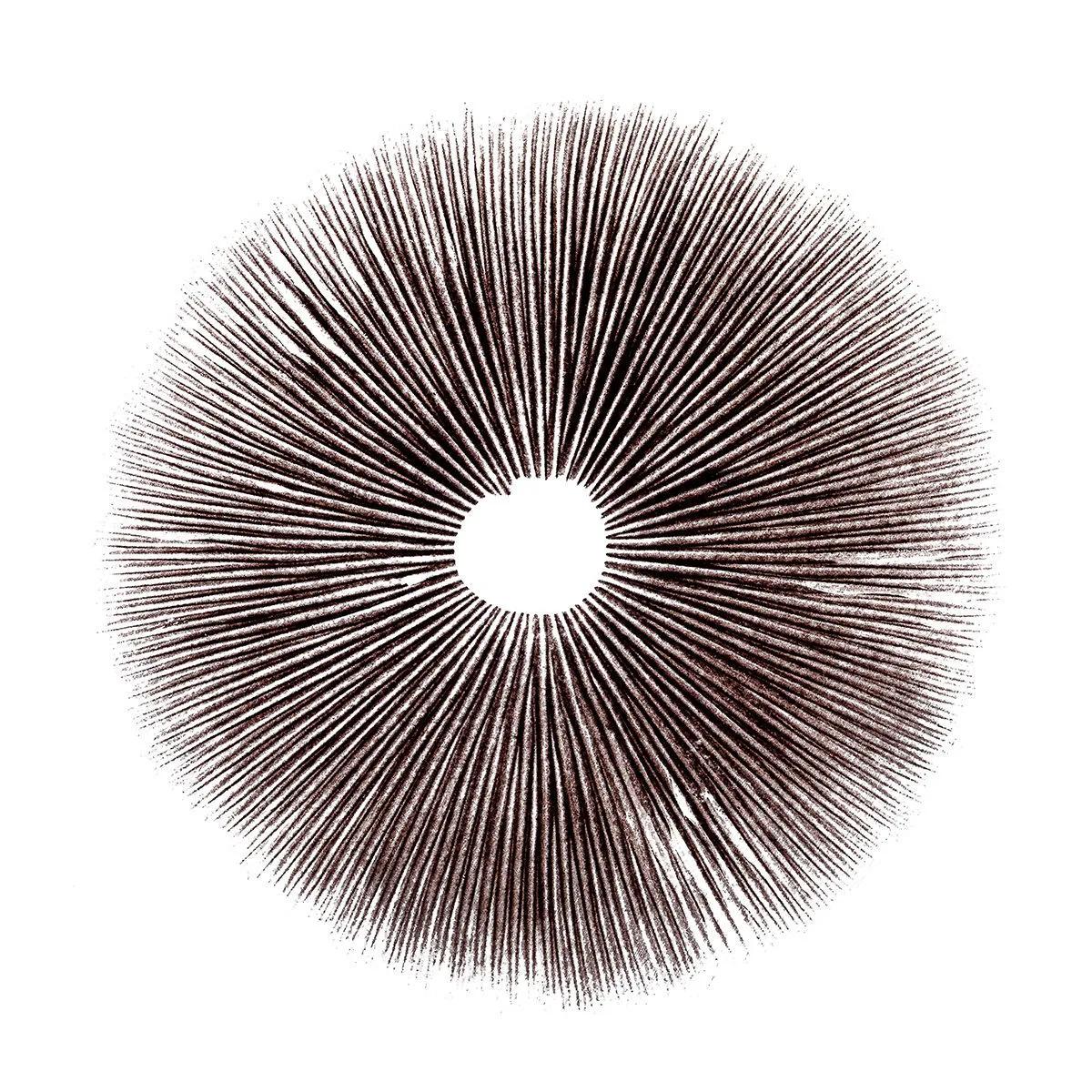
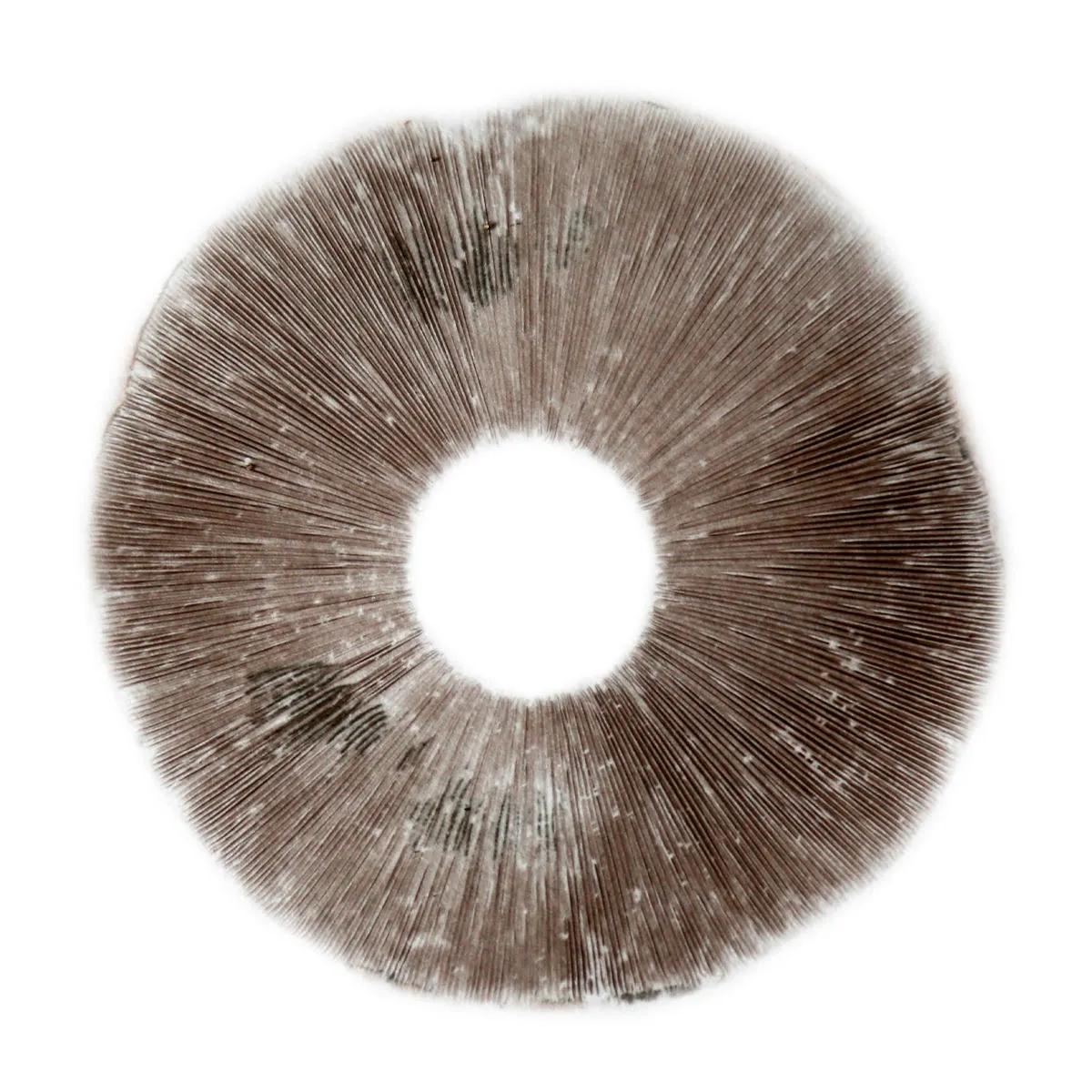
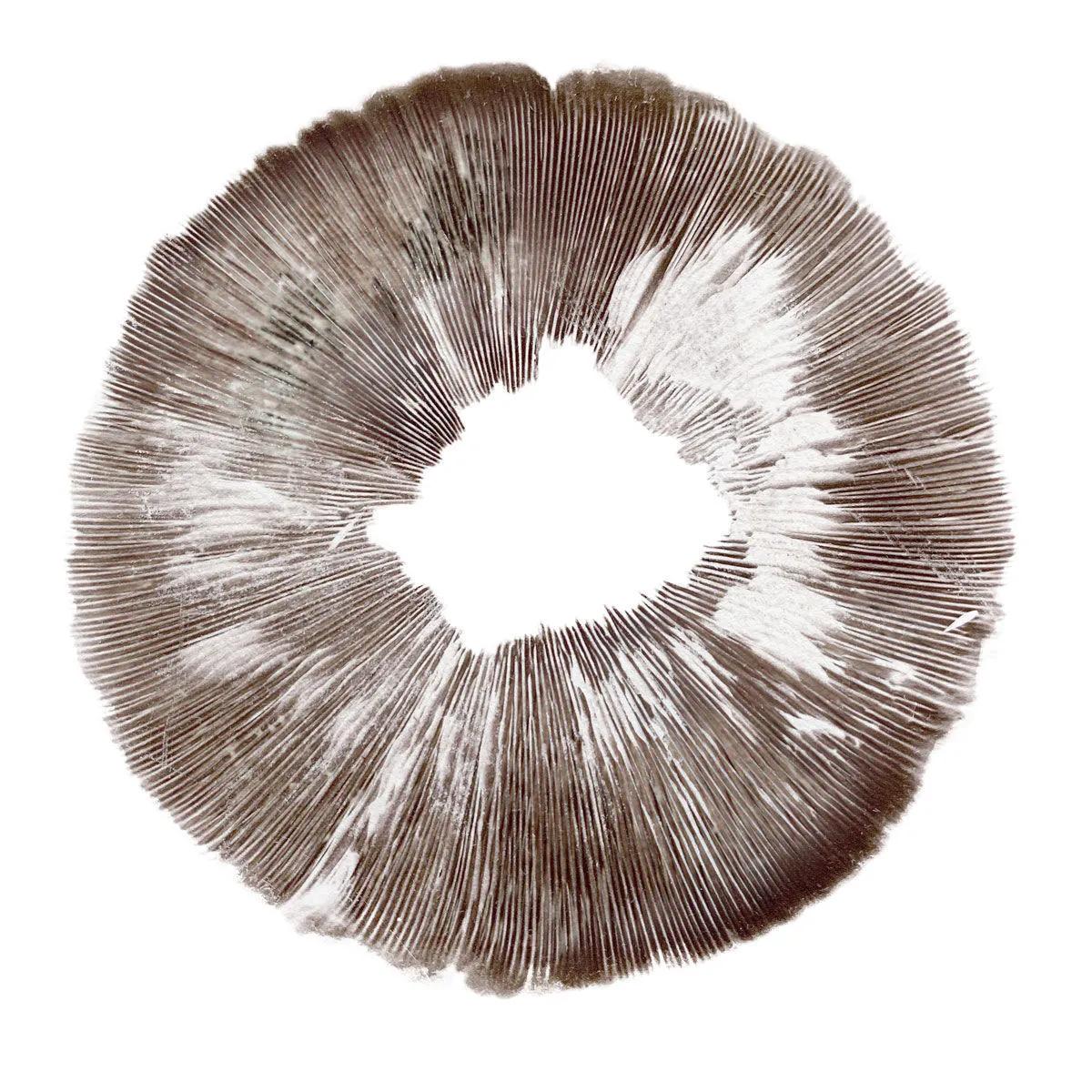
The print itself has a tactile quality worth mentioning — when you open the foil, you can see the spore deposit as a dark purplish-brown pattern, often showing the gill structure of the original cap. It's genuinely beautiful in a nerdy, mycological way. The density of the deposit tells you a lot about the print quality before you even reach for a microscope.
Spore prints are remarkably durable when stored correctly. Keep the print sealed in its original foil inside an airtight bag or container. Store at room temperature or, better yet, in the fridge at 2–8°C. Avoid moisture — that's the main enemy. A desiccant packet in the storage container is a smart addition. Kept this way, your Amazonas spore print should remain viable for years. We've personally examined prints stored for over 5 years that still produced clear, well-defined spore samples under 400x magnification.
Psilocybe cubensis is one of the most widely studied species in the Psilocybe genus. According to a 2022 study published in the International Journal of Molecular Sciences, renewed interest in psilocybin and Psilocybe spp. has emerged due to increasing evidence of therapeutic potential (PMC9764976). A 2025 paper exploring cubensis strains noted that preclinical studies have shown more pronounced effects from psilocybin extracts than from isolated psilocin or psilocybin alone, supporting the idea of a synergistic relationship between the various compounds present in the mushroom (PMC11856550).
Research into the therapeutic applications of psilocybin continues to expand. According to a 2024 review in contemporary psychology, clinical trials using psilocybin for cancer-related psychological distress demonstrated rapid and sustained improvements in mood and existential wellbeing (PMC12565330). A separate study explored psilocybin's potential as a treatment for smoking cessation, with participants undergoing cognitive behavioural therapy alongside psilocybin administration (PMC6007659). These findings are driving a wave of mycological research interest — and having access to verified, well-sourced spore specimens is where that research starts.
A spore print is a deposit of mushroom spores collected by placing a mature cap gill-side down on a surface (usually foil or paper) and allowing the spores to drop naturally over several hours. The result is a concentrated pattern of millions of spores that mirrors the gill structure. It's the most stable format for long-term spore storage.
Typically 3–5 syringes of 10ml each, depending on the density of the deposit and how much you scrape per syringe. You only need a tiny amount of spore material per syringe — a few square millimetres of print is plenty. Don't use the whole thing at once.
Stored cool, dry, and sealed — easily 2–5 years, often longer. We've seen prints remain viable beyond 5 years when kept in the fridge with a desiccant packet. The key enemies are moisture, heat, and direct sunlight.
Both are Psilocybe cubensis strains, but Amazonas originates from subtropical South American environments and is considerably harder to find commercially. Golden Teacher is the most widely available cubensis strain globally. For microscopy, comparing spore morphology across strains like these is a standard taxonomy exercise.
A compound microscope at 400x magnification or higher is standard for spore identification. You'll also need glass slides, coverslips, sterile water to rehydrate the spores, and ideally a staining solution like cotton blue in lactophenol for better contrast. A still-air box helps keep your preparation clean.
Mycelium is the vegetative body of a fungus — a network of fine, thread-like cells called hyphae that grow through a substrate. Think of it as the root system of a mushroom. The fruiting body (the mushroom itself) is just the reproductive structure; the mycelium is where the organism actually lives and feeds.
Yes, room temperature works if the environment is dry and dark. Refrigeration (2–8°C) extends viability significantly though, so if you're planning to keep the print for more than a few months, the fridge is the better option. Just make sure it's sealed to prevent moisture from condensation.
Last updated: April 2026
Medical disclaimer. This content is for informational purposes only and does not constitute medical advice. Consult a qualified healthcare provider before use of any substance.