Spore Prints
We'll only email you about this product — no marketing.
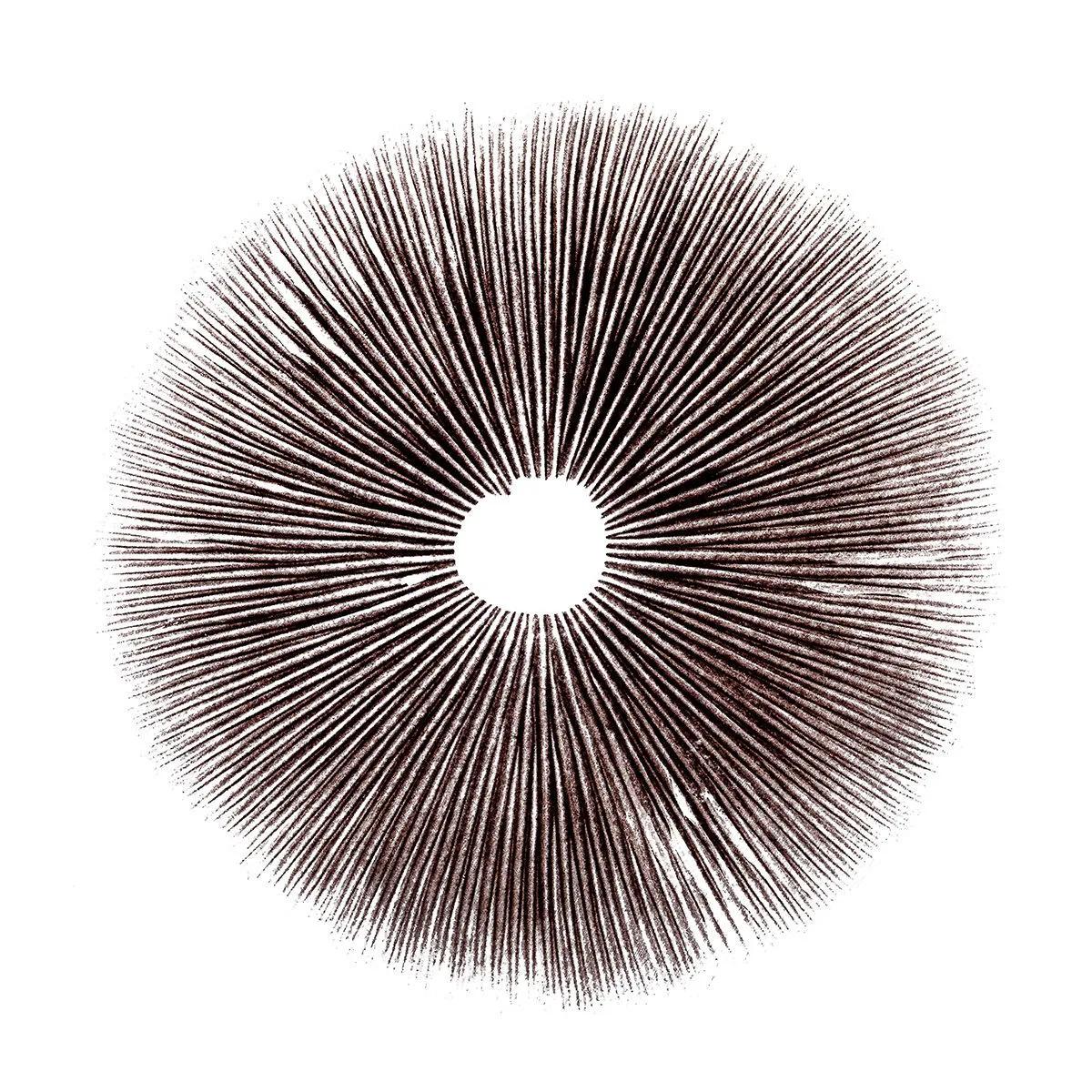
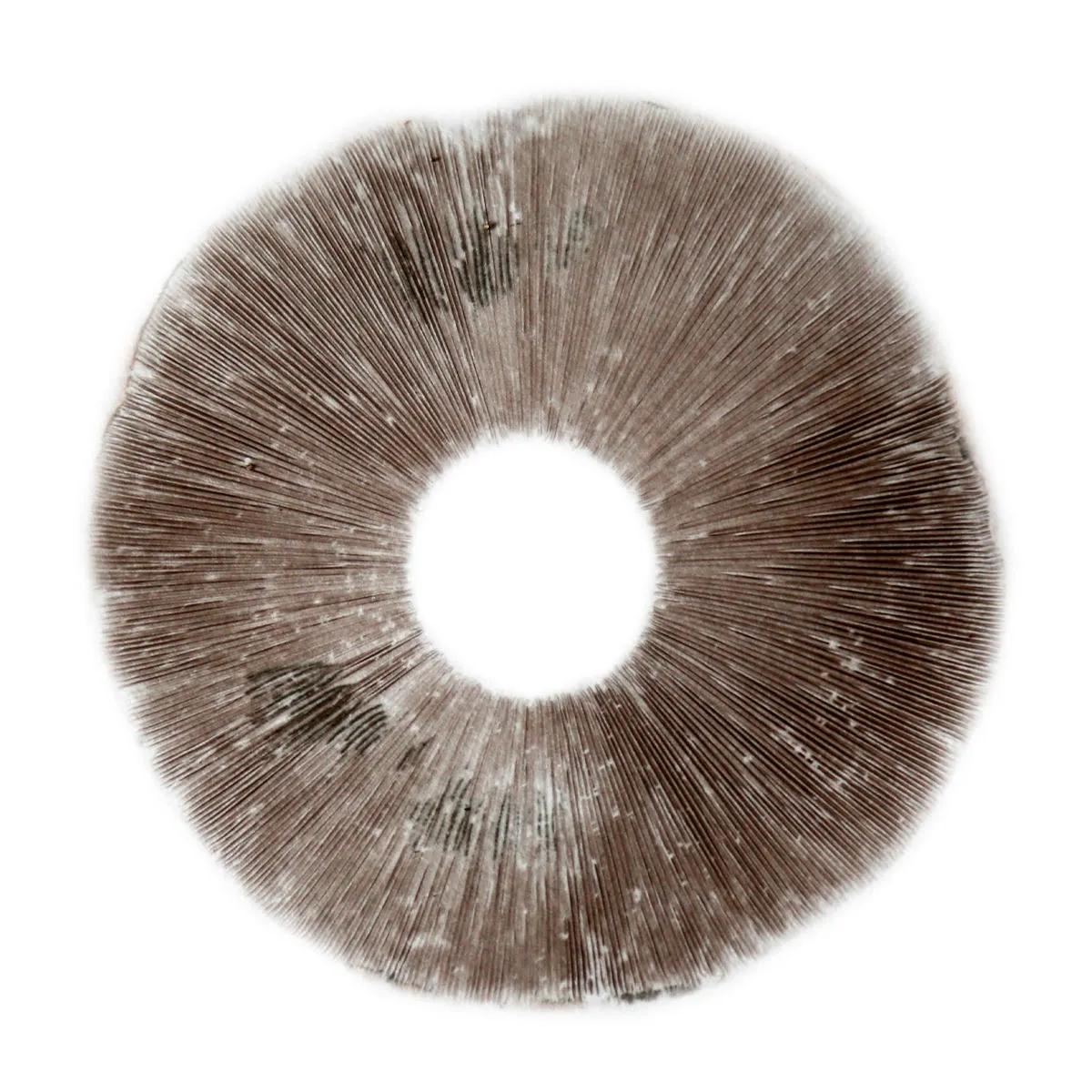
A Golden Teacher spore print is a laboratory-produced deposit of Psilocybe cubensis spores on foil, used for microscopy research and as a starting point for making your own spore syringes. This particular print is produced under sterile lab conditions, sealed to prevent contamination, and holds viable spores for up to two years when stored properly. If you've worked with syringes before and want to step up your mycology game, prints give you more control over the process — and more material to work with.
A spore print is the raw source material — millions of spores deposited directly onto a sterile surface. One print can produce multiple spore syringes, which makes it more economical if you're doing ongoing microscopy work or cultivation research. Syringes are convenient and ready to use straight away, but prints give you flexibility. You decide how many syringes to make, how concentrated to make them, and you can store the unused portion of the print for later.
We'd pick a print over a syringe if you're planning more than one project. If you just want to inoculate a single grow kit and get on with it, a ready-made syringe saves you a step. But if you're the type who likes to understand the full process — from spore to mycelium to fruit — this is where you start.
Golden Teacher is the most widely cultivated Psilocybe cubensis strain on the planet, and there's a reason for that. It's forgiving with growing conditions, colonises substrate reliably, and produces generous flushes of medium-to-large mushrooms with distinctive golden caps. For microscopy, the spores are large and clearly defined under magnification — good news if you're building identification skills.
According to research published in Molecules, a renewed interest in psilocybin and Psilocybe spp. has emerged due to increasing evidence of its pharmacological significance (PMC9764976). And a 2025 study in Horticulturae noted that the therapeutic potential of psilocybin-producing mushrooms has revitalised both research and commercial interest in their cultivation (PMC12194638). Golden Teacher sits right at the centre of that renewed attention — it's the strain most researchers and cultivators reach for first.
One honest limitation: Golden Teacher isn't the most potent cubensis variety out there. Strains like Penis Envy or APE produce higher psilocybin concentrations per gram of dried fruit. But GT compensates with reliability and ease of cultivation — fewer aborts, faster colonisation, and a wider tolerance for temperature fluctuations. For most people, that trade-off is well worth it.
We've been selling mushroom cultivation supplies since 1999, and the number one question we get about spore prints is: "How do I know the spores are still good?" The answer is straightforward — if you store the print in a cool, dark, dry place (a sealed bag in the fridge works brilliantly), viable spores last up to 24 months. After that, germination rates drop but don't disappear entirely. We've seen prints older than 2 years still produce healthy mycelium, though we wouldn't bank on it.
The second most common question: "Can I see the spores?" Yes. Hold the foil up to the light and you'll see a dark purple-brown deposit. That's your spore mass. If the print looks bare or patchy, something went wrong in production — but these lab-grade prints are dense and uniform. You can feel a very slight texture on the foil surface where the spores sit. It's subtle, but it's there.
| Specification | Detail |
|---|---|
| Species | Psilocybe cubensis |
| Strain | Golden Teacher |
| Format | Spore print on sterile foil |
| Production | Laboratory conditions, contamination-free |
| Shelf life | Up to 2 years (stored correctly) |
| Storage | Cool, dark, dry place — ideally 2-8°C |
| SKU | SH0032 |
| Syringes per print | Approximately 3-5 (10ml each) |
Complete your setup: pair this Golden Teacher spore print with a Psilocybe cubensis grow kit for a straightforward path from spore to harvest. If you'd rather skip the syringe-making step, we also carry ready-made Golden Teacher spore syringes — just inoculate and go. For sterile work, grab some nitrile gloves and a still air box or laminar flow hood.
This is the core skill that separates casual growers from people who actually understand what they're doing. A spore syringe is simply spores suspended in sterile water — and making one from a print takes about 15 minutes once you've got your technique down.
One print typically yields 3 to 5 syringes of 10ml each, depending on how dense the spore deposit is and how concentrated you make each syringe. That's a lot of microscopy slides — or a lot of grain jars, depending on your intentions.
Spore prints are more shelf-stable than syringes, which is one of their main advantages. A syringe should be used within 6-12 months; a print holds for up to 24 months. The key factors are darkness, dryness, and cool temperatures. A sealed ziplock bag inside a fridge (not freezer) is the gold standard. Keep it away from anything damp, and don't open the seal until you're ready to work in a sterile environment.
If you leave a print on your desk in direct sunlight for a week, you'll still have spores — but you'll also have a much higher contamination risk and reduced viability. Treat it like the lab product it is.
Psilocybe cubensis has become the most studied psilocybin-producing species in modern research. According to a study in Psychopharmacology, preclinical research has shown more pronounced effects from psilocybin-containing mushroom extracts than from isolated psilocin or psilocybin alone, supporting what mycologists call the "entourage effect" in fungi (PMC11856550).
Research into the therapeutic potential of psilocybin continues to expand. According to a 2025 review in Cureus, studies using psilocybin for cancer-related distress have demonstrated rapid and sustained improvements in mood and anxiety measures (PMC12565330). A separate review noted psilocybin's potential in smoking cessation research, where administration was paired with cognitive behavioural therapy in a structured clinical setting (PMC6007659).
None of this means a spore print is medicine — it's a research and cultivation tool. But the science explains why Golden Teacher remains the most requested strain we carry.
| Feature | Spore Print | Spore Syringe | Spore Vial |
|---|---|---|---|
| Ready to use | No — requires syringe preparation | Yes — inject directly | Yes — inject directly |
| Shelf life | Up to 24 months | 6-12 months | 6-12 months |
| Yield | 3-5 syringes per print | 1 syringe (10ml) | 1 vial (10ml) |
| Sterile technique needed | Yes — critical | Basic hygiene | Basic hygiene |
| Best for | Experienced cultivators, bulk projects | Single inoculations, beginners | Single inoculations, beginners |
| Cost per inoculation | Lower (multiple uses) | Higher (single use) | Higher (single use) |
A spore print is a deposit of mushroom spores dropped onto a sterile surface — in this case, aluminium foil under laboratory conditions. When a mature mushroom cap is placed gill-side down on a clean surface, it releases millions of spores in a pattern that mirrors the gill structure. This print serves as the raw genetic material for making spore syringes or for microscopy study.
Typically 3 to 5 syringes of 10ml each, depending on spore density and how concentrated you make each syringe. A single print contains millions of spores, so you've got plenty of material to work with across multiple projects.
Seal it in a clean ziplock bag and place it in the fridge at 2-8°C. Keep it away from moisture, light, and heat. Stored this way, the spores remain viable for up to 2 years. Don't freeze it — ice crystals can damage spore cell walls.
A laminar flow hood is ideal but not strictly necessary. A still air box (SAB) — essentially a large plastic tub with arm holes — works well for home mycologists. The critical thing is minimising airborne contaminants during the transfer. Gloves, isopropyl alcohol, and a clean workspace go a long way.
A syringe is spores already suspended in sterile water, ready to inject into substrate. A print is the dry source material you use to make syringes yourself. Prints last longer (up to 24 months vs. 6-12 for syringes) and yield multiple syringes, but require sterile technique to prepare.
Not directly, no. You'll need to make a spore syringe first, then use that syringe to inoculate your substrate or grow kit. The print-to-syringe process takes about 15 minutes — see our step-by-step guide above.
You can't tell viability by eye alone. A good print shows a dense, dark purple-brown deposit on the foil. If it's been stored correctly (cool, dark, dry, sealed), spores should remain viable for up to 2 years. The only definitive test is inoculating substrate and watching for mycelium growth within 7-14 days.
Mycelium is the vegetative body of a fungus — a network of thread-like cells called hyphae that grows through substrate, breaking down nutrients. Think of it as the root system of the mushroom. When spores germinate, they produce mycelium first; mushroom fruit bodies emerge later from a fully colonised mycelium network.
Last updated: April 2026
Medical disclaimer. This content is for informational purposes only and does not constitute medical advice. Consult a qualified healthcare provider before use of any substance.