Spore Syringes
by Mondo
The Mondo Spore Syringe Psilocybe cubensis Hawaii is a ready-to-use inoculation tool containing spores of the Hawaiian PES (PESH) strain — a fast-colonising Psilocybe cubensis variety known for producing heavy, oversized fruit bodies with caps measuring 25–75mm across. If you want massive flushes from a strain that colonises substrate quickly, this is the syringe to reach for.
Mondo has built a solid reputation among European cultivators for clean, viable spore syringes, and the Hawaii strain is one of their most popular offerings for good reason. It's vigorous, forgiving, and rewards even modest growing setups with dense canopies of thick-stemmed mushrooms. We've stocked Mondo syringes for years and the consistency batch to batch is genuinely impressive — you rarely see a dud.
The Psilocybe cubensis Hawaii strain (Hawaiian PES / PESH) colonises faster than most cubensis varieties we carry. Where something like Ecuador or Golden Teacher might take its time working through a jar of grain, Hawaii tends to show visible mycelium growth within days of inoculation, and full colonisation often wraps up noticeably sooner. That speed matters — the less time your substrate sits partially colonised, the smaller the window for contaminants to take hold.
Then there's the fruit bodies themselves. Hawaii produces big, meaty mushrooms. We're talking thick stems and caps that spread 25–75mm wide — some growers report individual specimens that look almost comically large next to other cubensis strains. The flushes tend to be heavy too, not just in individual mushroom size but in overall yield per flush. If you're the type who wants to see your substrate absolutely covered in pins, this strain delivers.
The honest limitation? Big fruit bodies sometimes mean fewer individual mushrooms per flush compared to strains that produce loads of smaller ones (like B+). You get weight, but not always count. For most growers that's a worthwhile trade-off, but it's worth knowing upfront.
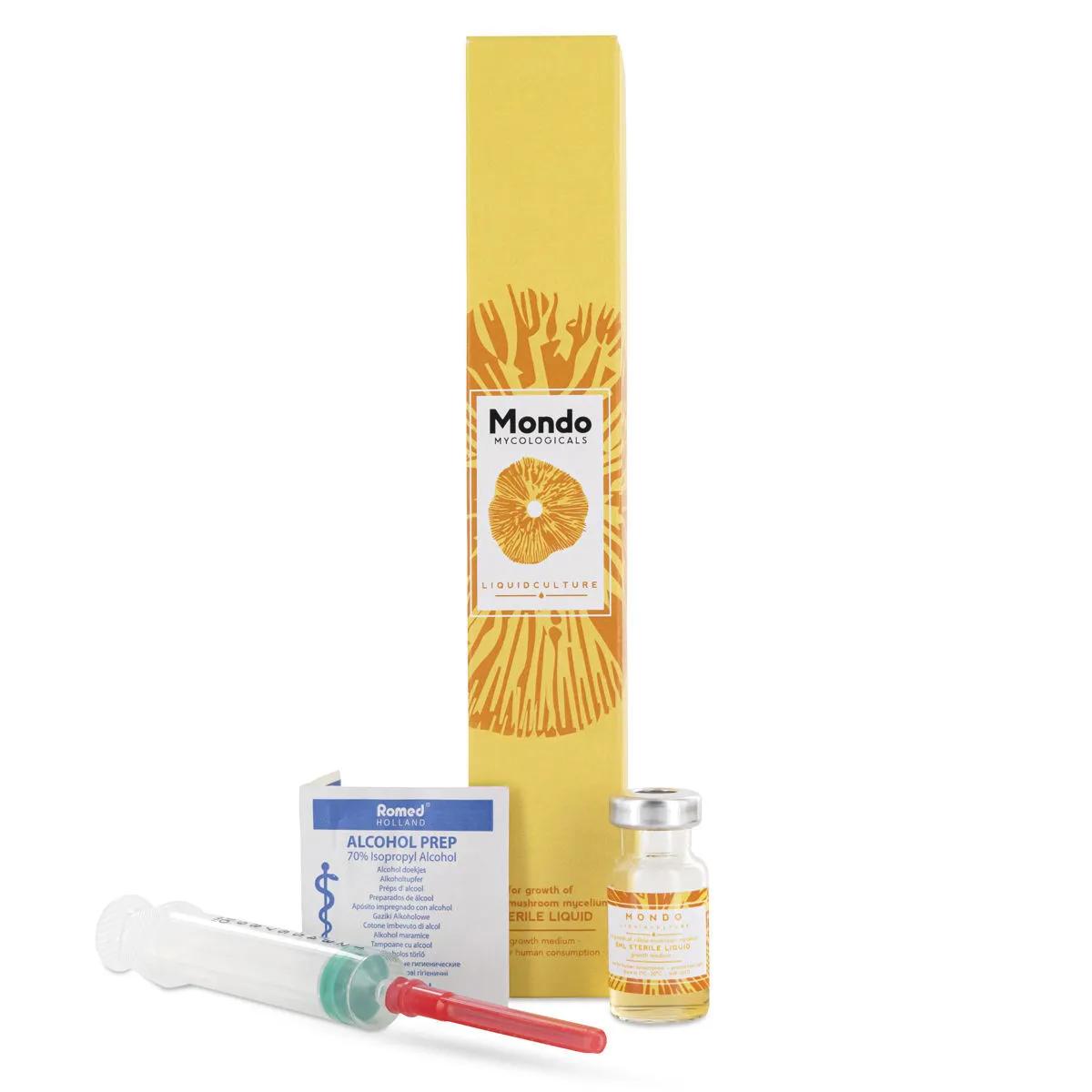
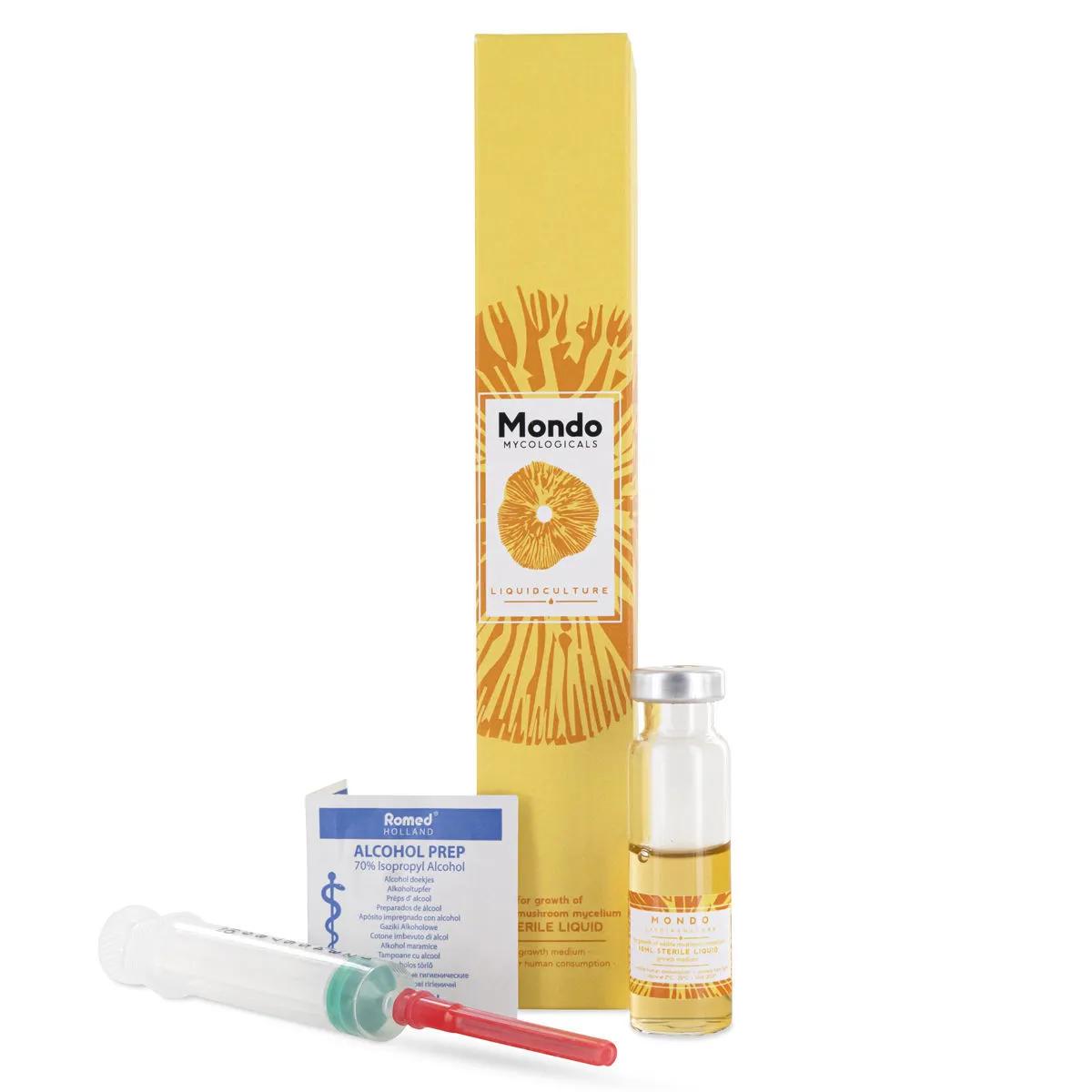
Each Mondo Spore Syringe Psilocybe cubensis Hawaii includes everything you need for inoculation — no hunting around for extras.
| Component | Detail |
|---|---|
| Spore syringe | 20ml syringe containing Psilocybe cubensis Hawaii spores in sterile solution |
| Needle | Sterile hypodermic needle, individually wrapped |
| Alcohol swab | For sterilising injection ports before inoculation |
| Strain | Psilocybe cubensis Hawaii (Hawaiian PES / PESH) |
| SKU | SH0022 |
| Producer | Mondo — Netherlands |
| Recommended substrate | Sterilised rye grain |
| Inoculation rate | 3–5ml per litre of substrate |
| Storage | Refrigerate at 2–8°C — viable for months when stored properly |
We've been shipping Mondo spore syringes from our Amsterdam shop since they first appeared in the European market, and the Hawaii strain consistently gets reordered more than most. The feedback pattern is predictable: first-time growers pick it because they've read it's forgiving, then come back because the yields impressed them. Experienced cultivators grab it because colonisation speed means faster turnaround between grows.
One thing we notice people underestimate: substrate quality. Mondo recommends sterilised rye for the Hawaii strain, and we'd echo that strongly. We've seen growers try brown rice flour cakes, popcorn kernels, wild bird seed — and while Hawaii will colonise most of them eventually, rye gives you the best combination of nutrition, moisture retention, and grain size for this particular strain. The mycelium grips rye kernels aggressively and the colonisation front moves fast and even. Switch to rye and you'll feel the difference in your first jar.
The other thing worth mentioning: needle temperature. If you're flame-sterilising your needle between jars (and you should be), let it cool completely before injecting into the next port. We've heard from customers who melted the plastic around the needle attachment by rushing this step. Thirty seconds of patience saves you a ruined syringe.
Inoculating grain substrate with a spore syringe is straightforward, but sterile technique separates a successful grow from a mouldy mess. Follow each step carefully.
Mondo produces spores in multiple formats, and each has its place. Here's how they compare for the Hawaii strain specifically.
| Format | Volume | Best for | Shelf life | Ease of use |
|---|---|---|---|---|
| Spore syringe (this product) | 20ml | Direct grain inoculation — the most common method | Months refrigerated | Highest — ready to inject out of the box |
| Spore vial | 10ml | Agar work and liquid culture starters | Up to 2 years refrigerated | Moderate — requires transfer technique |
| Spore print | N/A (dry deposit) | Long-term storage and trading | Years when stored dry | Lowest — must create your own syringe or agar transfer |
For most growers — especially if this is your first or second cultivation project — the spore syringe is the right call. No extra steps, no additional equipment beyond what's included. You shake, you inject, you wait. The Mondo Spore Vial is a better pick if you're working with agar plates or want to build a liquid culture library, but that's a more advanced workflow.
Complete your setup: pair this Mondo Spore Syringe Psilocybe cubensis Hawaii with sterilised rye grain substrate bags for the fastest colonisation. A still-air box and isopropyl alcohol (70%) are the two cheapest upgrades that make the biggest difference to your success rate. If you'd rather skip the inoculation step entirely, Mondo also produces ready-to-fruit grow kits with fully colonised substrate — just add water and wait.
Here's something we tell every customer who walks into the shop asking about spore syringes: the strain you pick matters less than how clean your process is. We've seen people lose entire batches of Hawaii — one of the most vigorous colonisers available — because they skipped the alcohol wipe or inoculated in a kitchen with the extractor fan running. Contaminants like Trichoderma and cobweb mould don't care how fast your mycelium grows if they get a head start.
The Hawaii strain does give you an advantage here. Faster colonisation means the mycelium claims territory before competitors can establish. But that advantage evaporates if you introduce thousands of airborne spores during inoculation. A still-air box — literally a plastic storage tub with two arm holes — reduces contamination rates dramatically. We've watched customers go from 50% jar loss to near-zero just by adding that one piece of equipment.
The other failure mode we see regularly: temperature. Hawaii likes 24–27°C during colonisation. Below 20°C and growth stalls. Above 30°C and you're creating ideal conditions for bacterial contamination while stressing the mycelium. A simple seedling heat mat with a thermostat keeps things consistent without any guesswork.
At the recommended rate of 3–5ml per litre of substrate, a 20ml syringe covers 4–6 one-litre jars. Use the lower end (3ml) if your sterile technique is solid and the higher end (5ml) if you want faster colonisation or are working in less-than-ideal conditions.
Refrigerate at 2–8°C in a clean ziplock bag. Don't freeze it — ice crystals can damage spores. Stored properly, Mondo spore syringes remain viable for several months. Always shake well before use, as spores clump together during storage.
Sterilised rye grain is the recommended substrate and the one we'd pick every time for this strain. The kernel size and moisture content suit Hawaii's aggressive colonisation style. Brown rice flour (BRF) cakes work but colonise slower and produce smaller yields.
With Hawaii, you'll typically see white mycelium patches forming at the injection sites within 5–10 days at 24–27°C. Full colonisation of a one-litre rye jar usually takes 2–4 weeks. If you see green, black, or bright orange growth, that's contamination — isolate and discard that jar immediately.
Yes — it's one of the best choices for a first grow. Fast colonisation reduces the contamination window, and the strain is forgiving of minor temperature fluctuations. The main thing to get right is sterile technique during inoculation. If you can manage that, Hawaii does the rest with minimal fuss.
Completely different species. Hawaiian PES (this product) is Psilocybe cubensis — the most commonly cultivated species, grown on grain substrate. Copelandia Hawaiian is Panaeolus cyanescens, a different species that requires dung-based substrate and more advanced growing conditions. Don't confuse the two when ordering.
You can, but a spore vial is better suited for agar work because the solution is more concentrated and the smaller volume gives you finer control. If a syringe is all you have, drop 1–2ml onto the agar surface and spread gently. Expect multi-spore germination — you'll need to isolate sectors for clean cultures.
You injected before the needle cooled. Heat transfers from the metal into the plastic luer-lock fitting. Wait at least 30 seconds after flaming — the needle should be cool to the touch before it goes anywhere near the syringe body or the injection port.
Last updated: April 2026
Medical disclaimer. This content is for informational purposes only and does not constitute medical advice. Consult a qualified healthcare provider before use of any substance.