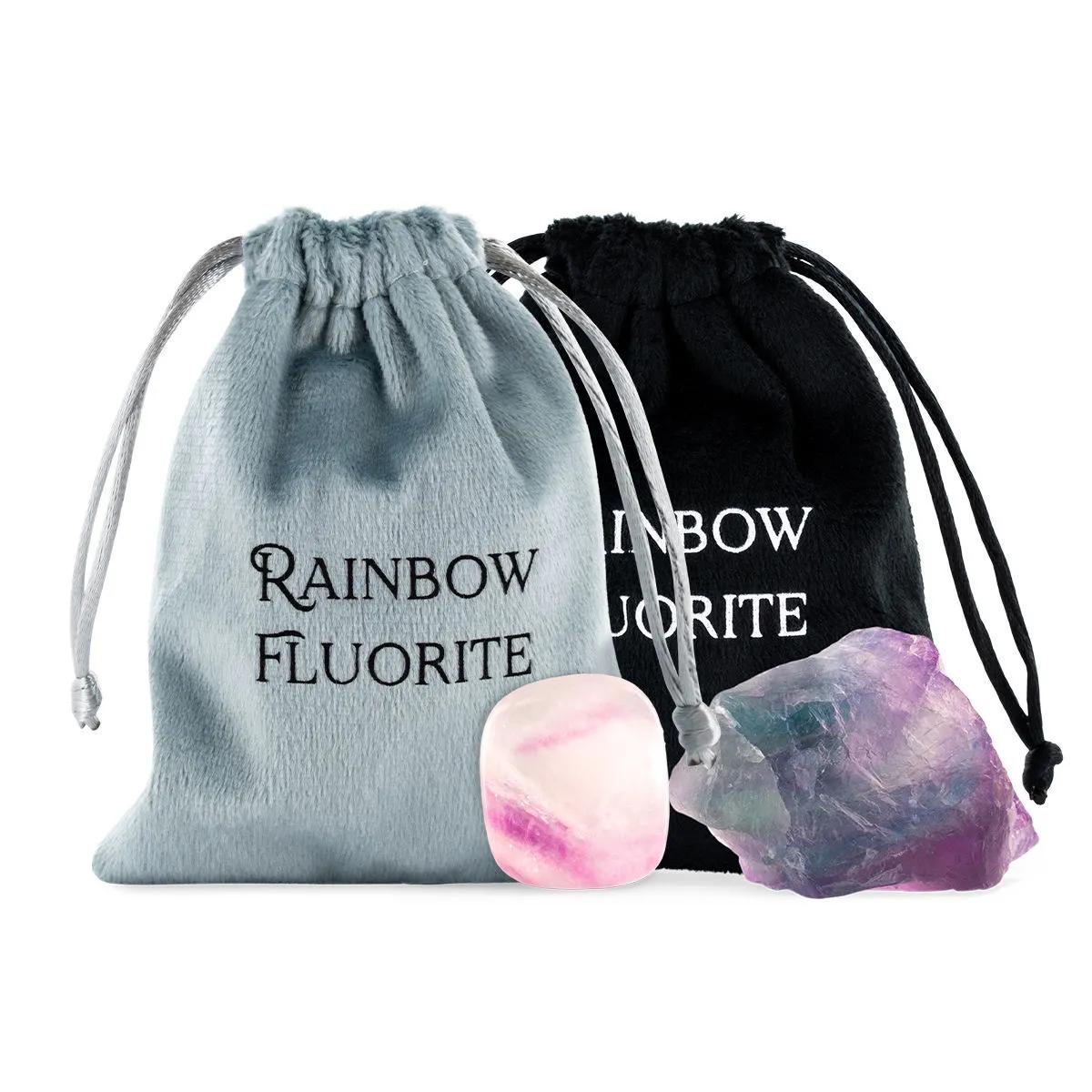
Rainbow Fluorite is a calcium fluoride crystal that displays multiple colour bands — typically purple, green, and white — within a single specimen. Also known as fluorspar, it's one of the most recognisable collector stones on the shelf, and one of the few crystals where every piece looks genuinely different from the next. We've been stocking crystals at the Amsterdam shop for years, and Rainbow Fluorite is the one people pick up, hold to the light, and almost always take home.
Why Rainbow Fluorite is worth picking up
If you're starting a crystal collection or adding to one, Rainbow Fluorite gives you the most visual variety per stone. The banding happens because fluorite forms in layers, and trace elements like manganese, uranium, and thorium get incorporated into the crystal structure during growth — that's where the purples and greens come from. Hold a piece up to a window and you'll see the bands shift depending on the angle.
It's nicknamed the "genius stone" in crystal circles, and is traditionally associated with focus, clear thinking, and creative work. We're not going to tell you it'll fix your deadlines — but plenty of customers keep one on their desk and swear by the placebo, the reminder, or both. Either way, it looks good next to a monitor.
Natural or polished — which one to pick
Both variants are the same stone with different finishes. The choice comes down to whether you want the raw look or the smooth one.
| Variant | SKU | Best for |
|---|---|---|
| Natural | SM0769 | Raw, unpolished surface with visible crystal facets. Better for display shelves, altar setups, and collectors who want the stone as it came out of the ground. |
| Polished | SM0770 | Smooth, tumbled finish with deeper colour saturation. Better for pocket carrying, meditation, or anyone who likes a tactile stone to fidget with. |
If you're undecided: polished is the safer pick for a first crystal because the colours pop more under indoor light. Natural rewards a sunnier window — though as we'll get to, direct sun is also what kills the colour over time.
Specifications at a glance
| Mineral name | Fluorite (calcium fluoride, CaF₂) |
| Also known as | Fluorspar, "genius stone" |
| Size | 3–5 cm per piece |
| Colours | White, purple, green (banded) |
| Origin | China, Russia, South Africa, USA |
| Mohs hardness | 4 (relatively soft — handle with care) |
| Finish options | Natural or polished |
| Cleaning | Soft cloth, a little water |
How to look after it
Fluorite is softer than quartz — a 4 on the Mohs scale — so it scratches and chips more easily than you'd expect from a stone that looks this solid. A few practical pointers from behind the counter:
- Keep it out of direct sunlight. UV exposure fades the purple and green bands over months. A bright desk is fine; a south-facing windowsill is not.
- Clean it with a soft cloth and a small amount of water. Skip the salt baths and ultrasonic cleaners — fluorite doesn't like either.
- Store it separately from harder stones (quartz, agate, tiger's eye). Throw it in a pouch with those and you'll get surface scratches.
- If you're carrying the polished version in a pocket, keep it away from keys. Same scratch issue.
- Pick it up and actually look at it now and then. Sounds obvious — but a crystal sitting forgotten in a drawer isn't doing much for anyone.
Honest limitations
Two things worth being straight about. First, no two pieces look identical — the banding pattern, the dominant colour, and the size within the 3–5 cm range will vary. If you want a specific colour balance (more purple, more green), you'll have to take what arrives. Second, metaphysical claims about focus, creativity, and "calming clear thinking" are traditional associations, not scientifically established effects. Plenty of people find ritual and intention useful; we just won't pretend a rock has been clinically validated.
Pairs well with a small wooden or brass display stand to show off the banding, and works nicely alongside clear quartz or amethyst points if you're building a collection. For a workspace setup, a piece of black tourmaline on the opposite side of the desk is a classic combination.
Frequently Asked Questions
What is Rainbow Fluorite?
Rainbow Fluorite is a calcium fluoride crystal (mineral name: fluorite, also called fluorspar) that contains multiple colour bands in a single specimen — usually purple, green, and white. The colour variation comes from trace elements incorporated into the crystal structure during formation.
What is Rainbow Fluorite good for?
Traditionally, Rainbow Fluorite is associated with focus, clear thinking, and creative inspiration — which is why it's nicknamed the "genius stone." Many people keep a piece on their desk or beside their bed. These are cultural associations, not medical claims.
Why does fluorite have so many colours?
Fluorite forms in layers, and trace elements like manganese, uranium, and thorium get incorporated into the crystal structure as it grows. Different elements produce different colours — that's why a single piece can show purple, green, and white bands together.
Will Rainbow Fluorite fade in sunlight?
Yes. Prolonged UV exposure fades the purple and green bands over time. Keep your crystal away from direct sunlight — a shaded desk, shelf, or bedside table is ideal. Indoor lighting won't cause fading.
How do I clean my Rainbow Fluorite?
Use a soft cloth with a small amount of water. Avoid salt water, ultrasonic cleaners, and harsh chemicals. Fluorite is a 4 on the Mohs hardness scale, so it's softer than quartz and scratches more easily — gentle handling is the rule.
What's the difference between natural and polished Rainbow Fluorite?
Same stone, different finish. Natural has a raw, unpolished surface with visible crystal facets — better for display. Polished is smooth and tumbled with deeper colour saturation — better for carrying or holding during meditation.
Last updated: April 2026