
Ginger Germ-Reduced Powder Organic
Digestion
by Holy Flavour
Organic Ginger Germ-Reduced Powder
Organic ginger germ-reduced powder is a finely milled form of Zingiber officinale root that delivers the warmth and bioactive compounds of fresh ginger in a convenient, shelf-stable format. The "germ-reduced" process lowers the microbial load without stripping out the good stuff — gingerols, zingerone, and beta-carotene all stay intact. What you do lose is a bit of that face-melting spiciness. The result is a slightly sweeter, more approachable ginger powder that still packs a proper punch in teas, golden milk, and cooking.
Why Germ-Reduced Organic Ginger Powder?
Ginger has been a cornerstone of herbal practices for thousands of years, and for good reason — the rhizome produces a cocktail of bioactive compounds that researchers keep circling back to. Gingerols are the headline act: they're responsible for that characteristic heat and have been the focus of dozens of clinical studies. Zingerone, which forms when gingerols are cooked, contributes antioxidant activity. Then there are curcuminoids and high amounts of beta-carotene rounding things out.
So why germ-reduced? Standard dried ginger can carry a high microbial count simply because of how it's harvested and dried — it grows underground, after all. Germ reduction brings that count down to food-safe levels through a controlled process (usually steam treatment) that doesn't involve irradiation or chemical fumigation. You get cleaner powder without sacrificing the phytochemical profile. And that slightly sweeter flavour profile makes it genuinely more pleasant in drinks where raw ginger would have you wincing.
We've had this on the shelf for a while now, and the honest feedback from behind the counter: people who found regular ginger powder too aggressive actually stick with this one. If you already love that sinus-clearing burn, you might find it a touch mild. But for daily use in teas and smoothies, the gentler profile is a real advantage.
What the Research Says About Ginger Powder
Ginger is one of the most studied spices on the planet, and the findings keep stacking up. Here's what the science actually shows — no hand-waving, just cited data.
According to a study published in PMC (Effect of Ginger Powder Supplementation), ginger intake compared to placebo resulted in a significant decrease in fasting blood sugar (FBS) and HOMA-IR, a marker of insulin resistance. According to research in the same area (Efficacy of Ginger Supplementation), 1.8g of ginger powder taken daily for 8 weeks led to reduced FBS, triglyceride, and total cholesterol concentrations.
A complete systematic review (Ginger on Human Health, 2020) examined studies on nausea and vomiting in pregnancy, finding consistent positive outcomes across multiple trials. And according to the reference text The Amazing and Mighty Ginger (NCBI Bookshelf), administration of standardised ginger extract decreased aortic atherosclerotic lesion areas and plasma triglycerides in animal models.
On the inflammation front, according to research published in PMC (Effect of Ginger Powder on Nitric Oxide), ginger hexane extract significantly inhibited excessive production of nitric oxide (NO) and related protein expression. A separate study (The Influence of Ginger on Human Health) demonstrated a statistically significant negative correlation between ginger usage and certain health markers.
That's 6 separate cited findings. Not bad for a kitchen spice.
Taste and Texture — From Our Counter
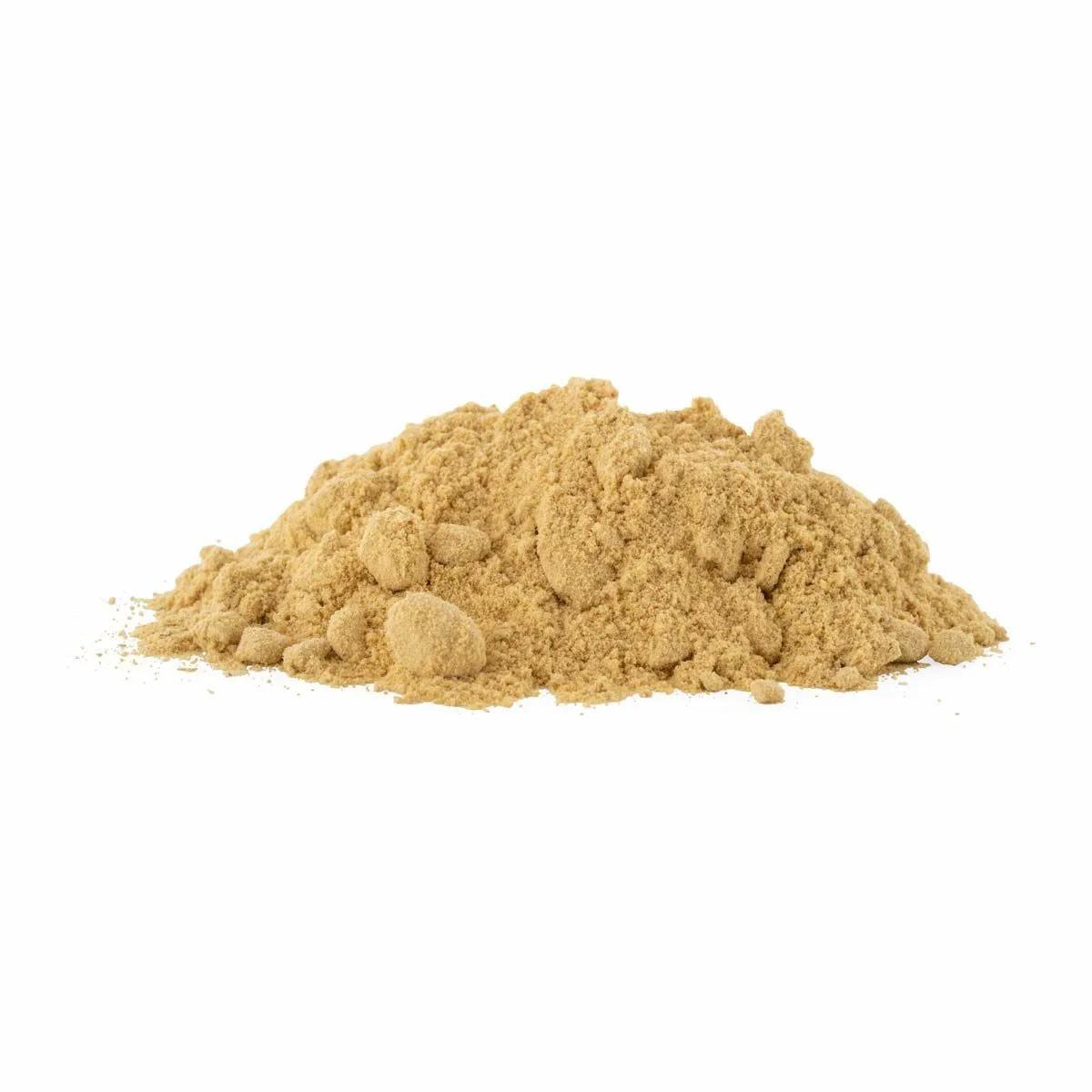
Open the bag and the first thing you notice is the aroma: warm, peppery, slightly citrusy, but without that nasal-clearing sharpness you get from a fresh knob of ginger. The powder itself is fine-milled and pale yellow-beige — no lumps, dissolves reasonably well in hot water though you'll want to stir properly. In cold liquids it tends to settle, so hot drinks are the way to go.
Taste-wise, there's a noticeable sweetness upfront before the warmth builds. It won't make your eyes water the way raw ginger powder can. If you're adding it to chai or golden milk, you'll get that ginger backbone without it bulldozing every other flavour in the cup. For cooking — stir-fries, curries, soups — it works well, though dedicated cooks might prefer fresh root for dishes where ginger is the star rather than a supporting player.
The one honest limitation: if you specifically want that throat-burning intensity for, say, a cold-weather ginger shot, this germ-reduced version is a bit too polite. You'd be better off with a standard organic ginger powder or fresh root for that purpose. For everything else — daily teas, baking, smoothie additions — this is the better daily driver.
How to Use Organic Ginger Powder
- Boil fresh water and let it cool for 30 seconds to around 90°C — boiling water directly on ginger powder can make it taste slightly bitter.
- Add half a teaspoon (roughly 1–2g) of ginger powder to your cup. Clinical studies have used doses ranging from 170mg to 1g taken 3 to 4 times daily, so half a teaspoon per cup puts you right in that range.
- Pour the hot water over the powder and stir well for 15–20 seconds. The powder won't fully dissolve — it's a whole root, not an extract — but vigorous stirring gets it properly suspended.
- Add honey, lemon, or turmeric powder to taste. A pinch of black pepper alongside turmeric increases curcumin absorption — a well-known trick.
- Let it steep for 3–5 minutes. The longer you leave it, the more warmth develops.
- Stir again before drinking, as sediment settles quickly. Some people strain it through a fine mesh — your call.
For cooking, simply add to recipes as you would any ground ginger. Start with half a teaspoon per serving and adjust. Store in a cool, dry place with the bag sealed — moisture is the enemy of any powdered spice.
Specifications
| Spec | Value |
|---|---|
| Botanical Name | Zingiber officinale |
| Form | Germ-reduced fine powder |
| Ingredients | 100% organic ginger powder |
| Certification | Organic |
| Key Bioactives | Gingerols, zingerone, beta-carotene, curcuminoids |
| Suggested Use | 1–2g per cup, up to 4g daily |
| Storage | Cool, dry place, sealed container |
| SKU | HE0059 |
Ginger Powder Compared to Fresh Ginger Root
| Factor | Germ-Reduced Ginger Powder | Fresh Ginger Root |
|---|---|---|
| Convenience | Scoop and stir — ready in seconds | Requires peeling, grating, or slicing |
| Shelf Life | 12+ months when stored properly | 2–3 weeks in the fridge |
| Spiciness | Moderate, slightly sweet | Intense, sharp, pungent |
| Bioactive Concentration | Concentrated — less volume needed | Higher water content, need more |
| Microbial Load | Reduced through processing | Variable, depending on source |
| Best For | Daily teas, smoothies, baking | Cooking, juicing, ginger shots |
Pair this ginger powder with organic turmeric powder for a proper golden milk base — the two have been used together in traditional preparations for centuries, and the flavour combination is spot-on. If you're building a daily herbal tea routine, organic chamomile flowers make a good evening counterpart to ginger's warming morning kick.
Safety and Interactions
Ginger is generally well tolerated, but it's not consequence-free in large amounts. At doses above 4g daily, some people report heartburn, acid reflux, or mild stomach upset. Clinical dosing guidelines suggest no more than 4g per day for general use.
According to pharmacological references, ginger may interact with blood-thinning medications and certain conventional treatments. Some common herbal preparations including garlic and ginger are known to interact with conventional treatments, potentially affecting clearance and plasma concentrations. If you're on medication — particularly anticoagulants — speak with your doctor before adding significant amounts of ginger to your daily routine.
Pregnant women have used ginger for morning sickness traditionally, and clinical trials have used up to 250mg powder taken four times daily in that context, but again — check with your healthcare provider first.
Frequently Asked Questions
What does "germ-reduced" actually mean?
It means the microbial load (bacteria, moulds, yeasts) has been lowered through a controlled process, typically steam treatment. The bioactive compounds — gingerols, zingerone, beta-carotene — remain intact. You get cleaner powder with a slightly sweeter, less aggressive flavour.
How much organic ginger powder should I use per day?
Clinical studies have used doses ranging from 170mg to 1g taken 3 to 4 times daily. A reasonable daily amount is 1–4g total. One study used 5g daily for 12 weeks, but most research sits in the 1–2g range for general use.
Can I cook with germ-reduced ginger powder?
Absolutely. Use it anywhere you'd use standard ground ginger — curries, stir-fries, baking, soups. Start with half a teaspoon per serving. The slightly sweeter profile actually works well in baked goods like ginger biscuits and banana bread.
Does ginger powder contain vitamins?
Ginger contains high amounts of beta-carotene (a precursor to vitamin A), along with small amounts of B vitamins and vitamin C. The real value lies in its bioactive compounds — gingerols, zingerone, and curcuminoids — rather than its vitamin content.
Is germ-reduced ginger powder less effective than regular ginger?
No. The germ-reduction process targets microbial contamination, not the phytochemicals you're after. Gingerol and zingerone content remains comparable to standard dried ginger powder. The main difference is taste — it's a bit sweeter and less sharp.
Can ginger powder cause side effects?
At doses above 4g daily, some people experience heartburn or acid reflux. Ginger may also interact with blood-thinning medications. Stick within the 1–4g daily range and you're unlikely to run into problems.
What's the best way to store organic ginger powder?
Keep it in a sealed container in a cool, dry place away from direct sunlight. Moisture is the main enemy — it causes clumping and can degrade the powder over time. Stored properly, it keeps for well over a year.
Last updated: April 2026
You might also like
Medical disclaimer. This content is for informational purposes only and does not constitute medical advice. Consult a qualified healthcare provider before use of any substance.