Incense & aromatherapy
We'll only email you about this product — no marketing.
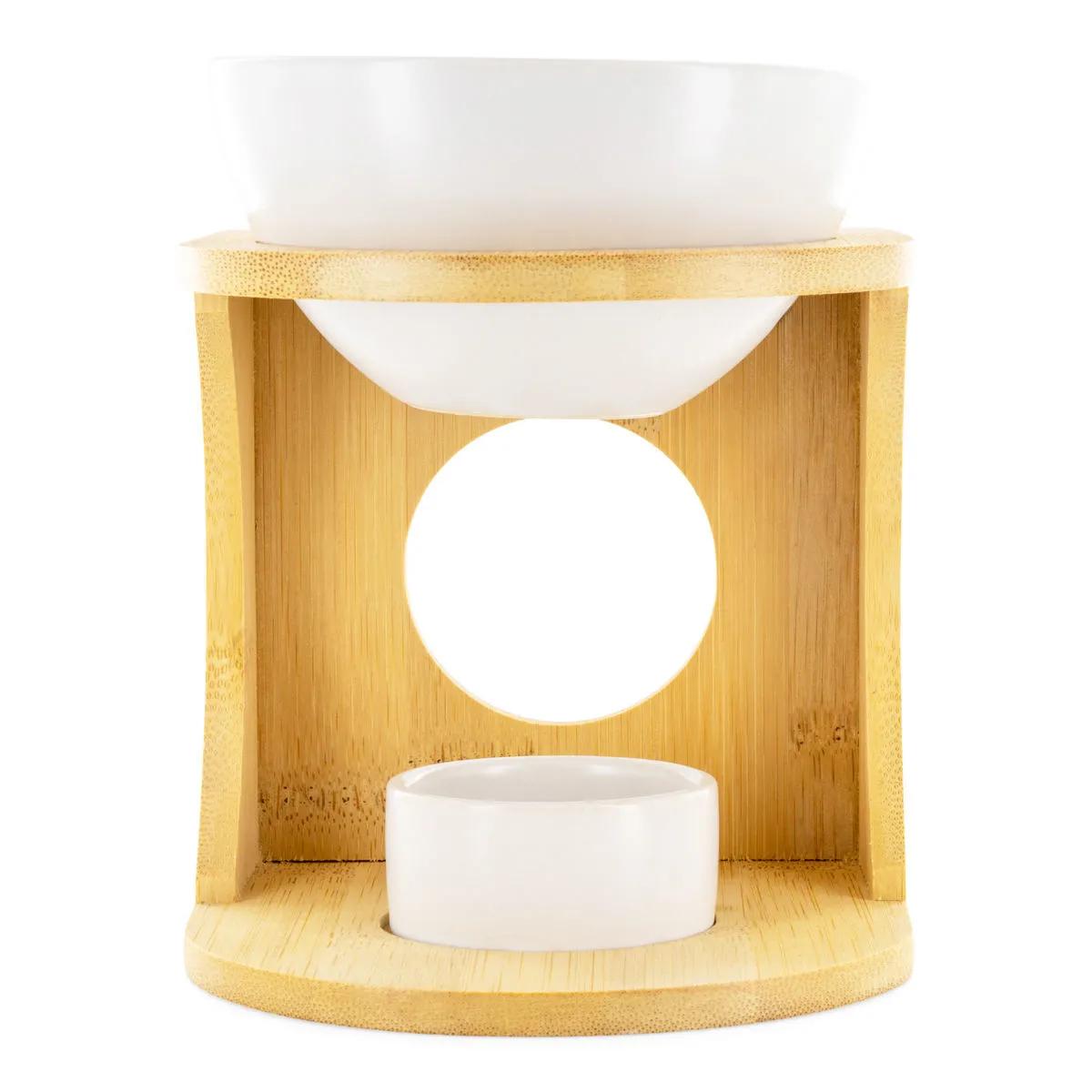
The Essential Oil Burner Bamboo Stand is a tea-light-powered aroma diffuser that uses bamboo and ceramic to fill your room with fragrance the old-fashioned way — no batteries, no plugs, no plastic. You place a few drops of essential oil mixed with water into the ceramic bowl, light a tea light underneath, and the gentle heat does the rest. It looks good on a shelf, it weighs next to nothing, and it actually works.
Most oil burners you'll find online are either flimsy ceramic pieces that chip within a week or overdesigned electric diffusers that hum like a small fridge. This bamboo stand sits right in the middle — it's a simple, well-made piece that does one job properly. The bamboo frame feels solid in your hands without being heavy, and the natural grain gives each one a slightly different look. We've had these on display in the shop, and they genuinely get more attention than burners twice the price.
The design is straightforward: a bamboo stand holds a removable ceramic bowl (10.5 cm diameter) on top, with a ceramic tea light holder (5.5 cm diameter) sitting below. The tea light heats the water-and-oil mix in the bowl, and as the water evaporates, the scent drifts through the room. No moving parts, no settings to fiddle with. If you've used a candle, you can use this.
One honest limitation: because it relies on a tea light, you're looking at roughly 3–4 hours of burn time per session before the candle runs out. That's actually a benefit in disguise — you won't accidentally leave it running all night. But if you want something that fills a room for 8+ hours unattended, an electric ultrasonic diffuser would be the better pick. For atmosphere and a controlled scent window, though, this bamboo burner is the one we'd grab.
| Spec | Value |
|---|---|
| SKU | SM0613 |
| Frame material | Bamboo |
| Bowl material | Ceramic |
| Tea light holder material | Ceramic |
| Bowl diameter | 10.5 cm |
| Tea light holder diameter | 5.5 cm |
| Heat source | Standard tea light candle (not included) |
| Electricity required | No |
| Cleaning | Wipe ceramic bowl with warm soapy water |
Complete your setup — pair this burner with any of our essential oils or burning oils to get started straight away. A pack of standard tea lights rounds it off. If you're after a different scent delivery method, have a look at our incense sticks and cones in the incense and aromatherapy section.
Electric diffusers are everywhere now, and they have their place. But there's something an ultrasonic mist machine can't replicate: the warm, slightly toasted quality a flame gives to essential oils. The gentle heat from a tea light doesn't just evaporate the oil — it softens it. Lavender smells rounder, citrus oils lose their sharp edge, and woodsy scents like cedarwood open up properly. We've tested this side by side in the shop, and the candle-heated version wins on scent depth every time.
There's also the practical side. No cord trailing across your shelf. No water tank to refill every 90 minutes. No motor that eventually dies. A bamboo stand and a ceramic bowl will last years if you don't drop them. The ceramic components wipe clean in seconds — a bit of warm water and a cloth, done. Try saying that about the inside of an ultrasonic diffuser after six months of peppermint oil residue.
And the bamboo itself is worth mentioning. It's one of the fastest-growing plants on the planet, which makes it a genuinely sustainable material choice. The grain on this stand is tight and smooth — no rough edges, no splinters. It feels like something you'd find in a design shop, not a bargain bin.
We sell the burner — what you put in it is up to you. But since we get asked constantly about which oils actually do anything beyond smelling nice, here's what the published research says.
According to a review published in Frontiers in Pharmacology, six studies using bergamot essential oil (Citrus bergamia) showed positive effects based on subjective stress responses (PMC4345801). Lavender has the most research behind it — a review in the International Journal of Molecular Sciences noted that essential oils, including lavender, have demonstrated anti-inflammatory properties in laboratory settings (PMC8584325). And according to a review in PMC, lavender essential oil has been studied for its clinical implications, with researchers examining its potential calming properties (PMC9357533).
That said, research also flags some cautions. According to a systematic review mapping aromatherapy evidence, the occurrence or absence of adverse effects of inhaled essential oil interventions was reported in only 2 out of multiple systematic reviews examined (NBK551015). That means safety reporting in this field is still patchy. And according to a clinical aromatherapy review in PMC, essential oils are toxic to eyes and can result in a chemical burn — if contact occurs, the eye should be irrigated with milk or a vegetable oil, not water (PMC7520654). Keep your oils away from your face, basically.
The number one mistake people make with oil burners is using too much oil. Five drops in a bowl of water is plenty for a bedroom. We've had customers come back saying "it gave me a headache" — turns out they were pouring oil straight into the bowl without water, or using 15–20 drops at once. More isn't better. Start with 3 drops, give it 10 minutes, and add from there.
The second thing: not all essential oils are equal. Pure essential oils — steam-distilled or cold-pressed from actual plant material — behave differently from synthetic fragrance oils. Synthetic ones tend to smell stronger but flatter, and they can leave a sticky residue in the bowl. Pure oils evaporate cleaner and the scent has more layers to it. You can feel the difference when you're cleaning the bowl afterwards.
Fill the ceramic bowl with warm water, add 3–5 drops of essential oil, place a lit tea light in the holder below, and let the heat do the work. The scent should reach you within 5–10 minutes. Never let the bowl run dry while the candle is burning.
Yes — any pure essential oil works. Lavender, eucalyptus, peppermint, and citrus oils are popular choices. Synthetic fragrance oils also work but may leave more residue. Always dilute with water in the bowl rather than using oil neat.
Start with 3–5 drops mixed into the water. For a small room (under 15 m²), that's usually enough. If the scent fades after 20–30 minutes, add 1–2 more drops. Going above 8–10 drops in one session can make the scent overpowering.
They're safe when used sensibly. Keep the burner on a stable, heat-resistant surface away from flammable materials. Never leave a lit tea light unattended. According to Healthline, topical use of certain oils like lavender and tea tree on prepubescent males has been linked to hormonal effects — but inhaled use from a burner at normal drop counts is a different exposure level entirely. Ventilate the room if you're sensitive.
Overuse can cause headaches, nausea, or throat irritation. According to a clinical review in PMC, essential oils are toxic to the eyes and can cause chemical burns on direct contact. People with asthma or respiratory conditions should start with fewer drops and keep a window open. If you're on medication, be aware that some essential oils may interact with certain drugs — check with your pharmacist if you're unsure.
Let it cool completely after use. Wipe with warm soapy water and a soft cloth. For stubborn oil residue, a splash of white vinegar in warm water loosens it quickly. Dry before storing or reusing.
Bamboo is surprisingly tough — it has a higher tensile strength than many hardwoods. This stand won't warp from the tea light's heat because the candle sits in a ceramic holder, not directly against the bamboo. Keep it dry between uses and it'll last years.
Last updated: April 2026
Medical disclaimer. This content is for informational purposes only and does not constitute medical advice. Consult a qualified healthcare provider before use of any substance.